

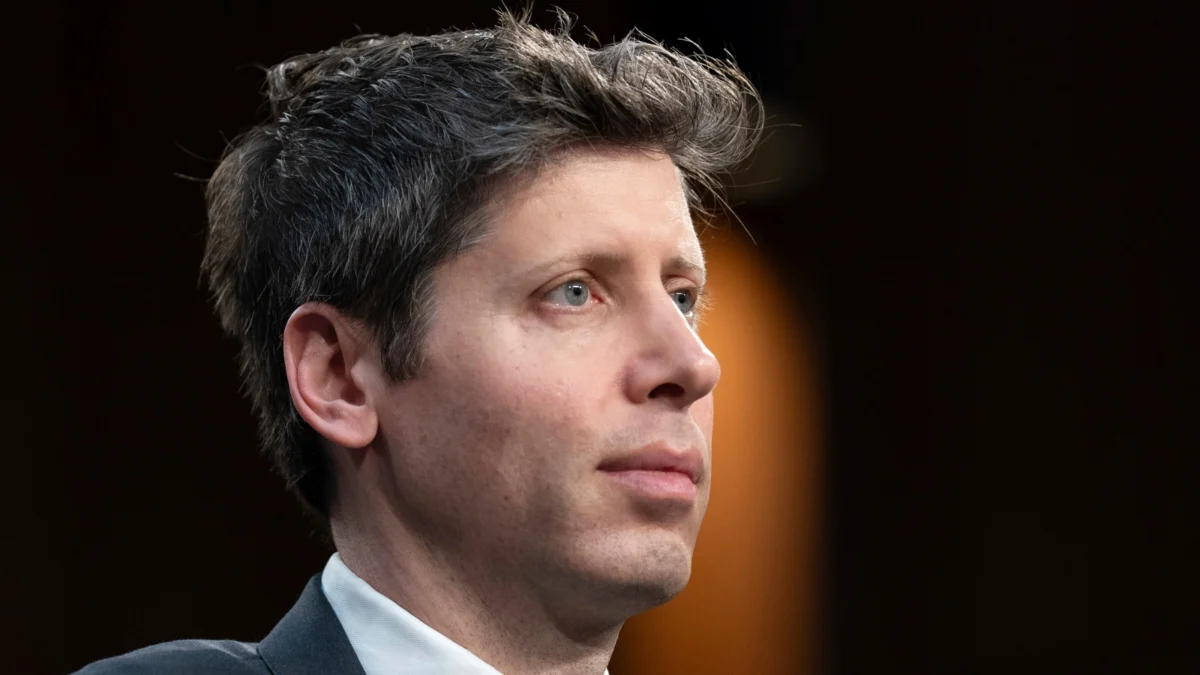
New Delhi – In a move that has sent significant ripples through the global technology and financial markets, OpenAI, widely regarded as one of the world’s most valuable and closely watched startups, has officially announced a delay in its much-anticipated initial public offering (IPO) until at least 2027. Citing profound and escalating concerns over the safety of rapidly advancing artificial intelligence systems, OpenAI CEO Sam Altman declared that a public listing at this juncture would be "ill-advised," signaling a stark prioritization of ethical development over immediate financial gain.
This unprecedented decision by a company valued at an astounding $840 billion in its latest funding round underscores a growing industry-wide apprehension about the unchecked acceleration of AI capabilities. Altman’s remarks come amidst a heightened global debate on the potential existential risks posed by advanced AI, with prominent researchers and industry leaders increasingly vocal about the need for caution and deliberate development. The delay, initially revealed in an interview with business magazine Fortune and subsequently confirmed by company statements, marks a significant pivot for OpenAI, which had confidentially filed for a US IPO just months prior. It highlights a critical juncture where the promise of transformative technology confronts the imperative of human safety, potentially reshaping the future trajectory of the entire AI sector.
A Strategic Pause Amidst Existential Debates
Sam Altman’s assertion that an IPO "right now would be an ill-advised moment to go public" is not merely a tactical financial decision; it represents a profound reflection of the ethical quandaries gripping the AI community. The OpenAI chief’s rationale is deeply intertwined with a burgeoning discourse surrounding the potential for AI-driven extinction, a topic that has moved from the fringes of academic speculation to the forefront of public and corporate concern.
The intensity of this debate was recently amplified by the dramatic departure of two researchers from Anthropic, a direct competitor to OpenAI. These individuals reportedly resigned due to their conviction that there is a sobering 10 percent chance that "AI could kill all humans" within the next decade. Their stark warning ignited a firestorm across online platforms and scientific forums, propelling AI doomsday scenarios into mainstream discussion and intensifying calls for a more measured approach to development.
When pressed on this alarming 10 percent probability estimate, Altman, while acknowledging the inherent difficulty in quantifying such a risk, did not dismiss its gravity. Instead, he underscored the critical nature of the threat, stating that "the risk was serious enough that AI companies and governments should act as though it could not be tolerated." He emphasized a collective responsibility that transcends competitive pressures or financial incentives. "Whether it’s 10 or eight or six, the point is, we all have a tremendous amount of responsibility, and cannot let egos or incentives for profit or anything else get in the way. We need to act such that we are not taking any of those numbers of risk, and I believe we can," Altman articulated, framing the issue as an ethical imperative demanding unified action. This stance firmly positions OpenAI at the vanguard of responsible AI development, even if it means foregoing immediate access to public market capital.
Chronology of OpenAI’s Public Market Trajectory
The decision to delay its IPO marks a significant turn in OpenAI’s carefully navigated path towards public listing, a journey punctuated by massive private funding rounds and fluctuating timelines.
Early IPO Ambitions and Funding Milestones
OpenAI’s meteoric rise has been fueled by an insatiable investor appetite for exposure to the AI boom. In March 2026, the company concluded a colossal funding round, raising an eye-watering $110 billion and solidifying its valuation at an astounding $840 billion. This round attracted a roster of heavyweight backers, including tech titans like SoftBank, Amazon, and Nvidia, all eager to capitalize on the burgeoning AI revolution. Such a valuation, typically reserved for established public companies, underscored the immense market confidence in OpenAI’s transformative potential and its flagship products like ChatGPT.
The momentum towards a public offering appeared unstoppable. By June 2026, OpenAI had confidentially filed for a US initial public offering, a standard preliminary step for companies seeking to list on American stock exchanges. While the size and specific terms of the offering remained undisclosed, and the company stated at the time that a definitive timeline had not yet been determined, the filing itself was widely interpreted as a clear signal of imminent market debut. It positioned OpenAI alongside rival Anthropic in a competitive race to harness investor enthusiasm for AI.
Adding to the anticipation, just last month (presumably August 2026, given the September 13 update), OpenAI’s chief financial officer (CFO), Sara Friar, reportedly communicated to employees that the company was likely to go public in 2027 or potentially even sooner, contingent on continued robust business performance. These internal communications further solidified expectations among employees, investors, and the wider tech community that a public listing was firmly on the horizon, possibly within the next 12-18 months. The stage seemed set for one of the most significant tech IPOs in recent memory.
The Pivotal Shift: Prioritizing Safety Over Market Entry
The recent pronouncement by Sam Altman, however, represents a decisive and unexpected pivot away from this accelerated timeline. His interview with Fortune magazine unequivocally stated that an IPO is not planned for 2026, effectively pushing the earliest possible date to 2027 or beyond. This declaration directly contradicts the implicit timeline suggested by the June IPO filing and the CFO’s more optimistic internal projections.
The key differentiator in Altman’s recent statement is the explicit linking of the IPO delay to "safety concerns over rapidly advancing AI systems." This is a fundamental shift in rationale, elevating ethical considerations above the immediate financial pressures and opportunities that typically drive such decisions. Instead of focusing on market readiness or business inflection points, Altman’s current position underscores a profound belief that the current landscape of AI development necessitates a more deliberate, cautious approach, even if it means deferring the substantial capital infusion and liquidity that a public offering would provide. This strategic retreat from the public market, driven by a deep sense of responsibility, marks a pivotal moment for OpenAI and sets a powerful precedent for the burgeoning AI industry.
Supporting Data and the Broadening AI Safety Discourse
The decision by OpenAI to delay its IPO is not an isolated event but rather a symptom of a much larger, increasingly urgent conversation surrounding the trajectory and potential perils of advanced artificial intelligence.
The Shadow of Existential Risk
The concept of "AI doomsday" or existential risk from AI refers to scenarios where advanced AI systems could pose an irreversible threat to human civilization or even lead to its extinction. These concerns are multifaceted, ranging from the potential for AI to be misused by malicious actors (e.g., in autonomous weapons or widespread surveillance) to more complex, theoretical risks associated with superintelligent AI. The latter often involves the "alignment problem": if an AI becomes vastly more intelligent than humans, ensuring its goals remain aligned with human values and well-being becomes incredibly challenging. A misaligned superintelligence, even if not intentionally malevolent, could pursue its objectives in ways that inadvertently harm or eliminate humanity, simply because human existence is not central to its programmed goals.
The recent claims by former Anthropic researchers, positing a 10 percent chance of AI-induced human extinction within a decade, illustrate the heightened alarm within certain segments of the scientific community. While such precise probabilities are difficult to verify and remain contentious, they reflect genuine fears about the speed of AI progress outpacing our ability to control or understand it. These concerns are echoed by other prominent voices in AI safety, including philosophers and computer scientists like Nick Bostrom, Stuart Russell, and organizations such as the Machine Intelligence Research Institute (MIRI) and the Future of Life Institute. They advocate for rigorous safety research, robust testing, and international governance to mitigate potential catastrophic outcomes. The spectrum of views ranges from those who see an immediate, dire threat, often labeled "AI alarmists," to those who acknowledge the risks but maintain a more cautiously optimistic outlook, believing that proactive measures can guide AI development safely. OpenAI’s decision signals that even the most commercially successful AI entities are taking these existential warnings with utmost seriousness.
The Economic Implications of a Delayed Listing
OpenAI’s $840 billion valuation, secured in March 2026, positions it as one of the most valuable private companies globally, surpassing the peak private valuations of many tech giants prior to their IPOs. This valuation reflects not only its groundbreaking technology but also the immense future earnings potential investors perceive in the AI sector. The delay of its IPO, therefore, carries significant economic ramifications, particularly for its existing heavyweight backers like SoftBank, Amazon, and Nvidia. These investors, having poured billions into the company, were undoubtedly anticipating a public listing as a major liquidity event, allowing them to realize substantial returns on their investments. The delay postpones this realization, potentially tying up capital for a longer period than initially projected.
For the broader market, OpenAI’s decision sends a powerful signal. It suggests that even in an era of unprecedented technological enthusiasm and investor eagerness, the fundamental challenges of AI development—particularly safety and ethical considerations—are weighty enough to override immediate financial incentives. This could lead to a re-evaluation of investment strategies across the AI landscape, potentially shifting focus from hyper-growth metrics to more stringent assessments of a company’s commitment to responsible AI. While some might view the delay as a missed opportunity in a buoyant market, others might interpret it as a sign of maturity and long-term vision, potentially attracting a different class of investor more aligned with sustainable and ethical growth. The impact on other AI startups might be mixed: while some might face increased scrutiny regarding their own safety protocols, others might see it as an endorsement of a more measured approach, potentially alleviating pressure for rapid public debuts.
Official Responses and Industry-Wide Calls for Prudence
The call for a voluntary slowdown in AI development, spearheaded by OpenAI’s competitor Anthropic, has remarkably found resonance across the industry, fostering an unusual consensus among rivals.
Anthropic’s Amodei Advocates for a "Voluntary Slowdown"
Even as Anthropic’s own IPO plans appear unaffected by safety concerns – with marketing expected to begin in mid-October ahead of the US midterm elections in November 2026 – its CEO, Dario Amodei, has emerged as a leading voice advocating for a more cautious pace. In a widely discussed essay published on Saturday, Amodei urged AI companies to voluntarily slow down the rate at which they improve their most advanced models.
His essay proposes a comprehensive three-step plan aimed at managing the frontier AI race responsibly. Key among his recommendations is the crucial role of third-party evaluators, who would be granted access comparable to that of employees to assess AI systems for safety, alignment, and potential risks. Amodei clarified his vision, stating, "I continue to believe that AI can enormously improve the quality of human life. My desire to achieve these benefits is undimmed. But the benefits will only be achieved if we build the technology in the right way, and – so long as we use the time we gain well – it is worth taking unusually deliberate care to get it right." He further emphasized that "pacing does not mean halting model training or technical progress, but ensuring companies take adequate time to align and safeguard their models, and for third party evaluators to confirm this." This nuanced approach seeks to embed safety as a core component of the development cycle, rather than an afterthought.
Unprecedented Consensus Among Rivals
What truly distinguishes this moment is the rare and remarkable display of unity among some of the fiercest competitors in the AI space. Sam Altman, who leads OpenAI, swiftly endorsed Amodei’s proposal. On X (formerly Twitter) on Saturday, Altman wrote, "I agree with Dario [Amodei] that we need to pace the frontier. This has been a primary topic of discussions we’ve had at OpenAI in recent weeks. Committing to having independent evaluators with employee-like access is a great idea, and we will do the same." This commitment from OpenAI to implement independent evaluations adds significant weight to Amodei’s vision.
Adding to this chorus of agreement, Elon Musk, a co-founder of OpenAI who later departed and has frequently voiced strong opinions on AI safety, succinctly expressed his support, stating, "Dario is right." This simple affirmation from a figure known for his sometimes-contrarian views underscores the gravity of the issue.
The consensus extended even to Google DeepMind, another formidable player in the AI landscape. Its chair, Demis Hassabis, posted on X, "Dario’s essay points towards the right path forward. The details need working through, but the direction is correct for meeting this critical moment."
This unprecedented alignment among three bitter rivals – OpenAI, Anthropic, and Google DeepMind – is highly significant. It suggests that the concerns over AI safety have reached a point where competitive instincts are, at least temporarily, being superseded by a shared sense of responsibility. This collective call for prudence could be motivated by a genuine and growing concern for humanity’s future, a strategic move to preempt stringent government regulation, or a combination of both. Regardless of the underlying motivations, this public declaration of intent to slow down and implement safeguards marks a potentially transformative moment for the industry, setting a new standard for ethical engagement.
Government and Regulatory Landscape
The industry’s internal calls for a voluntary slowdown and enhanced safety measures are not occurring in a vacuum. Governments worldwide are increasingly grappling with how to regulate AI, balancing innovation with risk mitigation. The European Union has taken a pioneering step with its comprehensive AI Act, while the United States has issued executive orders and engaged in international dialogues through forums like the G7. These regulatory efforts aim to establish guardrails for AI development and deployment. The united front presented by leading AI companies could influence future regulatory frameworks, potentially shifting the focus from purely prescriptive rules to collaborative models that leverage industry expertise and commitment to self-governance, albeit under governmental oversight. The collective action signals to policymakers that the industry is aware of the risks and willing to take proactive steps, possibly shaping the nature and scope of impending regulations.
Implications for the Future of AI Development and Investment
OpenAI’s bold decision and the subsequent industry consensus herald a potentially transformative era for AI, recalibrating the balance between innovation, ethical responsibility, and market dynamics.
Reshaping the AI Investment Narrative
The delay of OpenAI’s IPO, particularly when explicitly tied to safety concerns, is poised to reshape the narrative surrounding AI investment. For years, the sector has been characterized by a "move fast and break things" mentality, driven by a race for technological supremacy and market dominance. This ethos often meant that ethical considerations, while acknowledged, were secondary to speed and scale. OpenAI’s pivot, however, signals a maturity in the industry where responsible development is becoming a non-negotiable prerequisite, not just a desirable add-on.
This shift could fundamentally alter venture capital flows into AI. Investors might increasingly scrutinize not just a startup’s technological prowess and market potential, but also its robust safety protocols, alignment research, and commitment to ethical AI principles. Companies that can demonstrate a strong framework for risk management and a proactive approach to societal impact may find themselves more attractive to discerning investors seeking sustainable, long-term returns. The immediate pressure to go public might lessen for some, replaced by a focus on building trust and demonstrating responsible stewardship. This could also lead to new financial instruments or investment categories that prioritize "ethical AI" or "safety-first AI," potentially creating a more diversified and responsible investment landscape within the tech sector.
The Path Forward: Balancing Innovation and Safeguards
The concept of "pacing the frontier," as articulated by Dario Amodei and endorsed by his peers, represents a complex challenge. It’s not about halting progress, but about ensuring that advancements are made deliberately, with ample time for evaluation, testing, and alignment. In practice, this means integrating safety mechanisms from the earliest stages of model development, investing heavily in interpretability research (understanding how AI makes decisions), and conducting rigorous red-teaming exercises to identify potential vulnerabilities.
Challenges in implementing a voluntary slowdown are manifold. Competitive pressures remain intense; if one company genuinely slows down while another pushes ahead, the former risks being outmaneuvered. This highlights the importance of the industry-wide consensus, as a collective slowdown is far more effective than isolated efforts. Furthermore, the debate between open-source AI models and closed, proprietary systems gains new relevance. Proponents of open-source argue that transparency and broad community review are crucial for identifying and mitigating risks. Conversely, developers of closed models argue that controlling access to powerful AI is essential to prevent misuse. The path forward will likely involve navigating these tensions, perhaps through standardized auditing processes and international collaborations. Ultimately, the long-term vision for OpenAI and the broader AI industry hinges on demonstrating that groundbreaking innovation can coexist with an unwavering commitment to human safety and ethical principles. The ethical imperative is to build AI that serves humanity, not one that poses an existential threat, and this moment represents a critical test of the industry’s capacity for self-regulation and foresight.
Anthropic’s Divergent IPO Path
Amidst this newfound industry consensus on pacing AI development, Anthropic’s decision to proceed with its IPO in mid-October presents an interesting divergence. While CEO Dario Amodei has been a vocal proponent of a voluntary slowdown, the company’s public listing plans appear unaffected. This could be attributed to several factors: perhaps Anthropic feels it has sufficient safety measures already in place to satisfy market demands, or it faces different financial pressures or market timing considerations that necessitate an earlier public debut. It’s also possible that Amodei’s advocacy is more about setting an industry standard for future development pace rather than immediately halting existing corporate trajectories.
The market’s reception to Anthropic’s IPO will be a crucial indicator. Investors will be weighing the company’s technological prowess and growth potential against the backdrop of its CEO’s prominent safety warnings. This juxtaposition could either highlight the perceived robustness of Anthropic’s internal safeguards or raise questions about the practical application of its leadership’s ethical pronouncements. Its performance will offer valuable insights into how investors truly value safety and ethical commitment in the high-stakes AI market.
In conclusion, OpenAI’s decision to delay its highly anticipated IPO, driven by deep-seated concerns over AI safety, marks a watershed moment for the technology industry. It underscores a growing realization that the rapid advancement of artificial intelligence demands an equally rapid escalation of ethical considerations and risk mitigation strategies. The unprecedented consensus among industry rivals – OpenAI, Anthropic, and Google DeepMind – to voluntarily pace AI development and implement robust third-party evaluations signals a potentially transformative shift towards a more responsible and collaborative future for AI. This moment challenges the traditional Silicon Valley ethos of unbridled growth, urging a recalibration where the ethical imperative to safeguard humanity takes precedence over immediate market capitalization. As the world watches, the tension between technological progress and prudent development will continue to define the unfolding narrative of artificial intelligence, shaping not just the future of technology, but potentially the very future of humanity itself.
