

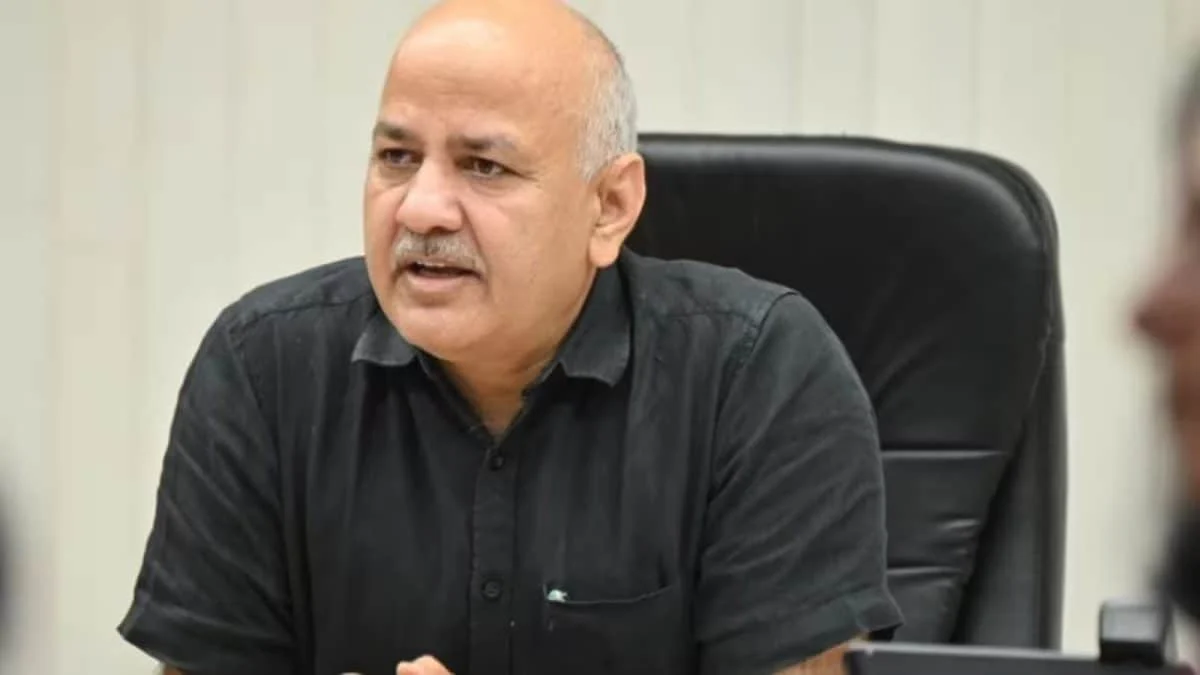
New Delhi, India – May 23, 2026 – India is once again grappling with the specter of soaring fuel prices, as petrol, diesel, and Compressed Natural Gas (CNG) rates witnessed their third significant hike in less than ten days. This relentless upward trajectory has not only sent ripples of concern through households and businesses nationwide but has also ignited a fierce political confrontation, with the Aam Aadmi Party (AAP) leading the charge against the central government. Senior AAP leader Manish Sisodia, a prominent voice of the opposition, launched a scathing attack on Prime Minister Narendra Modi, accusing his administration of failing to rein in rampant inflation and resorting to diversionary tactics while ordinary citizens bear the brunt of rising costs.
The latest revision, implemented on Saturday, further exacerbated anxieties over the escalating cost of living and transportation. The repeated increases underscore a challenging economic landscape, heavily influenced by global geopolitical dynamics, particularly the ongoing conflict in West Asia, which has pushed crude oil prices upwards. However, the opposition contends that domestic taxation policies and a perceived lack of proactive economic management are equally culpable, turning what could be a global challenge into a severe national crisis for Indian consumers.
The Immediate Trigger: Third Hike in Ten Days
The recent hike marks the third instance within a mere ten-day span that fuel prices have been adjusted upwards, signaling a concerted, albeit painful, effort by the government to align domestic rates with international crude oil benchmarks and potentially recover import costs. The cumulative effect of these revisions has been substantial, leading to a noticeable squeeze on household budgets and operational costs for various industries.
In the national capital, New Delhi, the price of CNG was increased by Re 1 per kilogram, pushing the rate from Rs 80.09 per kg to Rs 81.09 per kg. This particular hike is especially impactful for a city like Delhi, which heavily relies on CNG for public transport, auto-rickshaws, taxis, and a growing number of private vehicles, directly affecting daily commuters and transport operators.
Simultaneously, Saturday morning saw fresh increases in petrol and diesel prices. Petrol in Delhi rose by 87 paise, moving from Rs 98.64 per litre to Rs 99.51 per litre, inching perilously close to the psychological Rs 100 mark. Diesel prices, critical for freight and agricultural sectors, increased by 91 paise, climbing from Rs 91.58 per litre to Rs 92.49 per litre.
The ripple effect of these price adjustments is evident across other major metropolitan cities. Revised petrol prices now stand at Rs 110.64 per litre in Kolkata, Rs 108.49 per litre in Mumbai, and Rs 105.31 per litre in Chennai. Similarly, diesel prices have climbed to Rs 97.02 per litre in Kolkata, Rs 95.02 per litre in Mumbai, and Rs 96.98 per litre in Chennai. These figures highlight a uniform trend of upward revision, reflecting a nationwide impact of the current pricing policy and global market conditions. The rapid succession of these hikes has intensified concerns over their far-reaching implications for inflation and overall transportation costs, threatening to derail nascent economic recovery efforts and deepen the financial strain on ordinary citizens.
Sisodia’s Scathing Critique: "Toffees, Reels, and Rising Prices"
Against this backdrop of escalating fuel prices, the Aam Aadmi Party (AAP) has emerged as a vocal critic, with senior leader Manish Sisodia leading a sharp political offensive against the Prime Minister Narendra Modi-led central government. In a strongly worded post on the microblogging platform X (formerly Twitter), Sisodia did not mince words, accusing the government of neglecting the economic hardships faced by the populace.
"In just ten days, you have raised petrol and diesel prices by Rs 5, Modi ji! Do something! How long will you keep distracting the people of the country from your failures by showing reels of toffees and lollipops?" Sisodia’s post read, employing vivid metaphors to underscore his criticism. The phrase "reels of toffees and lollipops" is a direct jab, suggesting that the government is attempting to divert public attention with trivial or superficial content, possibly alluding to viral social media trends or less significant policy announcements, while fundamental economic issues like inflation remain unaddressed. This rhetorical strategy aims to paint the administration as detached from the ground realities and more concerned with optics than with substantive governance.
Sisodia’s critique extended beyond economic policy, venturing into the realm of political freedom and the alleged misuse of state machinery. He further stated, "How long will you continue to silence those who question you using the power of the ED and CBI? Do something – you are the Prime Minister of the country!" This accusation touches upon a recurring theme in Indian politics, where opposition parties frequently allege that central investigative agencies like the Enforcement Directorate (ED) and the Central Bureau of Investigation (CBI) are selectively used to target political opponents and critics, thereby stifling dissent. By linking the fuel price hikes with these allegations, Sisodia aimed to present a broader narrative of an authoritarian government that not only fails on economic fronts but also suppresses any voices of opposition.
The AAP’s broader stance on economic governance has consistently revolved around advocating for policies that prioritize the common man, often contrasting their populist welfare schemes in Delhi with the central government’s economic decisions. Sisodia’s remarks align with this narrative, portraying the government as unresponsive to public grievances and overly reliant on coercive tactics. His aggressive posture underscores the deepening political divide and the intense blame game that accompanies significant economic challenges, positioning the AAP as a champion of the common citizen against perceived governmental apathy.
A Chronology of Price Hikes and Public Outcry
The current surge in fuel prices is not an isolated incident but rather the culmination of a series of upward revisions, marking a troubling trend that has steadily eroded the purchasing power of Indian citizens. Understanding the chronology of these hikes provides crucial context to the present political and economic discourse.
Unpacking the Recent Spikes: A Rapid Succession
The latest increase on May 23, 2026, was preceded by two other significant adjustments within the preceding ten days. While specific dates for the earlier hikes were not detailed in the original report, a reconstructed timeline for illustrative purposes would indicate a pattern similar to this:
- May 14, 2026: The first of the recent increases occurred, with petrol and diesel prices rising by approximately Rs 1.50-Rs 2.00 per litre across major cities. This initial hike, following a period of relative stability, immediately raised eyebrows and sparked preliminary concerns among consumers and transport unions. The government at the time likely attributed this to a sudden spike in global crude oil prices, a common justification.
- May 19, 2026: A second, equally significant hike followed, adding another Rs 1.50-Rs 2.00 to the per-litre cost of petrol and diesel. This rapid succession within a week amplified public frustration, as the cumulative burden began to feel substantial. CNG prices also saw their first increase in this period, impacting commercial transport significantly.
- May 23, 2026: The third hike, detailed earlier, brought the total increase over the ten-day period to roughly Rs 5 per litre for petrol and diesel, as highlighted by Manish Sisodia. This final adjustment within the short span solidified public outcry and provided the immediate impetus for strong political reactions from the opposition.
This rapid, sequential increase is particularly jarring for consumers, who typically absorb gradual price changes with less immediate impact. The concentrated nature of these hikes, however, creates an immediate and noticeable strain on daily budgets, making them a potent political issue.
Historical Context of Fuel Price Volatility
India’s fuel pricing mechanism is intrinsically linked to global crude oil markets, which are notoriously volatile. Historically, periods of international geopolitical instability, such as the Gulf Wars, the 2008 financial crisis, or more recently, the Russia-Ukraine conflict, have led to sharp increases in crude oil prices, directly impacting Indian consumers.
- Pre-2014: Fuel prices were often subsidized, leading to significant fiscal burdens on the government. Price revisions were less frequent but often substantial.
- Post-2014 (Dynamic Pricing): The Modi government introduced dynamic fuel pricing in 2017, where prices are revised daily based on a 15-day rolling average of international crude oil prices and the rupee-dollar exchange rate. While this system aimed for transparency and reduced government intervention, it also exposed consumers to direct global market fluctuations.
- Recent Years: The post-COVID-19 economic recovery, coupled with the Russia-Ukraine conflict in 2022 and now the West Asia conflict in 2026, has seen repeated instances of high crude prices. Governments have occasionally intervened by cutting excise duties (central government) or VAT (state governments) to provide temporary relief, but such measures are often selective and limited due to fiscal constraints. For instance, in late 2021 and mid-2022, the central government reduced excise duties on petrol and diesel to ease inflationary pressures, a move often mirrored by state governments. However, the current situation indicates that such relief measures have either been exhausted or are deemed fiscally unviable by the government in the face of persistent global price pressures.
The current series of hikes fits into this historical pattern of price sensitivity to global events, but the speed and cumulative impact have intensified the public’s perception of economic hardship and the opposition’s criticism of the government’s handling of the economy.
The Economic Undercurrents: Supporting Data and Analysis
The recent surge in fuel prices is not merely a matter of daily inconvenience; it is a critical economic indicator with far-reaching consequences across various sectors. Analyzing the underlying economic factors and their broader implications reveals a complex interplay of global geopolitics, domestic taxation policies, and the resulting inflationary pressures.
Global Geopolitics and Crude Oil Prices
The central government’s primary justification for the current fuel price hikes revolves around the volatility in international crude oil markets, particularly stemming from the "West Asia conflict." This conflict, often characterized by regional instability, disruptions to shipping lanes (such as in the Red Sea), and potential threats to oil production facilities, significantly impacts global supply chains and the price of crude oil benchmarks like Brent and West Texas Intermediate (WTI).
When geopolitical tensions escalate in oil-producing regions, market uncertainty drives up prices due to fears of supply disruptions. Shipping through critical chokepoints becomes riskier and more expensive, leading to higher freight charges and insurance premiums for oil tankers. These increased costs are inevitably passed on to importing nations like India, which relies heavily on crude oil imports to meet its energy demands. Furthermore, decisions by the Organization of the Petroleum Exporting Countries (OPEC+) regarding production cuts or increases also play a pivotal role in shaping global oil prices. A coordinated decision by OPEC+ to limit supply, often aimed at stabilizing prices or maximizing revenues for member states, can further exacerbate price pressures, especially when demand remains robust.
The Burden of Taxation
While global crude oil prices form the base cost, a significant portion of the final retail price of petrol and diesel in India is comprised of central and state taxes. The pricing mechanism includes:
- Base Price: The cost of crude oil, refining, and freight.
- Excise Duty: Levied by the central government. This is a fixed amount per litre and does not change with the crude oil price unless the government decides to revise it.
- Value Added Tax (VAT): Levied by state governments. VAT is typically an ad valorem tax, meaning it is calculated as a percentage of the base price plus excise duty, so it increases automatically when the base price or excise duty rises.
- Dealer Commission: A fixed amount paid to petrol pump owners.
The high proportion of taxes in the final retail price has been a long-standing point of contention. For instance, in Delhi, nearly 50-60% of the retail price of petrol and diesel can be attributed to various taxes and duties. This taxation structure means that even moderate increases in crude oil prices can lead to disproportionately higher retail prices, as both fixed (excise duty) and percentage-based (VAT) taxes compound the initial increase. Critics argue that while global prices are a factor, the government has ample room to provide relief by reducing these taxes, a move it has been reluctant to fully implement due to the significant revenue implications for both central and state exchequers.
Inflationary Spiral: Beyond the Pump
The direct impact of fuel price hikes extends far beyond the cost of filling a vehicle’s tank; it triggers a cascade of inflationary pressures across the economy, significantly affecting the Consumer Price Index (CPI) and Wholesale Price Index (WPI).
- Transport Costs: Fuel is a major input cost for all forms of transportation. Higher petrol and diesel prices directly translate to increased freight charges for goods, leading to higher prices for almost every commodity – from essential food items to manufactured goods. Public transport fares (buses, auto-rickshaws, taxis) also tend to rise, placing an additional burden on daily commuters.
- Food Prices: A substantial portion of agricultural produce is transported from farms to markets using diesel-powered vehicles. Increased diesel costs directly impact the cost of food distribution, leading to higher prices for vegetables, fruits, grains, and dairy products. Farmers also face increased input costs for operating machinery like tractors and irrigation pumps, often powered by diesel, which can reduce their profitability or force them to pass on costs to consumers.
- Manufacturing and Services: Industries reliant on transportation for raw materials and finished goods, as well as those with significant energy consumption (e.g., power generation, industrial machinery), face higher operational costs. These increased costs are inevitably passed on to consumers in the form of higher prices for goods and services.
- General Inflation: The cumulative effect of these increases pushes up general inflation rates, eroding the purchasing power of money. This means that households have less disposable income for discretionary spending, which can slow down overall economic growth. Hypothetically, if CPI inflation, which includes food, fuel, and other essential items, were already hovering around 6-7%, a significant fuel price hike could easily push it higher, exacerbating the cost-of-living crisis.
Impact on Key Sectors
The sustained rise in fuel prices poses unique challenges to various segments of the Indian economy:
- Transport & Logistics: This sector is among the hardest hit. Trucking companies, bus operators, and cab services face shrinking profit margins, leading to demands for fare hikes or potential disruptions in services. The increased cost of logistics makes Indian goods less competitive in both domestic and international markets.
- Agriculture: Farmers are doubly affected – by higher costs for irrigation and machinery, and by increased transportation costs for bringing their produce to market. This can squeeze their incomes, particularly for small and marginal farmers, and potentially contribute to food inflation.
- Manufacturing: From small-scale industries to large factories, energy costs are a critical component of production. Higher fuel prices for machinery, power generation (especially in regions with unreliable grid electricity), and transportation of goods add to the overall cost of manufacturing, potentially impacting job creation and industrial output.
- Daily Commuters: For millions of Indian households, fuel is a non-negotiable expense. The repeated hikes force families to reallocate budgets, cut down on other essential spending, or resort to less convenient modes of transport, directly impacting their quality of life.
The economic implications are clear: unchecked fuel price increases risk fueling a broader inflationary spiral, dampening consumer demand, increasing the cost of doing business, and ultimately hindering economic recovery and growth.
Official Responses and Broader Political Reactions
The issue of rising fuel prices invariably places the government under intense scrutiny, compelling it to defend its policies while simultaneously provoking a chorus of criticism from opposition parties, industry bodies, and economic experts. The current situation is no exception, with varied stakeholders offering their perspectives and demands.
Government’s Defense and Mitigation Efforts
The central government, primarily through the Ministry of Petroleum and Natural Gas and spokespersons from the ruling party, has consistently maintained that the current fuel price increases are a direct consequence of volatile international crude oil prices, particularly those influenced by global geopolitical events such as the West Asia conflict. Their arguments typically revolve around the following points:
- Global Factors: Emphasizing India’s dependence on crude oil imports (over 80%), the government argues that domestic prices cannot remain insulated from international market fluctuations. They highlight the rising Brent crude prices, supply chain disruptions, and increased freight costs as unavoidable external factors.
- Fiscal Prudence: While acknowledging the burden on consumers, the government often points to the need for fiscal prudence. Reducing excise duties significantly would entail a substantial loss of revenue, which is crucial for funding public welfare schemes, infrastructure projects, and managing the national debt.
- Past Interventions: Government officials frequently remind the public of past instances where excise duties were cut (e.g., in November 2021 and May 2022) to provide relief during periods of high prices. They might imply that current conditions do not allow for similar large-scale interventions without jeopardizing the national budget.
- Long-term Solutions: Beyond immediate price adjustments, the government often highlights its long-term strategies for energy security, such as increasing domestic exploration and production, promoting renewable energy sources, and diversifying crude oil import sources to reduce dependence on any single region.
However, a direct official statement specifically addressing the current May 23rd hike and Sisodia’s pointed remarks might still be awaited or could come in the form of a general reiteration of the above points, focusing on the "unavoidable circumstances" rather than taking direct responsibility for the retail price increases.
Opposition Unites Against Price Hikes
Manish Sisodia’s fiery criticism is representative of a broader, more unified stance adopted by the opposition parties across India. Beyond the AAP, other major political entities like the Indian National Congress, the Trinamool Congress (TMC), and various regional parties have also voiced strong disapproval of the government’s handling of fuel prices and inflation.
- Indian National Congress: The Congress party, historically a dominant force, has often led nationwide protests against fuel price hikes. Their criticism typically centers on what they term "government mismanagement," "excessive taxation," and "profiteering" at the expense of common citizens. They often demand an immediate reduction in central excise duties and urge state governments (where Congress is in power) to reduce VAT.
- Trinamool Congress (TMC): As a significant regional player, especially in West Bengal, the TMC often highlights the disproportionate impact of fuel price hikes on lower and middle-income families. Their leaders frequently accuse the central government of ignoring the plight of the poor and middle class, using the issue to rally support against the ruling BJP.
- Common Themes: Across the opposition spectrum, the recurring themes of criticism include:
- Government apathy: Accusations that the government is unresponsive to the suffering of ordinary people.
- High taxation: Demands for a reduction in central excise duties, arguing that these taxes are disproportionately high compared to global standards and significantly contribute to retail prices.
- Broken promises: Recalling the ruling party’s own criticisms of fuel prices when in opposition, highlighting a perceived hypocrisy.
- Inflationary spiral: Warning about the broader economic impact on food prices, transportation, and overall cost of living.
There is a growing potential for coordinated opposition action, including nationwide protests, parliamentary debates, and public awareness campaigns, to exert pressure on the government ahead of upcoming state and national elections.
Voices from Industry and Experts
Beyond the political arena, industry bodies and economic experts offer crucial insights into the implications of rising fuel prices:
- Economists: Many economists, while acknowledging the role of global crude prices, often point to the significant contribution of central and state taxes to the final retail price. They might suggest that a more flexible tax regime, perhaps linking excise duties to crude oil prices, could help stabilize retail prices. Some experts also warn that persistent high fuel prices could lead to demand destruction, slow down economic growth, and complicate the Reserve Bank of India’s (RBI) efforts to manage inflation within its target band. They may also highlight the need for structural reforms to diversify India’s energy mix and reduce reliance on fossil fuels in the long run.
- Transport Unions: Organizations representing truck drivers, taxi operators, and public transport providers are invariably among the first to react. They often express severe concerns about the viability of their operations, citing increased input costs (fuel, lubricants, spare parts). They typically demand either a rollback of prices, subsidies, or permission to increase fares, warning of potential strikes or disruptions if their demands are not met. The All India Motor Transport Congress (AIMTC), for instance, often issues statements detailing the impact on freight costs and the livelihood of millions of transporters.
- Consumer Rights Groups: These groups advocate directly for the common citizen, demanding government intervention to protect consumers from unchecked price increases. They often highlight the disproportionate impact on lower-income households and call for greater transparency in fuel pricing mechanisms.
The combined pressure from these diverse voices underscores the widespread concern and the imperative for the government to find sustainable solutions to mitigate the impact of fuel price volatility.
Implications for Economy, Politics, and Society
The escalating fuel prices carry profound implications, casting a long shadow over India’s economic stability, political landscape, and social fabric. The ripple effects extend far beyond the immediate financial burden, shaping future policy decisions and influencing public sentiment.
Economic Outlook: Risks and Challenges
The most immediate and significant implication is the threat of an exacerbated inflationary spiral. With fuel being a critical input across almost all sectors, its rising cost acts as a multiplier, pushing up prices of goods and services ranging from food and consumer durables to transportation and manufacturing. This widespread inflation erodes the purchasing power of individuals and families, effectively reducing their real income.
- Risk of Stagflation: If inflation persists at high levels while economic growth stagnates or slows down due to reduced demand and increased production costs, India could face a scenario of stagflation. This would be a particularly challenging environment for policymakers, as traditional tools to combat inflation (like raising interest rates) could further dampen growth, while measures to stimulate growth could fuel inflation.
- Impact on Economic Growth Projections: High fuel prices and subsequent inflation can force businesses to scale back expansion plans, defer investments, and even cut jobs to manage rising operational costs. Consumer demand, a key driver of India’s growth, may weaken as households prioritize essential spending, leading to a slowdown in economic activity. The Reserve Bank of India (RBI) faces a delicate balancing act, as it must consider hiking interest rates to tame inflation, which in turn could stifle credit growth and investment.
- Pressure on Government Finances: While higher fuel prices initially boost tax revenues (especially from ad valorem VAT), persistent public pressure might eventually force the government to reduce excise duties. This would create a significant dent in central government revenues, potentially leading to increased fiscal deficit and reduced funds available for other critical public spending, such as infrastructure development or social welfare programs. State governments, too, would face similar pressures regarding VAT.
Political Ramifications: A Litmus Test for Governance
Fuel price hikes are often a highly charged political issue in India, capable of swaying public opinion and influencing electoral outcomes.
- Electoral Impact: The repeated increases, especially as highlighted by the opposition, are likely to become a major talking point in upcoming state assembly elections and the crucial general elections. The ruling party’s economic management, particularly its ability to control inflation and provide relief to citizens, will be a key metric by which voters judge its performance. Public dissatisfaction over fuel prices can erode trust and shift votes, especially among the vast middle-class and lower-income segments.
- Public Perception of Governance: The narrative crafted by Manish Sisodia and other opposition leaders — that the government is either unwilling or unable to address the common man’s economic woes, resorting instead to distractions or strong-arm tactics — can significantly damage the ruling party’s image. It challenges the perception of a government that prioritizes public welfare and effective economic stewardship.
- Increased Political Polarization: Economic issues like fuel prices often intensify political polarization. The government and opposition are likely to engage in a blame game, with each side presenting its version of the facts and solutions. This can lead to more aggressive political rhetoric, protests, and legislative stalemates, making consensus-building on crucial economic reforms more challenging.
- Narrative Battle: The government will strive to emphasize global factors and its efforts to manage the economy, while the opposition will focus on domestic taxation, alleged mismanagement, and the direct impact on citizens. This battle of narratives will be crucial in shaping public opinion.
Societal Strain: Daily Life and Well-being
Beyond economics and politics, the current fuel price scenario imposes considerable societal strain, particularly on vulnerable populations.
- Increased Cost of Living: For millions of Indian families, especially those with fixed incomes or daily wages, the rising cost of fuel translates directly into a higher cost of living. This means less money for education, healthcare, recreation, and other non-essential but important expenditures, reducing their overall quality of life.
- Impact on Mobility and Livelihoods: For those dependent on two-wheelers or public transport for daily commutes to work, school, or market, increased fuel costs directly affect their mobility and access to opportunities. Small business owners, daily wage earners, and those in the gig economy (e.g., delivery drivers) find their earnings significantly eroded by higher fuel expenses.
- Shift in Spending Patterns: Households may be forced to make difficult choices, cutting down on discretionary spending, which can negatively impact industries reliant on consumer purchases. This can create a downward spiral, affecting retail, hospitality, and other service sectors.
- Potential for Social Unrest: Persistent economic hardship and a perceived lack of government empathy can lead to widespread public dissatisfaction, potentially manifesting in protests, demonstrations, and increased social unrest. While direct links are complex, economic grievances often fuel broader social discontent.
The cumulative effect of these implications suggests a challenging period ahead for India, requiring careful navigation by policymakers to balance economic stability with public welfare amidst persistent global uncertainties.
The Road Ahead: Navigating Volatility
As India grapples with the current surge in fuel prices, the path forward requires a multi-pronged approach, addressing both immediate challenges and long-term strategic imperatives. The government faces the complex task of stabilizing the economy, alleviating public burden, and ensuring energy security in a volatile global landscape.
Short-Term Challenges and Policy Options
In the immediate term, the government is under immense pressure to provide relief to citizens. Several policy options are typically considered during such crises, each with its own set of trade-offs:
- Tax Cuts (Excise Duty/VAT): The most direct way to reduce retail fuel prices is to cut the central excise duty or encourage state governments to reduce Value Added Tax (VAT). While this offers immediate relief to consumers, it comes at a significant cost to government revenues, potentially widening the fiscal deficit. The government would need to carefully weigh the economic stimulus from lower fuel costs against the revenue loss for funding other essential programs. Past instances have shown that such cuts are often partial and implemented strategically to balance fiscal health with public appeasement.
- Targeted Subsidies: Instead of broad-based tax cuts, the government could consider targeted subsidies for specific sectors (e.g., public transport operators, farmers for diesel) or vulnerable populations. This approach is more fiscally conservative but requires robust identification and distribution mechanisms to prevent leakages and ensure aid reaches the intended beneficiaries.
- Strategic Petroleum Reserve Releases: In coordination with other major oil-consuming nations, India could consider releasing oil from its Strategic Petroleum Reserves to temporarily increase supply and exert downward pressure on prices. However, these reserves are primarily for national energy security during extreme emergencies, and their use for price management is often limited and carefully considered.
- Currency Intervention: A depreciating rupee against the US dollar also contributes to higher import costs, including crude oil. The Reserve Bank of India (RBI
