

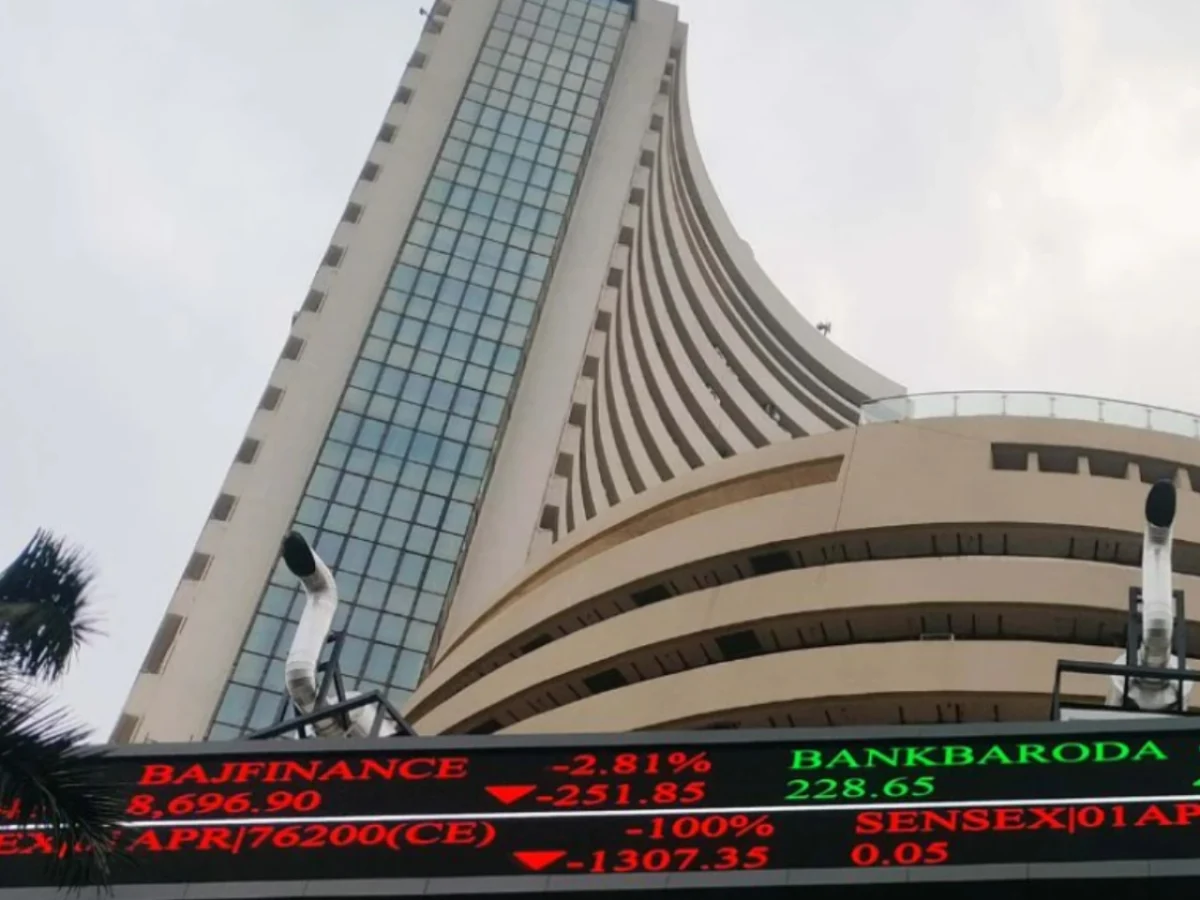
Mumbai, India – June 15, 2026 – Indian benchmark indices witnessed a robust opening on Monday, June 15, 2026, with the Nifty 50 nearing the significant 24,000-point psychological barrier and the BSE Sensex soaring over 1,000 points. The widespread optimism across Dalal Street was primarily fueled by promising reports of a breakthrough in peace negotiations between the United States and Iran, a development that has significantly bolstered global risk appetite and eased geopolitical tensions.
The positive sentiment translated into broad-based buying across key sectors, including automotive, infrastructure, and finance, indicating renewed investor confidence in the economic outlook. The early morning rally saw nearly all sectoral indices trading in the green, underscoring the market’s enthusiastic reaction to the prospect of enhanced global stability.
Main Facts: A Resounding Start to the Trading Week
The Indian stock market kicked off the week with remarkable vigor, reflecting a global wave of optimism following reports of a significant step forward in US-Iran peace talks. This pivotal geopolitical development immediately resonated with investors, leading to substantial gains across the board.
At precisely 9:29 am IST, the BSE Sensex recorded an impressive surge of 1,051 points, or 1.39%, to reach 76,579.26. Simultaneously, the NSE Nifty 50 gained a substantial 323 points, or 1.37%, to trade at 23,945.55. Both indices not only opened significantly higher than their respective previous closes of 75,527.95 and 23,622.90 but also swiftly hit early morning highs. The Sensex touched an intraday peak of 76,821.07, while the Nifty scaled 24,011.40, momentarily crossing the coveted 24,000-mark.
)
The surge was not confined to a few heavyweights; rather, it was a broad-based rally driven by strong buying interest across a diverse range of sectors. Banking, auto, and information technology (IT) stocks emerged as frontrunners, spearheading the market’s upward trajectory. Data from Bseindia.com confirmed that all sectoral indices were trading positively, signaling a pervasive bullish sentiment.
This market euphoria was amplified by a sharp decline in crude oil prices, as the easing of Middle Eastern tensions allayed fears of supply disruptions. Lower crude prices are a significant boon for an oil-importing nation like India, promising relief from inflationary pressures and strengthening the rupee.

Chronology of the Market Rally: From Global News to Local Gains
The narrative of Monday’s market rally began even before the opening bell, with overnight global developments setting a distinctly positive tone. Reports detailing the substantial progress towards a US-Iran peace agreement began circulating, immediately impacting international markets and futures.
Pre-Market Buzz:
)
- Asian Market Rally: Early morning trading in Asia saw a broad gauge of Asian equities jump more than 2%, reflecting heightened risk appetite. Japan’s Nikkei surged 4.98% to 69,306, South Korea’s KOSPI jumped 5.41% to 8,562, and Taiwan Weighted rose 2.76%.
- US Futures Firm: US stock futures also traded firmly higher, indicating a strong opening for Wall Street later in the day. Dow Jones futures climbed 455 points (0.89%) to 51,657.71, S&P 500 futures added 0.50% to 7,431.46, and Nasdaq futures gained 0.31% to 25,888.84.
- Crude Oil Plunge: Brent crude oil declined sharply by over 4% (4.70%) towards the $83.23 per barrel mark, while West Texas Intermediate (WTI) dropped 5.10% to $80.56. This significant drop eased global inflation concerns and provided a crucial tailwind for equity markets, particularly for net oil importers like India.
- Bitcoin’s Rebound: Even the cryptocurrency market reacted positively, with Bitcoin reclaiming the $65,000 level, signifying improved risk sentiment across global asset classes.
Indian Market Opening (9:15 AM IST):
The Indian indices opened with a substantial gap-up, immediately reflecting the positive global cues. The Nifty indicated a 297-point opening gain at 23,926, confirming the anticipation of a strong session.
Early Trading (9:29 AM IST):
Within minutes of trading, the initial gains consolidated and expanded.
)
- BSE Sensex: Up 1,051 points (1.39%) at 76,579.26.
- NSE Nifty: Up 323 points (1.37%) at 23,945.55.
Both indices quickly surpassed their previous closing levels and hit early highs, demonstrating aggressive buying from institutional and retail investors alike. The Nifty’s brief foray above 24,000 was a significant psychological milestone, signaling strong upward momentum.
Sectoral Performance and Top Movers:
The rally was broad-based, but specific sectors stood out. Auto, infrastructure, and finance stocks led the charge on the Nifty 50.
- Top Gainers (Early Trends):
- IndiGo: Topped the gainers, surging 3.43% to Rs 4,870.25.
- Bajaj Finserv: Rose 3.42% to Rs 1,746.95.
- Eternal: Gained 3.36% to Rs 252.00.
- Other significant gainers included Bajaj Finance, L&T, UltraTech Cement, and Asian Paints, all of which rose over 2.9%. Maruti and Reliance Industries also contributed to the rally, adding 2.23% and 1.56%, respectively.
- Top Losers (Early Trends):
- Only Sun Pharma traded marginally in the red, down 0.15% at Rs 1,804.50.
- NTPC remained largely flat with a negligible 0.01% gain.
Overall, 29 out of the 30 Sensex index stocks opened higher, painting a clear picture of overwhelmingly positive market sentiment.
Supporting Data and Expert Analysis: Decoding the Market’s Ascent
The market’s robust performance was not merely anecdotal; it was underpinned by a confluence of macroeconomic factors, technical indicators, and expert interpretations. Analysts were quick to highlight the various elements contributing to this significant surge.
)
Geopolitical Stability and Economic Benefits
Piyush Jhunjhunwala, Founder & CEO of Stockify, emphasized the profound impact of geopolitical developments. "The positive move in the Sensex and Nifty has been driven by a number of issues, including signs that tensions between the US and Iran are easing, resulting in improved investor confidence and positive expectations for the future," Jhunjhunwala stated. He elaborated on the far-reaching benefits: "Geopolitical stability is seen as ultimately a benefit to the world’s equity markets, since it lessens concerns about disruption to the supply of oil, allowing for lower crude oil prices. For India, lower crude oil prices can help to manage inflation, support the value of the rupee and increase economic growth potential."
This perspective underscores the critical linkage between global political stability and domestic economic health, particularly for an emerging economy heavily reliant on imported energy. Lower oil prices reduce import bills, ease pressure on the current account deficit, and provide fiscal space for government spending, all of which are conducive to higher economic growth and a stable currency.
)
Technical Indicators Signal Bullish Momentum
Aakash Shah, Technical Analyst at Choice Broking, provided a detailed technical perspective, highlighting several key triggers. "Asian markets surged at the start of the week after reports of progress toward a US-Iran peace deal boosted risk appetite globally. A broad gauge of Asian equities jumped more than 2%, while US futures also traded firmly higher. Meanwhile, Brent crude oil declined sharply by more than 4% toward the $83 per barrel mark, easing inflation concerns and providing additional support to market sentiment," Shah reiterated the global context.
Focusing on the Nifty’s technical setup, Shah noted, "Nifty has confirmed a consolidation breakout with momentum turning bullish as RSI jumped to 51.25 with a bullish crossover and MACD nears a positive crossover, while fading bearish pressure and strong put writing at 23,500 strike pushed PCR to 1.41, its highest since January."
)
- RSI (Relative Strength Index): A jump to 51.25 with a bullish crossover suggests that the buying pressure is increasing and the index is gaining strength after a period of consolidation.
- MACD (Moving Average Convergence Divergence): Nearing a positive crossover indicates that the short-term momentum is shifting upwards, often a precursor to a sustained rally.
- PCR (Put-Call Ratio): A high PCR of 1.41 (its highest since January) signifies strong put writing at lower strike prices (like 23,500), implying that option writers expect the market to stay above these levels, providing robust support. This indicates strong confidence among institutional players.
- India VIX: The India VIX, a measure of market volatility, dropped 5.73% to 14.71, reaching its lowest level since February 27. A declining VIX typically signals reduced investor fear and increased confidence, reinforcing the bullish outlook.
Shah concluded, "The option chain shows resistance near 23,800 and 24,000 strikes, and a sustained move above 24,000–24,200 could trigger a fresh uptrend with support at 23,500–23,300. Overall, the technical setup indicates a strong positive opening with bullish momentum likely to remain dominant. Improvement in market breadth, declining volatility, strengthening momentum indicators, and supportive derivatives positioning favour the bulls. The immediate trading range for Nifty is expected between 23,500 and 24,000, while a decisive breakout above the 24,000–24,200 zone could determine the next directional move toward higher levels."
Cryptocurrency Market Reacts Positively
The ripple effect of the US-Iran peace deal extended beyond traditional equities and commodities to the cryptocurrency market. Akshat Siddhant, Lead Quant Analyst at Mudrex, observed, "Bitcoin has reclaimed the $65,000 level following the announcement of a U.S.–Iran peace agreement, which improved risk sentiment across global markets. The development triggered sharp reactions across oil, gold, and crypto, with investors moving back into risk assets."
)
Siddhant also noted positive inflows into Bitcoin ETFs, which recorded net inflows of $85.8 million on Friday, ending a five-day streak of outflows. This indicates renewed institutional interest and confidence in the digital asset space. He highlighted the upcoming June 19 signing in Switzerland as a critical event for assessing the agreement’s durability. "If buying pressure remains strong and the deal progresses smoothly, Bitcoin could move toward the $74,000 level. However, downside risk remains with support standing at the $61,000 level," Siddhant added, emphasizing the continued monitoring of the peace process’s progress.
Official Responses and Broader Market Commentary
While there were no immediate "official government responses" in the provided context, the detailed analyses from market experts like Piyush Jhunjhunwala and Aakash Shah serve as critical market commentary, guiding investor perception and strategy. Their insights offer a quasi-official interpretation of market movements and future expectations.
)
Sectoral Strength as an Economic Barometer
Piyush Jhunjhunwala highlighted the significance of the sectoral performance. "The strength of the banking and information technology sectors indicates investors are showing renewed interest in these sectors due to their economic connection, and, therefore, is a good indicator that there is a renewed focus on global economic activity."
- Banking & Finance: A surge in banking and finance stocks suggests an expectation of improved economic activity, increased credit demand, and potentially better asset quality for banks. It often signals confidence in the broader economic recovery.
- Information Technology (IT): The IT sector’s rally points to optimism about global business confidence and spending, as Indian IT firms largely derive their revenue from international clients. Geopolitical stability reduces uncertainty, encouraging corporations worldwide to invest more in technology.
- Automotive: Lower crude oil prices directly benefit the automotive sector by reducing input costs (plastics, paints, rubber derivatives) and boosting consumer discretionary spending due to reduced fuel expenses.
- Infrastructure: A stable global environment and lower commodity prices (like steel, cement) support infrastructure development, making projects more viable and attractive.
- Consumer Discretionary (e.g., Asian Paints, Bajaj Finance): These stocks often perform well when consumer confidence is high and disposable incomes are expected to rise, driven by factors like lower inflation and a stable economic outlook.
Cautious Optimism and Long-Term Strategy
Despite the immediate euphoria, Jhunjhunwala advised a balanced perspective. "While this is a very positive development, market participants will continue to be affected by real or perceived changes in the price of crude oil, the flow of funds from foreign institutional investors (FII), upcoming earnings from publicly traded companies, and announcements from global central banks." This highlights the multifaceted nature of market drivers beyond a single geopolitical event.
)
He further counselled investors against chasing short-term gains: "Instead of trying to play short-term moves in the market, investors should take advantage of periods of optimism to strengthen their portfolios with fundamentally sound companies and using a disciplined long-term investment strategy." This advice underscores the importance of a well-researched, patient approach to investing, rather than succumbing to speculative impulses.
Implications for Investors and the Economy
The implications of this market surge, driven by a potential US-Iran peace deal, are far-reaching, touching upon various aspects of the Indian economy and investment landscape.
)
Economic Stability and Growth Prospects for India
- Inflation Management: The most immediate and significant benefit for India is the sharp decline in crude oil prices. As a major oil importer, India’s economy is highly susceptible to oil price volatility. Lower crude prices directly translate to reduced input costs for industries, lower transportation costs, and ultimately, softer inflation. This gives the Reserve Bank of India (RBI) more flexibility in its monetary policy decisions.
- Rupee Appreciation: A reduction in India’s import bill dueated to lower oil prices helps narrow the current account deficit, which in turn supports the Indian Rupee. A stronger rupee can make imports cheaper and help attract foreign investment. The USD/INR pair already slipped 0.54% to 94.61 on Monday.
- Increased Economic Growth Potential: With reduced inflationary pressures and a stable currency, consumer and business confidence are likely to improve. This can lead to increased consumption, higher capital expenditure by corporations, and overall stronger economic growth.
- Fiscal Space: A lower oil import bill also frees up government resources that might otherwise be spent on subsidies or managing currency depreciation, providing more fiscal space for developmental projects.
Investment Strategy and Sectoral Outlook
- Banking and Financial Services: The sector is a direct beneficiary of economic stability and growth. Improved credit demand, lower interest rate expectations (if inflation remains benign), and better asset quality bode well for banks and NBFCs.
- Automotive: Lower fuel costs and reduced input prices boost the profitability of auto manufacturers and encourage consumer spending on vehicles.
- Infrastructure & Cement: Reduced commodity prices (like crude-derived bitumen, coal for cement production) and renewed government focus on capital expenditure in a stable economic environment will support this sector.
- Information Technology: While Indian IT is globally exposed, geopolitical stability reduces uncertainty for global clients, potentially leading to increased IT spending and project outsourcing.
- Consumer Discretionary: With improved consumer sentiment and potentially higher disposable incomes, sectors catering to non-essential goods and services are likely to see increased demand.
- Energy Sector: While upstream oil companies might see some pressure from lower crude prices, oil marketing companies (OMCs) and companies in the downstream sector could benefit from better margins.
- Commodities: The impact on commodities is mixed. While crude oil prices are down, gold climbed 2.52% to $4,328.42, indicating that some investors still seek safe-haven assets or see it as an inflation hedge despite current trends.
Global Market Dynamics
The US-Iran peace deal has broader implications for global markets:
- Reduced Geopolitical Risk Premium: A resolution to tensions in the Middle East removes a significant source of global geopolitical risk, reducing the "risk premium" often factored into asset prices.
- Energy Market Stability: A stable Middle East ensures more predictable oil supply, contributing to global energy market stability and potentially sustained lower oil prices.
- Boost to Global Trade and Investment: Enhanced stability encourages international trade and cross-border investments, fostering global economic growth.
What Investors Should Note for the Future
Investors are advised to remain vigilant despite the current euphoria. The sustainability of the rally hinges on several factors:
)
- Durability of the Peace Deal: The actual signing of the US-Iran peace agreement, scheduled for June 19 in Switzerland, will be a crucial event. Any hiccups or reversals in the peace process could quickly dampen sentiment.
- Global Central Bank Policies: Upcoming announcements from major global central banks regarding interest rates and quantitative easing will continue to influence market liquidity and investor behavior.
- Corporate Earnings: The performance of publicly traded companies in their upcoming earnings reports will provide fundamental insights into economic health and corporate profitability.
- Foreign Institutional Investor (FII) Flows: The sustained flow of foreign capital into Indian markets is vital for maintaining momentum. Any significant outflows could temper the rally.
- Crude Oil Price Stability: While currently down, any unforeseen events could still trigger volatility in crude oil prices, which would have immediate repercussions for India.
In conclusion, Monday’s market surge is a testament to the powerful influence of geopolitical developments on global financial markets. The prospect of a US-Iran peace deal has ignited optimism, promising a more stable global environment and significant economic benefits for India. While the immediate outlook is bullish, prudent investors will continue to monitor the evolving situation and adhere to disciplined, long-term investment strategies.
