

TECHNOLOGY
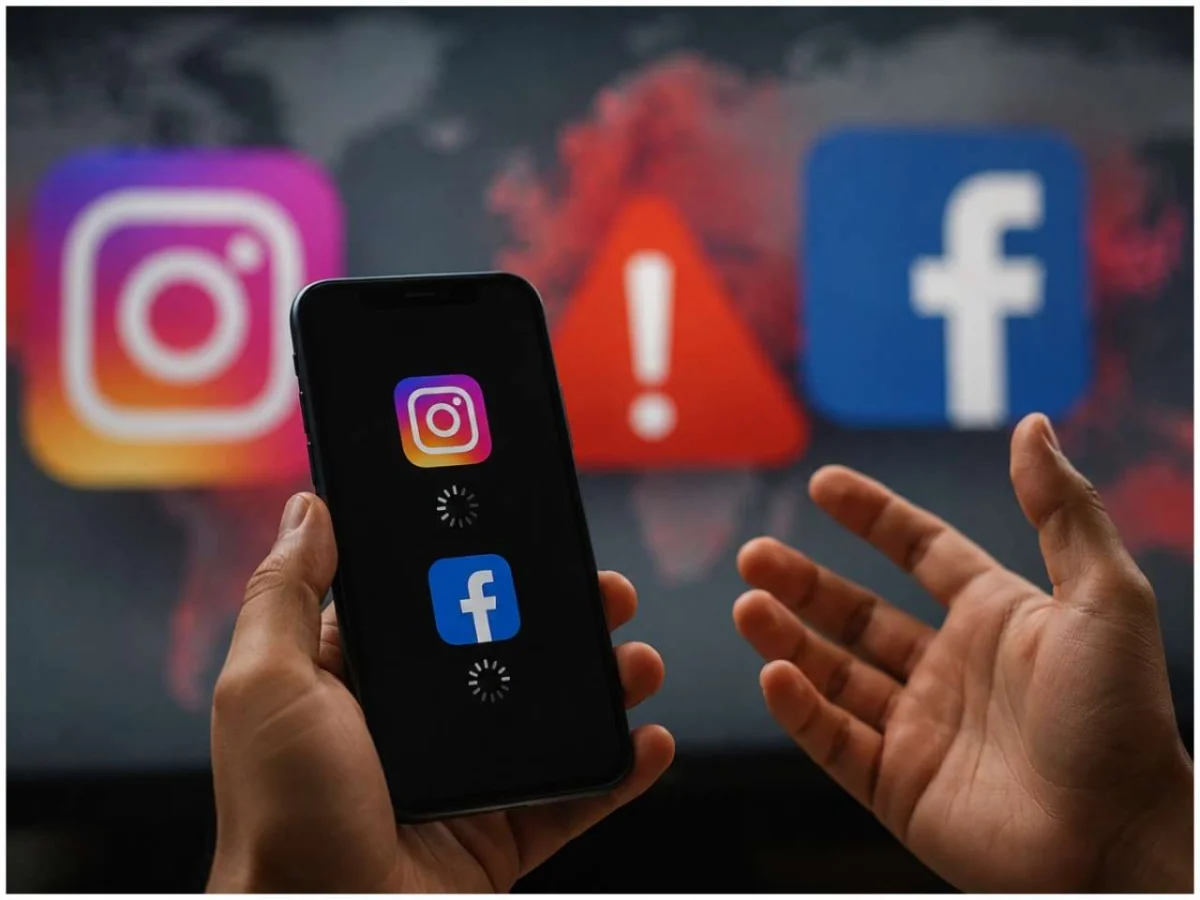
Social media giants Instagram and Facebook, both under the Meta Platforms umbrella, experienced a significant and widespread outage on Sunday afternoon, July 19, 2026. Millions of users across numerous countries reported severe issues, including inability to log in, post new content, or refresh their news feeds. The disruption, which began intensifying around 1 PM IST, left users frustrated and disconnected, turning to alternative platforms like X (formerly Twitter) to confirm the global scope of the problem. As the digital world grappled with the unexpected downtime, Meta remained conspicuously silent, offering no immediate explanation or timeline for resolution.
The incident underscored the profound reliance of individuals and businesses alike on these ubiquitous platforms for communication, commerce, and daily interaction. The extended period of uncertainty and lack of official communication only amplified the widespread concern, highlighting the fragility of digital infrastructure that underpins so much of modern life.
Main Facts: A Digital Silence Descends
Sunday, July 19, 2026, witnessed a significant disruption to two of the world’s most dominant social media platforms: Instagram and Facebook. Beginning early afternoon, users from a multitude of countries reported a cascading series of technical difficulties that rendered the services largely inaccessible. The primary complaints revolved around persistent login failures, an inability to upload new posts or stories, and a complete cessation of feed updates, leaving users staring at stale content or error messages.
The scale of the problem quickly became evident through Downdetector, a prominent real-time outage tracker, which recorded a massive surge in user-reported issues. The number of complaints escalated dramatically between 1 PM and 4 PM IST, indicating a synchronized and widespread systemic failure rather than isolated incidents. The global nature of the outage meant that users from diverse geographical regions, time zones, and internet service providers were uniformly affected, pointing towards a core issue within Meta’s infrastructure.
Despite the mounting reports and growing public outcry on rival platforms, Meta Platforms, Inc., the parent company of Instagram and Facebook, maintained a perplexing silence. There was no immediate official statement, acknowledgment, or explanation released through any of their corporate channels, status pages, or official social media accounts. This lack of communication left users and businesses in limbo, uncertain about the cause, duration, or potential impact of the outage. The frustration was palpable, transforming what might have been a minor inconvenience into a major point of contention regarding the reliability and transparency of major tech services.
)
Chronology of the Outage: From Sporadic Reports to Global Gridlock
The events of July 19, 2026, unfolded rapidly, transforming a typical Sunday afternoon into a moment of digital chaos for billions.
Initial Reports Surface
The first trickles of trouble began to emerge shortly after noon IST. Individual users across various regions started reporting minor glitches – a slow feed refresh, a failed photo upload, or a brief login hiccup. These initial reports were often dismissed as personal internet issues or temporary server blips, common occurrences in the vast landscape of online services. However, the isolated incidents soon coalesced into a discernible pattern.
Downdetector Records a Massive Surge
By approximately 1 PM IST, the anecdotal evidence began to be corroborated by hard data. Downdetector, a platform that aggregates user-submitted reports of service disruptions, showed a sharp and unprecedented spike in complaints for both Instagram and Facebook. The graph on Downdetector’s website transformed from a flat line to a towering peak within minutes, signaling a widespread problem. The volume of reports continued to climb relentlessly, peaking dramatically between 1 PM and 4 PM IST. This three-hour window represented the critical period when the outage moved from being a localized annoyance to a global crisis. The sheer number of simultaneous reports indicated that the issue was not confined to a particular region or internet service provider but was rather a fundamental breakdown affecting Meta’s core services.

Escalation and Global Reach
As the afternoon progressed, the outage’s geographical footprint expanded exponentially. What might have started in one continent quickly spread, affecting users across North America, Europe, Asia, Africa, and Australia. The uniformity of the complaints – login failures, posting errors, and unrefreshable feeds – pointed towards a centralized issue rather than distributed problems. Users found themselves unable to access their profiles, communicate with friends and family, or conduct business activities reliant on the platforms. The global nature of the disruption highlighted the interconnectedness of modern digital life and the vast reach of Meta’s services.
Sustained Impact and Lingering Issues
Even after the initial peak on Downdetector, the number of complaints did not immediately subside. Instead, reports continued to flow in, albeit at a slightly reduced rate, indicating that while some users might have experienced intermittent restoration, the underlying issues persisted for a significant portion of the user base. This prolonged impact extended the period of frustration and uncertainty, underscoring the severity and complexity of the technical problem Meta was facing. The inability to predict when services would be fully restored added another layer of anxiety for dependent users and businesses.
Meta’s Continued Silence
Throughout this entire chronological unfolding – from the first whispers of trouble to the full-blown global outage – Meta Platforms maintained an absolute silence. There were no posts on their official corporate communication channels, no updates on a dedicated status page, and no public acknowledgments from company executives. This lack of real-time information was a notable aspect of the crisis, leaving millions of affected individuals and businesses to rely on third-party trackers and the collective reports of fellow users on platforms like X to understand the scope of the problem.
)
Supporting Data and Technical Context: Unpacking the Digital Breakdown
Understanding the depth of the July 19 outage requires an examination of the tools and contexts that define such widespread digital disruptions.
Downdetector’s Indispensable Role
Downdetector served as the primary, unofficial barometer of the crisis. This third-party service collects status reports from users across various internet services and applications, aggregating them to identify potential outages. Its real-time graphs provide visual confirmation of service disruptions, indicating the intensity and geographical spread of reported issues. For the July 19 outage, Downdetector’s charts for both Instagram and Facebook showed an unprecedented vertical spike, far exceeding typical daily fluctuations. This surge, concentrated between 1 PM and 4 PM IST, unequivocally signaled a major systemic failure rather than isolated user errors or localized network issues. In the absence of official communication from Meta, Downdetector became the most reliable source for users seeking confirmation that they were not alone in experiencing problems.
Historical Precedents and Potential Causes
Major outages affecting global tech giants are not unprecedented. Meta itself has faced significant downtime in the past, most notably in October 2021 when a configuration error took down Facebook, Instagram, WhatsApp, and Messenger for nearly six hours, impacting billions. Other tech behemoths like Google, Amazon Web Services (AWS), and Microsoft have also experienced widespread disruptions due often to issues ranging from Domain Name System (DNS) failures, Border Gateway Protocol (BGP) routing problems, server misconfigurations, software bugs, or even hardware failures in critical data centers.
)
While Meta has yet to comment, typical causes for such extensive outages include:
- DNS (Domain Name System) Issues: The internet’s "phone book," translating website names into IP addresses. A misconfiguration here can make services unreachable.
- BGP (Border Gateway Protocol) Problems: This protocol dictates how data travels across the internet. Routing errors can effectively disconnect entire networks.
- Server Configuration Errors: Even a small error in the vast configuration files of a global network can have ripple effects, leading to widespread service disruption.
- Software Bugs: A new software deployment or an existing bug can crash critical systems.
- Hardware Failures: While less common for such widespread, simultaneous issues, failures in core infrastructure components can contribute.
It is crucial to emphasize that without official communication from Meta, any specific cause remains speculative. However, the global and simultaneous nature of the issues strongly suggests a problem at the core infrastructure level, rather than application-specific bugs.
Economic and Social Ramifications
The impact of such an outage extends far beyond mere inconvenience for individual users. For businesses, especially small and medium-sized enterprises (SMEs) that heavily rely on Instagram and Facebook for marketing, customer engagement, and sales, the downtime translates directly into lost revenue and disrupted operations. E-commerce stores, content creators, advertisers, and digital marketers faced an immediate cessation of their activities, potentially missing critical sales windows or advertising impressions. The global advertising market, significantly powered by Meta’s platforms, experiences a tangible economic hit during such disruptions.
)
Socially, the outage highlights society’s profound dependency on these platforms. For billions, Facebook and Instagram are primary conduits for communication with friends and family, sharing life updates, accessing news, and even organizing community events. The sudden disconnection can lead to feelings of isolation and frustration, especially for those who rely on these platforms as their main source of digital connection. The disruption of news feeds also means a temporary blackout for many on current events, demonstrating the powerful, albeit sometimes fragile, role these platforms play in information dissemination.
Official Responses and the Echo of Silence
One of the most striking aspects of the July 19, 2026, outage was the prolonged and absolute silence from Meta Platforms, Inc. As millions grappled with inaccessible services, the tech giant offered no public statement, no acknowledgment of the problem, and no estimated time for resolution.
Meta’s Uncharacteristic Reticence
In an era of instant communication and heightened public scrutiny, a major tech company’s silence during a global outage is increasingly rare and often met with criticism. While investigating a complex technical issue certainly takes time, industry best practices typically dictate at least a preliminary acknowledgment of the problem via alternative channels, such as a brief post on X, an update to a dedicated status page (if one exists and remains operational), or a quick statement to major news outlets. This initial communication, even if it simply states "we are aware and investigating," serves to inform users, manage expectations, and mitigate widespread panic or misinformation.
)
Meta’s decision to remain silent throughout the peak hours of the outage diverged sharply from these norms. This lack of transparency fueled user frustration and led to a vacuum of information, which was quickly filled by speculation and user-generated content on other platforms.
Reasons Behind Corporate Silence
While frustrating for the public, there can be various reasons why a large corporation like Meta might delay an official response during a crisis:
- Root Cause Analysis: Before making a public statement, companies often want to accurately identify the root cause of the problem to avoid issuing incorrect or premature information that might later need correction. In a vast, complex infrastructure, this can take hours.
- Internal Protocols: Large organizations have strict internal communication protocols that must be followed. Crafting a statement, getting it approved by various departments (technical, legal, public relations), and translating it for global audiences takes time.
- Focus on Resolution: Engineering teams are typically fully engaged in resolving the issue, and diverting resources to public relations might be seen as secondary during the critical phase of restoration.
- Avoiding Speculation: Some companies prefer to wait until they have a clear understanding of the issue and a solid plan for recovery before communicating, fearing that early, vague statements might lead to more questions than answers.
However, for a company that operates at the scale of Meta, with billions of users and significant economic impact, the expectation for prompt and transparent communication is exceptionally high. The absence of even a simple "we’re working on it" message on a platform like X, which remained operational, was particularly noticeable.
)
User Expectations vs. Corporate Reality
The disconnect between user expectations for immediate updates and the corporate reality of measured, carefully vetted communication during a crisis was starkly evident. Users, accustomed to instant gratification and real-time information, often interpret silence as indifference or incompetence. For businesses relying on Meta’s services, the lack of an official update meant they couldn’t inform their own customers or adjust their marketing strategies, leading to further disruption.
Implications of Prolonged Silence
The prolonged silence from Meta carries several implications. Firstly, it can erode user trust and loyalty. In a competitive digital landscape, reliability and transparency are key differentiators. Secondly, it can invite greater scrutiny from regulatory bodies concerned about critical infrastructure resilience and corporate accountability. Finally, it reinforces the narrative that large tech companies, despite their pervasive influence, can sometimes operate in an opaque manner when faced with internal challenges. The eventual statement from Meta, whenever it arrives, will be crucial in addressing these concerns and rebuilding confidence.
Netizens’ Reactions and Coping Mechanisms: The Digital Lifeline of X
In the absence of official communication from Meta, the digital world found its collective voice and shared experience on X (formerly Twitter). The platform became the primary arena for users to confirm the outage, vent their frustrations, and, notably, inject humor into an otherwise disruptive situation.
)
X: The De Facto Outage Hub
As Instagram and Facebook remained inaccessible, X became the go-to platform for real-time updates and communal solidarity. Users flocked to X to search for hashtags like #InstagramDown, #FacebookDown, and #MetaOutage, instantly finding millions of others reporting similar issues. This immediate confirmation served to alleviate individual anxiety, assuring users that the problem was systemic rather than personal. The platform transformed into a digital water cooler, where collective experiences were shared, and information gaps were filled by crowdsourced reports.
A Mix of Frustration and Humour
The reactions on X were a vibrant blend of frustration, bewilderment, and characteristic internet humor. Many users expressed genuine annoyance at being disconnected from their primary social networks, highlighting their reliance on Instagram for sharing daily moments or Facebook for community engagement. Businesses voiced concerns over lost revenue and interrupted operations.
However, a significant portion of the conversation quickly turned to memes and witty observations. The original article highlights two prime examples:
)
- The Frustrated Creator: One user, Ashok Mor (@_techibee), shared a video demonstrating his inability to upload a Reel on Instagram, capturing the common frustration of content creators whose work was suddenly stalled. This raw, immediate reaction resonated with many experiencing similar issues.
- The "Normal Life" Parody: Another user, Oreo (@TigerVishkit), shared a humorous video depicting someone enjoying a "normal life" – blissfully unaware of their child falling from a stroller – as a satirical take on how disconnected people become when social media isn’t working. This meme perfectly encapsulated the collective self-awareness and dark humor often found online during such events, mocking society’s dependence on digital validation.
These reactions underscored the dual nature of social media’s impact: while a critical tool, its absence also highlighted the sometimes-absurd dependency users develop. The shared humor created a sense of camaraderie, turning a collective inconvenience into a shared cultural moment.
User Troubleshooting Efforts and Best Practices
Amidst the chaos, many users attempted to troubleshoot the issues themselves, often guided by collective wisdom shared on X or by basic tech advice. The original article provided practical tips for users facing Instagram or Facebook issues, which are worth expanding upon:
- Check Downdetector or X: The first and most crucial step is to verify if the issue is widespread. If thousands of others are reporting problems, it’s almost certainly not your fault. This prevents unnecessary troubleshooting on your end.
- Avoid Repeated Login Attempts/Password Resets: Frantically trying to log in multiple times or resetting your password can exacerbate the problem, potentially locking your account or causing further system strain if the outage is related to authentication servers. It’s best to wait.
- Switch Internet Connections: Try toggling between Wi-Fi and mobile data. Sometimes, an issue might be localized to your Wi-Fi network or internet service provider (ISP). If the problem persists on both, it confirms the issue is with the app/platform itself.
- Restart the Application: Close the Instagram or Facebook app completely (force quit) and reopen it. This can clear temporary glitches or cached data that might be causing issues.
- Use a Different Browser/Device: Attempt to access the platforms from a different web browser (e.g., Chrome instead of Safari) or a different device (e.g., a laptop instead of a smartphone). This helps determine if the issue is app-specific or device-specific.
- Check for App Updates: Ensure your Instagram and Facebook apps are updated to the latest version. Developers often release patches that fix bugs or improve compatibility, though an update is unlikely to resolve a major widespread outage originating from the server side.
- Clear App Cache: For Android users, clearing the app’s cache (Settings > Apps > Instagram/Facebook > Storage > Clear Cache) can sometimes resolve minor issues by removing corrupted temporary files. For iOS, offloading the app and reinstalling it achieves a similar effect but is more drastic.
These steps, while generally useful for minor glitches, were largely ineffective against a widespread core infrastructure outage, further underscoring the severity of the July 19 event. They highlighted, however, the proactive nature of users attempting to regain their digital connections.
)
Broader Implications and Future Outlook: Beyond the Downtime
The July 19, 2026, outage of Instagram and Facebook is more than just a temporary inconvenience; it carries broader implications for user trust, digital resilience, and the future landscape of social media.
Erosion of Trust and Reliability
Each major outage chips away at user trust. While occasional downtime is expected for any complex system, frequent or prolonged disruptions can lead to users questioning the reliability and stability of the platforms they rely upon. For Meta, a company already navigating challenges related to data privacy, content moderation, and intense competition, maintaining consistent uptime is crucial for retaining its vast user base. A perceived lack of transparency during such events further compounds this issue, making users feel undervalued or uninformed. Over time, this erosion of trust could prompt users and businesses to diversify their digital presence, seeking more resilient alternatives.
The Imperative for Digital Redundancy
The outage served as a stark reminder for businesses, content creators, and even individuals: relying solely on one platform for critical operations or communication is a significant risk. Companies that base their entire marketing strategy or customer service solely on Instagram or Facebook experienced a complete halt in operations. This event underscores the critical need for digital redundancy – having backup channels, diversified marketing strategies, and alternative communication methods. For businesses, this might mean investing in their own websites, email marketing lists, or presence on multiple social media platforms. For individuals, it reinforces the value of direct communication methods and a healthy balance of online and offline interactions.
)
Regulatory Scrutiny and Infrastructure Resilience
Widespread outages of critical digital infrastructure can attract the attention of regulatory bodies worldwide. Governments are increasingly recognizing social media platforms not just as entertainment tools, but as essential public infrastructure, given their role in information dissemination, commerce, and public discourse. Extended downtime raises questions about the resilience of these systems, the adequacy of their disaster recovery protocols, and the accountability of tech giants. It wouldn’t be surprising if this outage prompts further discussions or investigations into digital infrastructure reliability and potential regulatory frameworks to ensure greater transparency and stability from dominant tech players.
Meta’s Ongoing Challenges
The July 19 outage fits into a broader context of challenges for Meta. The company is continually under pressure from emerging rivals like TikTok, faces ongoing antitrust scrutiny, and grapples with evolving user preferences and privacy concerns. Ensuring the fundamental stability and accessibility of its core platforms is a foundational requirement for Meta to navigate these complexities and pursue its ambitious metaverse vision. Downtime on its flagship apps can distract from strategic objectives and divert significant resources towards reactive problem-solving.
Conclusion: Awaiting the Explanation
As the world slowly returned to a semblance of normal digital life after the July 19 outage, the lingering question remained: What happened? The global disruption of Instagram and Facebook underscored the immense power and pervasive influence these platforms wield over modern society. It highlighted the collective frustration born from sudden disconnection and the creative resilience of a global online community finding solace and humor on alternative channels.
)
Ultimately, the onus remains on Meta Platforms to provide a comprehensive and transparent explanation for the outage. This statement will not only clarify the technical cause but also serve as a crucial opportunity for the company to reaffirm its commitment to reliability, rebuild user trust, and demonstrate its capacity to manage the immense responsibility that comes with operating some of the world’s most critical digital services. Until then, the July 19 outage will stand as a potent reminder of the inherent vulnerabilities in our increasingly interconnected digital world.
