Introduction: A Landmark Month for the Hosur-Based Giant
In a resounding display of market resilience and strategic execution, TVS Motor Company has reported its sales figures for September 2026, showcasing a robust growth trajectory that spans both its domestic strongholds and its expanding international footprint. The company, a cornerstone of India’s automotive sector, has successfully navigated a complex global economic landscape to post a 16.65% year-on-year (YoY) growth in domestic two-wheeler sales, while simultaneously witnessing a staggering 29.74% surge in exports.
The total domestic volume for the month stood at 4,82,073 units, a significant leap from the 4,13,279 units recorded in September 2025. This volume increase of nearly 69,000 units in a single month highlights the brand’s deepening penetration into the Indian consumer consciousness. On the global front, the company shipped 1,56,691 units, compared to 1,20,776 units in the same month previous year, reinforcing TVS’s status as a formidable global player in the two-wheeler industry.
The Core Narrative: Domestic Dominance and the "Jupiter" Factor
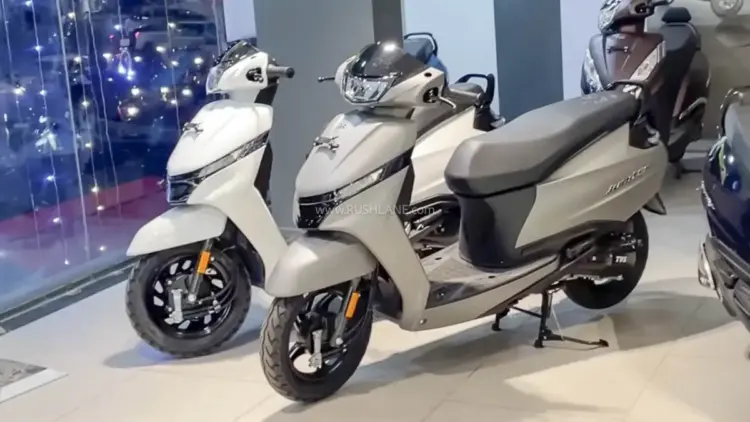
At the heart of TVS’s domestic success is the ubiquitous TVS Jupiter. Long regarded as the primary challenger to the traditional scooter hierarchy in India, the Jupiter continues to be the crown jewel of the TVS portfolio. In September 2026, the model clocked 1,54,725 units, marking an 8.87% growth over the 1,42,116 units sold in September 2025.
The Jupiter’s contribution to the total domestic sales volume remains monumental, accounting for 32.10% of the company’s total two-wheeler sales in India. Industry analysts attribute this sustained success to the model’s evolution; from a simple 110cc commuter to a sophisticated 125cc offering equipped with "SmartXonnect" technology and class-leading under-seat storage. The Jupiter has effectively bridged the gap between a family utility vehicle and a modern, tech-laden scooter.

Following the Jupiter is the Apache series, TVS’s performance-oriented brand. The Apache range saw a healthy 14.67% growth, reaching 61,148 units. This growth is particularly noteworthy as it signifies a "premiumization" trend in the Indian market, where young buyers are increasingly opting for performance and racing pedigree over basic commuting. The TVS XL, the legendary moped that has served as the backbone of rural Indian logistics for decades, followed closely with 55,517 units, maintaining a steady 3.29% growth.
The Electric Revolution: iQube’s Meteoric Rise
Perhaps the most significant story within the domestic data is the performance of the TVS iQube. As India pivots toward sustainable mobility, the iQube has emerged as a frontrunner in the electric vehicle (EV) transition. In September 2026, the iQube recorded sales of 45,320 units, a massive 47.05% increase from the 30,820 units sold in September 2025.
With an absolute gain of 14,500 units, the iQube represents the largest volume growth among all established models. This surge is a direct result of TVS’s aggressive expansion of its EV charging infrastructure and the introduction of multiple variants of the iQube, catering to different price points and range requirements. The iQube’s success is a clear indicator that the Indian urban commuter is no longer "testing the waters" with EVs but is now fully embracing them as a primary mode of transport.
New Entrants and Market Adjustments
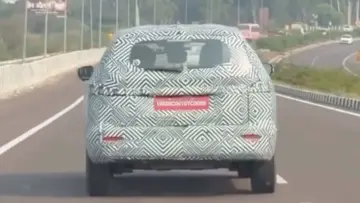
September 2026 also saw the impact of new product launches. The TVS Orbiter and the Ntorq 150, two of the company’s latest additions, contributed 17,027 units and 12,693 units, respectively. These figures are particularly impressive given they are compared against zero volumes from the previous year. The Orbiter, positioned as a futuristic urban crossover, seems to have found an immediate audience, while the Ntorq 150 has successfully tapped into the "mega-scooter" enthusiast segment.
However, not all models shared the upward trend. The TVS Raider, which had previously been a high-flyer in the 125cc motorcycle segment, saw a decline of 13.34%, settling at 36,183 units. Similarly, the TVS Sport witnessed a marginal dip of 2.97%. These shifts suggest a tightening of the entry-level commuter segment, where consumers are either upgrading to premium models like the Ronin (which grew by 44.25%) or switching to electric alternatives.
Chronology of Growth: Month-on-Month Momentum
To understand the current peak, one must look at the sequential progress from August 2026. The domestic sales grew by 11.13% in just thirty days, adding 48,277 units to the tally.

This month-on-month (MoM) growth was driven largely by the festive season preparation. In India, September often marks the beginning of inventory building for the Dussehra and Diwali periods. The TVS XL delivered the largest sequential volume addition, jumping by 9,581 units (a 20.86% MoM increase), signaling a strong recovery in rural sentiment. Other notable MoM performers included the TVS Sport (+62.71%) and the Radeon (+51.74%), further reinforcing the theory that rural and semi-urban markets are gearing up for a high-consumption festive cycle.
The Global Footprint: Star City Leads the Charge
While the domestic story is one of variety and EV transition, the export story is one of absolute dominance in the commuter segment. TVS’s exports are heavily anchored by the Star City series.
The Star City 125 led the export charts with 79,912 units, a 41.37% increase over the previous year. Remarkably, this single model accounts for 51% of TVS’s total overseas shipments. When combined with the standard Star City (30,976 units), the duo represents over 70% of the company’s international sales. These models have become the preferred choice in African and Latin American markets, where durability and fuel efficiency are the primary purchasing drivers.
The Apache brand is also finding global takers, with exports rising 37.56% to 16,822 units. Interestingly, the TVS Raider’s export numbers nearly doubled, rising 91.99% to 10,064 units, suggesting that the model’s sporty design is resonating well with international youth demographics, even if it faced a slight domestic dip.
Official Responses and Strategic Vision
While official statements from the TVS board emphasized "customer-centric innovation," the underlying strategy is clear: diversification. By maintaining a presence in the ultra-utilitarian moped segment, the high-performance racing segment, and the cutting-edge EV segment, TVS has hedged its bets against market volatility.
A spokesperson for the company noted that the growth in exports is a result of "tailored product offerings for diverse geographies." The company has invested heavily in understanding the specific road conditions and fuel qualities of its export destinations, leading to the high reliability associated with the Star City brand. Regarding the domestic EV surge, the company maintains that its "integrated ecosystem approach"—which includes battery manufacturing and charging partnerships—is the key differentiator.

Implications for the Future: What This Means for the Industry
The September 2026 data serves as a bellwether for several industry-wide trends:
- The Decline of the 100cc Commuter: The stagnation or decline of entry-level models like the Sport and Star City (domestically) suggests that the Indian buyer is moving toward 125cc and above. The "value-for-money" equation is shifting from "lowest price" to "best features and performance."
- EVs are the New Mainstream: With the iQube crossing the 45,000-unit mark, EVs are no longer a niche "second vehicle" for wealthy households. They are now competing head-to-head with mainstream ICE scooters in terms of volume.
- The Resilience of Rural Markets: The sharp MoM increase in XL and Radeon sales suggests that rural distress may be easing, potentially due to a favorable monsoon or increased government infrastructure spending. This is a positive sign for the broader Indian economy.
- Global De-risking: By exporting over 1.5 lakh units monthly, TVS is effectively de-risking itself from domestic downturns. The massive growth in Star City exports provides a steady stream of foreign exchange and ensures factory utilization remains high even during domestic lulls.
Conclusion: A Powerhouse in Motion
TVS Motor Company’s performance in September 2026 is more than just a collection of impressive numbers; it is a testament to a well-oiled machine that understands the pulse of both the local farmer and the global urbanite. As the company continues to integrate advanced technology—ranging from the 310cc Apache RTX category (which saw a 2,475% export growth from a small base) to the zero-emission iQube—it is positioning itself not just as a bike manufacturer, but as a leader in the future of global mobility.
If current trends hold, the final quarter of 2026 could see TVS breaking even more records, further solidifying its position as a titan of the two-wheeler world. The Jupiter continues to lead the way, but the rising stars of the EV and export segments are the ones defining the company’s future.