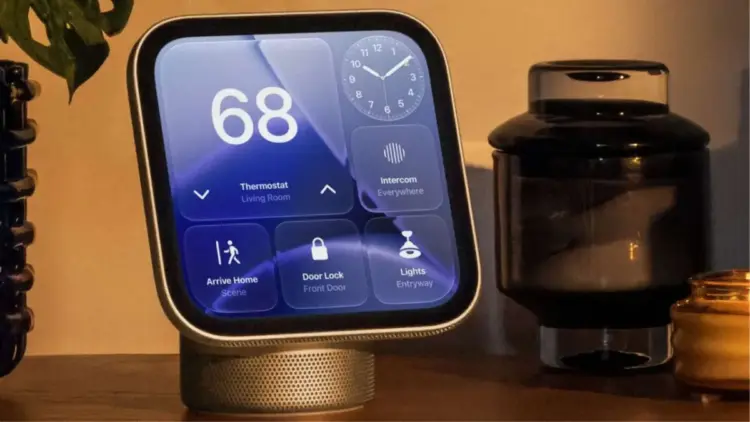
NEW YORK, NY – October 14, 2026 – Apple, the Cupertino-based technology giant, has once again thrown its hat into the fiercely competitive smart home arena with the introduction of HomeView. Priced at USD 299 and slated for a November launch, this 7-inch smart home screen is positioned not as a standalone revolutionary device, but rather as an elegant and simple extension of the iPhone ecosystem, powered by a personalized Siri AI. With HomeView, Apple aims to carve out a distinct niche by emphasizing user trust, data privacy, and seamless integration, directly challenging the established dominance of Amazon’s Echo Show and Google’s Nest Hub in a market it has previously struggled to capture.
The launch, unveiled at a focused event in New York, underscores Apple’s strategic pivot in the smart home sector. Following the lukewarm reception of its HomePod smart speaker in 2018, which garnered only around 6% market share, HomeView represents a refined approach, learning from past missteps and leveraging the unparalleled strength of Apple’s existing user base and its renowned ecosystem. The company is betting that simplicity, elegance, and a deep commitment to user privacy – what some are provocatively calling a "boring" strategy – will ultimately be its secret weapon against its well-entrenched rivals.
Main Facts: Introducing HomeView – Apple’s Latest Foray into the Smart Home
Apple’s new HomeView is a sleek, minimalist 7-inch touchscreen device designed to serve as a central hub for smart home interactions and personal information. Available for USD 299 this November, it’s presented as a natural extension of the iPhone, bringing key functionalities and personalized experiences into the ambient environment of a user’s home.
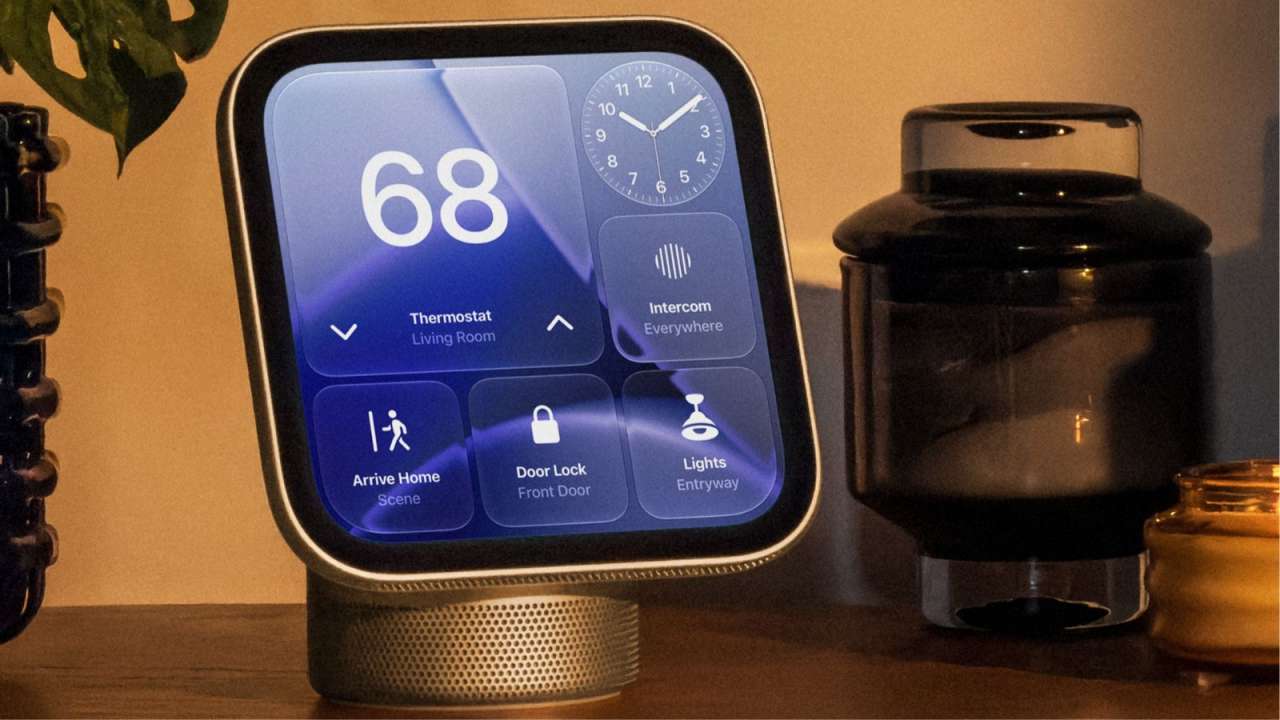
At its core, HomeView is a device focused on elegant utility. It can be effortlessly placed on an aluminium base, designed to blend seamlessly with modern home aesthetics, or conveniently mounted on a wall, offering flexibility in placement. The device integrates advanced camera and voice recognition technologies, enabling it to personalize home screens dynamically for different users. This personalization extends to displaying relevant apps, calendar appointments, and even specific Spotify accounts based on who is interacting with the device.
Crucially, HomeView is primarily controlled by a highly personalized Siri AI. Unlike many smart home devices that store extensive personal data directly on the device or in generalized cloud profiles, HomeView relies on a nearby iPhone for context and sensitive data. This architectural choice is central to Apple’s privacy-first approach, ensuring that personal information like messages, contacts, and detailed calendar entries are not permanently housed on the shared home screen device itself, but rather accessed securely and temporarily from the user’s primary device.
While built-in Apple applications such as FaceTime and Apple Music are readily available and optimized for the HomeView experience, the device’s reliance on the iPhone extends to third-party applications. For instance, accessing a specific Spotify account or other non-Apple services often requires the presence and authentication of a user’s iPhone. This design philosophy reinforces the idea of HomeView as an ancillary device, deeply integrated into the Apple ecosystem, rather than a completely independent smart home hub. Apple’s presentation at the New York event heavily emphasized HomeView’s design principles: simplicity, elegance, and a user experience that prioritizes ease of use and trustworthiness over feature bloat.
Chronology: Apple’s Smart Home Journey and Evolution
Apple’s path into the smart home market has been characterized by ambition, innovation, and learning from challenging market realities. HomeView is not the company’s first attempt to establish a significant presence in the connected home, but it marks a distinct evolution in its strategy.
The HomePod Era: Lessons Learned
Apple’s initial major foray into the smart speaker market began with the launch of the original HomePod in February 2018. Positioned as a premium smart speaker with an emphasis on high-fidelity audio, advanced acoustics, and deep integration with Apple Music and Siri, the HomePod aimed to differentiate itself from the more utilitarian offerings from Amazon and Google. Its primary selling point was superior sound quality, leveraging spatial awareness to adapt audio output to its environment.
However, the HomePod faced significant hurdles. Its initial price point of USD 349 was considerably higher than most competitors, limiting its mass-market appeal. More critically, Siri’s capabilities at the time were widely perceived as less versatile and intelligent compared to Amazon’s Alexa and Google Assistant. While excellent for music playback within the Apple ecosystem, Siri struggled with broader knowledge queries, third-party integrations, and complex smart home commands. This resulted in a limited market share, hovering around 6%, far below Apple’s typical dominance in other product categories.

Apple attempted to address some of these shortcomings with software updates, improving Siri’s functionality and introducing features like intercom capabilities and stereo pairing. The subsequent launch of the HomePod mini in 2020, at a more accessible price point of USD 99, broadened its appeal and introduced Ultra-Wideband (UWB) technology for enhanced spatial awareness and device handoff. Despite these efforts, the HomePod line primarily appealed to existing Apple loyalists deeply invested in the ecosystem, failing to truly disrupt the broader smart speaker market dominated by lower-cost, feature-rich alternatives.
The lessons from HomePod were clear: premium audio alone wasn’t enough, Siri needed to evolve significantly, and a smart home device needed to offer more compelling utility beyond just sound. HomeView represents a strategic shift away from the "audio-first" approach, instead focusing on a visual interface and leveraging the iPhone’s power as its central processing unit, while learning from Siri’s previous limitations.
The Evolving Smart Home Landscape
The smart home industry has undergone rapid transformation over the past decade. Early adopters were drawn to the novelty of voice control and remote management of lights and thermostats. Amazon, with its Echo line, and Google, with its Home/Nest devices, quickly established themselves as frontrunners, creating an ecosystem of compatible devices and services. These companies democratized smart home technology, making voice assistants a common household feature and introducing smart displays that combined visual feedback with voice interaction.

Key trends in this evolving landscape include:
- Ubiquity of Voice Assistants: Siri, Alexa, and Google Assistant have become household names, enabling hands-free control of various devices and services.
- Growing Privacy Concerns: As smart devices collect more data, user anxieties about privacy, data security, and potential surveillance have intensified.
- Interoperability Challenges: The proliferation of devices from different manufacturers led to a fragmented experience. The emergence of industry standards like Matter aims to address this, promising seamless communication between devices regardless of brand. Apple has been a key proponent of Matter through its HomeKit framework.
Apple’s HomeKit, introduced in 2014, has long been its framework for smart home device control, emphasizing security and privacy. While respected for its robust security protocols and tight integration with iOS, HomeKit’s adoption was initially slower due to stringent certification requirements for hardware manufacturers. HomeView is designed to work seamlessly within this HomeKit environment, strengthening Apple’s position as a curator of a secure and cohesive smart home experience.
Supporting Data and Market Analysis
The smart home market is a battleground of giants, each vying for consumer attention and loyalty. Apple’s HomeView enters a space where established players have carved out significant market share, but also one ripe for disruption, particularly around user experience and trust.

The Competitive Arena: Amazon, Google, and Beyond
Market research firms consistently show Amazon and Google leading the smart speaker and smart display categories. Amazon’s Echo Show series and Google’s Nest Hub devices offer a wide array of features, often at competitive price points. For instance, entry-level smart displays from these companies can be found for under $100, while their more advanced models typically range from $150 to $250.
These competitors excel in several areas:
- Ubiquity and Price: Their devices are widely available, often discounted, making them accessible to a broad consumer base.
- Feature Richness: They offer extensive third-party integrations, video calling, streaming services, recipe guides, security camera feeds, and comprehensive smart home control dashboards.
- Deep Service Integration: Amazon leverages its e-commerce platform and Prime services, while Google integrates seamlessly with its search, YouTube, and vast information ecosystem.
However, their weaknesses often revolve around privacy concerns. The sheer volume of data collected by these devices, and the business models built around it, have led to public skepticism and regulatory scrutiny. Users frequently express worries about microphones constantly listening, data being used for advertising, and the potential for unauthorized access. This is precisely the vulnerability Apple aims to exploit.

Apple’s Ecosystem Advantage: A Walled Garden Strategy
HomeView’s most potent weapon is its unparalleled integration with the Apple ecosystem. This "walled garden" approach, often criticized for limiting choice, becomes a significant strength when it comes to user experience, personalization, and security.
The device’s reliance on a "nearby iPhone for context" is a cornerstone of this strategy. This means that instead of HomeView independently processing and storing all personal data, it intelligently pulls relevant information (like upcoming calendar events, specific iMessages, or even which Spotify account to play) from the authenticated user’s iPhone. This architecture has several profound implications:
- Enhanced Privacy: Personal data remains primarily on the user’s iPhone, which is inherently more secure and under the user’s direct control. HomeView acts more as a secure display and interface for that data, rather than a data repository itself.
- Seamless Personalization: When different family members, each with their own iPhone, interact with HomeView, the device can instantly adapt to display their personalized content, thanks to camera and voice recognition identifying the user and linking to their respective iPhones. This avoids the need for complex multi-user profiles on the device itself.
- Leveraging Existing Services: Users gain instant access to their Apple Music libraries, Photo Libraries (perhaps as dynamic ambient displays), FaceTime calls, and iMessage conversations, all presented in a familiar Apple interface.
This deep integration differentiates HomeView from competitors, which often require users to log into various services independently on the smart display, potentially duplicating data or creating separate security vulnerabilities. Apple’s approach consolidates the user’s digital identity through their Apple ID and iCloud, creating a more cohesive and inherently private experience.

The Price Point Debate: Premium Positioning vs. Mass Market Appeal
At USD 299, HomeView is positioned at the higher end of the smart display market, notably more expensive than many comparable offerings from Google and Amazon. This pricing strategy is consistent with Apple’s historical approach across its product lines. The iPhone, despite being consistently priced higher than most Android flagships, continues to dominate the premium smartphone segment globally.
Apple’s belief is that its users are willing to pay a premium for a combination of:
- Design and Build Quality: The "simplicity and elegance" highlighted at its launch implies superior materials and craftsmanship, like the aluminium base.
- Ecosystem Integration: The seamless experience of all Apple devices working together holds significant value for many users.
- Security and Privacy: Apple consistently markets its devices on their superior security and privacy features, which resonates with a segment of the market increasingly concerned about data exploitation.
- Brand Loyalty and Perceived Value: Apple’s strong brand reputation often translates into higher perceived value, better customer support, and strong resale value.
While this pricing may limit HomeView’s mass-market penetration, Apple is clearly targeting its affluent, tech-savvy customer base who prioritize quality, privacy, and an integrated experience. The company believes there is a significant market segment that has been underserved by the current smart home offerings, particularly those who are wary of the privacy implications of more budget-friendly alternatives.

The "Boring" Strategy: Simplicity as a Feature
Apple’s characterization of HomeView as "boring" is a deliberate and sophisticated marketing strategy. In an age where new AI products are often complex, experimental, and sometimes unreliable, Apple is pivoting to simplicity and trustworthiness as core features.
This "boring" strategy implies:
- Reduced Cognitive Load: HomeView is designed to do a few things exceptionally well, rather than attempting to be a jack-of-all-trades. This reduces the mental effort required to learn and use the device.
- Predictable Reliability: Users can expect consistent performance and a familiar experience, free from unexpected bugs or confusing new features that might compromise privacy or functionality.
- Focus on Core Utility: Rather than offering a myriad of experimental AI features, HomeView focuses on practical, everyday tasks: displaying personalized information, facilitating communication (FaceTime, iMessage), and controlling smart home devices.
- Trust through Transparency: By relying on the iPhone for context and emphasizing on-device processing where possible, Apple reinforces its commitment to user privacy, building trust in an era of data breaches and algorithmic opacity.
This approach directly contrasts with the often-overwhelming complexity of current AI products, which can sometimes feel like beta tests released to the public. Apple is betting that a mature, reliable, and private experience will appeal to users fatigued by tech complexity and hungry for products that simply work, without demanding constant attention or raising privacy alarms.

Official Responses and Industry Reception
Apple’s official communication around HomeView has been consistent with its brand ethos, emphasizing a distinct vision for the smart home.
Apple’s Narrative: Focus on Privacy and Personalization
At the New York event, Apple executives articulated a clear narrative for HomeView. The focus was less on raw technological prowess and more on the human element: how the device enhances daily life through subtle, intelligent interactions. They highlighted:
- Seamless Personalization: The ability for HomeView to recognize individual users via camera and voice, and instantly adapt its display to their unique calendar, messages, and music preferences, was a key talking point. This wasn’t just about convenience; it was about making the device feel truly personal, rather than a generic household gadget.
- Unwavering Privacy: The reliance on the iPhone for contextual data and the emphasis on on-device processing for sensitive functions like voice recognition were presented as fundamental architectural choices, not just features. This reinforces Apple’s long-standing position as a privacy champion, aiming to assuage consumer fears about ambient listening and data exploitation.
- Design Elegance and Simplicity: The physical design, from the 7-inch display to the optional aluminium base, was showcased as a testament to Apple’s commitment to aesthetics and intuitive user experience. The "boring" aspect was reframed as a deliberate choice for calm, reliable technology in a chaotic world.
Apple’s messaging positions HomeView not as a competitor to existing smart displays in terms of feature count, but as a superior, more trustworthy alternative for those who value privacy, elegant design, and seamless integration within their Apple ecosystem.

Analyst and Media Reactions
Initial reactions from tech analysts and media outlets have been varied but largely centered around Apple’s strategic differentiation. Many commentators acknowledge the higher price point but understand it within Apple’s premium market strategy.
The "boring" aspect has garnered significant attention. Some analysts view it as a clever way to manage expectations and highlight Apple’s focus on foundational strengths rather than chasing ephemeral trends. "Apple isn’t trying to out-Google Google," noted one tech journalist. "They’re trying to out-trust everyone." Others express skepticism, questioning whether a device that is essentially an iPhone extension, albeit a well-designed one, can truly disrupt a market saturated with more versatile, and often cheaper, alternatives.
The privacy-centric design has been widely praised, with many seeing it as a potential game-changer in a market where trust is often a commodity. However, questions remain about Siri’s ability to compete effectively with Alexa and Google Assistant in terms of sheer breadth of knowledge and third-party integrations, despite Apple’s claims of personalized AI. The success of HomeView will largely depend on whether consumers value the integrated, private, and simple experience enough to justify the premium price and the reliance on an existing iPhone.

Competitor Silence or Subtle Shifts
In the immediate aftermath of such a launch, direct "official responses" from competitors like Amazon and Google are rare. However, their long-term strategies are likely to be subtly influenced. We might see them:
- Emphasizing their own privacy features: While often criticized, both Amazon and Google have made strides in offering privacy controls and transparency. They may double down on these communications.
- Adjusting pricing or bundling: To maintain their competitive edge, they might offer more aggressive pricing or bundle deals for their smart displays.
- Enhancing ecosystem integration: While they lack the tightly controlled ecosystem of Apple, they may seek to improve the seamlessness of their own services and device interactions.
The entry of HomeView signals that the smart display market is still very much in play, and Apple’s unique approach will undoubtedly spur further innovation and competition from all players.
Implications and Future Outlook
HomeView represents more than just a new gadget; it signifies a maturing strategy for Apple in the smart home and ambient computing space. Its success or failure will have significant implications for how we interact with technology in our homes and the future direction of personal AI.

Reshaping the Smart Home Experience
If HomeView succeeds, it could redefine consumer expectations for smart home devices. Its emphasis on simplicity, privacy, and seamless personalization via the iPhone could encourage other manufacturers to rethink their approaches. Instead of standalone, feature-packed hubs, we might see a shift towards more specialized, context-aware "extensions" that leverage the power and security of our primary personal devices.
This could lead to a trend where smart home devices are seen less as independent computing units and more as intelligent interfaces for our existing digital lives. The concept of a "digital anchor" in the home – a device that provides a stable, trusted point of interaction for personalized information and control – could become a new standard.
The Battle for the Digital Living Room
HomeView is a crucial piece in Apple’s broader strategy to dominate the digital living room. Alongside Apple TV, HomeKit, and the potential for future AR/VR devices, HomeView strengthens Apple’s control over the entertainment, communication, and automation aspects of the home. By offering a unified, secure, and aesthetically pleasing ecosystem, Apple aims to make its devices the default choice for every aspect of a user’s digital life, both inside and outside the home. Owning the "gateway" to smart home services is critical for long-term platform dominance, and HomeView positions Apple squarely in that role.

Siri’s Evolving Role
HomeView serves as a critical testbed for a more advanced, personalized, and contextual Siri. By relying on the iPhone for context, Siri on HomeView has the potential to be far more intelligent and proactive than its previous iterations. It can access a richer trove of personal data (securely, via the iPhone) to offer truly personalized suggestions, reminders, and interactions. This could finally allow Siri to catch up to, or even surpass, competitors in specific, highly personalized use cases, moving beyond simple commands to more nuanced, predictive assistance. The emphasis on on-device processing also suggests a future where more AI tasks are handled locally, enhancing both speed and privacy.
Long-Term Vision: An Ambient Apple Experience
Ultimately, HomeView fits into Apple’s long-term vision for ambient computing – a future where technology seamlessly fades into the background, anticipating needs and assisting users without requiring constant explicit interaction. HomeView, with its personalized screens and contextual Siri, represents a step towards this goal.
One can speculate about future iterations: larger HomeView displays integrated into furniture, even deeper integration with Apple Health for wellness monitoring, or enhanced capabilities through future AR/VR devices. The strategy is clear: make Apple’s ecosystem so indispensable, so intuitive, and so trustworthy that it becomes the invisible infrastructure of a user’s entire digital existence, both personal and shared within the home. The "boring" HomeView, far from being uninspired, might just be the quiet, confident foundation for Apple’s next big leap into the future of human-computer interaction.