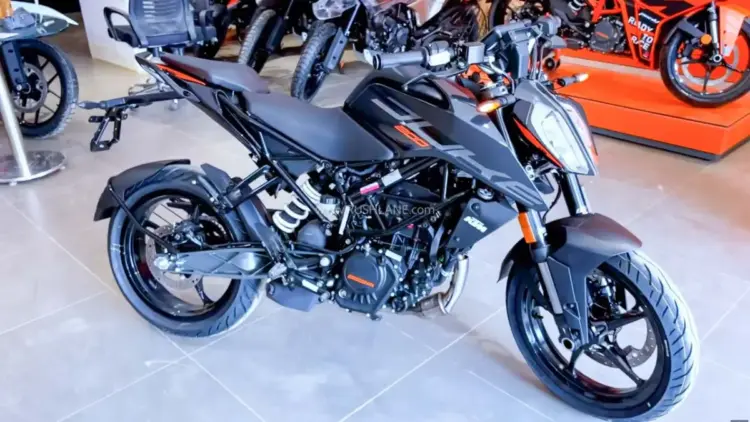
The Indian motorcycling landscape has long been defined by a fierce tug-of-war between economy and performance. However, few brands have influenced this tug-of-war as significantly as KTM. Since its debut in the Indian market, the KTM 200 Duke has served as the gateway for enthusiasts entering the world of high-performance motorcycling. In a surprising and aggressive move, KTM India has updated the 200 Duke for the second time in the 2026 calendar year.
Following a substantial refresh in February 2026, the October 2026 update brings "big bike" electronics to the 200cc segment, effectively narrowing the gap between the entry-level Duke and its more powerful siblings, the 250 and 390 Duke. With units already arriving at dealerships across the country, this update signals a paradigm shift in what riders can expect from a sub-250cc machine.
Main Facts: The October 2026 Overhaul
The latest iteration of the KTM 200 Duke, priced at approximately Rs. 2.09 lakh (Ex-showroom), is not merely a cosmetic exercise. While the previous update focused on hardware and aesthetics, the October refresh is centered on electronic sophistication.
Key Technological Additions:
- Bi-Directional Quickshifter: Perhaps the most significant addition for enthusiasts, the 200 Duke now allows for clutchless upshifts and downshifts. This feature, previously reserved for the 390 Duke and other premium middleweights, enhances the "Ready to Race" DNA by allowing seamless acceleration and smoother deceleration during spirited riding.
- Ride-by-Wire (RbW) Technology: By replacing the traditional cable-actuated throttle with an electronic system, KTM has achieved more precise throttle response. This technology also serves as the foundation for the bike’s new riding modes.
- Ride Modes (Street and Rain): For the first time in the 200 Duke’s history, riders can toggle between engine maps. ‘Street’ mode offers full power and crisp response, while ‘Rain’ mode softens the power delivery and increases electronic intervention to ensure safety on slick surfaces.
- Traction Control (TC): To manage the 25 PS of power on varying grip levels, KTM has integrated a Traction Control system. This is a segment-first for many 200cc competitors and emphasizes KTM’s commitment to safety without compromising performance.
- Updated Switchgear: To navigate these new electronic menus, the right-hand switchgear has been upgraded to the premium unit found on the 390 Duke, offering a more tactile and high-quality feel.
Chronology of the 2026 Updates: A Year of Rapid Evolution
To understand the significance of the current model, one must look at the unprecedented frequency of updates KTM has applied to this platform within a single year.

The February 2026 Update: The Hardware Foundation
Earlier this year, KTM focused on improving the mechanical and ergonomic aspects of the 200 Duke. The goal was to shed weight and improve braking efficiency.
- Braking System: The front disc was upsized to 320 mm (up from 300 mm) and paired with radially mounted calipers for better bite and heat dissipation.
- Weight Reduction: The bike adopted the lighter, high-pressure die-cast alloy wheels from the 390 Duke, significantly reducing unsprung mass and improving flickability.
- Convenience and Comfort: A USB Type-C charging port was integrated, alongside a redesigned rear grab rail and updated pillion footpegs to improve passenger comfort.
The October 2026 Update: The Electronic Revolution
The October update builds upon that hardware foundation. While the February update made the bike "leaner and meaner," the October update makes it "smarter." The introduction of the bi-directional quickshifter and ride-by-wire suggests that KTM is no longer treating the 200 Duke as a "budget" option, but rather as a premium precision tool for younger riders who demand the latest tech.
Supporting Data: Specifications and Performance Metrics
Despite the heavy electronic updates, the 200 Duke retains the mechanical heart that made it a legend.
Powertrain and Performance
- Engine: 199.5cc, single-cylinder, liquid-cooled, DOHC, 4-valve engine.
- Max Power: 25 PS @ 10,000 rpm.
- Max Torque: 19.3 Nm @ 8,000 rpm.
- Transmission: 6-speed gearbox, now augmented by the bi-directional quickshifter.
- Cooling: Large curved radiator to manage the high-compression heat characteristic of KTM engines.
Chassis and Cycle Parts
- Frame: Split-trellis frame (Tubular trellis frame with a bolt-on subframe).
- Front Suspension: WP Apex 43 mm USD (Upside Down) forks. Note: These remain non-adjustable to maintain a price distinction from the 390 Duke.
- Rear Suspension: WP Apex Monoshock, 10-step preload adjustable.
- Tires: 110/70-17 (Front) and 150/60-17 (Rear) radial tires, providing a massive contact patch for a 200cc motorcycle.
- Brakes: 320 mm front disc; 230 mm rear disc with Dual-Channel ABS.
Electronics and Safety
- SuperMoto ABS: Allows the rider to deactivate ABS on the rear wheel, permitting controlled slides—a favorite feature for track enthusiasts.
- Display: The LCD console remains, but it has been updated with tell-tale signs for Traction Control and Ride Mode indicators.
Official Context and Market Strategy
While KTM India has not yet released a formal "Grand Launch" press kit for the October update, the arrival of bikes at dealerships and the briefing of sales staff provide a clear picture of the company’s strategy.

The "Premium Entry" Philosophy
Industry analysts suggest that KTM’s rapid-fire updates are a response to the increasing competition in the 200-250cc space. With the rise of the Bajaj Pulsar NS400Z offering high displacement at a low price, and TVS constantly updating the Apache RTR 200 4V with segment-first features, KTM felt the need to re-establish the 200 Duke as the "tech leader."
By pricing the bike at Rs. 2.09 lakh, KTM is positioning the 200 Duke significantly higher than the Pulsar NS200 or the Apache 200 4V. However, they are justifying this premium by offering a level of electronic sophistication (Quickshifter, RbW, TC) that was unthinkable in this displacement category five years ago.
Visual Identity
The October 2026 models also showcase a shift in KTM’s design language. The new "Black" color scheme is a departure from the traditional "Dark Galvano." It features a stealthier, more monochromatic look, reducing the "Orange" saturation in favor of a mature, aggressive aesthetic. This move is likely intended to appeal to a broader demographic beyond the teenage "squid" stereotype that has sometimes been associated with the brand.
Implications: How the 200 Duke Changes the Market
The 2026 KTM 200 Duke update carries implications that extend far beyond the KTM showroom floor.

1. The Death of the "Basic" 200cc Bike
KTM has effectively raised the floor for the 200cc segment. Moving forward, it will be difficult for competitors to sell premium 200cc bikes without offering at least a basic quickshifter or ride modes. KTM has proved that there is a market for high-spec, small-capacity motorcycles.
2. Bridging the Gap to the 390
Previously, the jump from the 200 Duke to the 390 Duke was massive, both in terms of power and technology. With the inclusion of RbW and TC, a rider who starts on a 200 Duke will now be much better prepared for the electronic suites of larger capacity motorcycles. It creates a more cohesive "ladder" within the KTM brand.
3. Impact on the Used Market
The introduction of such a high-spec 2026 model will likely accelerate the depreciation of older 200 Duke models (pre-2024). Buyers in the second-hand market will now look for the "Electronic Duke," potentially making the older, cable-throttle versions less desirable to tech-savvy youngsters.
4. Safety as a Standard
The inclusion of Traction Control on a 25 PS bike might seem like overkill to some, but it sets a precedent for safety. In a country like India, where road conditions are unpredictable and monsoon rains can make city streets treacherous, the addition of a ‘Rain’ mode and TC on an entry-level performance bike is a commendable move toward reducing two-wheeler accidents.

Conclusion
The 2026 KTM 200 Duke is no longer just a "fast 200." It is a sophisticated, tech-laden machine that challenges the notion that small-displacement bikes must be simple. By integrating a bi-directional quickshifter, ride-by-wire, and traction control, KTM has essentially created a "Mini 390."
For the enthusiast, the Rs. 2.09 lakh price tag represents a significant investment, but one that is offset by a level of rider aid and performance hardware that remains unmatched in its class. As these units begin to roll out of showrooms this October, the competition will undoubtedly be heading back to the drawing board to figure out how to respond to KTM’s latest masterstroke. The "Ready to Race" mantra has never felt more technologically advanced.