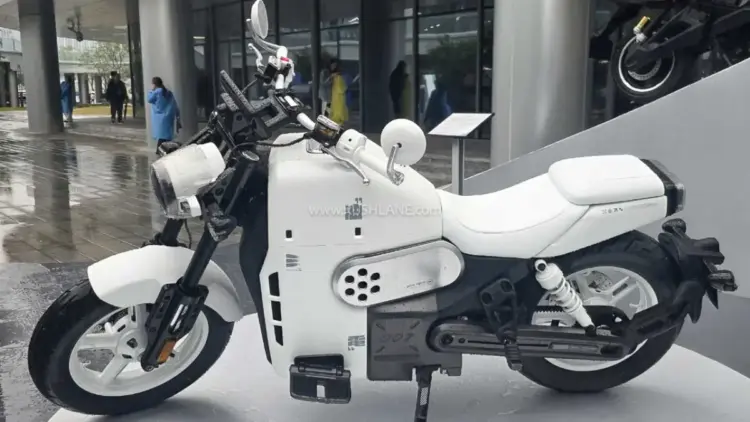
The global automotive landscape is currently witnessing a paradigm shift as traditional four-wheeler manufacturers seek to diversify their portfolios in an increasingly electrified world. Chery Holding Group, a titan in the Chinese automotive industry and a major global exporter of SUVs and passenger cars, has officially signaled its entry into the electric two-wheeler sector. Known primarily for its successful sub-brands such as Omoda, Jaecoo, Jetour, and Exeed, Chery is now leveraging its vast R&D capabilities to conquer the "New Energy" motorcycle market.
Through its commercial vehicle arm, Chery has secured the necessary regulatory approvals from the Chinese government to commence motorcycle production. This move is not merely a peripheral expansion but a calculated entry into the high-end, tech-focused electric mobility space. Under its new dedicated motorcycle brand, Cinnox, Chery has unveiled a roadmap that spans from entry-level urban mobility to groundbreaking, AI-integrated long-distance cruisers.
Main Facts: A Three-Pronged Entry Strategy
Chery’s entry into the two-wheeler market is characterized by a diverse product strategy designed to capture different segments of the market simultaneously. Information sourced from China’s Ministry of Industry and Information Technology (MIIT) and recent corporate technology events reveals three distinct products:
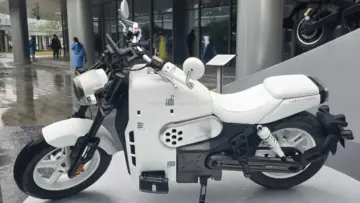
- The Grow C3 EREV Cruiser: Positioned as the world’s first AI-powered Range-Extended Electric Vehicle (EREV) cruiser, this flagship model addresses the primary hurdle of electric motorcycles: range anxiety.
- The Electric Adventure (ADV) Scooter: A rugged, pure-electric scooter designed for both urban commuting and light off-road exploration, boasting a range of up to 200 kilometers.
- The Entry-Level Electric Moped: A low-cost, high-volume moped that likely serves as Chery’s regulatory "foot in the door" for manufacturing licenses while catering to the mass-market commuter segment.
By launching the Cinnox brand, Chery aims to differentiate its two-wheeler offerings from its budget-friendly cars, focusing instead on a lifestyle-oriented, "smart" riding experience.
Chronology: From SUV Dominance to Two-Wheeled Innovation
The journey of Chery into the motorcycle world has been a rapid progression of regulatory maneuvering and technological showcasing.

- Early 2024 – Strategic Planning: Following the global success of the Omoda and Jaecoo brands, Chery’s leadership identified a gap in the premium electric motorcycle market, specifically for vehicles that offer "automotive-grade" technology.
- Q3 2024 – Regulatory Approval: Chery’s commercial vehicle division applied for and received official authorization from the MIIT to produce motorcycles. This is a critical legal milestone in China, where motorcycle manufacturing licenses are strictly controlled.
- October 2024 – The MIIT Filing: A small, retro-styled electric moped appeared in regulatory filings. While aesthetically modest, it confirmed Chery’s intent to begin assembly lines.
- Late October 2024 – The Wuhu Technology Event: At its global headquarters in Wuhu, Chery held a high-profile technology day. Here, it moved beyond the budget moped and showcased the Grow C3 cruiser and the ADV scooter, revealing its true ambitions for the Cinnox brand.
Supporting Data: Technical Specifications and Innovations
The Grow C3: Redefining the Long-Distance Electric Ride
The Grow C3 is the most technologically significant product in Chery’s new lineup. While most electric motorcycles rely solely on battery capacity, the Grow C3 utilizes an EREV (Extended Range Electric Vehicle) powertrain.
- Powertrain Logic: The bike is propelled by an electric motor. However, it carries a compact internal combustion engine that acts exclusively as a generator to recharge the battery while riding.
- AI Integration: Chery describes the bike as "AI-intelligent." This involves an onboard computer that optimizes power delivery based on terrain, predicts maintenance needs, and offers voice-activated controls.
- V2L Capability: Like modern electric SUVs, the Grow C3 features Vehicle-to-Load (V2L) technology. This allows riders to use the bike’s battery to power camping equipment, laptops, or even other electric vehicles, making it a "mobile power station."
- Connectivity: The motorcycle features a full-color digital instrument cluster with Over-the-Air (OTA) update capabilities, ensuring the software remains current throughout the vehicle’s lifespan.
The Electric ADV Scooter: Bridging Segments
Adventure scooters have become a booming segment in Asia and Europe. Chery’s offering in this space focuses on utility and "automotive-style" convenience.
- Range and Charging: The ADV scooter targets a range of 150 km to 200 km on a single charge. Crucially, Chery has stated the bike can be charged using standard automotive EV chargers, potentially allowing it to use the same infrastructure as Chery’s cars.
- Ergonomics: Designed with a tall stance and long-travel suspension, it is intended to handle the varied road conditions found in emerging markets.
The Moped: A Regulatory and Market Learning Tool
The electric moped registered with the MIIT bears a striking resemblance to the classic Yamaha Vino. In the Chinese domestic market, this "cloned" aesthetic is common for low-cost urban transport.
- Cost Efficiency: Estimated to be priced around CNY 2,000 (approx. $280 USD), these units typically utilize lead-acid batteries and hub motors to keep entry barriers low.
- Strategic Purpose: Industry analysts suggest this moped allows Chery’s production teams to calibrate their supply chains for two-wheeler components before scaling up to the complex Grow C3.
Official Responses and Corporate Vision
During the unveiling at the Wuhu technology event, Chery executives emphasized that the Cinnox brand is not just about transportation, but about "ecosystem integration." Chery’s official stance is that the boundaries between cars and motorcycles are blurring in the digital age.
"Chery is no longer just a car company; we are a technology-driven mobility provider," a spokesperson noted during the event. "The Cinnox brand represents our commitment to applying our expertise in battery management, AI, and autonomous systems to the two-wheeler world. We want to solve the range anxiety that has plagued the electric motorcycle industry for years."

By positioning the Grow C3 as an EREV, Chery is directly addressing the skepticism of traditional "petrol-head" riders who find current pure-electric motorcycles impractical for touring. The company’s focus on AI and connectivity also aligns with its "User-Centric" philosophy, which has been the cornerstone of its recent success in international markets.
Implications: How Chery Could Disrupt the Global Market
Chery’s entry into the motorcycle segment carries significant implications for both domestic and international markets.
1. The "Automotive-Grade" Standard
Traditional motorcycle manufacturers often lag behind car manufacturers in terms of infotainment, software integration, and battery management systems. Chery’s ability to port technology from its SUVs (like the Tiggo or Omoda series) into motorcycles gives it a massive competitive advantage in "smart" features.
2. Disruption of the E-Bike Market in Europe and SE Asia
Chery already has a robust distribution network in Southeast Asia, South America, and parts of Europe. It is highly probable that Cinnox products will eventually be sold alongside Omoda and Jaecoo cars. This "one-stop shop" for mobility could entice car buyers to add an electric scooter to their purchase, further increasing Chery’s market share.
3. The Proliferation of EREV Technology
While EREVs are popular in the Chinese car market (led by brands like Li Auto), the technology is virtually non-existent in motorcycles. If Chery’s Grow C3 proves successful, it could force legacy brands like Honda, Yamaha, and BMW to reconsider their electric roadmaps, which currently focus heavily on pure-electric or hybrid systems rather than range extenders.

4. Competitive Pressure on Domestic Rivals
Chery is not the only Chinese automaker looking at two wheels. Great Wall Motor (GWM) recently launched its Souo motorcycle brand with a massive flat-eight engine. However, Chery’s focus on "New Energy" and AI positions it as a more future-proof competitor compared to those sticking to traditional high-displacement internal combustion engines.
Conclusion
Chery’s foray into the electric two-wheeler market via the Cinnox brand marks a bold new chapter for the Wuhu-based manufacturer. By combining a pragmatic approach to regulatory requirements (the moped) with high-tech, innovative solutions for enthusiasts (the Grow C3), Chery is positioning itself as a formidable player in the global shift toward sustainable mobility.
As the Grow C3 and the ADV scooter move toward full-scale production, the industry will be watching closely to see if Chery can replicate its automotive success on two wheels. If the integration of AI, EREV technology, and automotive-grade charging standards resonates with consumers, Chery may very well redefine what a motorcycle can be in the 21st century.