The automotive landscape in India has always been a study in volatility and resilience, but few narratives are as compelling as the current divergence between the Renault-Nissan Alliance partners. As of September 2026, the two brands, which share a manufacturing backbone in Chennai, find themselves on starkly different paths. While Renault is grappling with a period of transition and cooling demand for its legacy portfolio, Nissan is witnessing a meteoric rise, fueled by a long-awaited expansion of its product lineup.
This report provides a comprehensive analysis of the domestic sales performance for both manufacturers in September 2026, the broader quarterly trends of Q3 (July–September), and the strategic roadmap that aims to stabilize Renault and sustain Nissan’s aggressive growth.
1. Main Facts: The Divergence in Domestic Volumes
The sales data for September 2026 reveals a significant shift in the power dynamic between the two alliance partners. Historically, Renault has been the volume leader in India, driven by the success of the Kwid and the Triber. However, Nissan has now closed the gap to a negligible margin, growing its volumes at a rate that suggests a permanent shift in market share.
Renault’s Performance Summary
In September 2026, Renault India registered domestic sales of 3,399 units. This represents a 20.30% year-on-year (YoY) decline compared to the 4,265 units sold in September 2025. Despite the decline, the brand saw some silver linings in sequential (month-on-month) growth for specific models like the Kwid and the newly reintroduced Duster.
Nissan’s Performance Summary
Nissan India emerged as the standout performer of the month, recording 3,300 units. This is a staggering 99.76% YoY growth from the 1,652 units sold in the same month previous year. This near-doubling of volumes is attributed almost entirely to the brand’s transition from a single-product entity (the Magnite) to a multi-model player with the introduction of the Gravite and Tekton.
2. Chronology: From Stagnation to Portfolio Expansion
To understand the September 2026 figures, one must look at the strategic decisions made by both companies over the preceding 24 months.
- 2024–2025: The "Single-Model" Struggle: For much of 2024 and early 2025, Nissan relied solely on the Magnite compact SUV. While the Magnite was a critical success, the lack of variety limited Nissan’s ceiling. Conversely, Renault’s aging lineup—Kwid, Triber, and Kiger—began to face stiff competition from newer micro-SUVs and updated premium hatchbacks from rivals.
- Late 2025: The Rebirth of the Duster: Renault officially brought back the Duster nameplate in its third-generation avatar. While early shipments were modest, it signaled Renault’s intent to move upmarket.
- Early 2026: Nissan’s Product Offensive: Nissan launched the Gravite (a mid-size SUV) and the Tekton (a premium crossover/lifestyle vehicle). These models were designed to leverage the CMF-B platform, providing a more premium experience than the CMF-A based Magnite.
- Q3 2026 (The Current Period): The impact of these launches has fully materialized. Nissan is now reaping the rewards of a diversified portfolio, while Renault is in the midst of "refreshing" its core models (like the Triber Turbo) to regain lost ground.
3. Supporting Data: Model-Wise Sales Breakdown
Renault: The Triber Dependency
Renault’s sales remain heavily anchored by the Triber, which continues to be India’s most affordable and versatile seven-seater.

- Triber: Sold 1,743 units in September 2026, accounting for a massive 51.28% of Renault’s total domestic sales. Its value proposition remains unmatched, though it faces internal competition from newer variants.
- Kiger: The sub-four-metre SUV saw a sharp decline, selling only 614 units, down 47.34% from 1,166 units in September 2025. The Kiger is currently navigating a highly saturated segment dominated by the Tata Nexon, Maruti Brezza, and its own cousin, the Nissan Magnite.
- Kwid: The entry-level hatchback showed surprising resilience with 577 units, a 12.70% YoY increase and a 35.45% month-on-month (MoM) jump. This suggests that demand at the bottom of the pyramid remains steady for established brands.
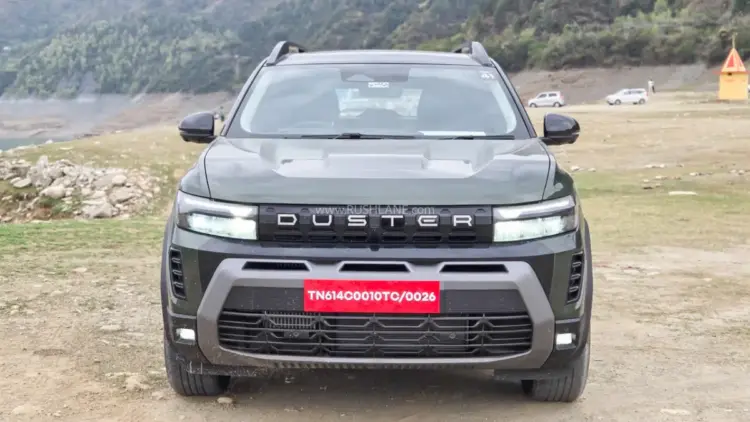
- Duster: The new-gen Duster contributed 465 units. While the number seems low compared to the "glory days" of the original Duster, it represents a 14.53% sequential increase from August’s 406 units, indicating a gradual ramp-up in production and market acceptance.
Nissan: The Rise of the New Guard
Nissan’s strategy of moving beyond the Magnite has paid off handsomely, with the new models now contributing more than half of the brand’s total volume.
- Magnite: Remains the flagship volume driver with 1,502 units, making up 45.52% of the total. Its performance has remained remarkably stable YoY, proving its longevity.
- Gravite: This mid-size SUV is the real success story, recording 1,389 units in September. It finished just 113 units behind the Magnite, suggesting it could soon become the brand’s top seller.
- Tekton: A more niche, premium offering, the Tekton sold 409 units. While it saw a 16.70% MoM decline from August (491 units), it provides Nissan with the necessary margins and brand prestige in the upper-mid segment.
Quarterly Performance (Q3 2026)
Looking at the July–September window, the shift is even more pronounced:
- Renault Q3: 9,534 units (Down 3.26% YoY).
- Nissan Q3: 11,244 units (Driven by the Gravite and Tekton contributing 60.3% of total quarterly sales).
- The Delta: Nissan finished the quarter 1,710 units ahead of Renault, a historic reversal for the alliance in India.
4. Official Responses and Manufacturing Context
While official spokespersons from Renault-Nissan Automotive India Private Limited (RNAIPL) typically maintain a unified front, the internal focus is clearly on "portfolio optimization."
The alliance’s manufacturing facility in Oragadam, Chennai, is currently undergoing a phased upgrade. This facility is the global hub for the CMF-B platform, which underpins the new Duster and Nissan’s Gravite.
Official Stance (Synthesized):
"The alliance is committed to a multi-fuel strategy for the Indian market. While the transition from older platforms to the new CMF-B architecture results in temporary volume fluctuations, the growth seen in Nissan’s new launches validates our product-led strategy. For Renault, the focus is now on introducing high-performance turbo-petrol engines and hybrid powertrains to meet the evolving demands of the Indian consumer."
The introduction of the 1.0-litre turbo-petrol Triber is a direct response to customer feedback regarding the vehicle’s performance under full load. Similarly, the Duster Hybrid is being positioned as a premium alternative to diesel SUVs, aiming to capture the environmentally conscious buyer.
5. Future Implications: Pipeline Power and Market Outlook
The sales figures for September 2026 are merely a snapshot of a much larger transformation. The next 12 to 24 months will see an unprecedented flurry of activity from both brands.

Renault’s Recovery Roadmap
Renault is betting heavily on alternative fuels and segment expansion:
- CNG Dominance: A Triber turbo-CNG is currently in testing (spied recently in Pune). This model will feature innovative underbody twin tanks to preserve luggage space—a common complaint in CNG vehicles. A Duster CNG is also reportedly in development.
- The Seven-Seat SUV: A long-wheelbase, seven-seat Duster is slated for a 2027 launch. This will allow Renault to compete with the Mahindra XUV700 and Tata Safari.
- The Bridger SUV: To fill the gap between the Kiger and the Duster, Renault is preparing a sub-four-metre "Bridger" SUV, which aims to reclaim the volume lost by the Kiger.
Nissan’s Expansion Strategy
Nissan is not resting on its recent laurels. The brand is looking to solidify its premium positioning:
- The Tekton 7-Seater: Expected in early 2027, this model will feature radar-based ADAS and premium interiors, targeting the family-oriented luxury segment.
- Electric Ambitions: While not reflected in the September 2026 domestic ICE (Internal Combustion Engine) sales, Nissan is reportedly fast-tracking a localized EV based on the Magnite platform to compete with the Tata Punch EV.
Industry Implications
The Renault-Nissan story in 2026 highlights a critical lesson for the Indian auto industry: Product freshness is the only hedge against market stagnation.
Renault’s decline in September, despite having a larger overall presence, shows that even reliable "warhorses" like the Triber and Kiger need constant innovation to fight off newer entrants. Nissan’s success, on the other hand, proves that there is immense "brand equity" waiting to be unlocked if a manufacturer provides the right products in the right segments.
As we move toward 2027, the battle will shift from "volumes" to "powertrains." The success of Duster’s hybrids and Triber’s turbo-CNG units will determine if Renault can reclaim its crown, or if Nissan’s diversified SUV portfolio will make it the new dominant partner in the Chennai-based alliance. For now, Nissan holds the momentum, but with the Duster ramping up and new models in the wings, Renault is far from out of the race.