Every time a vehicle traverses a road, it leaves behind more than just exhaust fumes. As tires wear down against the asphalt, they shed microscopic particles—a cocktail of synthetic rubber, carbon black, and specialized chemical additives. Among these is a compound known as 6PPD, designed to ensure tire longevity. However, when this chemical meets the atmosphere and the rain, it transforms into one of the most potent aquatic toxins known to science.
While the United States and Europe have begun grappling with the devastating impact of this chemical on fish populations, India—now the world’s third-largest automobile market—remains in a state of data-deficient vulnerability. Experts warn that as India’s roads become increasingly crowded, its rivers and urban waterways may be facing a silent, unmonitored mass extinction event.
Main Facts: The Chemistry of a Continental Contaminant
The chemical at the center of this environmental mystery is 6PPD (N-(1,3-dimethylbutyl)-N′-phenyl-p-phenylenediamine). For decades, it has been the "gold standard" additive in the global tire industry. Its primary function is to act as an antioxidant and antiozonant. By reacting with ground-level ozone, 6PPD prevents the rubber from cracking and degrading, significantly extending the lifespan of tires and ensuring vehicle safety.
The danger, however, lies not in the 6PPD itself, but in its transformation. When 6PPD is exposed to ozone at the tire’s surface, it undergoes a chemical reaction to form 6PPD-quinone (6PPD-Q).
Key Characteristics of 6PPD-Q:
- Acute Toxicity: It is identified as the second most toxic chemical to aquatic life ever recorded, trailing only a few highly regulated pesticides.
- Ubiquity: Because tire wear is a universal byproduct of motorized transport, 6PPD-Q is found in road dust, urban air, and stormwater runoff globally.
- Lethality: In sensitive species, even nanogram-per-liter concentrations can cause rapid death.
In India, the tire market is expanding in lockstep with the nation’s burgeoning automotive industry. Yet, despite the massive volume of tires produced and discarded annually, there is currently no centralized monitoring of 6PPD-Q levels in Indian road dust, stormwater drains, or freshwater ecosystems.
Chronology: From Mystery Deaths to Chemical Discovery
The identification of 6PPD-Q as an environmental hazard was not an overnight discovery; it was the culmination of a twenty-year scientific detective story.

1. The "Urban Runoff Mortality Syndrome" (Pre-2020)
For two decades, biologists in the Pacific Northwest of the United States observed a baffling phenomenon. In urban creeks, up to 90% of Coho salmon returning to spawn would die suddenly following heavy rainstorms. These fish exhibited symptoms of respiratory distress and loss of equilibrium, dying within hours. Scientists initially investigated common culprits: water temperature, pathogens, low dissolved oxygen, and heavy metals like zinc. None of these factors consistently explained the mass die-offs.
2. The 2020 Breakthrough
In December 2020, a landmark study published in the journal Science by researchers from the University of Washington and Washington State University finally identified the "smoking gun." By analyzing the complex chemical mixture in stormwater runoff, they isolated 6PPD-quinone. Toxicity tests confirmed that this byproduct was the specific agent causing the "Urban Runoff Mortality Syndrome."
3. Global Recognition and the 2022 Air Study
Following the 2020 revelation, researchers worldwide began looking for the compound. In 2022, a global air-monitoring study utilized passive samplers to quantify tire-derived chemicals in 18 megacities. While 6PPD-Q data for India was not explicitly quantified in that specific report, the study found that Kolkata ranked first globally for concentrations of diphenylguanidine (another tire-related chemical), signaling that Indian urban air is heavily saturated with tire wear particles.
4. The Current Indian Context (2024-2025)
While Western nations are now seeing legal petitions to ban 6PPD in tires, India is experiencing its greatest automotive boom in history. Tire production has surged, and the use of "crumb rubber" (shredded old tires) in artificial turf for sports fields has become a growing trend in Indian urban centers, creating new pathways for 6PPD-Q exposure.
Supporting Data: The Scale of India’s Tire Footprint
The potential for 6PPD-Q contamination in India is directly proportional to its explosive growth in vehicle ownership and tire manufacturing.
Automotive and Tire Production Growth
India has recently surpassed Japan to become the world’s third-largest automobile market. According to the Society of Indian Automobile Manufacturers (SIAM), the 2023-24 fiscal year saw a record growth of 10.4% in automobile wholesales.

- Tire Production: The Automotive Tyre Manufacturers’ Association (ATMA) India reported a 21% rise in tire production in 2022, followed by a 6% increase in 2023.
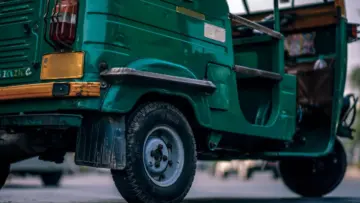
- Market Composition: Unlike many Western nations where passenger cars dominate, India has a massive fleet of two-wheelers and three-wheelers, all of which contribute to tire wear and the subsequent shedding of 6PPD into the environment.
The Artificial Turf Factor
Beyond the roads, the "second life" of tires poses a significant risk. Scrap tires are often shredded into "crumb rubber," used as infill for artificial turf lawns and sports fields to provide cushioning. Research in the U.S. has already detected 6PPD and 6PPD-Q in these fields. In India, the artificial turf market is expanding rapidly, often in schools and residential complexes, potentially exposing not just aquatic life but also human populations to these particles in high-density urban areas.
The Kolkata Data Point
A 2022 study published in Environmental Science & Technology Letters provided a chilling hint of the problem. By monitoring the air in 18 megacities, researchers found that Kolkata had the highest levels of certain tire-wear markers. This suggests that the sheer density of traffic and the specific environmental conditions in Indian metros create a high concentration of tire-derived pollutants that eventually wash into the Ganges and other major river systems.
Official Responses and Expert Insights
The lack of data in India is not necessarily due to a lack of risk, but rather a lack of focused monitoring and awareness.
Professor N. Jayaraman, Chair of the Department of Organic Chemistry at the Indian Institute of Science (IISc) in Bangalore, notes that 6PPD is the "goldilocks" chemical of the industry—it works so well that almost every manufacturer uses it. "To the best of our knowledge, no scientific data exists on the 6PPD-Q levels in Indian road dust, stormwater, or water bodies," Jayaraman says. He attributes this to the fact that the issue is relatively new on the global stage, and India’s focus has been diverted by the COVID-19 pandemic and other geopolitical concerns.
Paul Sharp, a chemist and Professor Emeritus at the University of Missouri, emphasizes the borderless nature of the toxin. Speaking to Mongabay-India, Sharp explained that 6PPD-Q is "ubiquitous all over the motorized world." He warns that because the chemical makes its way into water bodies during rainstorms, it leads to "rapid and mass death of aquatic species," often before authorities even realize a spill or contamination has occurred.
Currently, Indian regulatory bodies such as the Central Pollution Control Board (CPCB) have not yet established specific standards or monitoring protocols for 6PPD-Q. The chemical remains an unregulated additive, despite its proven toxicity in other geographical contexts.

Implications: A Perfect Storm for Environmental Degradation
The implications of 6PPD-Q contamination in India are compounded by the country’s unique infrastructure and climatic challenges.
1. The Stormwater Management Crisis
Most Indian cities lack a dedicated Stormwater Management (SWM) system. In many urban centers, stormwater drains are inadvertently used to carry untreated sewage because of gaps in the sewage network. When heavy monsoon rains hit, this "mixed" runoff—carrying both domestic waste and toxic road dust—flows directly into rivers, lakes, and ponds without any filtration. This creates a direct pipeline for 6PPD-Q from the streets to the heart of aquatic ecosystems.
2. Erratic Rainfall Patterns
Climate change has made Indian rainfall patterns increasingly erratic and intense. Short bursts of extreme rain are more effective at "scouring" roads and carrying high concentrations of tire wear particles into water bodies in a "first flush" effect. This sudden spike in 6PPD-Q concentration is exactly what triggers mass mortality events in fish.
3. Threats to Biodiversity and Food Security
While the focus in the U.S. has been on salmon, 6PPD-Q is known to affect a wide range of aquatic species. India’s rivers are home to thousands of endemic fish species and the endangered Gangetic Dolphin. If Indian fish species share the same sensitivity as the Coho salmon, the impact on riverine biodiversity and the livelihoods of millions of people who depend on inland fisheries could be catastrophic.
4. The Regulatory Vacuum
Professor Jayaraman argues that India’s weaker law enforcement and lack of effective regulatory bodies for freshwater protection make the 6PPD-Q issue particularly dangerous. "Our water bodies are already in poor shape," he states, emphasizing that without urgent policy measures to regulate 6PPD in the tire industry, the degradation of India’s lakes and rivers will only accelerate.
Conclusion
The story of 6PPD-Q in India is currently one of "unknown unknowns." The scientific community has identified the killer, the automotive industry provides the means, and the lack of infrastructure provides the opportunity. Until India begins systematic monitoring of its road dust and urban runoff, the true cost of its motorized expansion will remain hidden beneath the surface of its darkening waters. The transition to safer tire additives is not just a matter of industrial innovation; for India’s aquatic life, it may be a matter of survival.