The Indian automotive landscape in late 2026 continues to be a theater of intense competition, shifting consumer preferences, and strategic pivots. Perhaps nowhere is this more evident than in the performance of the Renault-Nissan Alliance. As the industry parses the domestic sales data for September 2026, a clear narrative of "contrasting fortunes" has emerged. While Renault is grappling with a double-digit year-on-year decline despite the return of its iconic Duster nameplate, Nissan has effectively doubled its volume, riding a wave of success generated by its expanded SUV portfolio.
This report provides a comprehensive analysis of the sales figures, the performance of individual models, the quarterly trends, and the strategic roadmap that both brands are navigating as they aim to solidify their presence in one of the world’s most volatile car markets.
1. The Core Findings: September 2026 Sales Overview
The headline figures for September 2026 reveal a stark divergence between the two partners, who share a manufacturing facility in Oragadam, Chennai, but currently find themselves at different stages of their respective product life cycles.
Renault: A Period of Consolidation and Transition
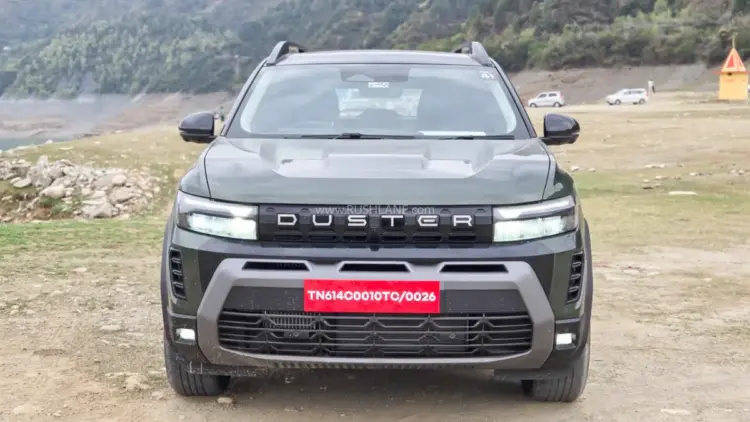
Renault India reported domestic sales of 3,399 units in September 2026. Compared to the 4,265 units sold in September 2025, this represents a significant 20.30% year-on-year (YoY) decline. Despite the brand’s efforts to refresh its lineup and re-introduce the Duster, the volume remains heavily dependent on its budget-friendly MPV, the Triber. The decline suggests that Renault’s older models, specifically the Kiger, are facing stiff competition from newer entrants in the sub-four-meter SUV segment.
Nissan: The Resurrection via Product Expansion
In contrast, Nissan India has staged a remarkable comeback. The brand recorded 3,300 units in September 2026, a staggering 99.76% growth compared to the mere 1,652 units sold in the same month the previous year. For years, Nissan was perceived as a "one-trick pony" in India, relying almost exclusively on the Magnite compact SUV. However, the introduction of the Gravite and the Tekton has fundamentally altered Nissan’s market position, allowing it to compete in multiple segments simultaneously.
2. Chronology: From "One-Model Brands" to Diversified Portfolios
To understand the September 2026 results, one must look at the events leading up to this month.
- Late 2024 – Early 2025: Both brands recognized that relying on a single high-volume model (Kwid/Triber for Renault and Magnite for Nissan) was unsustainable. The "Alliance 2.0" strategy was put into motion, involving a multi-billion dollar investment to bring new CMF-B platform vehicles to India.
- Late 2025: Nissan launched the Gravite, a mid-size SUV designed to challenge the dominance of the Hyundai Creta and Maruti Suzuki Grand Vitara.
- Early 2026: Renault officially brought back the Duster nameplate, built on a modern global platform with hybrid powertrain options.
- Mid-2026: Nissan introduced the Tekton, a premium crossover aimed at the lifestyle segment. Simultaneously, Renault updated the Triber with a 1.0-litre turbo-petrol engine to address performance concerns.
- September 2026: The market sees the full impact of these launches, with Nissan reaping immediate volume rewards while Renault works to scale up its new offerings.
3. Supporting Data: Detailed Model-Wise Performance
Renault’s Sales Breakdown: The Triber Dependency
The Triber remains the undisputed "breadwinner" for Renault, but the decline in other models highlights a need for a more balanced portfolio.

| Model | Sept 2026 Sales | Sept 2025 Sales | YoY Growth | MoM Growth (vs Aug 2026) |
|---|---|---|---|---|
| Triber | 1,743 | – | – | – |
| Kiger | 614 | 1,166 | -47.34% | – |
| Kwid | 577 | 512 | +12.70% | +35.45% |
| Duster | 465 | 0 (New) | N/A | +14.53% |
| Total | 3,399 | 4,265 | -20.30% | – |
Analysis of Renault Models:
- Triber: Accounting for 51.28% of the brand’s total sales, the Triber’s unique value proposition as an affordable 7-seater continues to resonate with large families.
- Kiger: The 47.34% drop is the most concerning metric for Renault. It suggests that the Kiger is losing ground to the updated Nissan Magnite and newer competitors like the Tata Punch and Hyundai Exter.
- Kwid: Interestingly, the Kwid showed resilience with a 12.70% YoY growth. This indicates that there is still a baseline demand for entry-level hatchbacks, particularly in Tier-2 and Tier-3 cities where affordability is paramount.
- Duster: While 465 units may seem modest for a legendary nameplate, the 14.53% month-on-month (MoM) increase suggests a positive reception. Renault appears to be taking a "quality over quantity" approach with the new Duster, focusing on higher-margin hybrid variants.
Nissan’s Sales Breakdown: The Power of Three
Nissan’s growth is a direct result of moving from a single-model strategy to a three-model offensive.
| Model | Sept 2026 Sales | Share of Total | MoM Growth |
|---|---|---|---|
| Magnite | 1,502 | 45.52% | – |
| Gravite | 1,389 | 42.09% | – |
| Tekton | 409 | 12.39% | -16.70% |
| Total | 3,300 | 100% | – |
Analysis of Nissan Models:
- Magnite: It remains the anchor, contributing nearly half of Nissan’s sales. Its value-for-money positioning remains its strongest asset.
- Gravite: This is the "breakout star" for Nissan. Selling 1,389 units—just 113 units shy of the Magnite—proves that Nissan can successfully compete in the premium mid-size SUV space.
- Tekton: While it saw a 16.70% decline from August (491 units), it serves as a crucial niche player, adding premium appeal to the showroom floor.
4. Quarterly Performance (Q3: July–September 2026)
When zooming out to the quarterly view, the shift in momentum becomes even more apparent.
- Renault Q3: Recorded 9,534 units, a slight 3.26% decline from the 9,855 units in Q3 2025. The Duster’s contribution (1,383 units for the quarter) helped prevent a much steeper crash, offsetting the Kiger’s continued slide.
- Nissan Q3: Recorded 11,244 units. Remarkably, the Magnite’s quarterly volume (4,459 units) remained virtually flat compared to last year (4,456 units). This means the entirety of Nissan’s massive growth came from the Gravite (4,215 units) and Tekton (2,570 units). These two new models now account for 60.3% of Nissan’s quarterly sales.
For the first time in several years, Nissan has finished a quarter ahead of Renault in the Indian market, leading by 1,710 units.
5. Strategic Implications and Official Outlook
While official press releases from the Alliance often emphasize "synergy," the internal dynamics are clearly shifting. The "Alliance 2.0" plan for India is now in full swing, and the focus has shifted toward three pillars: SUV-ification, Electrification (Hybrids), and Alternative Fuels (CNG).
The SUV Pivot
Both brands have realized that the Indian market is no longer driven by hatchbacks. Renault’s decision to revive the Duster and Nissan’s introduction of the Gravite are direct responses to the "SUV craze." The data shows that the mid-size SUV segment (where Duster and Gravite reside) offers higher margins and more stable demand than the entry-level segment.

The Technology Gap: Hybrid vs. Turbo
Renault is betting heavily on the Duster Hybrid to attract eco-conscious buyers who aren’t ready for full EVs. Meanwhile, the Triber has finally received the much-awaited 1.0-litre turbo-petrol engine, which should help it compete more effectively against the Maruti Suzuki Ertiga.
The CNG Opportunity
Renault is preparing a major offensive in the CNG space. A Triber Turbo-CNG featuring "underbody twin tanks" is currently in testing. This technology is crucial as it allows for CNG efficiency without sacrificing the boot space—a common complaint among Indian MPV buyers. A Duster CNG is also reportedly under development, which would be a first for the mid-size SUV segment in India.
6. Looking Ahead: The 2027 Roadmap
The sales figures of September 2026 are merely a snapshot of a larger transformation. The road to 2027 looks packed with launches that could further disrupt the rankings.
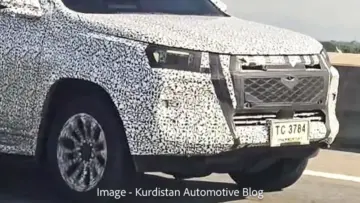
- Renault 7-Seater Duster (2027): Spied testing in Chennai, this model will target the Mahindra XUV700 and Tata Safari. It represents Renault’s move into the premium family SUV space.
- Nissan Tekton 7-Seater (2027): Nissan will follow a similar path, using the Tekton platform to create a larger, three-row SUV equipped with radar-based ADAS and premium features.
- The "Bridger" SUV: Renault’s upcoming sub-four-meter SUV (codenamed Bridger) is expected to sit between the Kwid and the Kiger, potentially replacing the aging Kiger or acting as a more rugged alternative to it.
7. Conclusion: A Critical Juncture
The September 2026 sales data serves as a wake-up call for Renault and a validation for Nissan.
For Renault, the message is clear: the brand cannot survive on the Triber alone. While the Duster’s return is a step in the right direction, the steep decline of the Kiger suggests that the brand needs to refresh its core volume drivers more frequently. The upcoming CNG and 7-seater variants will be vital to reclaiming lost market share.
For Nissan, the strategy of aggressive expansion has paid off. By diversifying its portfolio, it has insulated itself from the fluctuations of any single segment. The Gravite has proven that Indian consumers are willing to buy premium Nissans if the product is right.
As both brands continue to utilize their shared Chennai plant to its full capacity, the real winner of this "Alliance 2.0" strategy is the Indian consumer, who now has access to a wider array of globally-engineered, locally-manufactured vehicles ranging from budget MPVs to sophisticated hybrid SUVs. The battle for the final quarter of 2026 will likely hinge on how well these brands can manage their supply chains and capitalize on the upcoming festive season demand.