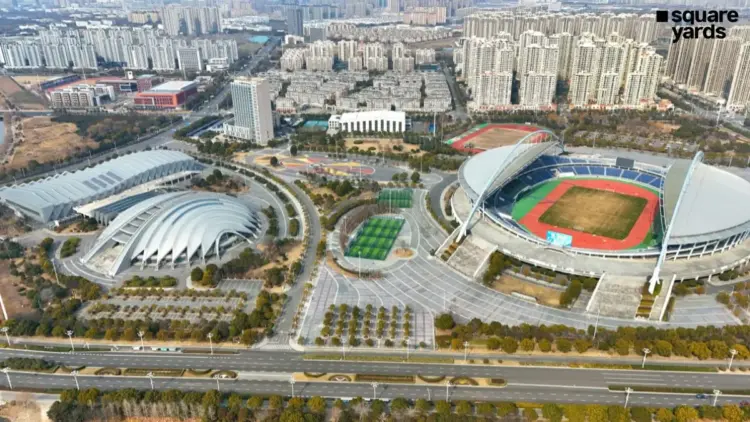
The landscape of Noida’s real estate market has reached a pivotal turning point as the Noida Authority officially approved the revised layout plan for the ambitious 300-acre Sports City project in Sector 150. This decision marks the end of a prolonged period of regulatory uncertainty, breathing new life into one of the most premium residential corridors along the Noida-Greater Noida Expressway. By establishing a clear framework for land use and infrastructure development, the approval sets the stage for a massive influx of investment and the resumption of long-delayed construction milestones.
The revised plan is not merely a bureaucratic update; it represents a fundamental commitment to a "sports-first" urban development model. Under the new guidelines, the 300-acre expanse is strictly partitioned to ensure that the "Sports City" nomenclature is backed by physical infrastructure. Specifically, 70% of the total land area is reserved exclusively for world-class sports facilities. Residential components are capped at 29.5%, while a modest 0.5% is designated for commercial use. This distribution aims to prevent the over-densification of the sector while providing residents with an unparalleled lifestyle centered on health, wellness, and open spaces.
Core Facts of the Approval: A Vision for Integrated Living
The approval of the revised layout for Plot 2 in Sector 150 is the result of rigorous technical scrutiny. The plan, meticulously prepared by Skyline Architectural Consultant, underwent a comprehensive vetting process by the Sports Authority of India (SAI). This involvement of a national-level sporting body underscores the Authority’s intent to ensure that the sports infrastructure meets professional standards, rather than being a secondary amenity to residential towers.
Key highlights of the approved layout include:
- Total Area: 300 Acres of prime real estate.
- Sports Infrastructure (70%): This includes plans for stadiums, multi-purpose halls, and specialized training academies.
- Residential Development (29.5%): A controlled footprint for high-end apartments and luxury housing.
- Commercial Utility (0.5%): Essential retail and business services to support the local population.
Furthering this progress, the Noida Authority also approved the specific building plans for Plot SC-02 on June 9, 2026. This move provides a direct green light for developers to proceed with vertical construction on this specific parcel, signaling a transition from the planning phase to active execution.
The Chronology of Progress: From Vetting to Building Clearances
The journey toward this approval has been a complex exercise in balancing developer interests with regulatory compliance. For years, Sector 150 was marketed as the "greenest sector" in Noida, but several projects faced hurdles due to the lack of finalized layout plans and environmental clearances.
The timeline reached a significant milestone in mid-2026. Following the vetting by SAI and the submission of revised architectural designs, the Noida Authority initiated a phase of conditional approvals. This phased approach allows the Authority to monitor progress closely, ensuring that the sports infrastructure is developed in tandem with—rather than after—the residential units.
The issuance of conditional occupancy certificates (OCs) for four major housing projects—developed by Brick Rise Developers, Ace Infracity, Land Kart Builders, and Samridhi Infra Square—represents a critical win for homebuyers. These certificates are subject to specific conditions related to the completion of common facilities and adherence to the revised layout, but they offer a clear path for residents to finally move into their homes.
Market Dynamics: Sector 150 Property Rates and Growth Trends
Despite the regulatory pauses of the past, Sector 150 has maintained its status as a high-value destination. Data from Square Yards indicates a steady upward trajectory in property valuations. As of June 2026, the average asking price in Sector 150 stands at approximately Rs 12,300 per sq. ft.
A quarter-on-quarter (QoQ) analysis reveals a consistent growth pattern:
- December 2025: Rs 12,050 per sq. ft.
- March 2026: Rs 12,200 per sq. ft.
- June 2026: Rs 12,300 per sq. ft. (a 1.03% QoQ increase).
The market is currently split between ready-to-move and under-construction inventory. Ready-to-move properties command an average rate of Rs 12,184 per sq. ft., while under-construction projects, which often feature more modern specifications and amenities under the new layout, are priced slightly higher at an average of Rs 12,600 per sq. ft. This premium on under-construction assets suggests that buyers are pricing in the future value of the completed Sports City infrastructure.
Comparative Analysis of Nearby Sectors
To understand the value proposition of Sector 150, one must look at the surrounding residential landscape. The Noida-Greater Noida Expressway corridor features several distinct micro-markets with varying price points and growth rates.
| Nearby Sector | Average Asking Price (per sq. ft.) | Reported Growth/Change |
|---|---|---|
| Sector 150 | Rs 12,300 | +1.03% (QoQ) |
| Sector 151 | Rs 11,650 | +47.08% (Annual/Reported) |
| Sector 152 | Rs 12,850 | +0.31% (QoQ) |
| Sector 146 | Rs 15,550 | +0.1% (QoQ) |
| Sector 78 | Rs 13,550 | +4.52% (Reported) |
| Sector 79 | Rs 15,700 | +6.68% (Reported) |
Sector 146 and Sector 79 remain the most expensive pockets in this comparison, largely due to their proximity to established metro links and commercial hubs. However, the massive 47.08% spike in Sector 151 highlights a "spillover effect," where investors seek more affordable entry points adjacent to the high-value Sector 150.
Strategic Connectivity: The Expressway Synergy and Regional Impact
The long-term residential appeal of Sector 150 is inextricably linked to its strategic location at the confluence of major transit arteries. The sector acts as a gateway between Noida and the rapidly developing regions of Greater Noida and the Yamuna Expressway.
The Noida-Greater Noida Expressway
This 24-kilometer corridor is the lifeline of the region, connecting Sector 150 to major employment hubs, IT parks, and educational institutions. For residents, this means reduced commuting times to commercial centers like Sector 125, 126, and 142. The expressway also provides a seamless connection to the DND Flyway, making South Delhi accessible within 30 to 40 minutes.
The Yamuna Expressway and Jewar Airport
Located just 5 km from the nearest entry point of the Yamuna Expressway, Sector 150 is perfectly positioned to benefit from the "Jewar Effect." The upcoming Noida International Airport at Jewar is expected to transform the region into a global logistics and aviation hub. This proximity offers residents steady transit toward the wider Yamuna Expressway corridor, which is slated for massive industrial and commercial expansion. For investors, the dual connectivity to both expressways makes Sector 150 a "blue-chip" asset in the Noida real estate portfolio.
Official Procedures: Transparency through Public Consultation
The Noida Authority has adopted a transparent approach toward the remaining parcels within the Sports City framework. Beyond the immediate approvals for Sector 150, revised plans have been submitted for other significant developments:
- Logix Infra Developers has submitted a revised plan for their holdings in Sector 150.
- 3C Green Developers has put forward a proposal covering the Sports City components in Sectors 78 and 79.
- ATS Homes has submitted a proposal for Sector 152.
In a move to ensure democratic urban planning, the Authority has invited public objections and suggestions on these proposals. This consultative phase allows homebuyers and local residents to voice concerns regarding density, environmental impact, and the adequacy of promised sports facilities. This step is crucial for rebuilding trust between the Authority, developers, and the investing public.
Broader Implications for Homebuyers and the Real Estate Ecosystem
The revival of the Sports City project has far-reaching consequences for various stakeholders in the real estate ecosystem.
For Existing Homebuyers
The issuance of conditional OCs and the approval of the layout bring an end to the "wait-and-watch" period. For thousands of buyers who had invested their life savings into these projects, the path to possession is finally visible. However, experts advise buyers to remain vigilant. The "revised" nature of the layout means that project-specific clearances are still required. Homebuyers should verify the status of their individual towers and ensure their developers are in compliance with the Authority’s latest conditions.
For Prospective Investors
Sector 150 presents a unique proposition. While prices have already seen appreciation, the actual realization of the "Sports City" amenities—stadiums, clubs, and vast green belts—is likely to trigger another wave of capital gains. The sector’s low-density planning (due to the 70% sports land requirement) ensures that it will remain a premium, less-congested alternative to the more crowded sectors of Central Noida.
For Developers
The approval is a double-edged sword for developers. While it allows them to resume sales and collections, it also imposes strict accountability. The Noida Authority has made it clear that residential development cannot outpace sports infrastructure. Developers must now allocate significant capital toward the 70% land use requirement, ensuring that the "Sports City" promise is physically manifested.
Conclusion: A Milestone for Noida’s Urban Evolution
The approval of the revised layout for Sector 150’s Sports City is more than a regulatory update; it is a signal of maturity for Noida’s real estate market. By involving the Sports Authority of India and enforcing strict land-use ratios, the Noida Authority is steering the city toward a more sustainable and specialized form of urban living.
As the expressways continue to bring the region closer to Delhi and the upcoming international airport, Sector 150 stands as a testament to what integrated planning can achieve. For the residents of Noida, the dream of living in a world-class sporting hub is no longer just a marketing brochure promise—it is a developing reality. The next few years will be critical as construction accelerates, but for now, the gridlock has finally been broken.