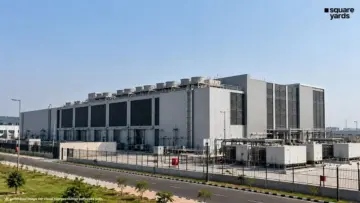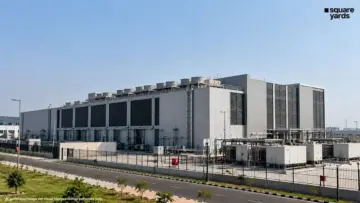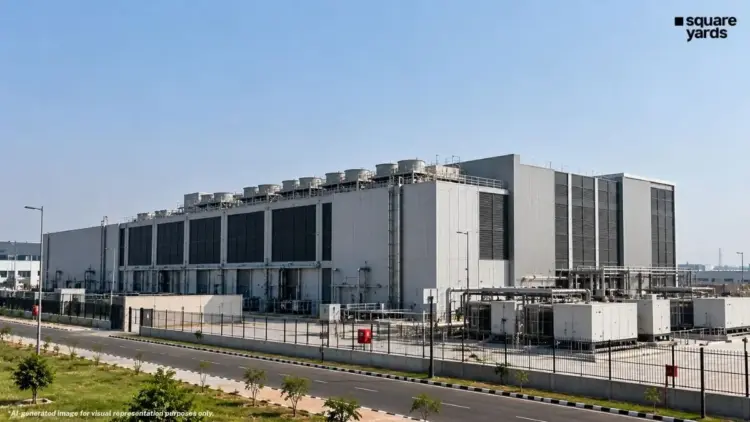
JHANSI — In a move set to redefine the economic landscape of Central India, the Uttar Pradesh government has reached a pivotal milestone in its ambitious plan to establish a massive technology corridor in the Bundelkhand region. The Detailed Project Report (DPR) for a proposed 1,000-acre data center and IT hub has been officially submitted to the state administration, signaling the transition of the project from a conceptual framework to an actionable development phase.
This specialized tech zone is a cornerstone of the Bundelkhand Industrial Development Authority (BIDA), a mega-project designed to create a new industrial city modeled after the success of Noida. Spanning over 56,000 acres across 33 villages near Jhansi, the initiative represents the state’s most aggressive push toward decentralizing industrial growth and tapping into the untapped potential of the Bundelkhand region.
Main Facts: A New Silicon Valley in the Heartland
The proposed IT and Data Center hub is strategically positioned to leverage Uttar Pradesh’s growing reputation as a preferred destination for digital infrastructure. Out of the 1,000 acres earmarked for this specific tech cluster, the state has already successfully acquired 810 acres, ensuring that the primary land bank is secured for the first phase of development.
The project is integrated into the larger BIDA master plan, which encompasses a staggering 56,662 acres. This larger industrial ecosystem is intended to be a multi-sectoral powerhouse, housing units from the automotive, defense, healthcare, logistics, and FMCG sectors. However, the IT and Data Center hub is viewed as the "brain" of this new city, providing the digital backbone necessary for modern automated manufacturing and global connectivity.
Key highlights of the project include:
- Strategic Location: Proximity to Jhansi, a major railway junction and a key node in the North-South and East-West corridors.
- Integrated Infrastructure: A dedicated power substation to meet the high-energy demands of data centers.
- Connectivity: Direct access to the Bundelkhand Expressway, linking the region to Delhi and the National Capital Region (NCR).
- Land Status: Over 80% of the Phase-1 land target for BIDA has already been met, providing a ready canvas for industrial developers.
Chronology: From Vision to Execution
The journey of BIDA and the IT hub reflects the Uttar Pradesh government’s long-term strategy to balance regional development.
- 2023 – The Genesis: The state government announced the formation of BIDA, the first major industrial township development in the state in nearly 47 years, following the establishment of Noida in 1976.
- Early 2024 – Land Identification: 33 villages around Jhansi were identified for the project, and the land acquisition process was fast-tracked under the state’s industrial policy.
- Mid-2025 – Phase-1 Momentum: The state approved the acquisition of 35,298 acres for the first phase. Rapid negotiations with local landowners led to the swift transfer of titles.
- Early 2026 – Specialized Clusters: The government refined the master plan to include a dedicated 1,000-acre IT and Data Center hub to attract high-value tech investments.
- October 2026 – DPR Submission: The submission of the Detailed Project Report on October 19, 2026, marks the final technical hurdle before the commencement of on-ground infrastructure work and the invitation of global tenders.
Supporting Data: Scaling the Industrial Frontier
The scale of BIDA is unprecedented in the region. To understand the impact of the 1,000-acre IT hub, one must look at the broader metrics of the BIDA development:
- Total Planned Area: 56,662 acres.
- Acquisition Phases:
- Phase 1: 35,298 acres (Target).
- Phase 2: 21,364 acres (Planned).
- Current Status (Oct 2026): 28,874 acres already acquired, representing over 80% of the Phase-1 requirement.
- The IT Hub Land Bank: 810 acres of the 1,000-acre target are already under government possession, significantly reducing the gestation period for incoming tech firms.
- Employment Potential: Preliminary estimates suggest that the wider BIDA project could generate over 500,000 direct and indirect jobs over the next decade, with the IT hub contributing a significant portion of high-skilled employment.
Data centers, in particular, require specialized infrastructure. The DPR outlines plans for high-capacity fiber-optic networks and redundant power grids. Unlike traditional factories, data centers operate 24/7 and require massive cooling systems, necessitating a robust water management system which the DPR addresses through planned reservoirs and recycling plants.
Official Responses: Government’s Strategic Intent
Senior officials within the Uttar Pradesh Industrial Development Department have emphasized that the Bundelkhand IT hub is not just a real estate project, but a strategic move to position UP as a global data hub.
"The submission of the DPR is a testament to our commitment to transforming Bundelkhand," stated a senior official involved in the BIDA planning. "For decades, this region was seen only through the lens of agriculture and mining. With BIDA, and specifically the IT and Data Center hub, we are introducing a high-tech economy to the heart of Bundelkhand. We are not just building factories; we are building a future-ready city."
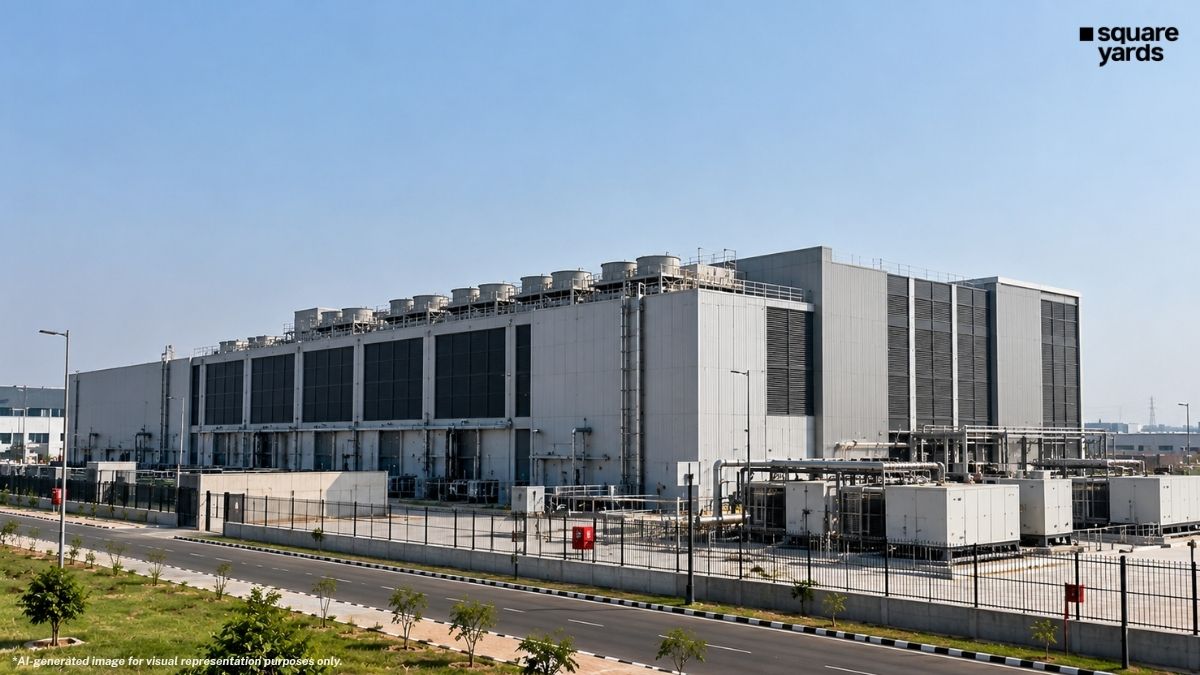
State planners have also noted that the IT hub will benefit from the Uttar Pradesh Data Center Policy 2021, which offers a range of incentives, including capital subsidies, interest subvention, and exemptions on stamp duty and electricity duty. By aligning BIDA with these existing policies, the government aims to attract global players like Google, Microsoft, or Adani Connex to set up massive server farms in the region.
Implications: Real Estate and Economic Transformation
The development of a 1,000-acre tech hub in a formerly agrarian region carries profound implications for the real estate market and the local economy.
1. Immediate Surge in Industrial Land Demand
The industrial land segment is expected to see the most immediate impact. As the government begins allotting plots, ancillary industries—such as construction material suppliers, logistics providers, and specialized engineering firms—will scramble to secure space near the IT hub. The presence of a data center hub often acts as a magnet for other technology-driven sectors, including electronics manufacturing and hardware assembly.
2. The Shift in Commercial and Office Space
While data centers themselves are not labor-intensive in terms of headcount, the "IT Hub" portion of the project is designed for software development centers, BPOs, and tech startups. This will create a secondary demand for Grade-A office spaces. Jhansi, which has historically seen limited commercial real estate activity, could witness the rise of modern business parks and co-working spaces to accommodate the firms supporting the BIDA ecosystem.
3. Housing and the "Workforce Effect"
The long-term success of the residential real estate market in Jhansi and surrounding areas will depend entirely on the "Workforce Effect." If BIDA successfully attracts large-scale manufacturing and tech firms, a diverse workforce—ranging from blue-collar factory workers to high-income software engineers—will migrate to the region.
This will necessitate a tiered housing approach:
- Affordable Housing: For industrial workers and support staff.
- Integrated Townships: For mid-to-senior level management who require modern amenities, schools, and healthcare facilities within reach.
- Rental Market: A significant boost is expected in the rental yields of existing properties in Jhansi as the initial wave of project managers and engineers arrives for the construction phase.
4. Infrastructure as a Catalyst
The government’s proposal for an airport, enhanced railway facilities, and a multimodal logistics park within the BIDA zone changes the "valuation" of the region. Connectivity to the Bundelkhand Expressway already links this zone to the Agra-Lucknow Expressway and the Yamuna Expressway, creating a seamless corridor to the National Capital. This logistical advantage makes the region attractive not just for IT, but for export-oriented manufacturing.
The Road Ahead
While the submission of the DPR is a landmark event, the true test lies in the execution. The pace at which the remaining land is acquired and the speed of utility deployment (power and water) will determine how quickly global investors commit capital.
For now, Bundelkhand stands at a crossroads. The transition from a drought-prone, economically lagging region to a "GIFT City-style" industrial metropolis is a bold vision. If realized, the 1,000-acre IT hub near Jhansi will not only bridge the digital divide but will also serve as the engine for Uttar Pradesh’s goal of becoming a $1 trillion economy.
Investors and developers are keeping a close watch on the next steps—the invitation of bids and the first stone-laying ceremony—which will signal that the "New Noida" of the South is officially open for business.