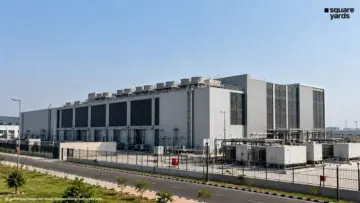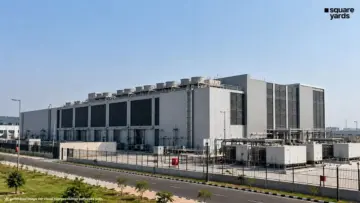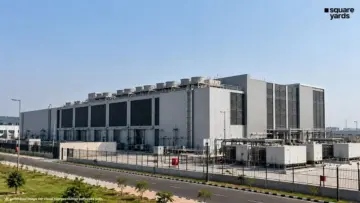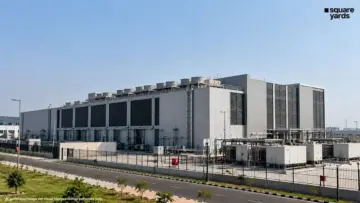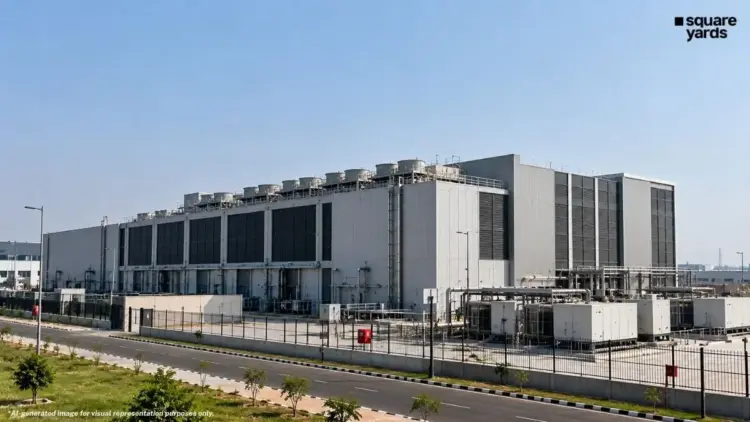
JHANSI, UTTAR PRADESH – In a move set to redefine the economic geography of Central India, the Uttar Pradesh government has officially received the Detailed Project Report (DPR) for a massive 1,000-acre data center and Information Technology (IT) hub. This ambitious project is the cornerstone of the newly formed Bundelkhand Industrial Development Authority (BIDA), a mega-industrial township designed to mirror the success of Noida in the state’s western belt.
The submission of the DPR marks a critical transition from conceptual planning to execution, signaling to global investors that the Bundelkhand region—historically known for its rugged terrain and agrarian roots—is being prepared as India’s next major technology and manufacturing frontier.
1. Main Facts: The Vision for a "New Noida" in Bundelkhand
The proposed IT and Data Center hub is not an isolated project but a vital organ of the broader BIDA master plan. Spanning a staggering 56,662 acres across 33 villages near the historic city of Jhansi, BIDA represents the most significant industrial undertaking in Uttar Pradesh in nearly half a century.
Key Highlights of the Project:
- Total BIDA Area: 56,662 acres (approx. 229 sq. km).
- Dedicated IT/Data Center Hub: 1,000 acres.
- Current Land Status: 810 acres already acquired for the IT hub; over 28,874 acres acquired for the overall BIDA project.
- Strategic Location: Positioned at the intersection of major transport corridors, including the Bundelkhand Expressway and the National Parks of the Defense Corridor.
- Diversified Industrial Mix: While the IT hub is a priority, the zone will also host sectors such as Defense, Logistics, FMCG, Healthcare, and Automotive manufacturing.
The government’s strategy is clear: leverage the relatively low cost of land and the burgeoning infrastructure in Bundelkhand to attract tech giants who are currently facing saturation and high operational costs in traditional hubs like Bengaluru, Hyderabad, and Delhi-NCR.
2. Chronology: From Legislative Notification to DPR Submission
The journey of BIDA and the IT hub has been characterized by rapid administrative movement, reflecting the state government’s urgency to achieve its $1 trillion economy goal.
- September 2023: The Uttar Pradesh cabinet officially approved the creation of the Bundelkhand Industrial Development Authority (BIDA). This was the first time since the establishment of Noida in 1976 that such a massive industrial township was notified.
- Late 2023 – Early 2024: The state government allocated an initial seed fund of ₹5,000 crore for land acquisition and basic infrastructure development. The identification of 33 villages surrounding Jhansi began.
- Mid-2024: Land acquisition gathered momentum. The government utilized a proactive compensation model to ensure minimal resistance from local landholders, focusing on the first phase of 35,298 acres.
- Early 2026: The focus shifted toward specialized zones. The proposal for a dedicated 1,000-acre IT and Data Center hub was formalized to capitalize on the "UP Data Center Policy 2021."
- October 2026: The submission of the Detailed Project Report (DPR) to the state government. By this time, the authority confirmed that 810 acres—81% of the required land for the IT hub—had been secured.
3. Supporting Data: Land Acquisition and Sectoral Allocation
The scale of BIDA is unprecedented for the region. To understand the impact, one must look at the phased data provided by the authority.
Land Acquisition Progress (as of October 2026)
| Phase | Target Acreage | Acquired Acreage | Achievement (%) |
|---|---|---|---|
| Phase 1 | 35,298 | 28,874 | 81.8% |
| Phase 2 | 21,364 | Planning Stage | – |
| IT/Data Center Hub | 1,000 | 810 | 81.0% |
Why Data Centers?
The push for a data center hub in Bundelkhand is backed by the UP Data Center Policy, which offers:
- Capital Subsidy: Up to 7% on fixed capital investment.
- Interest Subsidy: 60% on annual interest for five years.
- Electricity Duty Exemptions: 100% exemption for 10 years.
- Dual Power Grid: Provisions for uninterruptible power supply, a non-negotiable requirement for data storage facilities.
The data center market in India is expected to reach $10 billion by 2027. By establishing a hub in Jhansi, the UP government aims to capture at least 20% of the North Indian data traffic, providing a low-latency alternative to the Noida clusters.
4. Official Responses and Administrative Strategy
Senior officials within the Uttar Pradesh Industrial Development Department have emphasized that BIDA is being developed with "Global Standards, Local Integration."
Official Stance on Infrastructure:
A spokesperson for the state government noted, "The submission of the DPR is a milestone. We are not just building warehouses; we are building a city of the future. The IT hub will be supported by a dedicated power sub-station and high-speed fiber-optic connectivity. We are in talks with major hyperscalers and domestic IT firms to anchor this project."
The "Single Window" Approach:
The government has integrated BIDA into the ‘Nivesh Mitra’ portal, ensuring that any business looking to set up in the IT hub can receive all necessary clearances—environmental, fire safety, and building permits—within a stipulated 15-to-30-day window.
BIDA’s CEO Insights:
The leadership at BIDA has consistently highlighted the importance of the 33-village ecosystem. The authority is currently working on a "Skill Development Center" near the IT hub to ensure that the local youth from Jhansi and surrounding districts are employable by the tech companies that eventually move in.
5. Implications for Real Estate and the Regional Economy
The development of a 1,000-acre IT hub within a 56,000-acre industrial city has profound implications for the real estate market, which is expected to move in distinct cycles.
Phase 1: The Industrial Land Surge
The immediate impact is being felt in the industrial land segment. With the government having acquired over 80% of Phase 1 land, private developers are now eyeing peripheral areas for ancillary industries. Logistics firms, component manufacturers, and construction material suppliers are expected to be the "first movers."
Phase 2: Commercial and Infrastructure Development
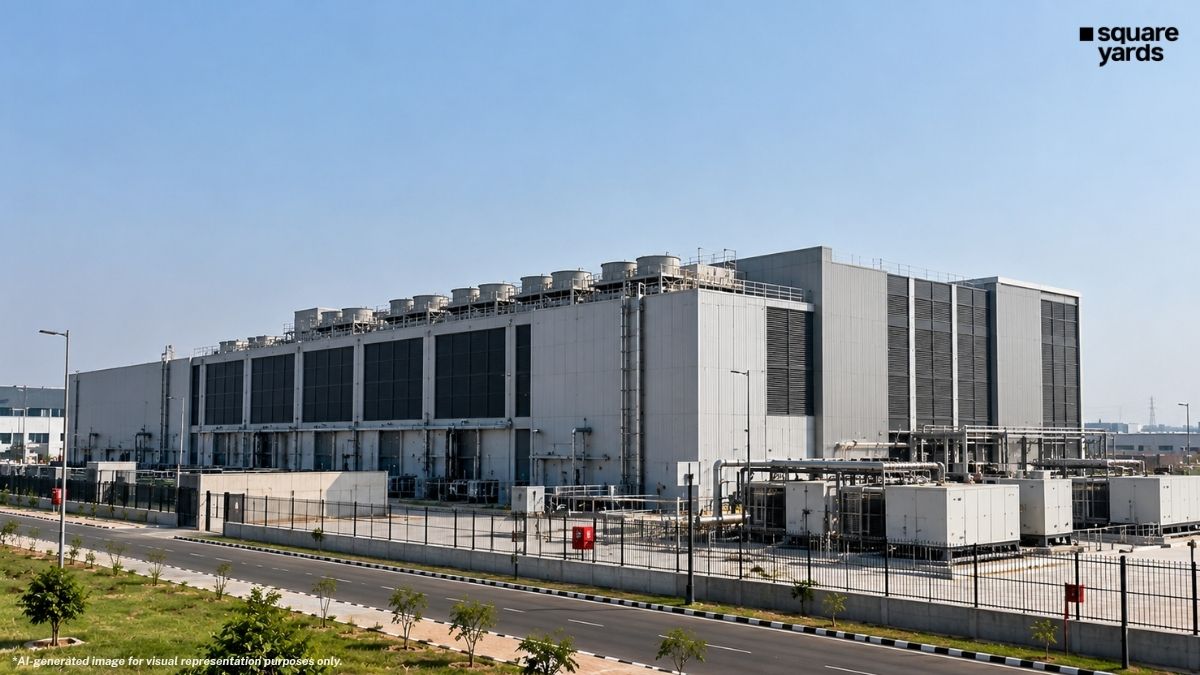
As the IT hub takes shape, the demand for specialized commercial real estate will rise. Data centers require specific cooling infrastructure and massive power units, but the IT hub will also need:
- Grade-A Office Spaces: For software development and BPO operations.
- Hospitality: Premium hotels and business centers for visiting executives.
- Retail: Shopping complexes to serve the initial wave of technical staff.
Phase 3: The Residential Boom and "The Noida Comparison"
Market analysts draw a direct parallel between BIDA and the early days of Greater Noida. While the current demand in Jhansi is predominantly industrial, the long-term outlook for residential real estate is bullish.
- Workforce Influx: If the IT hub and BIDA achieve even 50% of their projected employment targets, the region will see an influx of thousands of white-collar and blue-collar workers.
- Housing Demand: This will trigger a shift from traditional standalone houses in Jhansi city to organized townships and gated communities within the BIDA periphery.
- Rental Yields: Investors are already looking at land parcels along the Bundelkhand Expressway, anticipating high rental demand from the upcoming workforce.
The Connectivity Catalyst
The success of the IT hub is inextricably linked to the proposed infrastructure:
- The Airport: A proposed airport within the BIDA zone will be a game-changer for the IT sector, where air connectivity is a primary requirement for client visits and executive travel.
- Rail and Logistics: The multimodal logistics park will integrate BIDA with the Dedicated Freight Corridor (DFC), making it a hub for the movement of hardware and electronic goods.
- The Expressway Advantage: The Bundelkhand Expressway already provides a seamless link to Delhi via the Agra-Lucknow and Yamuna Expressways, reducing transit times significantly.
Conclusion: A Pivot Point for Uttar Pradesh
The submission of the DPR for the Jhansi IT hub is more than just a bureaucratic step; it is a declaration of intent. By focusing on high-growth sectors like data centers and IT, the Uttar Pradesh government is attempting to balance its industrial portfolio, ensuring that Bundelkhand is not just a center for heavy industry and defense, but also a node in the global digital economy.
For real estate investors and corporate entities, the window for "early entry" is rapidly closing. As land acquisition nears completion and infrastructure breaks ground, the transformation of Jhansi from a historical city to a futuristic "Tech-City" appears not just possible, but inevitable. The next five years will determine if BIDA can truly become the "Growth Engine" of Central India, but with 28,000 acres already in hand, the foundation is undeniably solid.