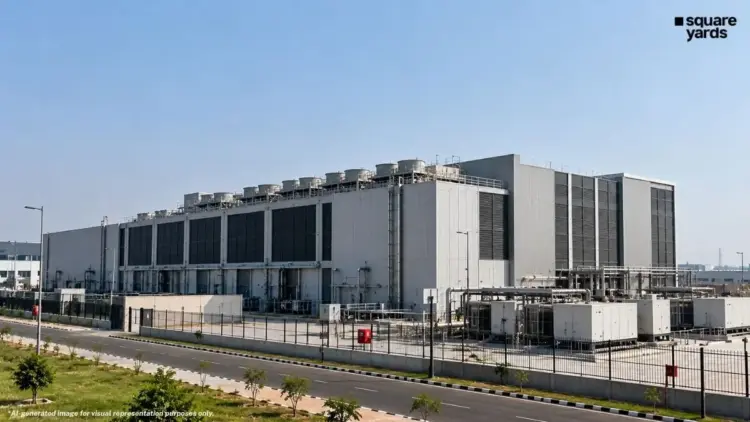
JHANSI, UTTAR PRADESH — In a move that signals a tectonic shift in the industrial landscape of North India, the Uttar Pradesh government has moved to the next critical phase of its ambitious Bundelkhand development plan. A Detailed Project Report (DPR) for a proposed 1,000-acre Data Center and Information Technology (IT) hub has been officially submitted to the state administration. This project, situated within the burgeoning Bundelkhand Industrial Development Authority (BIDA) zone, represents a cornerstone of the state’s strategy to diversify its economic engine and establish a "New Noida" in the heart of central India.
As of October 2026, the state has already secured 810 acres specifically for the IT hub, signaling that the transition from conceptual planning to ground-level execution is well underway. The development is poised to redefine Jhansi and its surrounding districts, transforming a region historically known for its agricultural roots into a high-tech industrial powerhouse.
I. Main Facts: A Digital Fortress in Bundelkhand
The proposed IT and Data Center hub is not a standalone project but the crown jewel of the Bundelkhand Industrial Development Authority (BIDA). BIDA is a massive, master-planned industrial township spanning 56,662 acres across 33 villages in the vicinity of Jhansi.
The core objectives of the IT hub include:
- Infrastructure Expansion: Building state-of-the-art Tier-IV data centers to support India’s growing digital economy.
- Investment Attraction: Creating a "plug-and-play" ecosystem for global tech giants, cloud service providers, and software development firms.
- Economic Diversification: Reducing the state’s reliance on the National Capital Region (NCR) for tech investments by offering a viable, well-connected alternative in Bundelkhand.
The project is strategically positioned to leverage the Bundelkhand Expressway, providing seamless connectivity to Delhi and Lucknow. The submission of the DPR marks the transition into the procurement and bidding phase, where the government will seek private-sector partners to develop the specialized infrastructure required for high-density computing and data storage.
II. Chronology of Development: From Vision to 80% Acquisition
The journey toward establishing BIDA has been one of the most rapid land-acquisition exercises in the history of Uttar Pradesh’s industrial development.
- September 2023: The Uttar Pradesh cabinet officially approved the formation of BIDA, modeled after the successful Noida (New Okhla Industrial Development Authority) framework. This was the first major industrial township announcement for the region in decades.
- Early 2024: The state government identified 56,662 acres of land across 33 villages near Jhansi. The project was divided into two distinct phases for systematic development.
- Mid-2025: The government earmarked 1,000 acres specifically for an IT and Data Center hub, recognizing the global surge in demand for data localization and cloud infrastructure.
- Early 2026: Land acquisition gained significant momentum. The government utilized a combination of direct purchase and land pooling to ensure minimal friction with local stakeholders.
- October 2026: Official reports confirm that 28,874 acres have been acquired. This represents over 80% of the Phase 1 target of 35,298 acres. Crucially, 810 of the 1,000 acres required for the IT hub are now in government possession, and the DPR has been finalized and submitted.
III. Supporting Data: The Scale of BIDA’s Industrial Ambition
The scale of the BIDA project is staggering, rivaling some of the largest industrial zones in Asia. To understand the impact of the IT hub, one must look at the broader statistical context of the authority’s plans.
Land Allocation Breakdown
- Total Identified Area: 56,662 acres.
- Phase 1 Target: 35,298 acres.
- Phase 2 Target: 21,364 acres.
- Current Status (Oct 2026): 28,874 acres (81.8% of Phase 1) acquired.
Sectoral Diversification
While the 1,000-acre IT hub is the focal point for high-tech investment, BIDA is designed as a multi-sectoral hub to ensure economic resilience. The land is being partitioned for:
- Defense Industrial Corridor: Supporting India’s self-reliance in arms and aerospace manufacturing.
- Automotive & Electric Vehicles (EV): Capitalizing on the shift toward green mobility.
- Logistics & Warehousing: Utilizing Jhansi’s position as a transit point between North and South India.
- FMCG & Healthcare: Dedicated zones for consumer goods and pharmaceutical manufacturing.
Infrastructure Commitments
To support the IT hub, the DPR outlines specific requirements:
- Power Supply: A dedicated sub-station to provide uninterrupted, high-voltage power—a prerequisite for data centers.
- Connectivity: Fiber-optic backbones integrated into the road networks.
- Logistics: A proposed greenfield airport and a multimodal logistics park within the BIDA zone to facilitate the movement of high-value hardware and personnel.
IV. Official Responses: A Strategic Pivot for Uttar Pradesh
Government officials have hailed the submission of the DPR as a "milestone in the decentralization of prosperity." Sources within the Uttar Pradesh Industrial Development Department suggest that the Chief Minister’s office is closely monitoring BIDA, viewing it as a catalyst for the state’s goal of becoming a $1 trillion economy.
"The submission of the DPR for the IT and Data Center hub is a testament to our commitment to making Bundelkhand a global investment destination," said a senior official involved in the project. "We are not just building factories; we are building a smart city. By acquiring over 80% of the Phase 1 land in record time, we have sent a clear message to investors that Uttar Pradesh is ready for business."
Planners emphasize that the IT hub is designed to attract "anchor tenants"—major multinational corporations whose presence will naturally draw in a secondary ecosystem of startups, service providers, and educational institutions. The government is also expected to announce specific incentives, including capital subsidies and electricity duty exemptions, tailored for data center operators in the Bundelkhand region.
V. Implications: Real Estate and Economic Transformation
The development of BIDA and its IT hub is expected to trigger a multi-decade growth cycle in the regional economy. However, the impact will be felt in waves across different real estate and economic segments.
1. Industrial Land: The Immediate Beneficiary
The first and most direct impact is the surge in demand for industrial land. As the government begins allotting plots based on the DPR, land values in the periphery of the 33 designated villages are expected to appreciate significantly. Speculative interest from institutional investors and industrial developers is already rising, with a focus on plots that offer proximity to the Bundelkhand Expressway and the proposed multimodal logistics park.
2. The Specialized Needs of Data Centers
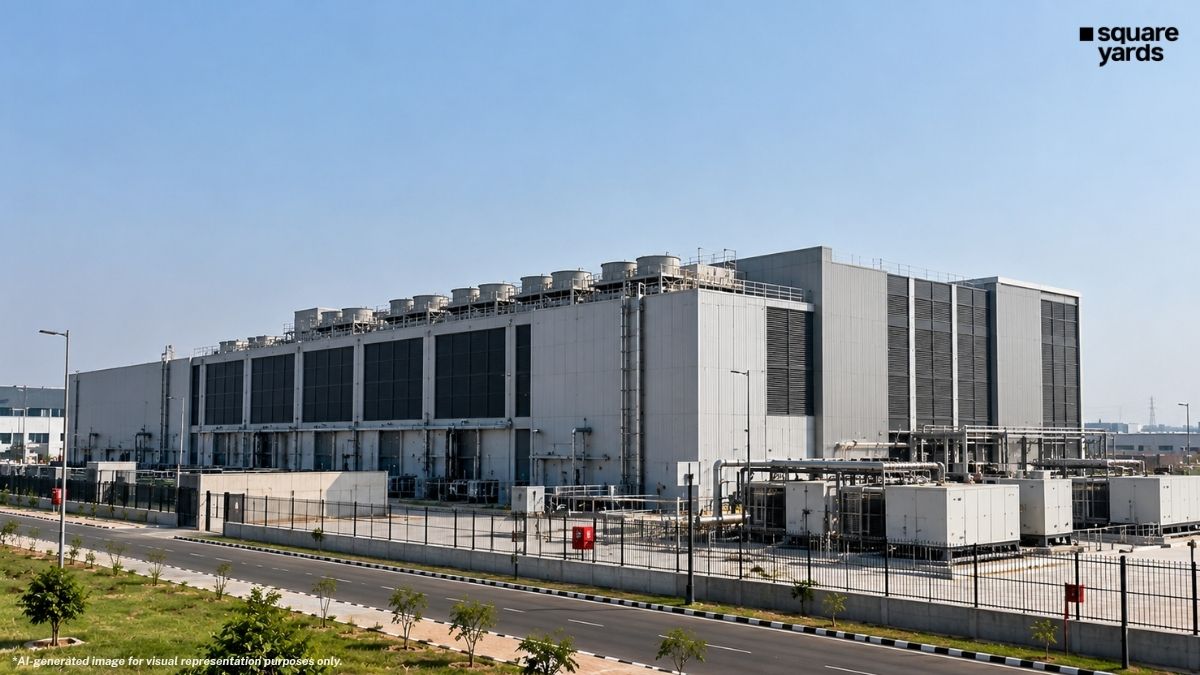
Unlike traditional manufacturing, data centers require very little manpower but massive infrastructure. The demand here will be for "ready-to-move" shells with high power-load capacities. This creates an opportunity for specialized real estate developers who focus on "built-to-suit" industrial assets.
3. Commercial and Office Spaces: A Secondary Wave
While data centers are automated, the broader IT hub will house software firms, BPOs, and tech-support offices. This will create a secondary demand for Grade-A office spaces in Jhansi. As the "wider industrial project" gains steam, the need for business hotels, conference centers, and retail hubs to serve visiting executives and the local workforce will become paramount.
4. Residential Real Estate: The "Jobs" Factor
The long-term outlook for the housing market in Jhansi and Bundelkhand depends entirely on the quality of jobs created.
- Blue-collar housing: Driven by the manufacturing and logistics sectors.
- White-collar housing: Driven by the IT and Defense sectors.
If BIDA successfully attracts high-paying tech roles, there will be a surge in demand for integrated townships, gated communities, and modern apartments—amenities that are currently scarce in the region.
5. Logistics and Connectivity
The integration of a proposed airport and railway facilities within the BIDA area will turn Bundelkhand into a vital node in the National Master Plan for Multi-modal Connectivity (PM Gati Shakti). This will not only benefit the IT hub but will also make the region a preferred destination for FMCG and e-commerce warehousing, further boosting the local economy.
Conclusion
The submission of the DPR for the 1,000-acre IT and Data Center hub is more than just a bureaucratic step; it is the blueprint for Bundelkhand’s future. By successfully acquiring the lion’s share of the required land, the Uttar Pradesh government has cleared the highest hurdle in industrial development.
While the industrial segment will see the first fruits of this labor, the true transformation will be measured by the influx of talent and the rise of a modern urban ecosystem around Jhansi. For investors and residents alike, the message is clear: Bundelkhand is no longer a region of the past; it is rapidly becoming the frontier of India’s digital future.