Executive Summary
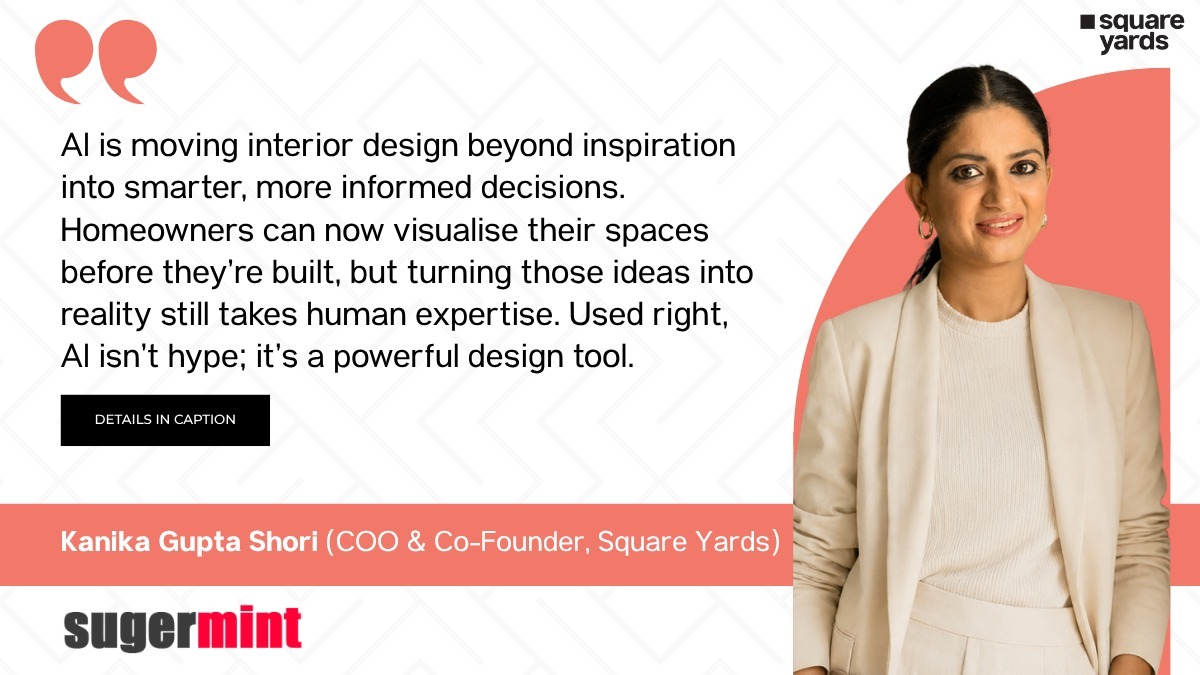
The interior design industry, long characterized by manual mood boards and protracted consultation cycles, is undergoing a radical technological metamorphosis. At the forefront of this shift is Artificial Intelligence (AI), a tool that is transitioning from a mere novelty to a foundational pillar of the modern real estate and home improvement ecosystem. As highlighted by Kanika Gupta Shori, COO and Co-Founder of Square Yards, AI is not just providing inspiration; it is streamlining the path from visualization to execution, making high-end design accessible to a broader demographic while demanding a new synergy between human creativity and machine precision.
1. Main Facts: The AI Revolution in the Living Room
The integration of Artificial Intelligence into interior design represents more than just a digital upgrade; it is a fundamental shift in how spaces are conceived, sold, and constructed. The traditional barriers to professional interior design—high costs, long timelines, and the difficulty of visualizing the final product—are being dismantled by sophisticated algorithms.
The Shift from Static to Dynamic Visualization
In the contemporary market, AI-powered platforms allow homeowners to upload a photo of a vacant room and, within seconds, generate a fully furnished, photorealistic render in styles ranging from Scandinavian minimalism to Industrial chic. This capability has moved beyond the "filter" phase and into the realm of spatial intelligence, where AI accounts for lighting, dimensions, and architectural constraints.
The Square Yards Perspective
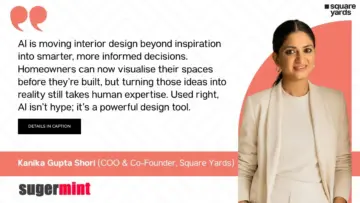
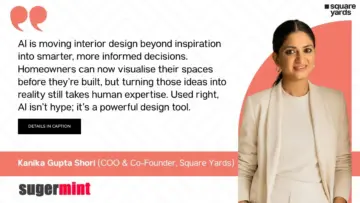
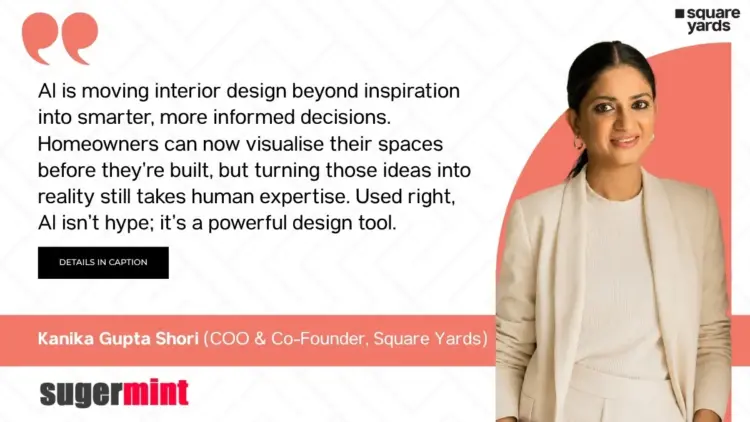
Kanika Gupta Shori, a leading voice in India’s PropTech (Property Technology) sector, notes that the true value of AI lies in its ability to facilitate "smarter, more practical decision-making." According to Shori, the technology serves as a bridge between the abstract ideas of a homeowner and the concrete requirements of a contractor. By enabling users to explore infinite permutations of furniture arrangements and color palettes before a single drop of paint is purchased, AI reduces the financial risk associated with design errors.
Key Technological Drivers
Several core technologies are driving this change:
- Generative AI: Creating new design concepts based on text prompts or image inputs.
- Computer Vision: Identifying the dimensions and structural elements of a room from a simple smartphone photo.
- Predictive Analytics: Suggesting materials and layouts based on regional trends, budget constraints, and historical user preferences.
2. Chronology: The Evolution of Design Technology
To understand the current AI-driven landscape, it is essential to trace the evolution of design tools over the past four decades.
The Era of Drafting Tables (Pre-1990s)
Before the digital revolution, interior design was a labor-intensive craft. Blueprints were hand-drawn, and "mood boards" consisted of physical clippings from magazines and fabric swatches. Changes to a design often meant starting a drawing from scratch, leading to high consultancy fees and limited experimentation.
The Rise of CAD and 3D Modeling (1990s – 2010s)
The introduction of Computer-Aided Design (CAD) software like AutoCAD and later, 3D modeling tools like SketchUp and 3ds Max, revolutionized the industry. While these tools allowed for greater precision, they remained the exclusive domain of trained professionals. The "rendering" process was slow, often taking hours or days for a single high-quality image.
The Democratization Phase: AR and VR (2015 – 2022)
With the rise of smartphones, Augmented Reality (AR) began to enter the mainstream. Apps allowed users to "place" a 3D model of a chair in their room via their camera. Virtual Reality (VR) headsets offered immersive walkthroughs of unbuilt apartments. However, these tools still relied on pre-built libraries and lacked the "intelligence" to generate new designs from scratch.
The Generative AI Explosion (2023 – Present)
The current era is defined by the emergence of Generative Pre-trained Transformers (GPT) and diffusion models (like Midjourney and DALL-E). For the first time, technology can "think" about a space. It can suggest a specific shade of navy blue that complements the natural light of a north-facing window. This marks the transition from design tools to design partners.
3. Supporting Data: The Economic and Functional Impact
The impact of AI on the interior design and PropTech sectors is quantifiable through market growth and efficiency metrics.
Market Growth and Investment
The global AI in the design market is projected to grow at a Compound Annual Growth Rate (CAGR) of over 25% through 2030. In the real estate sector, companies that integrate AI visualization tools report a 30-40% increase in user engagement on their platforms.
Efficiency Gains
Data from industry surveys indicates the following improvements:
- Reduction in Design Cycle: Traditional design phases that took 2-3 weeks can now be condensed into 48 hours using AI-assisted drafting and visualization.
- Cost Savings: By identifying spatial conflicts (e.g., a sofa that blocks a walkway) in the digital phase, homeowners can save an estimated 15-20% on "correction costs" during the construction phase.
- Sustainability: AI algorithms can optimize material usage, reducing waste in flooring and cabinetry by up to 12% through precise measurement and layout planning.
Consumer Behavior
According to Square Yards’ internal insights and broader market research, nearly 75% of modern homebuyers express a preference for listings that offer AI-driven "virtual staging" or customization options. The ability to see a personalized version of a future home is becoming a prerequisite for high-value real estate transactions.
4. Official Responses: The Hybrid Intelligence Model
While the technology is transformative, industry leaders are quick to clarify that AI is an augmentative tool, not a replacement for human talent.
Kanika Gupta Shori’s Strategic Vision
In her feature with Sugermint, Shori emphasized that while AI handles the "heavy lifting" of visualization, the "human touch" remains the soul of a home. She argues that the future of the industry lies in a "Hybrid Intelligence" model.
"AI can offer a thousand variations of a room," Shori suggests, "but an interior designer understands the emotional weight of a family heirloom or the ergonomic necessity of a specific kitchen height for an elderly resident."
Professional Design Community Reactions
The American Society of Interior Designers (ASID) and similar international bodies have noted that AI is shifting the designer’s role from "draftsman" to "curator." Professionals are now spending less time drawing lines and more time:
- Solving Complex Structural Issues: Addressing load-bearing walls and plumbing constraints that AI might overlook.
- Sourcing Materials: Navigating the global supply chain to find the exact sustainable materials suggested by the AI.
- Project Management: Ensuring that the digital "dream" is physically possible within the client’s budget and local building codes.
Technical Feasibility and Real-World Constraints
Experts warn that AI-generated images can sometimes be "hallucinatory"—proposing furniture that doesn’t exist or lighting effects that defy physics. Official responses from the technical community stress that AI designs must be vetted by architects to ensure they meet safety standards and structural integrity requirements.
5. Implications: The Future Landscape of Living Spaces
The long-term implications of AI in interior design extend beyond aesthetics, touching upon social equity, environmental sustainability, and the labor market.
The Democratization of Luxury
Historically, hiring an interior designer was a luxury reserved for the affluent. AI is democratizing this service. Low-cost or free AI tools allow middle-income homeowners to achieve a "designer look" on a budget. This shift is expected to grow the home decor market as more people feel empowered to renovate their spaces.
Sustainability and the Circular Economy
AI’s ability to analyze materials means it can be programmed to prioritize eco-friendly options. Future iterations of AI design tools are expected to include "carbon footprint calculators," showing homeowners the environmental impact of choosing marble versus recycled porcelain, or tropical hardwood versus bamboo.
The Evolution of the Labor Market
There is a valid concern regarding the displacement of entry-level design roles (such as junior renderers). However, the industry consensus is that new roles will emerge, such as "AI Design Prompt Engineers" and "Digital Space Curators." The focus will shift from how to draw to what to create.
Final Takeaway
As Kanika Gupta Shori’s insights illustrate, we are entering an era where the boundary between the digital and the physical is blurring. AI provides the map, but the human designer remains the navigator. For the homeowner, this means a more transparent, efficient, and personalized journey toward creating a home. The key to success in this new landscape is not choosing between AI and human expertise, but rather leveraging the strengths of both to transform a digital concept into a functional, livable reality.
In the words of the Square Yards leadership, AI makes design "smarter and more accessible," but it is the human element that makes a space a "home."