By [Your Name/Journalist Name]
Published: October 23, 2026
The traditional image of an interior designer—surrounded by physical fabric swatches, hand-drawn blueprints, and heavy catalogues—is undergoing a radical digital transformation. As Artificial Intelligence (AI) matures from a speculative novelty into a functional cornerstone of the real estate ecosystem, the boundaries between imagination and implementation are blurring.
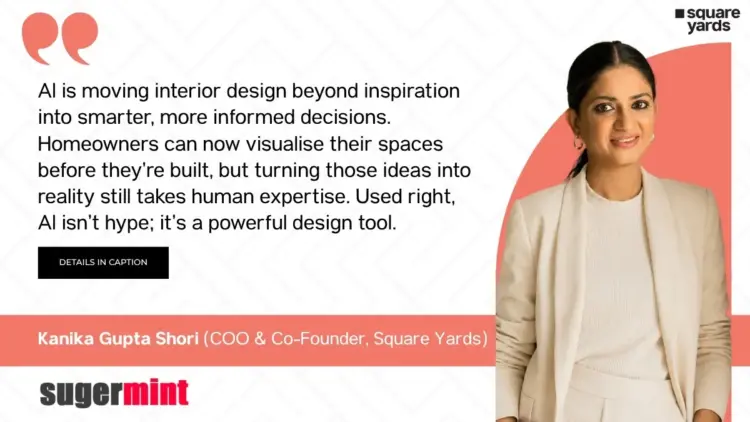
Recent insights from Kanika Gupta Shori, COO and Co-Founder of Square Yards, highlight a pivotal shift: AI is no longer just a tool for generating "pretty pictures" or Pinterest-style inspiration. Instead, it has become a sophisticated engine for decision-making, cost-efficiency, and spatial problem-solving. This evolution marks a new era where PropTech (Property Technology) and interior aesthetics converge to democratize high-end design for the average homeowner.
1. Main Facts: The AI Revolution in Living Spaces
The integration of AI into interior design is characterized by three core pillars: Visualization, Personalization, and Optimization.
From Mood Boards to Neural Networks
In the past, the "visioning" phase of a project was often the most fraught. Homeowners struggled to translate their abstract desires into a language designers could execute. Today, Generative AI models—trained on millions of architectural images—can take a simple text prompt or a smartphone photo of a bare room and render a fully furnished, photorealistic 3D environment in seconds.
The Rise of "Design Intelligence"
As Kanika Gupta Shori noted in her feature with Sugermint, the true power of AI lies in its ability to facilitate "smarter, more practical decision-making." This isn’t just about choosing a color; it’s about understanding how light interacts with that color at 4:00 PM in a north-facing room, or how a specific modular sofa layout affects the flow of traffic in a compact urban apartment.
Democratization of Luxury
Historically, hiring a designer to create multiple 3D renders was a costly and time-consuming process reserved for high-budget renovations. AI tools have lowered the barrier to entry, allowing homeowners to experiment with "what-if" scenarios—varying materials, lighting fixtures, and floor plans—without incurring massive professional fees during the exploratory phase.
2. Chronology: The Evolution of Design Technology
To understand where we are, we must look at the rapid acceleration of design tools over the last two decades.
- The Manual Era (Pre-2000s): Design relied on hand-drafted blueprints, physical mood boards, and manual measurements. Revisions were labor-intensive, often requiring entire sets of drawings to be scrapped and restarted.
- The CAD and 3D Modeling Era (2000–2015): Computer-Aided Design (CAD) and software like SketchUp or 3ds Max revolutionized the industry. While powerful, these tools required high technical proficiency and hours—sometimes days—to render a single high-quality image.
- The Early Digital Discovery Era (2015–2021): Platforms like Pinterest and Instagram became the primary source of inspiration. However, a gap remained: users could see beautiful homes but couldn’t easily visualize those styles within their own specific four walls.
- The Generative AI Explosion (2022–Present): The release of Large Language Models (LLMs) and image generators like Midjourney and DALL-E, followed by specialized PropTech AI, changed the game. Real estate platforms began integrating "Virtual Staging" and "AI Decorator" features directly into their listings.
- The Current State (2026): AI is now integrated into the procurement and construction workflow. It doesn’t just show a couch; it checks if that couch is in stock, calculates the shipping lead time, and ensures the dimensions fit the room’s CAD file with millimeter precision.
3. Supporting Data: The Economics of AI-Driven Design
The shift toward AI isn’t just a trend; it is backed by significant market growth and efficiency metrics.
Market Growth
According to industry reports from 2024–2026, the global AI in the construction and design market is projected to grow at a CAGR of over 25%. This growth is driven by the demand for "Smart Homes" and the increasing integration of AI within PropTech platforms like Square Yards.
Efficiency Gains
- Time Reduction: Traditional 3D rendering processes that once took 48 to 72 hours can now be completed via AI in under 5 minutes.
- Cost Savings: Virtual staging (using AI to furnish an empty home for sale) costs approximately 90% less than physical staging, which involves renting furniture and hiring movers.
- Error Mitigation: Industry data suggests that nearly 15% of renovation costs are attributed to "rework" due to homeowners changing their minds after seeing a physical installation. AI visualization reduces this "uncertainty gap," potentially saving homeowners thousands of dollars.
Consumer Behavior
A 2025 survey of new homebuyers indicated that 74% are more likely to engage with a real estate listing that offers an interactive AI-design tool. Furthermore, 60% of respondents stated they felt "more confident" in their renovation decisions after using an AI-powered visualization tool.
4. Official Responses: Insights from Industry Leadership
Kanika Gupta Shori’s perspective reflects a broader sentiment among PropTech leaders: technology is a bridge, not a replacement.
The Square Yards Vision
As the COO of one of the largest real estate platforms, Shori emphasizes that AI simplifies the "early-stage planning." By enabling individuals to communicate their preferences more effectively, AI removes the "lost in translation" moments that often occur between a client’s dream and a designer’s interpretation.
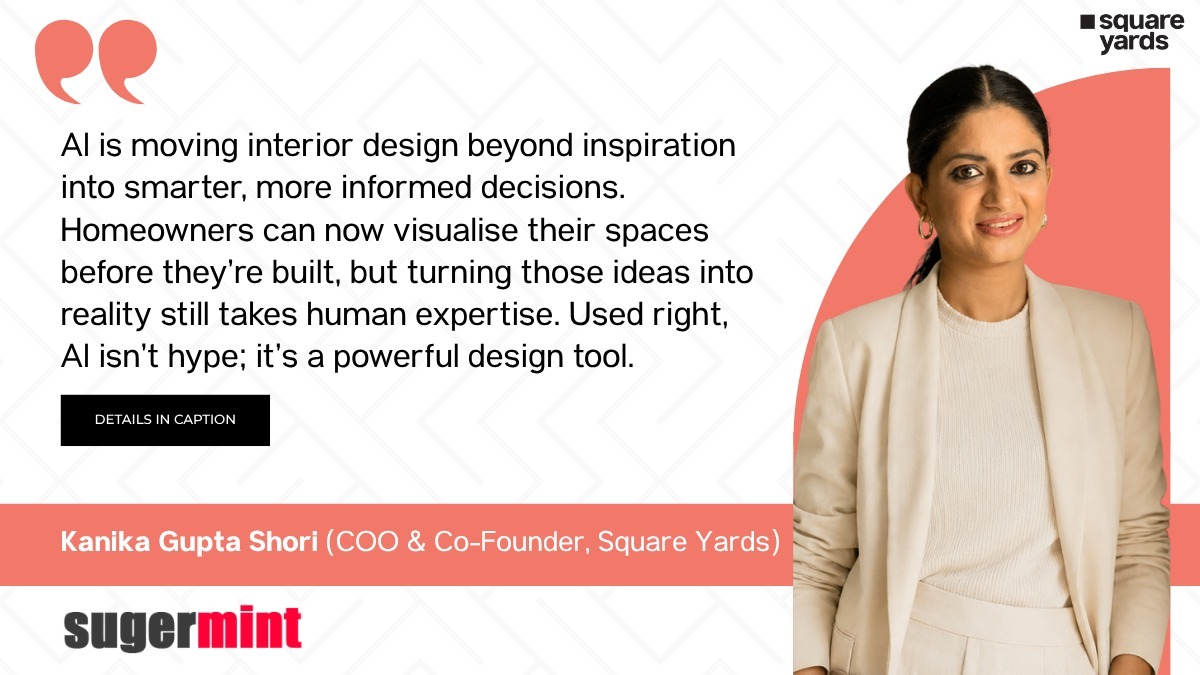
"AI should not be viewed merely as a source of inspiration," Shori suggests. Instead, it is a "valuable decision-support tool." This distinction is vital; while a machine can suggest a layout, the human professional ensures that the layout adheres to local building codes, electrical safety, and structural integrity.
The Designer’s Perspective
Professional design bodies have also weighed in. While there was initial fear that AI would replace interior designers, the consensus in 2026 has shifted toward "Augmented Intelligence." Designers are using AI to automate mundane tasks—like generating initial concepts or calculating material quantities—allowing them to focus on the high-level creative and emotional aspects of a project.
5. Why Human Expertise Still Matters: The "Reality Check"
Despite the brilliance of neural networks, the transition from a digital pixel to a physical brick remains a human endeavor. The limitations of AI in interior design fall into three categories:
1. The Physics of Living
AI can generate a stunning image of a floating staircase or a glass-walled bedroom, but it may not account for the weight-bearing requirements of the floor or the HVAC (heating, ventilation, and air conditioning) needs of the space. As Shori points out, "practical knowledge, technical understanding, and human expertise" are required to ensure a space is functional and safe.
2. Materiality and Tactility
An AI can show you the look of a velvet sofa or a marble countertop, but it cannot convey the feel, the durability, or the maintenance requirements. A human designer understands how a specific fabric will hold up against sunlight or pets—nuances that current AI models are still learning to quantify.
3. Emotional Resonance and Ergonomics
Design is deeply personal. It involves understanding the unique habits of a family—how they cook, how they relax, and how they move through their home. While AI can optimize for "average" ergonomics, a human designer tailors a space to the specific physical and emotional needs of the occupants.
6. Implications: The Future of the Industry
The long-term impact of AI on interior design and real estate is profound, touching on sustainability, economics, and the very nature of "home."
Sustainability and Waste Reduction
One of the most promising implications of AI-driven design is its potential for sustainability. By accurately predicting the exact amount of material needed—tiles, paint, flooring—AI minimizes construction waste. Furthermore, AI can suggest eco-friendly material alternatives that have a lower carbon footprint but achieve the same aesthetic goals.
The "Try Before You Buy" Real Estate Model
We are moving toward a future where every real estate listing is a "living" digital twin. A buyer won’t just see a house; they will see their version of that house. They can swap the kitchen cabinets or move a wall in a virtual environment before they even make an offer. This significantly increases the velocity of the real estate market.
Professional Evolution
The role of the interior designer is evolving into that of a "Design Editor" or "Project Curator." Instead of starting from a blank page, designers will use AI to generate 50 iterations based on client data, then use their expertise to select, refine, and execute the best 2 or 3 options.
Conclusion: The Hybrid Future
The integration of AI into interior design represents a rare win-win for the industry. For homeowners, it offers clarity and confidence. For professionals, it offers efficiency and a release from repetitive tasks.
As Kanika Gupta Shori aptly concludes, the key takeaway is balance. AI makes the process "smarter and more accessible," but it is the human touch that transforms a digital concept into a sanctuary. In the world of 2026, the most beautiful homes aren’t designed by machines or humans alone—they are the product of a seamless partnership between the two.
Key Highlights Summary:
- AI’s Role: Shifting from mere inspiration to a practical decision-support tool.
- Efficiency: Drastic reduction in rendering time and planning costs.
- Human Element: Essential for technical feasibility, ergonomics, and material selection.
- Market Impact: Increased consumer confidence and democratization of professional-grade design.