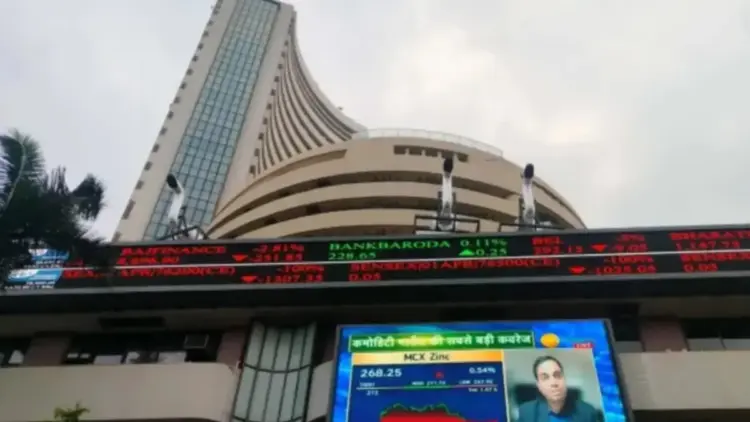
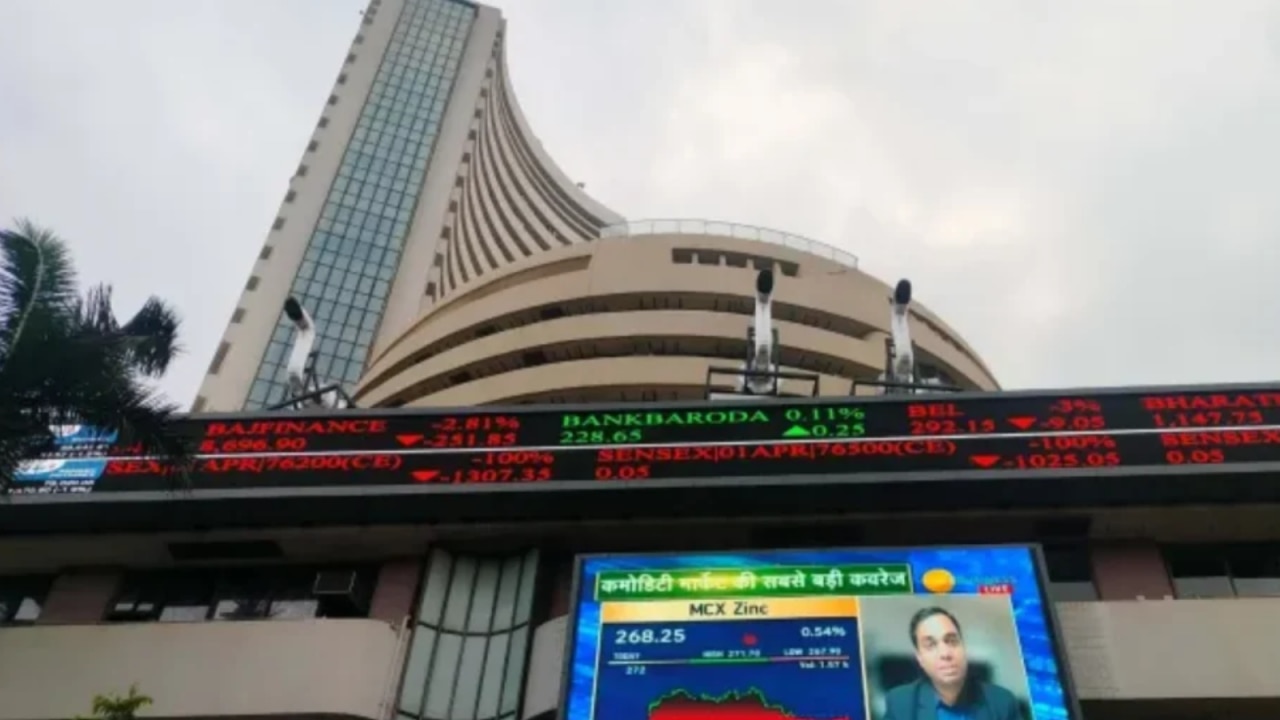
Mumbai, [Date of Publication, e.g., October 23, 2026] – Indian equity benchmarks, the Sensex and Nifty 50, concluded Friday’s trading session firmly in the red, extending a recent downward trend that has gripped the domestic market. A confluence of adverse factors, including a sharp surge in international crude oil prices, prevailing weak global cues, and broad-based selling pressure across key sectors, contributed to the market’s retreat. The broader economic landscape also saw the Indian rupee weaken against the US dollar, while prices for precious metals, gold and silver, experienced a notable decline.
The benchmark Nifty 50 index settled at 22,600, marking a decline of 87.65 points or 0.39 per cent. Similarly, the BSE Sensex closed at 73,123.83, shedding 125.56 points or 0.17 per cent from its previous close. This downturn reflects a growing apprehension among investors, who are grappling with geopolitical uncertainties, inflationary pressures, and a recalibration of growth expectations in a challenging global environment.
A Day of Retreat: Market Performance Unpacked
The Friday session unfolded with an air of caution that quickly escalated into widespread selling, as investors reacted to a barrage of negative domestic and international developments.
Morning Jitters and Intraday Volatility
The trading day commenced with a subdued sentiment, as early cues from Asian markets and overnight developments suggested a challenging session ahead. The Sensex and Nifty opened marginally lower, immediately signaling the lack of strong buying interest. As the morning progressed, the initial trickle of selling transformed into a more significant outflow, particularly in rate-sensitive and commodity-linked sectors. Mid-morning reports indicating a continued escalation in Brent crude oil prices further dampened spirits, pushing both indices deeper into negative territory.
Throughout the day, the market witnessed intermittent attempts at recovery, driven by bargain hunting in select large-cap stocks. However, these bounces proved short-lived, consistently succumbing to renewed selling pressure. The India VIX, a key indicator of market volatility, registered an uptick, underscoring the prevailing uncertainty and investor anxiety. This rise in volatility often precedes periods of significant market movements, reflecting a heightened expectation of price swings in the near term.
Closing Bell: A Red Finish
By the afternoon, the market’s direction was firmly established. Sectoral indices, one after another, began to flash red, with heavyweights like Metal and Consumer Durables leading the decline. The rupee, after an initial firmer opening, steadily lost ground against the dollar, adding another layer of concern for import-reliant India. The final hour of trading saw a flurry of activity as institutional investors squared off positions, culminating in the Sensex and Nifty closing at their session lows, cementing a disappointing end to the trading week. The sustained selling pressure across various market segments highlighted a broad-based lack of confidence, suggesting that investors were keen to de-risk their portfolios ahead of the weekend.

Unpacking the Drivers: Supporting Data and Market Dynamics
The market’s performance on Friday was not an isolated event but rather a culmination of several intertwined economic and geopolitical factors. The data points from the day paint a clear picture of the underlying stresses.
Crude Oil’s Unrelenting Ascent
Perhaps the most potent immediate trigger for Friday’s market decline was the relentless surge in international crude oil prices. Brent crude, the global benchmark, gained a significant 1 per cent, touching a staggering USD 114.31 per barrel at the time of reporting. This upward trajectory is primarily fueled by persistent geopolitical tensions in the Middle East, with reports of tanker strikes and supply chain disruptions exacerbating fears of a constrained global oil supply. For a net oil importer like India, a sustained rise in crude prices translates directly into a higher import bill, leading to potential inflationary pressures, increased current account deficit, and a weakened rupee. The specter of higher fuel costs looms large, threatening to impact everything from transportation logistics to manufacturing costs, ultimately squeezing corporate profit margins and consumer purchasing power.

Weak Global Cues and AI Bubble Concerns
The domestic market did not find much solace from its international counterparts. While some Asian markets managed marginal gains, the overarching sentiment globally remained cautious. Concerns over the potential "artificial intelligence bubble" continued to weigh on investor risk appetite, particularly in technology-heavy markets. Major central banks, including the US Federal Reserve, are grappling with stubborn inflation, leading to expectations of prolonged higher interest rates. This environment of tighter monetary policy in developed economies tends to divert capital away from emerging markets like India, impacting foreign institutional investment flows. Furthermore, lingering geopolitical uncertainties beyond the Middle East, such as the ongoing conflict in Eastern Europe, contribute to a risk-off sentiment globally, compelling investors to seek safer assets rather than riskier equities.
Sector-Wide Selling: A Deep Dive
The selling pressure was notably pervasive, impacting almost all sectoral indices on the National Stock Exchange. The Nifty Metal index emerged as the worst performer, plummeting 2.98 per cent. This sharp decline can be attributed to global growth concerns, which directly impact demand for industrial metals, coupled with potential inventory build-up and price corrections. Following closely was the Nifty Consumer Durables index, which shed 2.93 per cent. High inflation and rising interest rates typically curb discretionary spending, making big-ticket purchases less appealing for consumers, thereby impacting companies in this sector.

Other significant declines included:
- Nifty PSU Bank: Down 2.52 per cent, possibly due to concerns over asset quality in a slowing economy or specific sector-related news.
- Nifty FMCG and Nifty Pharma: Both declined 1.46 per cent. While typically defensive sectors, they too succumbed to the broader market pressure, perhaps due to input cost inflation (FMCG) or regulatory uncertainties/pricing pressures (Pharma).
- Nifty Private Bank: Lost 1.13 per cent, indicating a broad financial sector weakness.
- Nifty Media: Fell 1.12 per cent, often sensitive to advertising spend, which can decline during economic slowdowns.
- Nifty Auto: Declined 0.90 per cent, affected by rising fuel costs, higher interest rates on vehicle loans, and potential supply chain disruptions.
- Nifty IT: Slipped 0.33 per cent, despite being a strong performer recently, facing headwinds from global slowdown fears impacting client spending and potential currency volatility.
Mid- and Small-Cap Underperformance: A Growing Concern
A particularly striking aspect of Friday’s market action was the disproportionately sharp correction observed in mid- and small-cap stocks compared to the Nifty 50. This segment, often more volatile, has been a significant outperformer in recent times, leading to concerns about stretched valuations. The current correction is seen as a necessary recalibration, potentially driven by profit-booking and the unwinding of leveraged positions, where investors had borrowed to amplify their market exposure. The combination of valuation concerns, regulatory scrutiny, and a risk-off environment has made these segments particularly vulnerable.

Rupee Weakens, Precious Metals Slide
The Indian rupee, after opening marginally firmer at 94.78 against the US dollar, steadily lost ground throughout the session, softening towards 95.15. This depreciation was directly linked to the surging Brent crude prices, as India’s significant oil import bill necessitates a larger outflow of dollars, thereby weakening the domestic currency. The energy shock also revived global inflation concerns, pushing up US bond yields. Higher US bond yields make dollar-denominated assets more attractive, drawing capital away from emerging markets and putting further pressure on currencies like the rupee.
In the precious metals market, both gold and silver registered declines. Gold prices fell 0.31 per cent to Rs 1,42,871 per 10 grams for 24-carat gold, while silver declined a more significant 1.84 per cent to Rs 1,95,927 per kg. The rise in US bond yields typically makes non-yielding assets like gold less attractive, as investors seek better returns elsewhere.

NIFTY 50 Movers:
Among the NIFTY 50 constituents, a handful managed to defy the broader trend and register gains. These included Eternal, Apollo Hospitals, Asian Paints, TCS, UltraTech Cement, and Maruti, suggesting specific company-centric positive news or defensive buying in certain pockets. Conversely, the top losers mirrored the sectoral pain, with Shriram Finance, Adani Enterprises, JSW Steel, Jio Finance, Tata Steel, Adani Ports, and TMPV experiencing significant corrections.
Expert Voices: Official Responses and Market Outlook
Leading market analysts offered their perspectives on the current market dynamics and what lies ahead. Their insights underscored the complexity of the challenges facing investors.

Vinod Nair, Head of Research at Geojit Investments, articulated the primary concern regarding the broader market’s health. "The key concern in today’s market is the disproportionately sharp correction in mid- and small-caps relative to the Nifty. Valuation concerns and unwinding of leveraged positions, combined with surging crude prices and weak global cues, have intensified pressure on the broader market," Nair stated. He further highlighted the significance of the rising India VIX, indicating that "near-term volatility could persist." Nair pointed to the continued tensions in the Middle East as a crucial factor in keeping crude prices elevated, while the global equity sell-off, partly driven by concerns around artificial intelligence, continued to dampen investor risk appetite worldwide. Looking ahead, Nair emphasized that "inflation trends and the response of major central banks in balancing inflation and growth would be critical for market direction." He advised investors to focus on "stock- and sector-specific opportunities," with "earnings visibility and valuations emerging as key factors." This suggests a shift towards fundamental strength and prudent investment choices rather than speculative plays.
Rajeev Sharan, Head of Research at Brickwork Ratings, provided granular analysis on the currency market. He noted the rupee’s movement: "The rupee held in a narrow band on Friday, opening 3 paise firmer at 94.78 before softening toward 95.15 to the dollar by afternoon." Sharan directly linked the rupee’s pressure to the global energy landscape. "Rising Brent crude prices amid Middle East tanker strikes were putting pressure on the rupee through India’s oil import bill," he explained. Furthermore, he highlighted the ripple effect of the energy shock, which "was reviving global inflation concerns, pushing up US bond yields and weighing on gold prices." Sharan offered a technical outlook for the rupee, suggesting it "could face resistance around 95.30 as long as oil prices remained elevated." For gold, he anticipated some support, noting that it "could find support near current levels as Dhanteras demand absorbed the temporary decline," indicating a potential seasonal buffer for the yellow metal.

Implications and The Road Ahead
The market’s performance on Friday carries significant implications for various stakeholders, from individual investors to the broader Indian economy.
For Investors:
The current environment calls for heightened caution and a strategic approach. The disproportionate correction in mid- and small-caps serves as a stark reminder of the risks associated with frothy valuations and leveraged positions. Investors may need to re-evaluate their portfolios, prioritizing companies with strong fundamentals, clear earnings visibility, and reasonable valuations. Diversification across asset classes and geographies will be crucial to mitigate risks in a volatile global landscape. The rising India VIX suggests that market swings could become more pronounced, necessitating a disciplined investment approach rather than reactive decisions.

For the Indian Economy:
The surge in crude oil prices poses a direct threat to India’s macroeconomic stability. A higher oil import bill will inevitably widen the current account deficit, put pressure on the rupee, and fuel domestic inflation. This, in turn, could force the Reserve Bank of India (RBI) to maintain a tighter monetary policy stance for longer, potentially impacting credit growth and overall economic expansion. The government will face challenges in managing inflationary expectations and ensuring energy security, possibly requiring adjustments to fiscal policies or import strategies. Sustained high energy costs could also dampen consumer demand and corporate profitability, creating headwinds for economic recovery.
Future Outlook and Key Indicators:
The immediate future of the Indian markets will largely hinge on a few critical factors:

- Crude Oil Trajectory: Any de-escalation of Middle East tensions or an increase in global supply could provide significant relief. Conversely, further escalation would exacerbate existing pressures.
- Global Monetary Policy: The actions of major central banks, particularly the US Federal Reserve, regarding interest rates will heavily influence capital flows and currency movements. Any dovish pivot could inject optimism, while continued hawkishness would sustain pressure.
- Inflation Trends: Domestic and global inflation data will be closely watched. A moderation in inflation would ease pressure on central banks and potentially boost consumer confidence.
- Corporate Earnings: The upcoming corporate earnings season will offer crucial insights into the health of various sectors and companies, guiding investor sentiment and stock-specific opportunities.
- Geopolitical Developments: The broader geopolitical landscape, beyond the Middle East, will continue to play a significant role in shaping global risk appetite.
In conclusion, Friday’s market dip was a stark reminder of India’s interconnectedness with the global economy. While domestic fundamentals remain robust in many areas, external shocks from crude oil prices, global monetary policy, and geopolitical tensions are exerting undeniable pressure. The coming weeks will test the resilience of the Indian market, requiring both policymakers and investors to navigate a complex and evolving economic landscape with prudence and strategic foresight.