

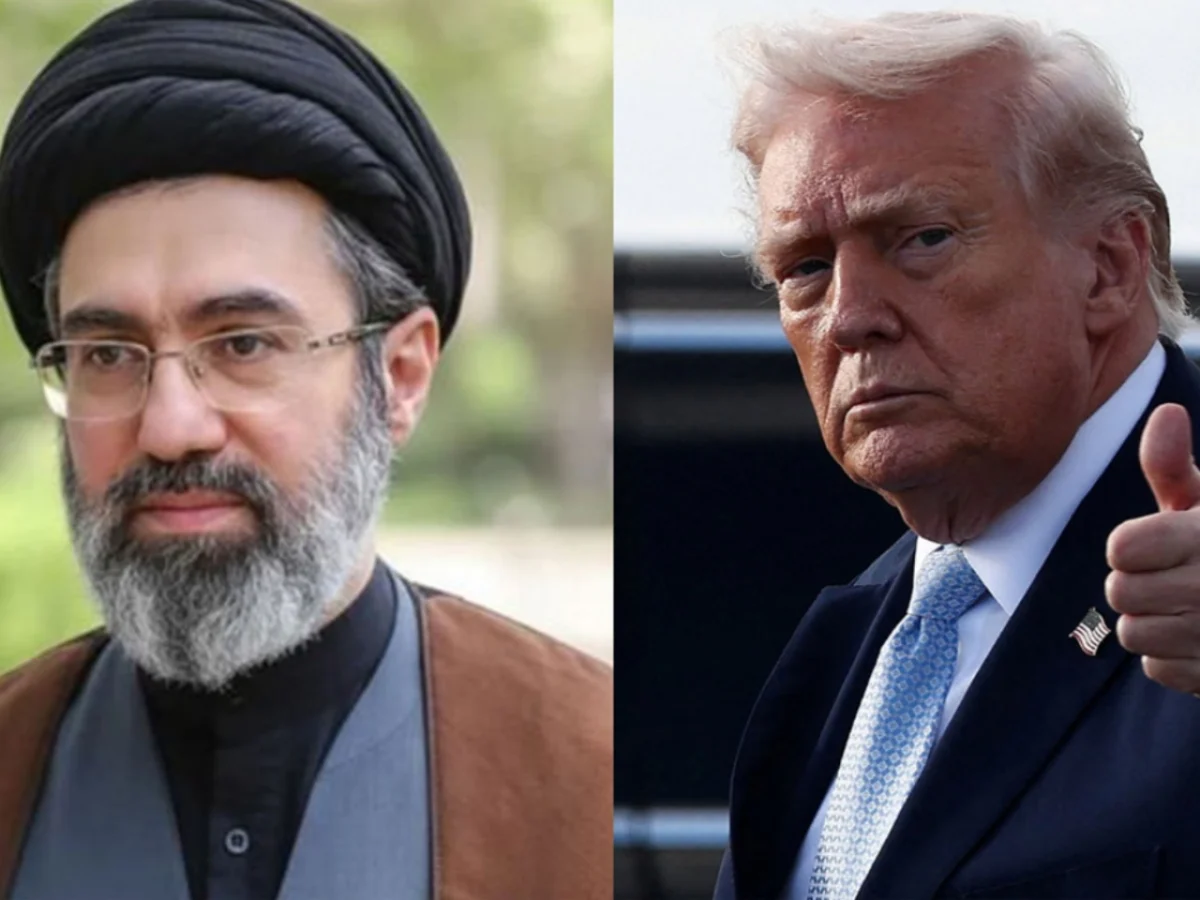
[City, Country] – [Date] – In a dramatic escalation of regional tensions, Iran’s Islamic Revolutionary Guard Corps (IRGC) launched multiple ballistic missiles towards United States military forces stationed in the Middle East. The surprise attack, which occurred at approximately 5:45 p.m. ET, was successfully thwarted by robust US air defense systems, with all incoming projectiles intercepted. Despite the immediate threat being neutralized, US forces across the region have reaffirmed their "vigilant and high state of readiness," underscoring the precarious security environment.
The brazen assault marks a significant shift in the volatile dynamic between Washington and Tehran, following a period where diplomatic overtures, albeit tentative, were reportedly explored. The incident has drawn swift condemnation from regional allies and ignited fresh concerns about the potential for wider conflict, particularly as Iran has simultaneously ruled out negotiations with the US and issued stark warnings regarding European naval presence in the strategically vital Strait of Hormuz.
Main Facts: A Bold Act of Aggression and Successful Defense
The core of the unfolding crisis centers on the unprovoked missile attack launched by Iranian forces. Multiple ballistic missiles were fired from Iranian territory, targeting US military installations in the Middle East. Crucially, the United States Central Command (CENTCOM) confirmed the successful interception of every projectile, preventing any direct impact on personnel or infrastructure. This decisive defensive action highlights the efficacy of advanced US air defense capabilities deployed in the region.
The attack was characterized as a "surprise" by CENTCOM, indicating a deliberate attempt by Iran to catch US forces off guard. While the initial reports from CENTCOM broadly stated "U.S. forces based in the Middle East" as the target, an Axios report subsequently specified a US military base in Jordan. This detail, if confirmed, carries significant geopolitical weight, as it would represent a direct assault on a sovereign nation’s territory and a breach of regional stability.
)
The immediate aftermath saw US forces swiftly recalibrating their posture, with an emphasis on heightened vigilance and preparedness. This proactive stance reflects the gravity of the situation and the ongoing assessment of potential future threats. The successful interception, while preventing immediate casualties or damage, does not diminish the seriousness of the Iranian act, which has been widely interpreted as a calculated show of force and a challenge to US military presence in the Middle East.
Chronology of Escalation: From Diplomatic Pause to Missile Fire
The recent missile attack did not occur in a vacuum but rather within a complex tapestry of historical animosity and recent diplomatic maneuvering. The sequence of events leading up to and immediately following the strike provides critical insight into the current flashpoint.

The Diplomatic Interlude: Just days prior to the missile launch, US President Donald Trump had indicated a temporary halt in military strikes against Iran. This pause, according to Trump, was initiated after Tehran "asked us very nicely, ‘Please stop, let’s meet,’" suggesting a window for diplomatic engagement to de-escalate tensions and potentially negotiate a new ceasefire agreement. This apparent willingness to engage, however fragile, offered a glimmer of hope for a peaceful resolution to ongoing disputes.
The Surprise Attack: This nascent diplomatic opening was abruptly shattered on [Date of Attack, e.g., July 29, 2026, as per the image source]. At 5:45 p.m. ET, the IRGC executed its ballistic missile strike. CENTCOM’s public statement, disseminated via a post on X (formerly Twitter), provided the first official confirmation: "At 5:45 p.m. ET today, Islamic Revolutionary Guard Corps forces launched multiple ballistic missiles from Iran in an attempted surprise attack on U.S. forces based in the Middle East. All Iranian missiles were successfully intercepted."
)
Target Identification and Condemnation: While CENTCOM maintained a broad geographical reference, Axios quickly reported that the target was a US military base located in Jordan. This specification immediately drew strong condemnations from regional allies. Both Kuwait and Qatar issued official statements, posted on X by their respective Ministries of Foreign Affairs, expressing "full solidarity" with the Hashemite Kingdom of Jordan. Kuwait’s MoFA affirmed its support for "all measures it takes to protect its security, sovereignty, and the safety of its people." Similarly, Qatar’s Ministry of Foreign Affairs underscored its "condemnation and strongest denunciation of the repeated attacks that targeted the sister Hashemite Kingdom of Jordan using drones, in flagrant violation of its sovereignty and the integrity of its territories, and a direct threat to its security and stability." The use of the term "repeated attacks" in Qatar’s statement, while potentially referring to previous drone incidents, adds another layer of concern regarding persistent threats to Jordan’s stability.
Iran’s Rejection of Talks: In a swift and defiant response that directly contradicted President Trump’s earlier narrative of Iranian willingness to negotiate, Iranian Deputy Foreign Minister Kazem Gharibabadi categorically ruled out talks with the United States. His remarks, made in an interview with State TV and carried by Al Jazeera, signaled a hardened stance from Tehran. Gharibabadi asserted, "We should not get America used to fighting whenever it wants and sitting at the negotiating table whenever it wants," directly challenging Washington’s perceived leverage. He further claimed it was the US that had "sent messages pleading for an end to the conflict," turning Trump’s narrative on its head.
)
This rapid succession of events – from a fragile diplomatic opening to a missile attack, successful interception, and an unequivocal rejection of dialogue – highlights the deep chasm of mistrust and competing narratives that define US-Iran relations.
Supporting Data and Context: Understanding the Stakes
To fully grasp the gravity of this incident, it’s essential to examine the broader geopolitical context, military capabilities, and strategic importance of the locations involved.
)
The Landscape of US-Iran Tensions: Relations between the United States and Iran have been fraught for decades, characterized by periods of intense confrontation and proxy conflicts. The 2015 Iran nuclear deal (JCPOA) offered a brief respite, but its subsequent abandonment by the Trump administration and the re-imposition of crippling sanctions reignited hostilities. Both nations have engaged in a shadow war, involving cyberattacks, maritime incidents, and support for opposing factions in regional conflicts. Direct military confrontations, while rare, carry immense risk, and the latest missile attack pushes the boundaries of this delicate balance.
Iran’s Ballistic Missile Arsenal: Iran has invested heavily in developing a formidable ballistic missile program, which it views as a cornerstone of its national defense and a deterrent against external aggression. The IRGC controls a diverse array of short- and medium-range missiles, some capable of reaching targets across the Middle East. These missiles vary in sophistication, payload capacity, and accuracy. While precise details of the missiles used in this attack are not public, their launch demonstrates Iran’s capability to project power beyond its borders. The development of these missiles has been a consistent source of international concern, particularly given their potential to carry conventional or, speculatively, non-conventional warheads.
)
US Air Defense Superiority: The successful interception of all Iranian missiles underscores the advanced capabilities of US air defense systems deployed in the Middle East. These systems typically comprise a layered defense network, including radar detection systems, command and control centers, and various interceptor missiles. Key components often include the Patriot missile system, designed to intercept tactical ballistic missiles, cruise missiles, and advanced aircraft, and potentially Terminal High Altitude Area Defense (THAAD), which provides an upper-tier defense against short-, medium-, and intermediate-range ballistic missiles. The ability to successfully neutralize multiple incoming ballistic missiles in a surprise attack scenario is a testament to the technology, training, and operational readiness of US forces. It sends a clear message about the deterrent capabilities present in the region.
Jordan’s Strategic Role: The reported targeting of a US base in Jordan is particularly significant. Jordan is a crucial US ally, sharing borders with Syria, Iraq, Saudi Arabia, and Israel, and playing a vital role in regional stability and counter-terrorism efforts. The presence of US forces in Jordan is part of broader security cooperation aimed at maintaining regional security and combating extremist groups. An attack on Jordanian soil, even if directed at US assets, constitutes a violation of Jordan’s sovereignty and risks destabilizing a relatively stable nation in a volatile region. This aspect was explicitly highlighted in the condemnations from Kuwait and Qatar.
)
The Strait of Hormuz: A Global Chokepoint: Beyond the immediate missile strike, Iran’s Deputy Foreign Minister Kazem Gharibabadi’s warning about European naval vessels in the Strait of Hormuz adds another layer of profound concern. The Strait of Hormuz is a narrow waterway between the Persian Gulf and the Gulf of Oman, through which roughly one-fifth of the world’s total oil consumption and a significant portion of global liquefied natural gas (LNG) transits daily. Iran has historically threatened to close the strait in response to perceived threats or sanctions, a move that would have catastrophic implications for global energy markets and the world economy. Gharibabadi’s declaration that Tehran would not restore the strait to its pre-war status and views its control as a "key defensive capability" reaffirms Iran’s intent to leverage this strategic chokepoint.
In response, US Central Command (CENTCOM) reiterated its ongoing commitment to securing regional maritime routes. With over 20 US Navy warships deployed in the Middle East, CENTCOM actively conducts maritime operations, which have involved redirecting, disabling, or boarding commercial vessels to enforce international law and ensure freedom of navigation. This dual commitment to both air defense and maritime security highlights the multifaceted nature of US operations aimed at containing Iranian aggression and safeguarding vital global interests.
)
Official Responses and Diplomatic Fallout: A Chasm of Distrust
The official responses from all parties involved paint a picture of deeply entrenched positions and a significant diplomatic impasse.
Iran’s Defiance and Terms: Deputy Foreign Minister Kazem Gharibabadi’s statements represent the most direct and unyielding articulation of Iran’s current stance. By ruling out negotiations with the United States, Tehran has effectively slammed shut the door on the diplomatic channel that President Trump had claimed was opening. Gharibabadi’s assertion that Iran would not allow Washington to "dictate the timing or terms of diplomacy" is a clear declaration of sovereignty and a rejection of any perceived weakness. His claim that it was the US "who sent messages pleading for an end to the conflict" directly refutes President Trump’s narrative, presenting Iran as the stronger, more principled party. Furthermore, the warning to Europe regarding the Strait of Hormuz, declaring any approaching naval vessels as "legitimate targets," is a severe escalation, directly threatening international shipping and challenging European naval operations in the region. This aggressive posturing is designed to project strength and deter any perceived infringement on Iranian interests or sovereignty over the vital waterway.
)
The US Position: Vigilance and Openness (Contradicted): Prior to the missile attack, President Trump’s remarks about Iran "asking us very nicely, ‘Please stop, let’s meet,’" had suggested a potential willingness to engage in dialogue. This stance was immediately contradicted by Iran’s missile launch and subsequent rejection of talks. The US response has since pivoted to emphasizing military readiness and the successful defense of its assets. CENTCOM’s public statements have focused on the operational success of the air defense systems and the continued commitment to regional security. While the US maintains a robust military presence, the diplomatic path appears, for now, to be blocked by Iran’s hardened stance. The contradiction between Trump’s earlier statements and Iran’s actions underscores the deep mistrust and divergent interpretations of events.
Allied Condemnation: A Unified Regional Front: The strong condemnations from Kuwait and Qatar are indicative of a broader regional concern over Iranian aggression. These Gulf nations are key US allies and share borders or maritime interests with Iran. Their unequivocal solidarity with Jordan, and their denunciation of the violation of its sovereignty, signal a unified front against actions that destabilize the region. Such statements are crucial in isolating Iran diplomatically and reinforcing the message that its actions are unacceptable to its neighbors. The emphasis on "repeated attacks" in Qatar’s statement, even if referring to prior incidents, highlights a pattern of concern that extends beyond this single missile launch.
)
The official responses reveal a deeply polarized environment, with Iran adopting an assertive and confrontational posture, while the US and its allies emphasize defense and regional stability. The immediate consequence is a significant setback for any potential de-escalation efforts.
Implications and Future Outlook: A Precarious Path Forward
The Iranian missile attack and the subsequent diplomatic fallout carry profound implications for regional stability, international relations, and global security.
)
Heightened Risk of Escalation: The most immediate and concerning implication is the increased risk of a wider conflict. A direct missile attack on US forces, even if intercepted, is a severe provocation. Had the missiles landed and caused casualties, a retaliatory strike from the US would have been almost inevitable, potentially triggering a dangerous cycle of escalation. Even without casualties, the incident raises the threshold of confrontation and makes future military responses from either side more probable. The "surprise" nature of the attack suggests a deliberate attempt to test US resolve and capabilities.
Diplomatic Deadlock and Deterioration of Trust: Iran’s outright rejection of negotiations, coupled with its aggressive rhetoric and military action, signals a deep diplomatic deadlock. The conflicting narratives regarding who sought an end to the conflict further erode any trust that might have existed. This makes future diplomatic breakthroughs incredibly challenging, as both sides appear unwilling to concede ground or accept the other’s version of events. The absence of a viable diplomatic channel leaves military options and proxy conflicts as the primary modes of interaction, increasing instability.
)
Impact on Regional Security Architecture: The targeting of a US base in Jordan and the threats regarding the Strait of Hormuz directly challenge the existing security architecture in the Middle East. It forces a reassessment of defense postures, intelligence gathering, and alliance commitments. Regional allies, already wary of Iranian influence, will likely strengthen their cooperation with the US and enhance their own defensive capabilities. The incident could also embolden other non-state actors supported by Iran, leading to a broader pattern of destabilizing actions.
Economic Ramifications and Energy Security: The threat to the Strait of Hormuz carries significant economic implications. Any disruption to shipping through this vital chokepoint, even perceived, can send shockwaves through global oil and gas markets, leading to price spikes and supply chain anxieties. International maritime insurance rates for vessels operating in the region would likely increase, raising the cost of trade. Iran’s explicit warning to European naval vessels directly challenges freedom of navigation and poses a threat to the global economy that relies heavily on the uninterrupted flow of energy resources from the Gulf.
)
International Scrutiny and Calls for Restraint: The international community will undoubtedly view this incident with alarm. While condemnation of Iran’s actions will be strong from Western nations and their allies, there will also be widespread calls for de-escalation and restraint from all parties to prevent a catastrophic regional war. United Nations bodies and other international organizations may attempt to facilitate dialogue, though the current Iranian stance makes such efforts difficult.
Future of US Military Presence and Strategy: The successful interception highlights the effectiveness of current US air defense systems but also underscores the persistent threat posed by Iran’s missile program. The incident will likely lead to a review of US military deployments, intelligence gathering, and rules of engagement in the region. The US may consider reinforcing its defensive capabilities or adjusting its strategic posture to deter future attacks more effectively.
)
In conclusion, the recent Iranian missile attack, while successfully defended, represents a dangerous escalation in the perennial conflict between Washington and Tehran. With diplomatic channels seemingly closed and rhetoric hardening on both sides, the Middle East faces an increasingly precarious future, where the specter of a wider conflict looms large, threatening regional stability and global economic security. The coming weeks will be critical in determining whether this incident remains an isolated, albeit serious, provocation or a harbinger of deeper and more perilous confrontations.
