

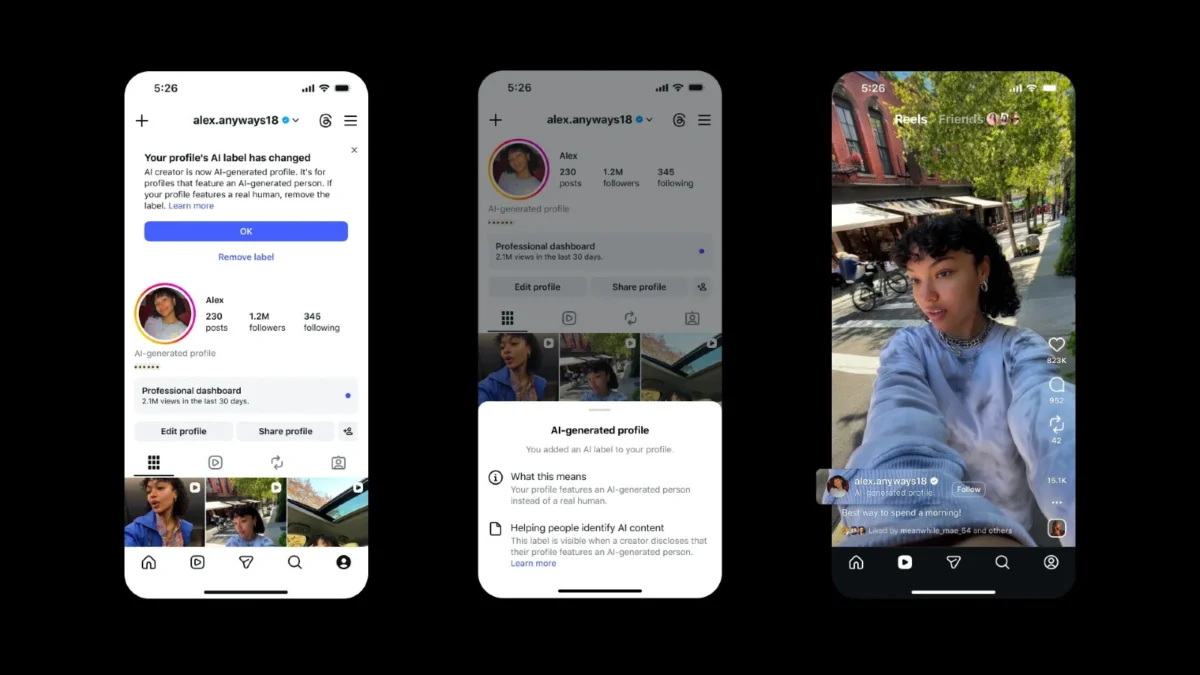
New Delhi, September 1, 2026 – In a significant move to foster greater transparency and combat the proliferation of deceptive AI-generated profiles, Instagram, the Meta-owned social media giant, announced a sweeping policy overhaul. Effective immediately, the platform is replacing its ambiguous "AI creator" label with a much clearer "AI-generated profile" designation for accounts featuring non-human, artificially intelligent characters. This strategic shift aims to explicitly inform users when they are interacting with an AI rather than a human, with severe penalties – including reduced content reach – for profiles that fail to disclose their synthetic nature.
The policy change, detailed in a blog post titled "Bringing More Transparency to AI-Generated Profiles on Instagram," underscores Meta’s escalating commitment to responsible AI integration and user trust. The move comes as the digital landscape grapples with the blurring lines between authentic human presence and increasingly sophisticated AI simulations, particularly in the lucrative realm of social media influencing.
Main Facts
Instagram’s Definitive Stance on AI Transparency
Instagram’s decision to rename and re-emphasize its AI disclosure policy marks a critical turning point in the platform’s approach to synthetic content. The former "AI creator" label, introduced previously, often led to user confusion, as it could be misinterpreted to mean a human creator using AI tools for content generation, rather than a profile entirely generated by AI. The new "AI-generated profile" label leaves no room for ambiguity, explicitly stating that the person or character featured is a product of artificial intelligence.
This clarity is paramount for user trust. As AI generative capabilities advance, virtual influencers are becoming indistinguishable from human counterparts, raising ethical concerns about authenticity, potential manipulation, and the erosion of genuine human connection online. Instagram’s revised labeling system directly addresses these concerns, empowering users with the necessary information to discern the nature of the profiles they encounter. The platform’s goal is to ensure that the authenticity of interaction remains a fundamental expectation, not a guessing game.
Mandatory Labeling Across All Content Formats
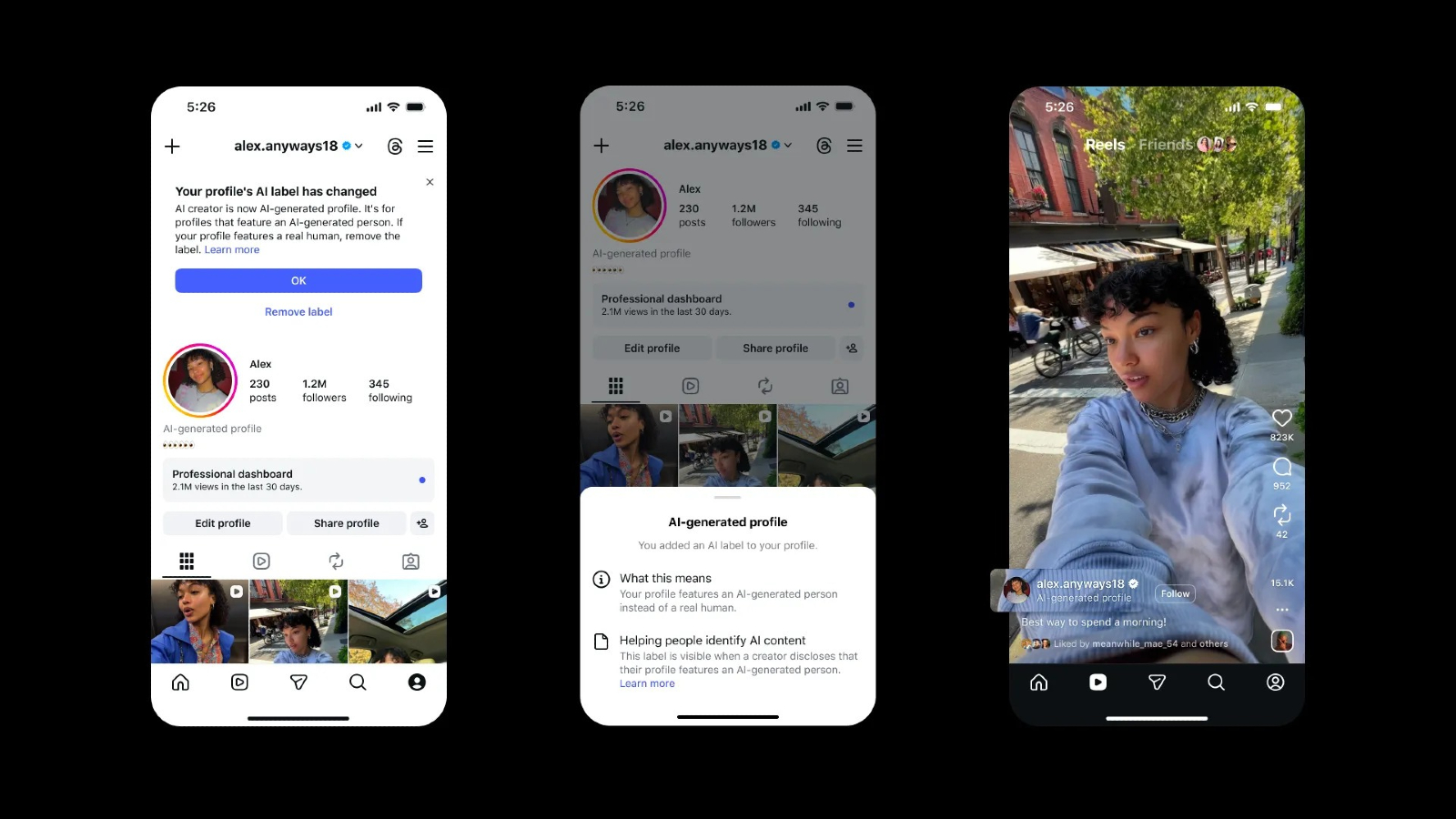
The enhanced transparency measures are comprehensive, extending across all primary content formats on Instagram. The "AI-generated profile" label will now be prominently displayed not only on individual posts, Reels, and Stories but, critically, directly beneath the account’s handle and display name in the main bio header. This ensures that the disclosure is immediately visible upon visiting an AI profile, eliminating the need for users to scour content for subtle indicators.
This persistent and pervasive labeling is designed to make the disclosure unavoidable. Whether users scroll through their feed, browse Explore, or land directly on an AI profile, the synthetic nature of the account will be made clear upfront. This ubiquitous application reflects Instagram’s recognition that AI-generated content can appear in diverse forms and contexts, and consistent disclosure is essential for maintaining a transparent environment across the entire platform ecosystem.
Penalties for Non-Compliance: A Blow to Undisclosed AI Profiles
To ensure adherence to the new policy, Instagram has introduced significant penalties for accounts that fail to properly label their AI-generated profiles. Profiles found to be featuring AI-generated individuals without the required disclosure will face a limitation in their content’s reach. This means their posts, Reels, and Stories will be less likely to be recommended to non-followers across key discovery surfaces such as Reels, Explore, and general feed suggestions.
This "limited reach" penalty is a potent disincentive for non-compliance. For many influencers and content creators, discoverability and organic reach are the lifeblood of their growth and monetization strategies. By curtailing the ability of undisclosed AI profiles to expand their audience, Instagram is effectively targeting their primary mechanism for influence and commercial viability. The policy aims to compel transparency by making it significantly harder for deceptive AI profiles to thrive and expand their footprint on the platform, thereby protecting the integrity of its recommendation algorithms and user experience.
Chronology of AI Integration and Regulation on Social Media
The Rise of AI-Generated Content and Virtual Influencers
The journey to Instagram’s new AI policy is rooted in the rapid evolution and proliferation of artificial intelligence within content creation. Over the past decade, AI technology has progressed from rudimentary image generation to creating sophisticated, hyper-realistic virtual personas. Early experiments in computer graphics and animation laid the groundwork, but it was the advent of advanced generative adversarial networks (GANs) and later, transformer models, that truly democratized the creation of synthetic media.
This technological leap birthed the phenomenon of virtual influencers. Characters like Lil Miquela, a CGI creation launched in 2016, quickly amassed millions of followers, partnered with major brands like Calvin Klein and Prada, and blurred the lines between digital fantasy and real-world celebrity. Following her success, a wave of other virtual influencers emerged globally, each meticulously crafted to possess unique personalities, aesthetics, and backstories. These AI-generated personalities offer brands unprecedented control, avoiding human scandals and controversies, and providing 24/7 availability for campaigns. Their ability to generate vast amounts of content, often with flawless execution, has made them attractive assets in the digital marketing landscape, fundamentally reshaping how audiences engage with and perceive "influencers." The challenge, however, has always been how to ethically integrate them without deceiving the end-user.
Meta’s Prior Attempts and Challenges in AI Disclosure
Meta, as a leading social media conglomerate, has been at the forefront of both integrating and grappling with the implications of AI. The earlier "AI creator" label was an initial, albeit imperfect, attempt to address the emerging issue of synthetic content. While well-intentioned, its vagueness proved problematic. A "creator" implies agency and human involvement, allowing for the misinterpretation that a human was simply using AI tools, rather than the profile itself being entirely AI-driven. This semantic loophole allowed many virtual profiles to operate in a gray area, benefiting from the perception of human authenticity without explicit disclosure.
Furthermore, Meta has faced direct challenges and backlash regarding its AI tools. A notable incident involved an Instagram AI feature that allowed users to generate images using other people’s likenesses without explicit consent. This raised significant privacy and ethical concerns, leading to widespread criticism and Meta’s subsequent removal of the feature. Such incidents highlight the complex and often contentious learning curve for tech giants navigating the ethical minefield of AI. These past experiences have undoubtedly informed the platform’s more stringent and unambiguous approach to AI disclosure, demonstrating a reactive evolution in policy development.
A Broader Industry Trend Towards AI Transparency
Instagram’s enhanced AI labeling policy is not an isolated incident but rather a reflection of a broader, accelerating industry trend towards greater AI transparency. As generative AI becomes more accessible and powerful, social media platforms worldwide are confronting similar challenges related to deepfakes, synthetic media, and virtual personas. Other major platforms, including TikTok and YouTube, have also begun implementing or strengthening their own AI disclosure policies, requiring creators to label AI-generated or manipulated content.
This concerted effort across the digital ecosystem stems from a growing global consensus on the need for AI ethics and content provenance. Regulatory bodies and governments around the world are increasingly scrutinizing AI’s impact on public discourse, elections, and individual rights. Discussions within international forums and legislative bodies are pushing for standardized frameworks for AI accountability and transparency. Instagram’s latest move can be seen as a proactive measure, aligning itself with these emerging global standards and demonstrating a commitment to responsible AI deployment in anticipation of future regulatory mandates. The platform is positioning itself as a leader in addressing these critical issues, understanding that user trust is paramount for long-term sustainability.
Supporting Data and User Sentiment
The Growing Scale of AI-Generated Content
While precise, real-time statistics on the volume of AI-generated content on Instagram are proprietary, industry analyses and expert observations point to an exponential growth trend. The widespread availability of user-friendly AI tools, from image generators like Midjourney and DALL-E to video synthesis platforms, has democratized the creation of synthetic media. Experts suggest that millions of AI-generated images, videos, and even text-based posts are uploaded across social media platforms daily, a number that continues to climb at an alarming rate. This surge is driven by both casual experimentation and sophisticated commercial endeavors, making it increasingly difficult for the average user to distinguish authentic content from artificial creations without explicit indicators.
This proliferation creates a fertile ground for deception, whether intentional or unintentional. As the fidelity of AI-generated content improves, the "uncanny valley" effect – where something looks almost human but is subtly unsettling – is diminishing. This makes it harder for the human eye to detect synthetic origins, underscoring the necessity for platform-level interventions like mandatory labeling.
The Psychological Impact on Users
Instagram’s blog post explicitly states that "people don’t like seeing a profile that seems human, only to find out later that the person featured is AI-generated." This sentiment highlights a crucial psychological impact of undisclosed AI profiles: the erosion of trust and the feeling of deception. When users engage with a profile, they inherently project human qualities and expectations onto it. Discovering that the perceived "person" is entirely artificial can lead to feelings of betrayal, confusion, and a general distrust of online interactions.
This lack of transparency can also contribute to a sense of digital fatigue, where users become increasingly skeptical of the content they consume. The constant need to verify authenticity adds a cognitive load to the online experience, detracting from the platform’s intended purpose of connection and shared experiences. For brands, associating with undeclared AI influencers carries significant reputational risks, as consumers increasingly value authenticity and transparency from the companies they support. The emotional and psychological toll of navigating a world where reality is constantly questioned necessitates robust disclosure mechanisms.
The Commercial Landscape of Virtual Influencers
The commercial allure of virtual influencers is undeniable. They offer brands unparalleled advantages: complete creative control, immunity to human scandals, the ability to work 24/7 across time zones, and perfect adherence to brand guidelines. The global virtual influencer market has seen substantial growth, with some estimates valuing it in the hundreds of millions of dollars, projected to reach billions in the coming years. Brands across fashion, beauty, gaming, and lifestyle sectors have invested heavily in collaborations with these digital personas, leveraging their unique appeal and often massive followings.
However, Instagram’s new policy introduces a critical factor into this lucrative equation: mandatory transparency. While virtual influencers offer distinct benefits, their continued commercial success has, to some extent, relied on the ambiguity of their origins. Once explicitly labeled as "AI-generated profiles," their perceived authenticity might shift. This could force brands and marketers to re-evaluate their strategies, potentially emphasizing the unique, futuristic, or artistic aspects of AI influencers rather than attempting to pass them off as human. The policy might, in fact, foster a new era where transparently AI-generated influencers carve out their own legitimate niche, valued for their distinct synthetic nature rather than their ability to mimic humanity.
Official Responses and Broader Regulatory Context
Meta’s Rationale and Commitment to User Trust
Meta’s official blog post, "Bringing More Transparency to AI-Generated Profiles on Instagram," serves as the primary articulation of the company’s rationale behind this policy shift. The core message revolves around empowering users with accurate information. "As generative AI becomes a bigger part of how people create, we’ve heard that people don’t like seeing a profile that seems human, only to find out later that the person featured is AI-generated," Instagram stated, underscoring user feedback as a key driver. The platform’s commitment is framed within a broader strategy of maintaining a trustworthy and authentic environment across its ecosystem.
This move aligns with Meta’s evolving "responsible AI" initiatives, which seek to develop and deploy AI technologies ethically and transparently. The company recognizes that the widespread adoption of AI tools on its platforms necessitates proactive measures to mitigate potential harms, including deception and misinformation. By taking a definitive stance on AI profile disclosure, Instagram is aiming to reinforce its credibility and foster a safer, more predictable online experience for its vast global user base.
Expert Opinions on the Policy’s Effectiveness
Reactions from digital ethics researchers and social media analysts to Instagram’s new policy are largely positive, though often accompanied by caveats. Dr. Anya Sharma, a leading researcher in digital ethics, commented, "This is a crucial step towards re-establishing trust in the digital sphere. The explicit ‘AI-generated profile’ label is far superior to its predecessor, and the penalty for non-compliance adds necessary teeth to the policy." However, Dr. Sharma also cautioned, "The challenge will lie in enforcement. AI models are constantly evolving, and detecting sophisticated deepfakes or intentionally disguised AI profiles will require ongoing technological vigilance from Instagram."
Social media analyst Mark Davies echoed this sentiment, adding, "While a welcome change, platforms like Instagram must also consider the potential for new loopholes. Will creators simply shift to ‘AI-assisted’ profiles where a human ‘hosts’ AI-generated content? The policy needs to be adaptive." Experts suggest that while the policy addresses direct AI-generated personas, the broader issue of AI-manipulated content within human-run profiles will remain a continuous battleground, requiring further refinement of disclosure mechanisms. The debate persists: is labeling sufficient, or should platforms consider stricter controls or even outright bans on certain types of undisclosed AI content?
The Interplay with Broader Digital Safety Initiatives
Instagram’s AI transparency policy cannot be viewed in isolation; it exists within a larger context of increasing pressure on tech giants to prioritize digital safety and responsibility. Just weeks prior to this announcement, Meta agreed to an $18 billion settlement with U.S. states and territories to resolve claims that Facebook and Instagram harmed children. As part of this landmark agreement, Meta committed to implementing significant changes aimed at better protecting young users online, including default daily time limits and nighttime blocks.
While the child safety settlement is distinct from AI transparency, both initiatives reflect a common theme: a growing expectation from regulators, governments, and the public for Meta to act as a more responsible digital steward. These pressures are compelling the company to proactively address potential harms across its platforms, whether they stem from addictive algorithms, privacy breaches, or deceptive AI content. The confluence of these regulatory and ethical challenges underscores a pivotal moment for Meta and the broader tech industry, signaling a shift towards greater accountability and a more regulated digital environment.
Implications for the Digital Ecosystem
For AI Content Creators and Virtual Influencers
The new policy heralds a significant shift for AI content creators and the ecosystem of virtual influencers. No longer able to operate in a gray area, they will be compelled to embrace transparency from the outset. This could force a strategic re-evaluation: rather than attempting to mimic human influencers, AI personas might now lean into their synthetic nature, highlighting their unique capabilities or artistic origins. Transparency could, paradoxically, become a new selling point, fostering a niche where authenticity is defined by honest disclosure rather than perfect human simulation.
However, the "limited reach" penalty for non-compliance could severely impact the growth potential of new or undeclared AI profiles. This might lead to a consolidation of the virtual influencer market, favoring those who are already established or who can quickly adapt to and fully comply with the new labeling requirements. Creators will need to invest more in creative differentiation and genuine engagement strategies, rather than relying on deceptive appearances, to thrive under the new regime.
For Brands and Marketers
For brands and marketers, Instagram’s policy change necessitates a careful review of their influencer marketing strategies. Partnerships with virtual influencers will now carry a clear "AI-generated profile" label, which might alter consumer perception. Brands must decide whether this explicit disclosure aligns with their brand image and marketing objectives. There will likely be a heightened emphasis on ethical marketing and clear disclosure to consumers, as brands risk reputational damage if they are perceived to be associated with deceptive practices, even inadvertently.
This could lead to a bifurcation in marketing approaches: some brands might strategically embrace AI influencers, highlighting their innovative nature, while others might pivot back towards human influencers, prioritizing perceived authenticity and genuine connection. The policy encourages a more thoughtful and transparent approach to influencer selection, ensuring that marketing campaigns are not only effective but also ethically sound.
For the Average Instagram User
The most direct beneficiary of this policy change is the average Instagram user. The enhanced clarity provided by the "AI-generated profile" label will empower users with crucial information, allowing for a more informed consumption of content. No longer will users have to question the authenticity of a seemingly human profile; the platform will explicitly state its synthetic nature. This enhanced transparency is expected to lead to a more trustworthy and less deceptive online experience.
By reducing the likelihood of encountering undisclosed AI profiles, Instagram aims to mitigate feelings of distrust, confusion, and potential manipulation. This empowerment through knowledge allows users to engage with content and profiles on their own terms, understanding whether they are interacting with a human, an algorithm, or a sophisticated AI construct. Ultimately, the goal is to restore a sense of predictability and honesty to digital interactions, allowing users to better distinguish between genuine human connection and engineered digital presence.
The Future of AI and Human Interaction on Social Platforms
Instagram’s latest policy is a clear indicator of the evolving relationship between AI and human interaction on social platforms. It signifies a pivotal moment where platforms are being forced to draw clearer boundaries between organic and synthetic content. In the long term, this could lead to a more distinct categorization of content, where users are well aware of whether they are engaging with human creations, AI-generated content, or AI-assisted content.
However, the challenge of sophisticated AI deception, including deepfakes and advanced synthetic media, will remain an ongoing concern. As AI technology continues to advance, platforms will face a continuous arms race against those seeking to exploit these technologies for malicious or deceptive purposes. Instagram’s move is a robust step, but it is unlikely to be the final one. The evolving role of social media platforms will be to constantly adapt, innovate, and mediate this new digital reality, ensuring that technological progress does not come at the expense of user trust and platform integrity. The future of online interaction will undoubtedly be a complex tapestry woven with threads of both human authenticity and artificial intelligence, demanding continuous vigilance and proactive ethical frameworks from the gatekeepers of our digital spaces.
