


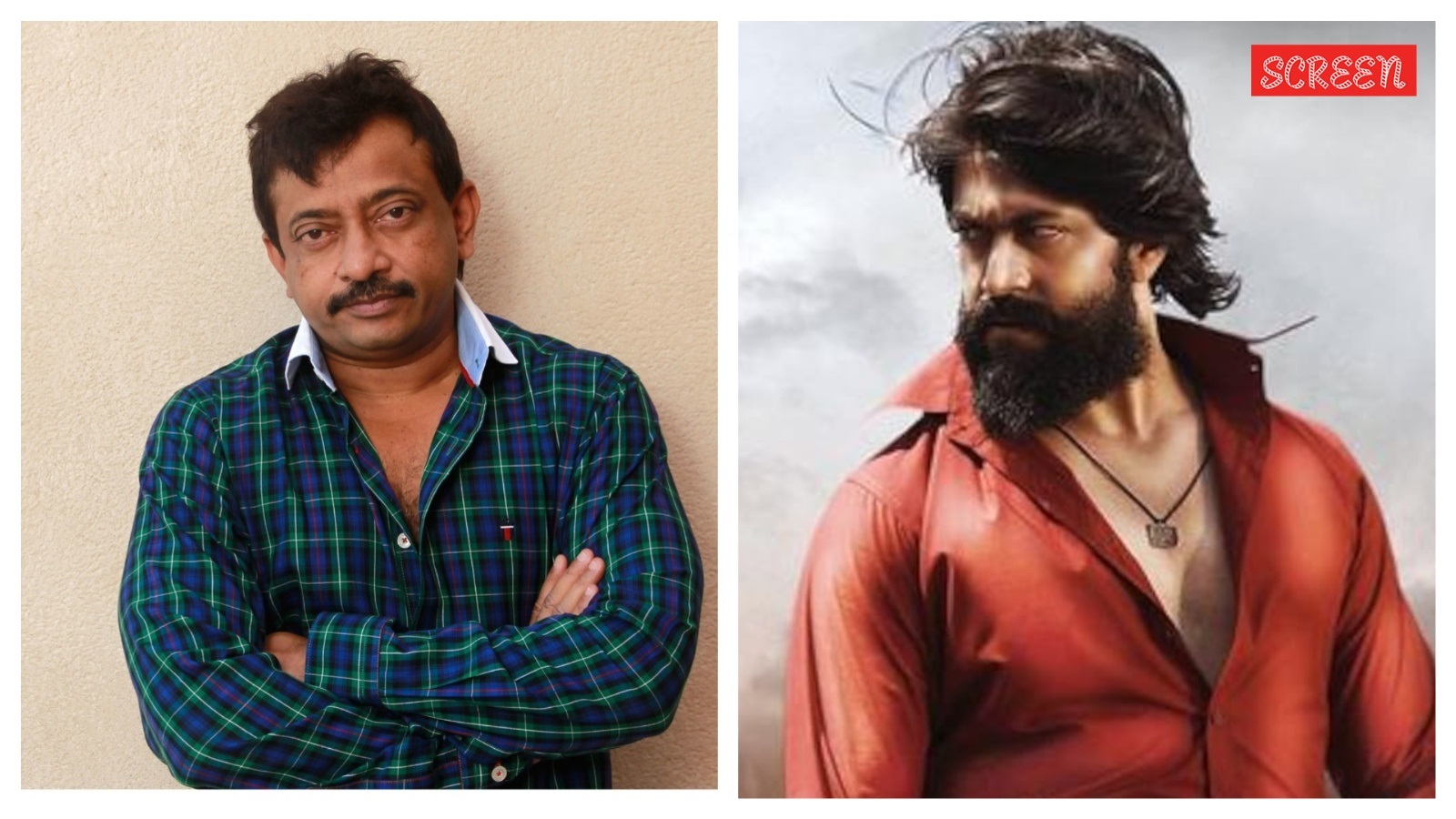
Mumbai, September 1, 2026 – In a move that has reignited a long-standing debate within the Indian film industry, acclaimed filmmaker Ram Gopal Varma has stepped forward to defend veteran Telugu producer Allu Aravind’s controversial remarks about Kannada superstar Yash. Varma’s intervention comes as Yash’s latest magnum opus, "Toxic: A Fairytale for Grownups," helmed by Geetu Mohandas, navigates a less-than-stellar opening at the box office, bringing renewed scrutiny to Aravind’s past comments.
The original statement, made by Allu Aravind some years ago, suggested that Yash was largely unknown to a pan-India audience prior to his seismic breakthrough with the KGF franchise. While initially met with considerable backlash, the sentiment has resurfaced on social media platforms, amplified by the current performance of "Toxic." Varma, known for his candid and often provocative opinions, has now offered a reasoned perspective, arguing that Aravind’s words were misconstrued and taken out of context.
Reinterpreting Allu Aravind’s "KGF" Context
Ram Gopal Varma took to his X (formerly Twitter) handle on Tuesday evening to address the controversy, labeling the uproar as "ridiculously laughable." He asserted that Allu Aravind’s intended meaning, when discussing "big films with unknown actors" and admitting to not knowing Yash before "KGF," was straightforward and should have been readily understood.
"What he clearly meant when he talked about big films with unknown actors, and saying he didn’t know of Yash before KGF, even a dumbo should understand that it was in context of the below," Varma posted, setting the stage for his subsequent analogies.
Varma’s core argument hinges on the idea that a film’s success, particularly its ability to catapult an actor to national prominence, is often driven by the project itself rather than pre-existing stardom. He posited that the narrative power and execution of a film can transform an actor into a household name, a phenomenon he illustrated with several high-profile examples from both Indian and international cinema.
Parallels Drawn: From Baahubali to Kantara
To bolster his defense of Allu Aravind’s perspective, Varma drew parallels with other actors who achieved pan-India recognition through groundbreaking films. He highlighted the case of Prabhas, the lead actor of the "Baahubali" series. While Prabhas was a well-established star in the Telugu film industry with a string of successful films like "Varsham," "Chatrapathi," "Darling," and "Mr. Perfect" to his name, Varma argued that his true pan-Indian, and subsequently global, superstardom was cemented by SS Rajamouli’s 2015 epic "Baahubali: The Beginning." Prior to "Baahubali," Varma contended, the Hindi audience’s awareness of Prabhas was significantly limited. The film’s phenomenal box office collection of over Rs 500 crore domestically was a watershed moment, irrevocably altering his career trajectory and audience perception nationwide.
The filmmaker then extended this analogy to Rishab Shetty, the writer, director, and lead actor of the 2022 Kannada action thriller "Kantara." Similar to Yash, Shetty was a recognized talent in the Kannada film industry, having delivered hits such as the 2016 rom-com "Kirik Party," Jayatheertha’s 2019 crime comedy "Bell Bottom," and Raj B Shetty’s 2019 neo-noir gangster film "Garuda Gamana Vrishabha Vahana." However, it was "Kantara" that propelled him to unprecedented national and international fame, amassing over Rs 550 crore at the domestic box office. Varma emphasized that, much like "Baahubali" for Prabhas, "Kantara" was the transformative vehicle for Shetty, introducing him to a vast new audience that was largely unaware of his prior work.
Hollywood’s Blueprint: Concept Over Stardom
Varma further elaborated on his thesis by referencing the approach of Hollywood, suggesting that its most enduring successes are built on compelling concepts and powerful storytelling, rather than an unquestioned reliance on star power. He invoked the legendary Marlon Brando as an example. Brando was already a respected actor with acclaimed performances in films like Elia Kazan’s "A Streetcar Named Desire" (1951) and "On the Waterfront" (1954). However, his definitive global breakthrough, cementing his status as an icon, came with his unforgettable portrayal in Francis Ford Coppola’s 1972 masterpiece, "The Godfather." Varma argued that even established stars in Hollywood find their ultimate recognition through projects that resonate universally and showcase their acting prowess in a profound manner.
"That’s because those films made them big stars and not the other way around," Varma explained. "Hollywood always spends big on concept films and not on stars. Even directors like Nolan use names only for their acting prowess and not to depend on their stardom."
He cited Christopher Nolan’s recent directorial ventures as prime examples of this philosophy. "The Odyssey," the 2026 action-adventure fantasy epic, has already surpassed $1.34 billion globally, while the 2023 period thriller "Oppenheimer" grossed over $983 million worldwide. While "The Odyssey" boasted a star-studded cast including Matt Damon, Anne Hathaway, and Tom Holland, "Oppenheimer" centered on Cillian Murphy in the titular role, an actor who, while respected, was not considered a traditional box-office draw on the same scale as some of his co-stars. Varma’s point is that the strength of Nolan’s vision and the narrative of these films were the primary drivers of their success, demonstrating that even A-list talent functions best when serving a compelling concept.
"We all know whether it’s Oppenheimer or Odyssey, they would work as much irrespective of who’s in it," Varma concluded, underscoring his belief in the primacy of content.
The "Toxic" Undercurrent and Ego’s Role
The timing of Varma’s defense is particularly noteworthy, coinciding with the lukewarm reception of "Toxic: A Fairytale for Grownups." The film, which had garnered significant pre-release hype, has reportedly underperformed at the box office in its initial days, leading to renewed discussions about star power versus content. Varma subtly alluded to this, suggesting that taking Allu Aravind’s statement personally might stem from an inflated ego.
"Coming back to the subject of Allu, it’s only highly egotistic people who will take his statement personally on such a general well-meaning thought," Varma stated. "Actually, this kind of reaction also explains why they are making what they are making." This veiled critique suggests that an overly defensive stance might be indicative of underlying insecurities or a misplaced focus in filmmaking.
Allu Aravind’s Original Statement and Yash’s Response
The genesis of this renewed controversy lies in Allu Aravind’s assertion made several years ago. He had commented that prior to the colossal success of Prashanth Neel’s 2018 Kannada period action film "KGF: Chapter 1" (which grossed over Rs 185 crore domestically), Yash was not a recognized figure on the national stage. This sentiment, while perhaps intended as an observation on the power of a breakthrough film, was perceived by many as dismissive of Yash’s years of hard work and contributions to the Kannada film industry.
In a recent promotional event for "Toxic," Yash himself addressed Aravind’s remarks, offering a nuanced perspective. "It’s true," Yash conceded on the popular television show "Aap Ki Adalat," acknowledging the transformative impact of "KGF." However, he quickly pivoted to a broader appreciation of the collaborative nature of cinema. "But I also believe that cinema doesn’t just belong to a producer. So many people work in cinema, but only the actor gets credit. Be it a character artiste or a writer, everyone works hard in cinema, but if an actor is not able to carry it, the film will not work. I feel the audience is right; sometimes I wonder why the actor wins all the love. And I truly believe that the audience is never wrong. They respect everyone and are aware of who deserves to earn more respect."
Yash’s response emphasizes his belief in the collective effort behind a film and the ultimate judgment of the audience, a sentiment that aligns with Varma’s argument about the power of content and performance.
Implications for the Industry
The ongoing discourse surrounding Yash’s stardom, Allu Aravind’s observations, and Ram Gopal Varma’s defense has several key implications for the Indian film industry:
- The Pan-India Phenomenon: The debate underscores the evolving nature of "pan-India" stardom. While films like "KGF" and "Baahubali" have undeniably created national stars, the question remains whether this recognition is solely a byproduct of these specific blockbusters or if it reflects a broader evolution in audience consumption and appreciation for regional cinema.
- Content vs. Star Power: Varma’s arguments, supported by Hollywood examples, reiterate the perennial debate of whether compelling content can transcend star power, or if a significant star is a prerequisite for widespread commercial success. The performance of "Toxic" will undoubtedly be scrutinized in light of this discussion.
- Regional Cinema’s Ascendancy: The rise of actors like Yash and Rishab Shetty from regional film industries to national prominence highlights the increasing influence and market reach of non-Bollywood cinema. This trend challenges the traditional dominance of Hindi cinema and opens new avenues for talent and storytelling.
- The Role of Social Media: The rapid resurgence and amplification of Allu Aravind’s comments on social media demonstrate its potent role in shaping narratives and fueling public discourse within the entertainment sphere. What might have been a fleeting comment years ago can now gain significant traction and relevance.
- Navigating Criticism: Yash’s mature and philosophical response to the controversy offers a model for how established artists can address potentially divisive remarks with grace and a broader perspective, emphasizing the collective nature of their craft.
As "Toxic" continues its theatrical run, the industry will be watching closely, not just for its box office performance, but also for how this debate shapes perceptions of stardom, content, and the ever-evolving landscape of Indian cinema. Ram Gopal Varma’s intervention has certainly added another layer to this ongoing conversation, reminding stakeholders of the fundamental interplay between a film’s concept, its execution, and the star power that ultimately brings it to life.
