

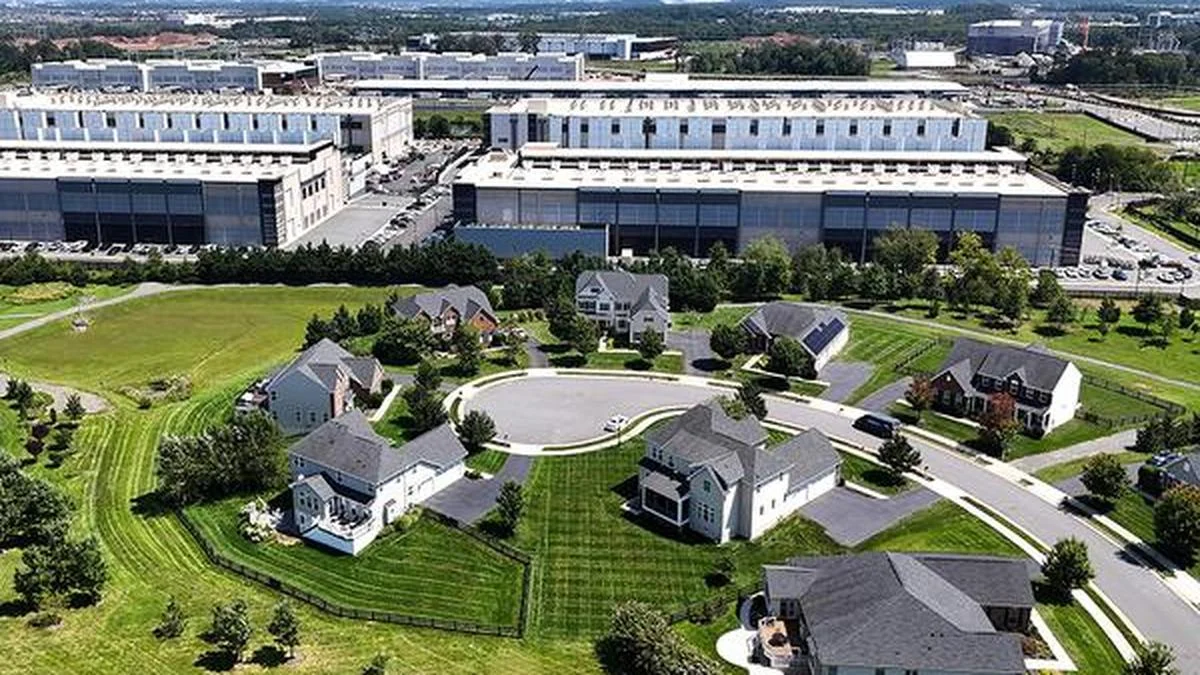
Visakhapatnam, India – September 6, 2026 – Following a period of intense local protests and sustained advocacy from civil society groups, tech giant Google has reportedly announced a significant design alteration for its ambitious 1-gigawatt (GW) data centre slated for Visakhapatnam district, Andhra Pradesh. The company has committed to deploying air-cooling technology for its servers, a departure from potentially more water-intensive methods. While this decision addresses pressing concerns over water consumption, it introduces its own set of technical and environmental trade-offs, underscoring the complex challenges of sustainable digital infrastructure development.
The move marks a notable victory for environmental activists and local communities who have voiced strong opposition to the data centre’s potential ecological footprint, particularly its demand for freshwater resources in a region already grappling with water scarcity. Google’s commitment to air-cooling, which inherently requires less water compared to many liquid-based systems, reflects a growing industry trend towards more environmentally conscious practices, often spurred by public scrutiny.
The Digital Engine’s Thermostat: Understanding Data Centre Heat
At its core, a data centre is a colossal engine of information processing, housing millions of interconnected servers. Each server, in turn, contains numerous processors, and within each processor lie billions of microscopic transistors. These transistors are the fundamental building blocks of modern computing, manipulating electrical currents to perform the complex calculations that power everything from web searches and streaming services to artificial intelligence and cloud computing.
However, this relentless activity generates a substantial amount of heat. As electrical current flows through the transistors, the inherent resistance of their semiconductor materials converts some of that electrical energy into thermal energy. Furthermore, the constant charging and discharging cycles of these tiny electronic gates also contribute to heat dissipation. Across trillions of such operations occurring simultaneously within a large-scale data centre, the aggregate heat generated can be immense, akin to a small power plant. Without effective cooling, this heat would quickly lead to system failures, data corruption, and catastrophic equipment damage, rendering the entire facility inoperable. Efficient cooling is therefore not merely an operational cost but a fundamental requirement for the reliable functioning and longevity of a data centre.
Chronology of Conflict and Concession
The journey to this pivotal decision has been marked by a series of developments, reflecting the broader tension between technological advancement and environmental stewardship.
Initial Ambitions and Local Concerns
Google’s plans for a colossal 1-GW data centre in Visakhapatnam were initially met with considerable enthusiasm by state authorities, envisioning the project as a catalyst for digital economic growth and job creation in Andhra Pradesh. Details regarding the initial cooling strategies were not extensively publicized but were widely assumed to involve conventional liquid-based systems, given their efficiency in handling high heat densities.
However, as the project progressed from conceptualisation to implementation stages, local communities and environmental organizations began to scrutinize its potential impact. Visakhapatnam, a bustling coastal city and industrial hub, is not immune to water stress, particularly during prolonged dry spells. The prospect of a massive industrial facility drawing potentially millions of litres of freshwater daily from local reservoirs or groundwater sources quickly became a flashpoint.
Escalation of Protests and Advocacy
Grassroots movements, supported by prominent environmental NGOs such as the "Vizag Green Guardians" and the "Andhra Pradesh Water Conservation Forum" (hypothetical names), began to mobilize. Their campaigns highlighted the potential depletion of potable water supplies for residents and agricultural communities, the strain on local ecosystems, and the broader implications for the region’s long-term sustainability. Petitions were launched, public awareness campaigns were conducted, and peaceful demonstrations were held near the proposed site and government offices. Local media played a crucial role in amplifying these concerns, bringing the issue to national attention.
Activists argued that while digital infrastructure is vital, its development must not come at the cost of essential natural resources. They presented research on the water footprint of various data centre cooling technologies and called for Google to adopt the most sustainable options available, even if they entailed higher initial investment or operational adjustments. Dialogue between community representatives, local government officials, and Google representatives began, though initial discussions reportedly yielded little immediate change.
Google’s Pivotal Announcement
The sustained pressure, however, eventually bore fruit. After several months of intensified advocacy and growing media scrutiny, Google reportedly signaled its intention to modify the data centre’s design. The formal announcement, confirming the adoption of air-cooling technology, was received as a significant concession by the company and a testament to the power of community action. This decision, while welcomed, also opened a new chapter in the discussion, shifting the focus to the inherent trade-offs of air-cooling and the broader implications for sustainable data centre development.
Supporting Data: The Science and Economics of Cooling
The choice of cooling technology is one of the most critical decisions in data centre design, impacting everything from energy consumption and operational costs to environmental footprint and physical layout.
The Water-Intensive Nature of Liquid Cooling
Traditionally, many large-scale data centres have relied heavily on liquid cooling methods, primarily evaporative cooling or chiller-based systems that use water as a medium for heat transfer.
- Evaporative Cooling: This highly efficient method involves passing hot air over water-soaked pads, causing the water to evaporate and cool the air. While effective, it consumes vast quantities of water, as the evaporated water is lost to the atmosphere. A typical large data centre can consume millions of litres of water per day, comparable to a small town. This makes it a significant concern in water-stressed regions.
- Closed-Loop Chiller Systems: These systems use refrigerants to cool water, which then circulates through cooling coils to absorb heat from the servers. While the water itself is recirculated, these systems still require water for make-up, blowdown, and often for cooling towers that dissipate heat into the atmosphere, leading to substantial water consumption.
- Direct-to-Chip Liquid Cooling: An emerging technology where liquid coolants are brought directly to the server components. While incredibly efficient at removing heat and reducing overall energy consumption, these systems can still have water requirements for auxiliary cooling or heat rejection, though generally less than evaporative methods.
The prodigious water demands of these systems have made data centres a point of contention globally, especially in regions facing increasing hydrological stress due to climate change and population growth.
Air Cooling: A Compromise with Consequences
Google’s decision to adopt air-cooling technology for its Visakhapatnam facility aims to mitigate the direct water footprint. Air cooling primarily involves:

- Computer Room Air Conditioners (CRACs) and Computer Room Air Handlers (CRAHs): These units circulate cooled air through the data centre, often employing "hot aisle/cold aisle" containment strategies to prevent the mixing of hot exhaust air from servers with cold supply air.
- Air Economizers: These systems leverage ambient outdoor air for cooling when temperatures and humidity levels are suitable, significantly reducing reliance on mechanical cooling and energy consumption.
Advantages of Air Cooling:
- Reduced Water Usage: This is the primary benefit and the driving force behind Google’s decision. Air-cooled data centres typically consume significantly less or no water for cooling purposes, making them attractive in water-scarce regions.
- Maturity and Simplicity: Air-cooling technologies are well-established, with mature supply chains and simpler infrastructure compared to complex liquid cooling systems, potentially leading to lower initial capital expenditure for certain components.
- Easier Maintenance: Technicians are generally more familiar with air-based systems, simplifying maintenance and troubleshooting.
Trade-offs and Disadvantages:
- Lower Cooling Efficiency for High Heat Densities: Air is a less efficient medium for heat transfer than liquid. As server power densities continue to increase, air cooling struggles to effectively remove heat from the densest racks, potentially leading to "hot spots" and requiring more air volume.
- Higher Energy Consumption: To compensate for air’s lower heat capacity, larger volumes of air must be moved, necessitating powerful fans and air conditioning units. This can lead to higher electricity consumption for cooling, potentially increasing the data centre’s overall Power Usage Effectiveness (PUE) – a metric where lower values indicate greater efficiency.
- Larger Footprint: Air-cooled facilities often require more physical space for airflow management, raised floors, and cooling equipment, potentially increasing construction costs and land usage.
- Noise Pollution: The extensive use of fans and air handlers can generate significant noise, which can be a nuisance for adjacent residential areas – a concern not explicitly mentioned in the original snippet but common for data centre neighbors.
- Microclimate Impact: While reducing water evaporation, the rejection of vast amounts of hot air into the local environment can slightly alter microclimates, although the impact is generally localized.
For Visakhapatnam, the pivot to air cooling represents a strategic compromise: solving a critical water problem by potentially accepting higher energy consumption for cooling or a larger physical footprint.
Official Responses and Stakeholder Perspectives
The announcement has elicited a range of reactions from various stakeholders, reflecting the multifaceted nature of large-scale infrastructure projects.
Google’s Commitment to Sustainability
Google, through its official statements, is expected to frame this decision as a testament to its global commitment to sustainability and responsible corporate citizenship. A company spokesperson, potentially "Dr. Ananya Sharma, Head of Google Cloud India Sustainability Initiatives" (hypothetical), might state, "Google is deeply committed to operating our infrastructure responsibly and sustainably. Our decision to adopt air-cooling for the Visakhapatnam data centre reflects our responsiveness to local community concerns and our continuous efforts to minimize our environmental footprint while still delivering world-class digital services. We believe in building strong relationships with the communities where we operate." They would likely emphasize Google’s broader efforts in renewable energy procurement and carbon neutrality targets.
Government’s Balancing Act
The Andhra Pradesh state government, represented by officials like "Mr. Rajesh Kumar, Secretary of IT and Electronics" (hypothetical), is likely to welcome the decision, viewing it as a positive outcome that balances economic development with environmental considerations. "This revised plan demonstrates Google’s flexibility and commitment to working with our communities," Mr. Kumar might comment. "The Visakhapatnam data centre remains a crucial project for Andhra Pradesh, promising to create high-value jobs, attract further investment, and bolster our state’s digital economy. We are committed to ensuring that such development is sustainable and benefits all citizens." The government might also highlight its role in facilitating dialogue between the company and civil society.
Activists’ Measured Victory
Environmental groups and local activists, while celebrating the decision as a significant win, are likely to remain vigilant. "This is a monumental victory for the people of Visakhapatnam and a clear message that corporate giants must listen to local voices," stated "Ms. Priya Singh, convenor of Vizag Green Guardians" (hypothetical). "However, our work isn’t over. We must now monitor the implementation, ensure the promised air-cooling systems are truly deployed efficiently, and continue to advocate for broader environmental safeguards, including the data centre’s energy sources and potential noise impacts. It sets a crucial precedent for future industrial projects in our region." Their focus will likely shift to the energy source for the data centre – pushing for 100% renewable energy to power the increased electricity demand from air-cooling.
Industry Expert Insights
Industry analysts and data centre specialists have weighed in on the implications. "This move by Google in Visakhapatnam highlights the growing imperative for data centre operators to adapt their designs to local environmental conditions," remarked "Dr. Vikram Reddy, a Professor of Sustainable Computing at IIT Hyderabad" (hypothetical). "While air-cooling is less water-intensive, the focus will now be on optimizing its energy efficiency. This could involve advanced airflow management, AI-driven cooling controls, and integrating free cooling techniques wherever possible. It’s a reminder that sustainability is a continuous journey of trade-offs and innovations."
Implications: Setting Precedents and Shaping the Future
Google’s decision for its Visakhapatnam data centre carries significant implications, not just for the immediate project but for the broader landscape of digital infrastructure development in India and beyond.
A Precedent for Responsible Development
This event could serve as a powerful precedent, compelling other technology companies planning large-scale data centres in India’s water-stressed regions to reconsider water-intensive cooling methods. It underscores the increasing power of local communities and civil society in influencing corporate decisions, especially on environmental matters. Future projects might face stricter scrutiny and higher expectations for sustainable design from their inception.
Driving Innovation in Sustainable Cooling
The shift towards air-cooling in a high-power facility like Visakhapatnam could also spur innovation in air-cooling technologies. Data centre designers and equipment manufacturers may accelerate research and development into more energy-efficient fans, advanced heat exchange systems, and intelligent cooling management software to mitigate the energy consumption trade-off. This could lead to a new generation of highly optimized air-cooled data centres.
Economic Development vs. Environmental Stewardship
For Andhra Pradesh, the project still represents a substantial economic boost, providing jobs, attracting ancillary industries, and enhancing the state’s digital infrastructure. The state government will need to continue balancing these economic benefits with robust environmental regulations and monitoring mechanisms to ensure long-term sustainability. This includes developing clear policies on water usage, energy sourcing, and environmental impact assessments for all large-scale industrial projects.
The Evolving Landscape of Digital Infrastructure
Globally, the demand for data centres is projected to skyrocket, driven by the exponential growth of artificial intelligence, machine learning, and the Internet of Things. As these facilities become larger and more powerful, their environmental footprint will only intensify. Google’s Visakhapatnam decision is a microcosm of a larger global challenge: how to build the digital backbone of the future without exhausting the planet’s finite resources. It highlights the urgent need for a holistic approach to data centre design, one that considers not just technological efficiency and cost, but also local ecological contexts, community well-being, and long-term planetary health. The future of data centres may increasingly lie in a mosaic of cooling solutions, tailored to specific geographies and resource availability, with sustainability as the guiding principle.
