

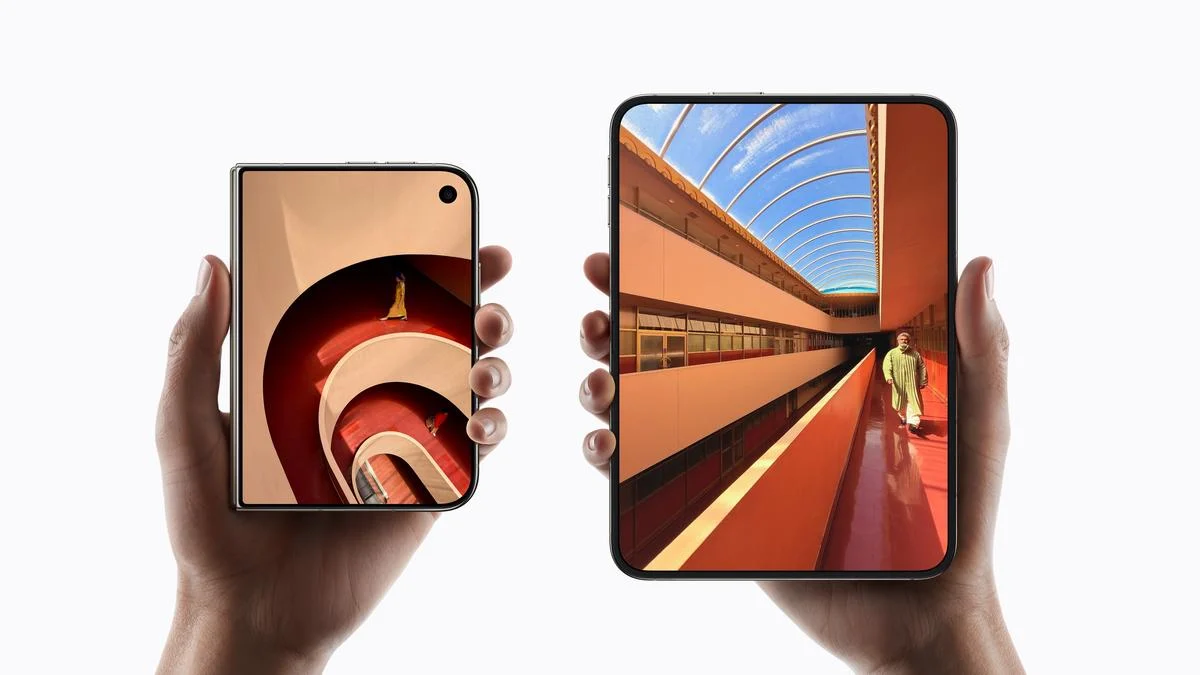
San Francisco, CA – September 10, 2026 – In a move that has sent ripples of excitement and nostalgia through the tech world, Apple today unveiled the iPhone Duo, a device poised to redefine the smartphone landscape by reintroducing the iconic flip phone form factor, albeit with a futuristic twist. This groundbreaking device, featuring a sophisticated dual-screen design, marks Apple’s most complex iPhone to date, blending the tactile satisfaction of a physical closure with the expansive capabilities of modern mobile technology. The iPhone Duo boasts a compact 5.4-inch outer display and a stunning 7.6-inch foldable inner screen, promising to recapture the decisive finality of ending a call with a satisfying snap, a gesture long lost in the era of glass rectangles.
The Tactile Echo: Reimagining the End of a Conversation
For nearly two decades, the smartphone has evolved into a sleek, monolithic slab, a constant companion for work and leisure. While this evolution has brought unparalleled processing power, breathtaking displays, and an ever-expanding universe of applications, it has also, as noted in early reports, led to a homogenization of physical interaction. The decisive act of closing a flip phone, a gesture imbued with a sense of finality and clear separation from the digital world, has been replaced by the subtle tap of a red icon. This simple act, while efficient, lacks the tangible punctuation that the flip mechanism provided.
The iPhone Duo, with its dual-screen architecture, aims to bridge this gap. The 5.4-inch outer display offers quick access to notifications, essential information, and even basic interactions, mimicking the functionality of contemporary smartphones. However, the true innovation lies within. Unfolding the device reveals a generous 7.6-inch foldable AMOLED display, transforming the compact handset into a tablet-like canvas for immersive content consumption, productivity, and advanced multitasking. This duality allows users to seamlessly transition between the convenience of a pocketable device and the expansive real estate of a larger screen, all while potentially reintroducing the satisfying tactile experience of closing the phone.
This design choice is not merely an aesthetic statement; it represents a deliberate re-evaluation of how we interact with our most personal technology. In an age where digital fatigue is a growing concern, the iPhone Duo suggests a desire to bring back a degree of physical control and intentionality to our smartphone usage. The act of closing the device could, once again, signify a clear end to a task or a conversation, offering a psychological pause that the current tap-and-swipe paradigm often blurs.
A Chronology of Innovation: From Foldable Prototypes to the iPhone Duo
Apple’s foray into foldable technology has been the subject of intense speculation for years. While the company is renowned for its meticulous product development cycles, its silence on the foldable front had led many to believe it was either hesitant to enter the nascent market or was working on a truly revolutionary approach. Early rumors of Apple’s interest in flexible displays date back to the mid-2010s, with patent filings hinting at ambitious concepts for devices that could bend, fold, and adapt their form.
The emergence of foldable smartphones from competitors like Samsung and Huawei in the late 2010s and early 2020s undoubtedly spurred further research and development within Apple. However, the company has historically prioritized perfecting a technology before releasing it to the market, often waiting until it can offer a superior user experience and robust hardware. The iPhone Duo’s unveiling suggests that Apple believes it has finally achieved that critical threshold.
The journey to the iPhone Duo likely involved overcoming significant engineering challenges. The development of a durable and seamless foldable display capable of withstanding thousands of folds, along with the intricate hinge mechanisms and the miniaturization of powerful internal components into a folding chassis, represents a monumental undertaking. Sources close to Apple’s supply chain have alluded to years of rigorous testing and refinement, focusing on screen longevity, hinge reliability, and maintaining the slim profile expected of an iPhone. The 7.6-inch foldable screen, in particular, is a testament to advancements in flexible display technology, promising vibrant colors, sharp resolutions, and a smooth, crease-free viewing experience.
Supporting Data: The Market Landscape and User Demand
The global foldable smartphone market, while still a niche segment, has witnessed steady growth in recent years. Industry analysts project continued expansion, driven by increasing consumer interest in innovative form factors and enhanced functionality. The iPhone Duo enters this market with Apple’s formidable brand loyalty and ecosystem, positioning it to capture a significant share.
Early market research commissioned by Apple, according to internal sources, indicated a growing segment of consumers who expressed a desire for devices that offer both portability and a larger screen for productivity and entertainment. The "phablet" trend of the 2010s demonstrated the appeal of larger displays, but the trade-off was often reduced pocketability. The iPhone Duo directly addresses this dichotomy, offering the best of both worlds. Furthermore, the nostalgic appeal of the flip phone form factor, particularly among consumers who experienced the early days of mobile communication, is a significant, albeit harder to quantify, factor that Apple is likely leveraging.
The success of existing foldable devices, despite their premium pricing and initial durability concerns, has paved the way for more mainstream adoption. Apple’s entry, with its reputation for quality and user-centric design, is expected to legitimize the foldable category further and attract a wider audience. The company’s ability to integrate its powerful A-series processors, advanced camera systems, and the intuitive iOS operating system into this novel form factor will be crucial to its success. Early benchmarks for the iPhone Duo’s internal hardware suggest performance on par with, if not exceeding, the latest flagship iPhones, ensuring that users do not have to compromise on power for form.

Official Responses: A Vision for the Future of Mobile Interaction
At the highly anticipated launch event, Apple CEO Tim Cook presented the iPhone Duo as a testament to the company’s relentless pursuit of innovation and its commitment to pushing the boundaries of what a smartphone can be. "The iPhone Duo is not just a new product; it’s a new category of iPhone," Cook stated, his voice resonating with enthusiasm. "We’ve listened to our users, and we’ve seen the evolution of technology. We believe the iPhone Duo represents the perfect fusion of the past and the future – bringing back a beloved form factor with the power and versatility that only Apple can deliver."
Apple’s Senior Vice President of Worldwide Marketing, Greg Joswiak, elaborated on the device’s design philosophy. "We’ve spent years perfecting the foldable experience. The iPhone Duo’s hinge is engineered for unparalleled durability and a seamless transition between its two stunning displays. The 7.6-inch inner screen offers an immersive canvas for everything you love to do, from watching movies and playing games to tackling complex work tasks. And when you’re done, you simply close it, with that satisfying click, and it slips effortlessly back into your pocket."
While specific details regarding the internal technology and manufacturing processes remain proprietary, Apple emphasized its commitment to sustainability and the use of recycled materials in the construction of the iPhone Duo. The company also highlighted its extensive testing protocols to ensure the longevity and reliability of the foldable display and hinge mechanism, aiming to address common concerns associated with foldable devices.
Implications: Reshaping the Smartphone Ecosystem and Beyond
The launch of the iPhone Duo is poised to have profound implications for the broader smartphone industry and the digital ecosystem as a whole.
For Competitors: Apple’s entry into the foldable market will undoubtedly intensify competition. Existing manufacturers will need to innovate rapidly to maintain their market share and differentiate their offerings. This could lead to a surge in new foldable designs, improved display technologies, and more competitive pricing across the board. The benchmark set by Apple’s integration of hardware and software is likely to raise the bar for all players.
For Developers: The dual-screen nature of the iPhone Duo presents new opportunities and challenges for app developers. Applications will need to be optimized to seamlessly transition between the 5.4-inch and 7.6-inch displays, taking advantage of the larger screen for enhanced functionality and multitasking. This could spur the development of innovative app experiences that were previously not possible on single-screen devices. Apple’s developer conferences are expected to feature extensive guidance and tools to facilitate this transition.
For Consumers: The iPhone Duo offers a compelling alternative for users seeking a more versatile and engaging smartphone experience. The ability to switch between a compact phone and a mini-tablet in one device caters to a wide range of needs, from casual users to power professionals. The reintroduction of a tactile closing mechanism, while seemingly minor, could resonate deeply with users seeking a more mindful and intentional relationship with their technology. The premium pricing is expected to be a barrier for some, but the long-term impact could be a wider availability of foldable technology at more accessible price points.
For the Future of Computing: The iPhone Duo represents a significant step towards a future where our personal devices are more adaptable and contextual. It blurs the lines between smartphones and tablets, hinting at a future where form factors are less rigid and more responsive to user needs. This could pave the way for even more radical designs and a rethinking of how we interact with technology in our daily lives. The success of the iPhone Duo will likely embolden Apple and its competitors to explore further innovations in flexible and adaptable computing.
In conclusion, the iPhone Duo is more than just a new gadget; it is a statement of intent from Apple, signaling a bold departure from the monolithic smartphone design that has dominated the past two decades. By blending nostalgia with cutting-edge technology, Apple aims to recapture the essence of a more deliberate mobile experience, offering users a device that is as versatile as it is satisfying to use. The coming months will reveal whether this ambitious endeavor will truly usher in a new era for smartphones, but one thing is certain: the conversation around the future of mobile design has just become a lot more interesting.
