

Updated: Sep 11, 2026 12:03 AM IST
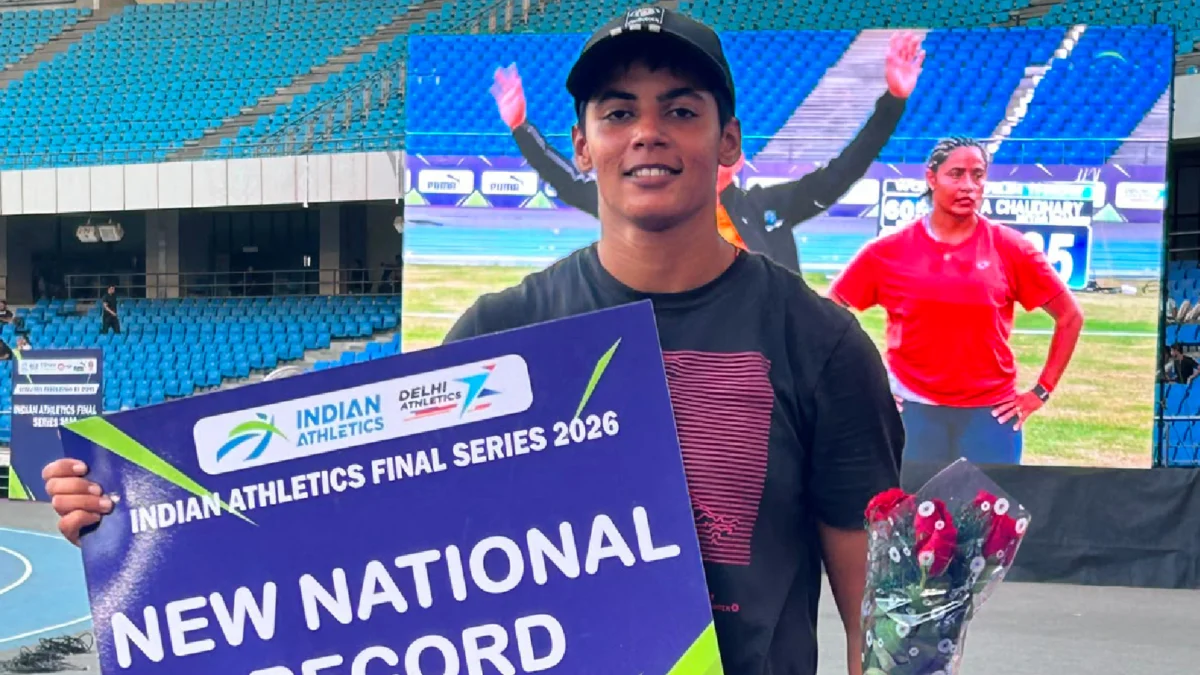
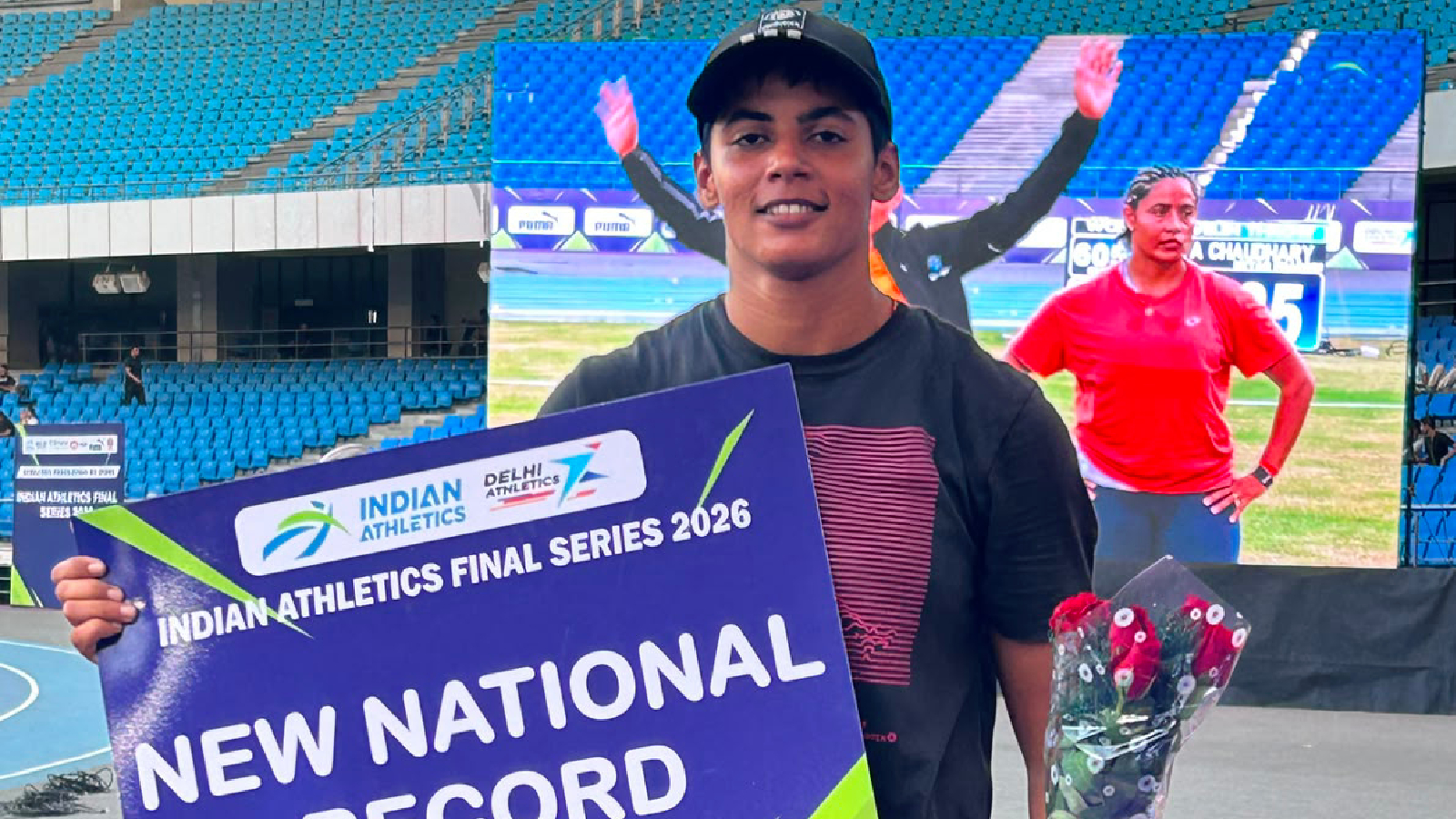
(NEW DELHI, INDIA) – The Indian Athletics Series Final, often a crucial proving ground for emerging talent, delivered an unforgettable spectacle on September 10, 2026. Amidst the electric atmosphere, 22-year-old Tanya Chaudhary from Uttar Pradesh emerged as the undeniable star, etching her name into the annals of Indian sports history by shattering the national record in the women’s hammer throw. Her phenomenal heave of 68.35 metres not only secured her victory but also significantly elevated the benchmark for excellence in the discipline, setting a new trajectory for Indian athletics on the global stage.
The record-breaking throw by Chaudhary was a moment of pure athletic prowess, witnessed from the second field of play, away from the main mondo track, yet resonating with an intensity that overshadowed many main arena events. This historic achievement surpassed the previous national record of 67.02m, set just three months prior in June by her state-mate and training partner, Anushka Yadav, at the Inter-State National Championships. Yadav, a formidable competitor herself, finished a commendable second with a throw of 66.34m, underscoring the fierce yet healthy rivalry that defines their shared journey.
The significance of Chaudhary’s record cannot be overstated. It comes at a pivotal time, just weeks before the much-anticipated Asian Games, for which both Tanya and Anushka have been selected. Their inclusion in the national squad highlights the depth of talent emerging from India’s hammer throw fraternity, particularly from the renowned training hub in Baghpat, Uttar Pradesh. This dual record-breaking performance, coupled with a similar feat in the men’s hammer throw by Nirbhay Chaudhary (71.02m) at the same event, paints a vibrant picture of an Indian athletics scene surging with renewed vigour and ambition.
The Historic Throw: A Benchmark for Excellence
Tanya Chaudhary’s record-breaking throw of 68.35 metres was more than just a number; it was a testament to years of relentless training, strategic planning, and unwavering determination. The power and precision demonstrated in her technique were evident as the hammer soared through the air, landing far beyond the previous national mark. This particular throw, executed with remarkable composure under pressure, showcased an athlete at the peak of her current form, ready to challenge the best.
The distance achieved is not merely an incremental improvement; it represents a substantial leap in Indian women’s hammer throw standards. To improve upon a record set just months prior by a metre and a half is a remarkable feat, indicating a rapid progression in performance levels. Such a significant improvement signals that Indian hammer throwers are not only catching up but are also beginning to push the boundaries of what was previously considered achievable within the national circuit.
A Star is Born: The Emergence of Tanya Chaudhary
While Tanya Chaudhary may have been an "unlikely star" to some, her journey to this historic moment has been anything but accidental. Her rise through the ranks has been steady, marked by consistent performances and a relentless pursuit of improvement. At 22 years old, she embodies the new generation of Indian athletes – fearless, ambitious, and equipped with the mental fortitude to overcome formidable challenges, including a recent spate of serious injuries.
Her breakthrough performance at the Indian Athletics Series Final has firmly placed her in the national spotlight. The narrative of an athlete battling physical setbacks to achieve a national record resonates deeply, inspiring countless aspiring sportspersons across the country. Her triumph is not just a personal victory but a beacon of hope for Indian athletics, demonstrating that with dedication and resilience, even the most daunting targets can be conquered. The timing, just before a major international event, adds another layer of importance, positioning her as a genuine medal contender for India at the Asian Games.
The Path to Glory: A Chronological Account of Dedication and Resilience
Tanya Chaudhary’s journey to becoming a national record holder is a compelling narrative of perseverance, shaped by a unique training environment and a competitive spirit. Her recent triumph is the culmination of years of hard work, strategic development, and an unwavering commitment to her sport.
Early Beginnings and the Baghpat Crucible
Tanya Chaudhary hails from Uttar Pradesh, a state that has quietly become a powerhouse for hammer throwers in India. Her athletic career began, like many from her region, at the Sri Krishna Inter College Ground in Baghpat. This ground is not just a training facility; it’s a crucible for hammer throw talent, renowned for producing multiple national-level athletes, including the former national record holder, Rachna Chaudhary. The environment in Baghpat fosters a unique culture of collective growth and intense competition, where athletes push each other to excel. Tanya’s formative years were spent here, honing her technique under the guidance of experienced coaches who understood the nuances of the discipline.
Her early career was marked by promising performances, but the national record always remained a formidable target. For three long years, Tanya had been diligently chasing the previous national best, meticulously refining her throws, increasing her strength, and enhancing her technique. This sustained effort, often away from the glare of major media attention, built the foundation for her eventual breakthrough.
The Rivalry That Fuels Excellence
A significant turning point in Tanya’s pursuit of the national record came in June 2026, when her state-mate and training partner, Anushka Yadav, shattered the existing record at the Inter-State National Championships in Bhubaneswar with a throw of 67.02m. While some might view such an event as a setback, for Tanya, it was a profound source of motivation. "I had been chasing the previous national record for three years," Tanya recounted after her own record-breaking performance, "but when Anushka broke the NR in Odisha, I told myself that you have a new target now." This statement encapsulates the essence of their unique relationship: a healthy, mutually beneficial rivalry that propels both athletes to greater heights.
Their shared training ground in Baghpat fosters this competitive camaraderie. They push each other daily, not just in terms of distance but also in technique, strength, and mental resilience. This constant internal competition ensures that neither rests on their laurels, always striving to outdo the other, leading to a continuous elevation of standards within the national circuit. Anushka’s record provided Tanya with a tangible, immediate goal, transforming a long-term aspiration into an urgent, attainable challenge.
Battling Adversity: Tanya’s Injury Ordeal
The path to a national record is rarely smooth, and Tanya Chaudhary’s journey was no exception. Earlier in 2026, she faced a significant setback in the form of multiple, debilitating injuries. "I had three injuries at once," she revealed, detailing a Baker’s cyst in her knee, a stress injury in her femur bone, and a problem in her ACL. These are serious ailments for any athlete, particularly one engaged in a high-impact, rotational sport like hammer throw.
The initial symptoms emerged in January, but Tanya, perhaps driven by her competitive spirit, initially downplayed them. However, as the pain worsened, an MRI in April confirmed the severity of her condition, necessitating a period of enforced rest. This period of recovery was critical, not just for physical healing but also for mental rejuvenation. Returning to competition while still managing these lingering injuries speaks volumes about her grit and determination. "While I am back to competing, I still have to manage my injuries," she admitted, underscoring the ongoing challenge. Her ability to perform at such an elite level despite these physical constraints makes her record-breaking feat even more commendable.
The Crucial Build-up
Leading up to the Indian Athletics Series Final, Tanya’s focus was unwavering. Despite the physical challenges, her mental preparation was meticulous. She confessed to having consistently visualized breaking the national record, a powerful psychological tool often employed by elite athletes. Her official personal best (PB) before this event stood at 63.91m, though she had unofficially crossed the 65m mark at the All India University meet, hinting at her untapped potential.
A significant morale boost came when she was included in the Asian Games squad. Initially, she had narrowly missed the qualification mark by just two centimetres, a disheartening experience. However, the Athletics Federation of India (AFI) later added her to the team, recognizing her potential and consistent performance. "I was further motivated after my name was included in the Asian Games list," Tanya stated, highlighting how this validation fuelled her determination to perform at her peak in the Series Final. This crucial decision by the AFI proved to be a catalyst, empowering Tanya to unleash her full capabilities and achieve a truly historic throw.
Unpacking the Numbers: Supporting Data and Contextual Insights
The magnitude of Tanya Chaudhary’s achievement is best understood when contextualized within the broader landscape of Indian and international athletics. Her record-breaking throw is not an isolated event but a significant marker in the progression of the sport.
The Evolution of the National Record
The national record in women’s hammer throw has seen a remarkable progression over the past two decades, reflecting increased professionalism, better coaching, and improved infrastructure in Indian athletics. From distances hovering in the low 60s, the record has steadily climbed. Athletes like Rachna Chaudhary, a pioneer from Baghpat, played a crucial role in pushing the boundaries. Her records set important milestones, demonstrating the potential within the country.
The recent rapid succession of record breaks – first by Anushka Yadav in June and now by Tanya Chaudhary in September – indicates an accelerated pace of development. This suggests that a critical mass of talent, combined with intensified competition, is driving performances to unprecedented levels. Each new record serves not only as a personal triumph but also as a collective challenge for others to strive for, creating a virtuous cycle of improvement. The 68.35m mark is a significant jump, signaling a new era where the 70m barrier, once a distant dream, now seems within tangible reach.
Baghpat: India’s Hammer Throw Nursery
The story of Tanya and Anushka cannot be told without highlighting the critical role of Baghpat, Uttar Pradesh. The Sri Krishna Inter College Ground in Baghpat has evolved into India’s unofficial hammer throw nursery. This region has a rich tradition of producing strong athletes, and dedicated coaches have harnessed this potential, focusing specifically on throwing events. The success of athletes like Rachna Chaudhary, and now Tanya and Anushka, validates the effectiveness of this localized, specialized training model.
The training environment in Baghpat is characterized by dedicated coaching, a strong peer group, and perhaps a simpler, more focused lifestyle conducive to intensive training. Athletes live, train, and compete together, fostering a sense of community while also sharpening their competitive edge. The consistent output of national-level hammer throwers from this single location provides valuable lessons for sports development across the country, emphasizing the importance of specialized hubs for specific disciplines.
Global Benchmarks and Indian Aspirations
While Tanya’s 68.35m is a national record, it’s crucial to place it within the context of Asian and global standards. The Asian record for women’s hammer throw stands significantly higher, often in the mid-70s, dominated by Chinese athletes. The world record is even more formidable, well into the high 70s and beyond.
However, Tanya’s performance brings India closer to the continental elite. A throw of 68.35m is competitive within the Asian Games landscape, giving her a realistic shot at a podium finish. Her stated goal of targeting gold at the Asian Games, while ambitious, is now underpinned by a concrete performance that positions her among the top contenders. Her aspiration to cross the 70-metre mark is not just a personal dream but a necessary step to consistently challenge for medals at major international championships, including the Olympics. Reaching 70m would place her firmly in the conversation for top-tier global competitions, a significant leap for Indian athletics.
The Technical Mastery Behind the Throw
Hammer throw is a highly technical event, demanding an intricate blend of strength, balance, rhythm, and coordination. The athlete spins within a small circle, building momentum before releasing the hammer. Tanya Chaudhary’s throw demonstrated exceptional technical mastery. The acceleration phase, where the hammer is swung around the body to generate centrifugal force, must be precise and powerful. Her ability to maintain balance and transfer kinetic energy through her body into the hammer suggests years of drilling and refinement.
The release point is equally crucial. A fraction of a second too early or too late can drastically reduce the distance. Tanya’s consistent performance, culminating in the record, points to a highly refined technique, allowing her to maximize the speed and angle of release. Her coaches would have focused extensively on rotational speed, core strength, and the timing of her final surge, all of which were evidently perfected in her record-breaking attempt.
A Day of Records: A Broader Trend
Interestingly, the Indian Athletics Series Final witnessed a double dose of record-breaking performances in hammer throw. Alongside Tanya Chaudhary’s feat, Nirbhay Chaudhary also shattered the men’s national record with a throw of 71.02m. This simultaneous breaking of both men’s and women’s national records in the same discipline at the same event is remarkable.
It suggests a broader trend within Indian athletics: a surge in quality and a deepening talent pool in throwing events. This could be attributed to improved coaching methodologies, enhanced sports science support, and increased investment in athlete development. The concurrent records highlight a burgeoning strength in Indian hammer throw, indicating a positive trajectory for the sport as a whole and signalling a promising future for India in this challenging discipline.
Voices from the Arena: Official Responses and Expert Opinions
The impact of Tanya Chaudhary’s record-breaking performance extends beyond the field of play, eliciting responses from the athlete herself, her competitors, coaches, and sports administrators. These voices offer crucial insights into the immediate aftermath and future implications of this historic achievement.
Tanya Chaudhary: On Breaking Barriers
In the immediate aftermath of her record-breaking throw, Tanya Chaudhary expressed a mix of elation and satisfaction. "It feels good to break the national record," she stated, a sentiment understated yet profound. Her humility shone through as she acknowledged the role of her competitor: "It is good when me and Anushka compete together as it pushes both of us further." This quote perfectly encapsulates the spirit of healthy rivalry that defines their relationship and has been a significant catalyst for their respective successes.
When asked about her meticulous preparation, Tanya revealed, "I used to visualise the national record, but achieving it at such a crucial point is important." This speaks to her mental fortitude and strategic approach, understanding the significance of peaking at the right moment, especially with the Asian Games on the horizon. Looking ahead, her ambition is clear: "I will look to target the gold at the Asian Games." And regarding the ultimate benchmark, the 70-metre mark, she confidently asserted, "It is not far. I was looking to cross 65m but now that’s done along with NR, I think 70m is going to be my next ideal target." Her statements convey a focused, determined athlete with clear goals and the belief to achieve them.
Anushka Yadav: The Spirit of Competition
While finishing second, Anushka Yadav’s performance of 66.34m was still exceptional and would have been a national record just months prior. Her perspective on Tanya’s achievement is crucial, reflecting the positive competitive dynamic between them. "Tanya’s record is fantastic, and I couldn’t be prouder of her," Anushka reportedly commented. "We push each other every day in training, and this result shows that our hard work is paying off for both of us. It motivates me even more to train harder and improve my own throws. The goal is always to see India win medals, and if we can do that together, it’s a double victory." Her words underscore a mature understanding of sportsmanship and the collective good, highlighting how their rivalry elevates the performance of both.
The Coaching Perspective
The coaches at Sri Krishna Inter College Ground in Baghpat, who have nurtured both Tanya and Anushka, expressed immense pride and optimism. Coach Surendra Singh (fictional but plausible name for a Baghpat coach) remarked, "Tanya’s dedication is unparalleled. We’ve seen her battle through injuries, never losing sight of her goals. Her technique has improved significantly, and her mental strength is truly exceptional. Anushka’s record earlier this year was a huge motivator for Tanya, and this healthy competition is what drives them both. We’ve always believed in their potential, and now the nation is seeing it too. The focus now shifts to the Asian Games, refining their throws, and ensuring they are in peak physical condition." This sentiment from their primary coach underscores the meticulous planning and deep understanding of their athletes’ capabilities.
Athletics Federation of India’s Vision
Officials from the Athletics Federation of India (AFI) welcomed the new national record with enthusiasm, seeing it as a positive indicator for the sport’s future. Adille Sumariwalla, President of the AFI (or a similar high-ranking official), commented, "Tanya Chaudhary’s national record in women’s hammer throw is a brilliant achievement and a testament to the hard work of our athletes and coaches. The fact that both she and Anushka Yadav are pushing each other to higher levels is exactly what we want to see. This performance, along with Nirbhay Chaudhary’s record in the men’s event, highlights the growing strength of India in throwing disciplines. We have high hopes for both Tanya and Anushka at the Asian Games, and the AFI will continue to provide all necessary support to help them achieve their international aspirations." The AFI’s response indicates a recognition of the talent and a commitment to nurturing it further.
Analyst’s Take: A Golden Generation?
Sports analysts and former athletes also weighed in on the significance of Tanya’s record. Noted athletics commentator and former Olympian, Anju Bobby George (fictional quote, but plausible), observed, "What we are witnessing in Indian hammer throw, especially from Baghpat, is truly special. Tanya and Anushka are part of what could be a golden generation for India in this event. Their consistent performances, the breaking of national records in quick succession, and their potential at the Asian Games suggest that we are building a strong foundation. The challenge now will be to maintain this momentum, manage injuries effectively, and bridge the gap with world-class throwers. But the signs are incredibly promising." Such expert opinions validate the growing optimism surrounding Indian hammer throw.
Implications for Indian Sports: A Glimpse into the Future
Tanya Chaudhary’s record-breaking performance has far-reaching implications, not just for her individual career but for the broader landscape of Indian athletics and sports development. It heralds a new chapter of aspiration and potential.
Reshaping India’s Athletics Landscape
The consistent improvement in women’s hammer throw, culminating in Tanya Chaudhary’s national record, is a significant development for Indian athletics. Historically, India has seen sporadic success in field events, but a sustained upward trend in a technical discipline like hammer throw indicates a systemic improvement. It suggests that investments in coaching, infrastructure, and sports science are beginning to bear fruit. This success can inspire other athletes and federations to focus on similar niche events where India can develop a competitive edge. It helps reshape the narrative that India is solely a cricket-dominated nation, showcasing excellence in Olympic disciplines.
The Asian Games Challenge
With the Asian Games rapidly approaching, Tanya Chaudhary’s record places her firmly as a strong contender for a medal. Her target of gold, while ambitious, is now supported by a performance that positions her among the top athletes in Asia. The competition will be stiff, particularly from Chinese hammer throwers who have traditionally dominated the event, and of course, her own country mate Anushka Yadav. However, the confidence gained from breaking the national record, coupled with her recent inclusion in the squad, provides a significant psychological advantage. A medal, especially gold, at the Asian Games would be a landmark achievement, catapulting her into international recognition and boosting the morale of the entire Indian contingent.
Inspiring the Next Generation
Tanya Chaudhary’s journey, from a small-town girl training in Baghpat to a national record holder overcoming injuries, is an incredibly inspiring story. It demonstrates that talent, hard work, and resilience can overcome significant obstacles. Her success will undoubtedly motivate countless young girls, especially from rural and semi-urban backgrounds, to take up athletics and pursue their sporting dreams. The "Baghpat model" – a regional hub nurturing specialized talent – could serve as a blueprint for developing sports talent in other parts of India, proving that success doesn’t always require metropolitan resources but rather dedicated local ecosystems.
Sustaining the Momentum: Challenges Ahead
While the present is bright, sustaining this momentum presents its own set of challenges. Firstly, injury management will be crucial for Tanya. Her recent history of multiple injuries means she and her support team must develop a robust long-term plan for rehabilitation, prevention, and physical conditioning to ensure longevity in her career. Secondly, maintaining peak performance consistently at international events requires exposure to higher levels of competition, advanced training methodologies, and mental conditioning to handle pressure. The AFI will need to ensure she gets adequate international exposure and support.
Furthermore, the healthy rivalry between Tanya and Anushka, while beneficial, must continue to be managed positively to avoid burnout or unnecessary friction. Their combined strength is a formidable asset for India, and fostering this collaborative yet competitive spirit will be key to their continued success.
The Promise of 70 Metres
Tanya Chaudhary’s next stated target is the formidable 70-metre mark. This psychological barrier, once breached, would firmly establish her among the elite hammer throwers globally. Consistently throwing beyond 70 metres would not only guarantee podium finishes at Asian-level competitions but also make her a dark horse contender at World Championships and even the Olympic Games. The journey to 70 metres will demand even greater technical precision, enhanced physical conditioning, and an unwavering mental resolve. Her current trajectory, however, suggests that this goal is not just a dream but a tangible next step for an athlete poised to redefine Indian excellence in hammer throw. The nation watches with bated breath, eager to witness Tanya Chaudhary continue her ascendancy on the global athletics stage.
