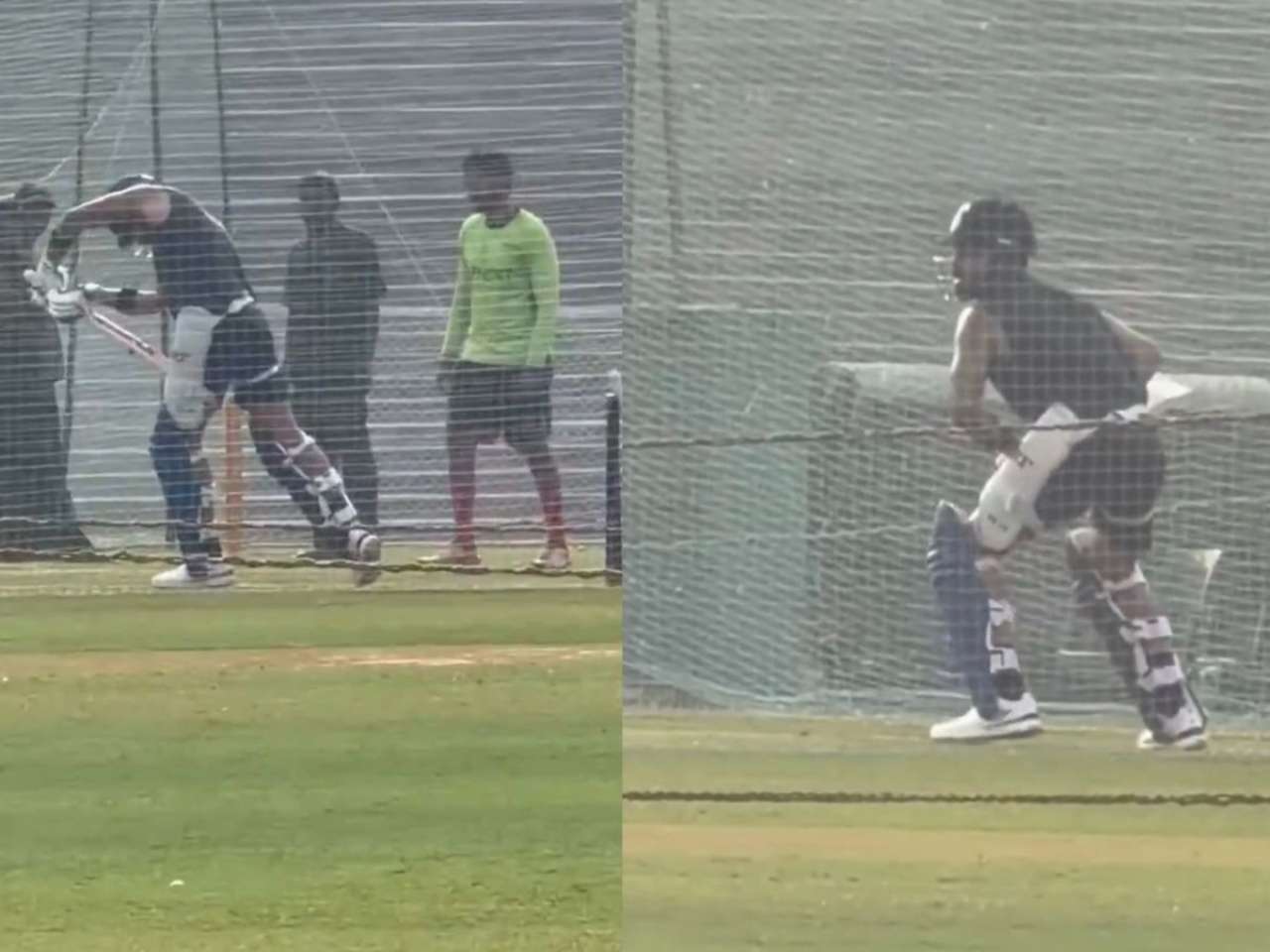
MUMBAI, India – In a significant development signaling India’s meticulous planning for their upcoming tour, star batter Virat Kohli has significantly ramped up his preparations for the five-match One Day International (ODI) series against New Zealand. Ahead of the opening encounter, Kohli was observed undergoing an intense and rigorous net session in Mumbai, meticulously honing his batting skills. This focused training regimen underscores the team’s determination as they gear up to face the formidable Black Caps in their own backyard, a tour laden with strategic importance for Indian cricket.
The sight of Kohli dedicating himself to the nets at the Brabourne Stadium, a familiar training ground for him before major international assignments, has generated considerable buzz among fans and pundits alike. His commitment is a clear indicator of the high stakes involved in this series, which serves as a crucial platform for player assessment, leadership development, and fine-tuning team combinations.
Main Facts: Kohli’s Resurgence and India’s Strategic Tour of New Zealand
The upcoming ODI series against New Zealand is poised to be a pivotal moment for Indian cricket, marked by the competitive comeback of Virat Kohli and a strategically divided captaincy structure. The tour, commencing with the ODI format, is designed to test India’s bench strength, nurture future leaders, and provide invaluable exposure to various playing conditions.
Intense Preparations in Mumbai
Virat Kohli’s recent net session in Mumbai was far from a routine practice. Eyewitnesses and reports indicate a highly focused and intense workout, with Kohli engaging in a range of batting drills designed to sharpen his technique, timing, and match readiness. The session at the iconic Brabourne Stadium saw him facing a variety of bowlers, simulating match scenarios, and working on specific aspects of his game. This meticulous approach highlights his enduring commitment to excellence and his unwavering desire to contribute significantly to the team’s success. For a player of Kohli’s stature, known for his relentless pursuit of perfection, these preparatory sessions are not just about physical readiness but also about mental conditioning, ensuring he is in peak form to tackle the challenges posed by New Zealand’s potent bowling attack and challenging conditions. His presence and dedication during these pre-series camps invariably lift the morale and intensity of the entire squad.

A Crucial Comeback for the Star Batter
The five-match ODI series against New Zealand marks Virat Kohli’s competitive return to the international arena, with his last ODI appearance dating back to October 3 against West Indies. His comeback, scheduled for November 4 at Eden Park in Auckland, is highly anticipated, as he will be competing exclusively in the ODI format throughout the series. This strategic decision to limit his participation to ODIs could be a move by the team management to manage his workload, allowing him to focus entirely on white-ball cricket, especially with an eye on future ICC tournaments. Kohli’s form and leadership on the field will be critical for India, particularly in navigating the unfamiliar conditions and aggressive style of play that the Black Caps are renowned for. His experience and ability to anchor an innings or accelerate when needed will be invaluable for the relatively young squad.
Strategic Captaincy Split for the ODI Series
Perhaps one of the most intriguing aspects of India’s tour strategy is the innovative approach to captaincy. The Board of Control for Cricket in India (BCCI) has opted for a split captaincy model, entrusting Shubman Gill with the leadership reins for the opening three ODIs, with Shreyas Iyer serving as his vice-captain. Following the third match, Gill, along with other players primarily focused on the upcoming Test series, will depart from the ODI squad to begin preparations for the red-ball challenge.

For the final two ODIs, Shreyas Iyer will assume the captaincy, a significant opportunity for him to demonstrate his leadership prowess. He will be ably supported by Ishan Kishan, who steps into the role of deputy. This rotational captaincy strategy is a clear indication of India’s long-term vision to groom multiple leaders within the squad, providing them with crucial international experience in high-pressure situations. It also allows for flexibility in player management, ensuring key Test players get adequate rest and preparation without compromising the competitiveness of the ODI unit. This approach is designed to cultivate a resilient and adaptable team culture, capable of performing consistently across formats and leadership changes.
Chronology of the Tour and Kohli’s Journey
The India-New Zealand tour is meticulously planned, segmenting the ODI and Test challenges to optimize player performance and strategic development. Virat Kohli’s journey within this framework is particularly noteworthy, focusing his efforts squarely on the white-ball format.

The Road to Auckland: Pre-Series Buildup
Following his intense training sessions at Mumbai’s Brabourne Stadium, Virat Kohli is scheduled to depart for New Zealand shortly. His early arrival, along with other key members of the ODI squad, will be crucial for acclimatization. Adapting to the different time zones, colder weather, and unique playing conditions in New Zealand is paramount for international teams. The practice pitches, ground dimensions, and even the local atmosphere can significantly influence a player’s performance. Kohli, a veteran of numerous international tours, understands the importance of this acclimatization period, utilizing every moment to get a feel for the conditions, adjust his technique, and integrate seamlessly with the squad. The team’s pre-series camps and warm-up matches, if any, will be instrumental in building cohesion and readiness before the competitive action kicks off. The strategic importance of being well-prepared physically and mentally cannot be overstated, particularly when facing a disciplined side like New Zealand on their home turf.
The Five-Match ODI Saga: Key Dates and Venues
The ODI series against New Zealand is structured across five crucial matches, with specific dates and venues marking the progression of the contest:

- November 4: The series opener will take place at the picturesque Eden Park in Auckland. This venue is known for its relatively short boundaries and lively atmosphere, often setting the stage for high-scoring encounters.
- November 7: The teams will then travel to Henry Park in Wellington for the second ODI. Wellington’s conditions can sometimes be challenging, with gusty winds impacting bowling and fielding, demanding adaptability from both sides.
- November 10: The third ODI will be held at a venue yet to be officially specified in the initial release, but likely another prominent ground in New Zealand, where Shubman Gill will lead for the final time in this series.
- November 13: The fourth ODI, with Shreyas Iyer now at the helm, will continue the intense competition at a new location, showcasing the depth of New Zealand’s cricketing infrastructure and diverse playing conditions.
- November 15: The series will culminate with the fifth and final ODI, providing a definitive conclusion to the white-ball leg of the tour and determining the series winner.
This tightly packed schedule demands peak physical fitness and mental resilience from all players, especially with the constant travel and adaptation to different stadia across the North and South Islands of New Zealand.
Transition to the Test Arena: A Separate Challenge
Following the conclusion of the ODI series on November 15, a significant transition will occur within the Indian touring party. Virat Kohli and other ODI specialists, whose participation is confined solely to the white-ball format, will return home. This strategic exit allows them adequate rest and recovery, managing their extensive international workloads.

Simultaneously, the focus will shift entirely to the red-ball format. The two-Test series, commencing on November 19 and concluding on December 1, represents a distinct challenge. Players like Shubman Gill, who will have departed the ODI squad earlier, will have had additional time to prepare for the longer format, engaging in red-ball specific training and potentially warm-up matches. The Test series will test India’s endurance, technical prowess, and strategic depth against a New Zealand side that is historically strong in home Test conditions. The contrasting demands of ODI and Test cricket necessitate this clear separation of squads and preparation phases, ensuring that India fields its strongest possible contingents for both formats.
Supporting Data: Squad Dynamics and Player Roles
The composition of India’s ODI squad for the New Zealand tour reveals a strategic blend of seasoned campaigners and emerging talents, designed to tackle the series effectively while also grooming future prospects. The split captaincy and phased squad changes underscore a forward-thinking approach to player management and leadership development.

India’s ODI Contingent for the Initial Leg (First Three ODIs)
The squad selected for the first three One Day Internationals showcases a balance of experience and youth, aiming for immediate impact while nurturing emerging talent:
- Shubman Gill [C]: Entrusted with captaincy, Gill’s dynamic batting and recent form will be crucial at the top order. This is a significant leadership opportunity for him.
- Rohit Sharma: The veteran opener’s presence provides stability, experience, and explosive power at the start of the innings, supporting Gill.
- Virat Kohli: The focal point of the batting line-up, his experience and match-winning capabilities are unparalleled.
- Shreyas Iyer [VC]: A key middle-order batter and vice-captain, his ability to build innings and accelerate will be vital.
- KL Rahul [WK]: A versatile batter and wicketkeeper, providing flexibility in the batting order and crucial behind the stumps.
- Nitish Kumar Reddy: An all-rounder whose potential with both bat and ball could be a game-changer.
- Axar Patel: The left-arm orthodox spinner and lower-order batter offers balance and control.
- Naman Dhir: A promising young talent looking to make his mark.
- Anshul Kamboj: A fast-bowling prospect, providing pace and swing options.
- Gurnoor Brar: Another young pacer, adding depth to the fast-bowling department.
- Ruturaj Gaikwad: An elegant opener, offering another solid option at the top.
- Arshdeep Singh: The left-arm pacer brings variety and death-bowling expertise.
- Ishan Kishan [WK]: A dynamic wicketkeeper-batter, offering explosive hitting and a crucial backup behind the stumps.
- Mohammed Siraj: A frontline fast bowler known for his aggression and wicket-taking ability.
- Prasidh Krishna: A tall fast bowler capable of generating bounce and pace, an important asset in New Zealand.
- Kuldeep Yadav: The wrist-spinner provides crucial breakthroughs in the middle overs.
This squad is built to be aggressive and adaptable, with multiple all-rounders and a diverse bowling attack, capable of performing across different conditions.

Reshuffling for the Series Deciders (Fourth and Fifth ODIs)
The latter half of the series sees a significant reshuffle, reflecting the strategic decision to prioritize Test preparations for some players and provide leadership opportunities to others:
- Shreyas Iyer [C]: Steps up to lead, a crucial test of his captaincy skills and tactical acumen.
- Rohit Sharma: Continues to provide stability and experience at the top.
- Virat Kohli: Remains a cornerstone of the batting line-up, his presence invaluable.
- Tilak Varma: A talented young left-handed batter, getting more exposure at the international level.
- Ishan Kishan [WK, VC]: Promoted to vice-captain, his explosive batting and wicketkeeping remain key assets. His white-ball specialization is clearly recognized here.
- Nitish Kumar Reddy: Continues his role, offering all-round capabilities.
- Axar Patel: Provides spin and lower-order batting contributions.
- Naman Dhir: Retains his spot, indicating the team management’s faith in his potential.
- Auqib Nabi: A new inclusion, potentially another fast-bowling option, highlighting depth.
- Gurnoor Brar: Continues to gain experience in the pace department.
- Ruturaj Gaikwad: Retains his opening slot.
- Arshdeep Singh: Remains a key death bowler.
- Kumar Kushagra [WK]: An additional wicketkeeper-batter, providing backup and showcasing another young talent.
- Mohammed Siraj: Continues to lead the pace attack.
- Yash Thakur: Another fast bowler, adding more options to the pace battery.
- Kuldeep Yadav: The primary wrist-spinner.
Notable absences from the initial squad for these matches include Shubman Gill, KL Rahul, and Prasidh Krishna, who presumably transition to Test preparations. This shift allows for the introduction of new faces like Tilak Varma, Auqib Nabi, and Kumar Kushagra, expanding India’s talent pool.

The Significance of Squad Rotation and Player Management
The phased squad announcement and captaincy changes are a testament to India’s sophisticated approach to player management. In an era of demanding international cricket schedules, workload management is paramount to prevent injuries and maintain player performance levels. By allowing Test-focused players to depart early, the BCCI ensures they have ample time to switch formats, mentally and physically.
Furthermore, this strategy is crucial for building a robust bench strength. Exposing a wider pool of players to international competition, especially in challenging conditions like New Zealand, accelerates their development. It also allows selectors to assess players under pressure, identifying those who can consistently perform at the highest level. The emphasis on white-ball specialists like Ishan Kishan, who has established himself as a regular in limited-overs formats but remains absent from Test selection since 2023, signifies a clear vision for distinct format teams. This targeted development ensures that India has a strong core for each format, ready to tackle specific challenges without over-relying on a handful of multi-format stars.

Official Responses and Strategic Rationale
While specific direct quotes from BCCI officials or selectors are not always immediately available in such pre-series reports, the strategic decisions made by the Indian cricket board and team management speak volumes about their vision and rationale.
BCCI’s Vision Behind Split Captaincy
The decision to implement a split captaincy model for the ODI series, initially with Shubman Gill and subsequently with Shreyas Iyer, is a clear manifestation of the BCCI’s long-term vision for leadership development. This approach is not merely about resting senior players but about actively grooming the next generation of Indian captains. By entrusting Gill and Iyer with significant leadership roles in an overseas series, the BCCI is providing them with invaluable experience in making tactical decisions, managing player dynamics, and handling media scrutiny under competitive pressure. This strategic move aims to create a pipeline of capable leaders, ensuring a smooth transition whenever senior players decide to step down. It also reflects a modern approach to managing player workloads and allowing individuals to focus on specific formats where their skills are most required, thereby maximizing their effectiveness.

Coach and Selectors’ Perspective on Kohli’s Role
From the perspective of the team coach and national selectors, Virat Kohli’s singular focus on the ODI format for this series is a calculated move. It ensures that India’s premier batter is in optimal physical and mental condition for white-ball challenges, without the added burden of switching formats or the demands of a Test series. His experience, tactical insights, and on-field presence are invaluable, even without the captaincy tag. The selectors likely view Kohli as a crucial anchor and aggressor in the middle order, someone who can steer the innings and provide stability. His role extends beyond just scoring runs; he is a mentor to younger players, an energetic presence in the field, and a fierce competitor whose standards push the entire team. His commitment to intense preparations, as seen in Mumbai, perfectly aligns with the team management’s expectations for all players, regardless of their stature.
Player Statements and Team Morale
While no direct statements from the players were provided in the initial report, the general sentiment within the Indian team camp, particularly among senior players, is likely one of support for the strategic decisions. Experienced players like Rohit Sharma and Virat Kohli understand the importance of nurturing new talent and developing future leaders. Their presence, even without full-time captaincy, provides a comforting and guiding influence for younger captains like Gill and Iyer. The emphasis on intense training sessions, like Kohli’s, sets a high benchmark for team morale and professionalism. The team is expected to be united in its goal to perform well in New Zealand, adapting to the split leadership and embracing the opportunities for individual and collective growth. The focus remains on team success, with each player understanding their specific role within the broader strategic framework.

Implications for Indian Cricket and Player Development
The India-New Zealand tour carries significant implications for the future trajectory of Indian cricket, particularly concerning player development, leadership succession, and the strategic prioritization of formats.
Kohli’s Form: A Barometer for India’s World Cup Hopes
Virat Kohli’s performance in this ODI series against New Zealand will be under intense scrutiny, serving as a critical barometer for India’s white-ball aspirations, especially with future ICC World Cups in mind. While he remains one of the greatest batters of his generation, consistent high-level performance is always key. His ability to dominate quality opposition in challenging overseas conditions will reinforce confidence in his enduring class and match-winning capabilities. A strong showing will not only bolster his individual statistics but also provide immense psychological impetus to the entire squad, demonstrating that India’s core remains formidable. His role in guiding younger players through pressure situations will be equally important, ensuring that his vast experience is effectively leveraged for team success. The series is an opportunity for Kohli to re-assert his dominance and set a powerful example for the team.

Grooming Future Leaders: Gill and Iyer’s Opportunity
The decision to entrust Shubman Gill and Shreyas Iyer with captaincy responsibilities, albeit in a phased manner, is a bold and commendable move by the BCCI. This tour provides an invaluable proving ground for these young talents, allowing them to hone their leadership skills in the crucible of international cricket. Gill, leading for the initial three ODIs, will face the challenge of setting the tone for the series and managing a team that includes seasoned veterans. Iyer, taking over for the crucial final two matches, will have the task of closing out the series under different dynamics. Their performances as captains will be closely monitored, offering insights into their tactical acumen, man-management skills, and ability to inspire confidence. This strategic investment in leadership development is crucial for India’s long-term sustainability, ensuring that a robust pool of captains is ready to step up when the time comes.
Bench Strength and White-Ball Specialization
The composition of both phases of the ODI squad, with several new and promising talents included, underscores India’s commitment to building formidable bench strength across all formats. Players like Nitish Kumar Reddy, Naman Dhir, Anshul Kamboj, Auqib Nabi, Kumar Kushagra, and Yash Thakur are being given crucial international exposure. This strategy ensures that India is not overly reliant on a few star players and can adapt to injuries or workload management requirements without a significant drop in performance. The clear emphasis on white-ball specialization, particularly for players like Ishan Kishan, highlights a growing trend in modern cricket where distinct skill sets are being developed for different formats. This targeted approach allows players to focus their training and development, leading to more specialized and effective performances in their chosen format.

The Broader Context: Preparing for Future Challenges
Beyond the immediate objectives of winning the series, the tour of New Zealand serves as a vital preparatory exercise for India’s broader cricketing ambitions. Performing well in challenging overseas conditions, against a top-tier team like New Zealand, instills confidence and provides invaluable lessons. The experience gained by both established players and emerging talents on this tour will be crucial for navigating future ICC tournaments, bilateral series against other strong nations, and adapting to diverse cricketing environments globally. The strategic decisions regarding captaincy, player rotation, and workload management reflect a forward-thinking approach aimed at building a resilient, adaptable, and consistently performing Indian cricket team ready to tackle any challenge on the international stage.
Source: DNA India