BENGALURU — In a move born of agricultural desperation and scientific controversy, the Karnataka government has greenlit a ₹28.52 crore (₹285 million) cloud-seeding initiative to combat one of the most severe droughts in the state’s recent history. Launched in September 2026, the "Karnataka Emergency Cloud Seeding Programme" aims to stimulate precipitation in parched districts, yet it faces a gathering storm of criticism from meteorologists and atmospheric scientists who question the timing, the transparency, and the ultimate efficacy of the project.
As the southwest monsoon begins its retreat, leaving behind a trail of dry reservoirs and withered crops, the state finds itself at a crossroads between technological intervention and the harsh realities of a changing climate.
Main Facts: A State Under Siege by Drought
The scale of the crisis facing Karnataka is unprecedented in the current decade. Between June 1 and September 30, 2026, the state recorded a staggering 35% rainfall deficit, receiving only 551 millimeters of rain. This shortfall has triggered a "large deficit" status in 30 districts and 209 taluks, according to data from the Karnataka State Natural Disaster Monitoring Centre (KSNDMC).
Cloud seeding, the centerpiece of the government’s response, is a weather modification technique that involves dispersing substances—typically silver iodide or salt—into clouds to serve as ice nuclei or condensation points. The goal is to alter the microphysical processes within the cloud to encourage the formation of rain droplets. However, experts are quick to point out that cloud seeding is not "rainmaking" in the literal sense; it cannot create clouds where none exist, nor can it force precipitation from clouds that lack the necessary moisture or vertical development.
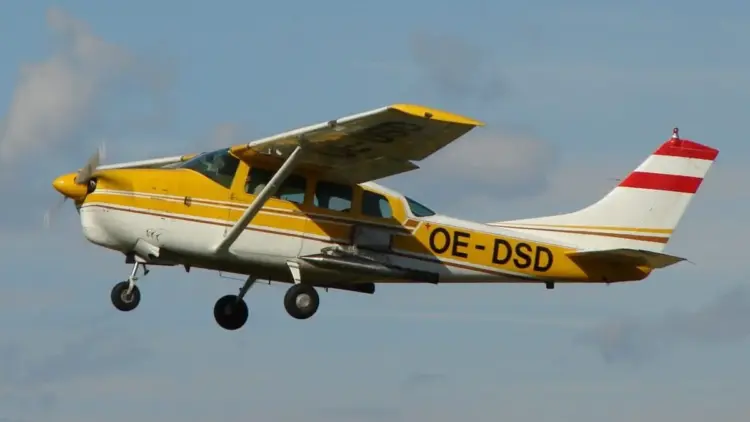
The Water Resources Department, which is spearheading the 2026 program, has allocated ₹285 million for the operation, utilizing specialized aircraft—such as the Cessna—to fly into the base of promising cloud formations. Despite the significant investment, the India Meteorological Department (IMD) and various independent weather analysts have issued warnings that atmospheric conditions are currently unfavorable for such operations, primarily due to the retreating nature of the monsoon.

Chronology: From Deficit to Deployment
The path to the September launch was paved by months of dwindling hopes and deteriorating weather patterns.
The El Niño Factor (Early 2026)
The year 2026 was identified early on by the IMD as an El Niño year. Historically, El Niño—a warming of the surface waters in the eastern Pacific Ocean—has a strong correlation with suppressed monsoons in India. G.S. Srinivasa Reddy, former director of the KSNDMC, notes that approximately 60% of Karnataka’s drought years have coincided with El Niño cycles. By mid-summer, it was clear that the 2026 monsoon would struggle to meet its quotas.
The Monsoon Failure (June–August 2026)
As the monsoon progressed, the anticipated "revival" of rains never materialized. By late August, the rainfall deficit had crossed the 30% threshold, sparking political pressure to "do something" for the farming community. During this period, the state government began forming two critical committees: a monitoring committee and a technical advisory and evaluation committee, featuring members from the KSNDMC, Karnataka Neeravari Nigam Limited (KNNL), and the Rural Development and Panchayat Raj (RDPR) Department.
The September Launch
On September 5, 2026, the Water Resources Minister officially flagged off the cloud-seeding operations at the HAL Airport in Bengaluru. This launch came at a time when many weather experts were already signaling that the window for effective seeding was closing. The southwest monsoon, which provides 75% of the state’s annual rainfall, was already entering its withdrawal phase, reducing the frequency and density of suitable "seedable" clouds.
Supporting Data: The Science and the Skepticism
To understand the controversy, one must look at the complex physics of the atmosphere and the historical data from previous seeding attempts.

The Microphysics of Rainfall
According to S.T. Aruna, chief scientist at the CSIR-National Aerospace Laboratories (NAL), cloud seeding targets "mixed-phase" clouds—those existing between 0°C and -40°C. In these clouds, supercooled water and ice crystals coexist. Through the Wegener-Bergeron-Findeisen (WBF) process, ice crystals grow at the expense of water droplets. If the natural "ice nuclei" (dust or salt particles) are insufficient, seeding introduces artificial particles to jumpstart this process.
"As these particles move around in a cloud, they accumulate more and more water until they become heavy enough to precipitate," Aruna explains. However, she admits that calculating the efficiency of this process is notoriously difficult. The central question remains: Would it have rained anyway?
Historical Precedents: Varshadhare and CAIPEEX
Karnataka is no stranger to this technology, having conducted programs in 2003, 2017, and 2019.
- Project Varshadhare (2017): A study by the Indian Institute of Tropical Meteorology (IITM) reported a 27.9% average enhancement in rainfall above natural levels. However, these measurements were taken within a narrow four-hour window post-seeding.
- The Solapur Experiment (CAIPEEX): A more robust study in the rain-shadow region of Maharashtra found an 18% increase in rainfall over a 100-square-kilometer area.
Madhavan Nair Rajeevan, a veteran climate researcher and former director of IITM, points out that while 18% sounds significant, it may be a "drop in the bucket" for areas facing severe water stress. Furthermore, the Solapur study highlighted that seeding only works if done during the early development stages of a cloud—a precision that is difficult to achieve without sophisticated, localized radar.
The Radar Deficit
In 2017’s Project Varshadhare, the state deployed three dedicated Doppler weather radars to monitor cloud density and thickness in real-time. In 2026, however, the state is reportedly relying on pre-existing, distant radars located in Goa, Hyderabad, and Chennai. Experts like G.S. Srinivasa Reddy argue that this lack of localized, high-resolution data severely hampers the ability of pilots to identify which clouds are truly "ripe" for seeding.

Official Responses: Optimism vs. Expert Caution
The government’s stance has been one of "proactive intervention," while the scientific community remains guarded.
The Government’s Defense
The Water Resources Minister has been vocal about the necessity of the project, stating that the government is "not worried about the financial burden" of the ₹285 million cost. The official narrative is that every possible measure must be taken to support the 209 drought-hit taluks, regardless of the statistical uncertainty of the outcome. A senior official on the technical committee, speaking on the condition of anonymity, noted that while the science is debated, the political imperative to act during a record-breaking drought is absolute.
The Scientific Dissent
Senior IMD officials have been uncharacteristically blunt, stating that "conditions are not favorable" for cloud seeding this late in the year. The primary concern is the retreating monsoon. Without the consistent moisture-laden winds of July and August, the clouds available in September and October are often too "thin" or "warm" to respond to seeding agents.
G.S. Srinivasa Reddy has also criticized the lack of public communication. In previous years, the KSNDMC issued daily reports detailing where seeding occurred and the resulting rainfall. In 2026, information has been sparse, leading to concerns about accountability.
Implications: Cost, Climate, and the Future of Water
The ₹28.52 crore project carries implications that extend far beyond the current monsoon season.

Financial Accountability
If the program fails to yield measurable increases in reservoir levels or soil moisture, the government will likely face intense scrutiny over its fiscal priorities. Critics argue that ₹285 million could have been more effectively spent on long-term drought resilience, such as desilting tanks, promoting micro-irrigation, or providing direct relief to farmers who have lost their Kharif crops. S.T. Aruna suggests the program should be viewed with "sceptical optimism," noting that failure might be due to factors "out of the realm of human control," yet the decision to fund it remains a human one.
The "Symptom vs. Cause" Debate
The 2026 drought highlights a grim trend: 17 of the last 26 years in Karnataka have been drought years. This suggests that drought is no longer an anomaly but a "common feature" of the state’s climate. Relying on cloud seeding—a "techno-fix"—may distract from the urgent need for systemic changes in water management. As climate change increases the frequency of El Niño events and disrupts traditional monsoon patterns, the "emergency" nature of these seeding programs may become an expensive, annual ritual with diminishing returns.
Technological Uncertainty
The reliance on out-of-state radars in 2026 represents a step backward in technical execution compared to 2017. If the state intends to make weather modification a part of its disaster management toolkit, experts argue it must invest in permanent, localized infrastructure rather than ad-hoc, late-season contracts.
Conclusion
As the Cessna aircraft fly over the parched fields of North Karnataka and the Cauvery basin, they carry the hopes of millions of farmers and the weight of a ₹285 million gamble. Whether they bring rain or merely empty the state’s coffers remains to be seen. In the age of El Niño and record-breaking deficits, Karnataka’s attempt to "disturb the clouds" serves as a poignant reminder of humanity’s struggle to negotiate with an increasingly unpredictable atmosphere. For now, the state watches the skies, waiting for a sign that its investment will yield more than just vapor.
Data Summary: Karnataka Rainfall Deficit (June–Sept 2026)
- Total Rainfall Recorded: 551 mm
- Percentage Deficit: 35%
- Affected Districts: 30
- Affected Taluks: 209
- Project Cost: ₹28.52 Crore (₹285 Million)
- Primary Technique: Aircraft-based aerosol release (Cessna)