The Indian automotive landscape is currently witnessing a tectonic shift as the nation’s largest carmaker, Maruti Suzuki, accelerates its transition toward electrification. While the company was initially perceived as a late entrant into the Battery Electric Vehicle (BEV) space, its roadmap is now becoming increasingly clear and formidable. The latest development in this journey is the emergence of detailed spy shots of the internally codenamed "YMC"—a dedicated seven-seater electric Multi-Purpose Vehicle (MPV) slated for a 2027 release.
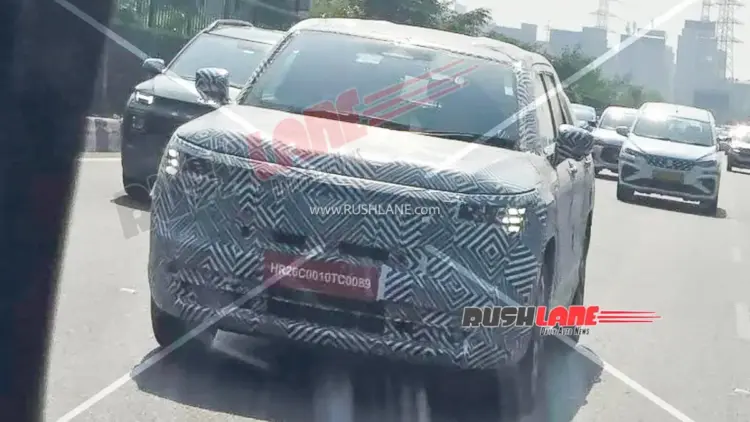
Following earlier glimpses of the vehicle’s rear, new photographs shared by automotive enthusiast Ishan Pahwa have provided the most comprehensive look yet at the YMC’s front fascia, side profile, and, crucially, its interior cabin. This vehicle represents a pivotal moment for Maruti Suzuki, as it aims to combine its traditional dominance in the MPV segment with cutting-edge electric powertrain technology.
Main Facts: Deciphering the Spy Shots
The "YMC" is not merely an electric version of an existing internal combustion engine (ICE) model like the Ertiga or XL6. Instead, it is being developed as a ground-up electric vehicle, likely positioned under the premium Nexa retail channel. The recent spy shots reveal several critical design and functional elements that define this upcoming people-mover.

Exterior Styling and "NEXTré" Identity
The front profile of the YMC test mule showcases a distinctive "short-nose" design, a common characteristic of dedicated EV platforms where the absence of a bulky engine allows for shorter overhangs and maximized cabin space. The windscreen is expansive, suggesting excellent outward visibility for the driver.
A standout feature is the lighting signature. The YMC appears to adopt a vertical interpretation of the "NEXTré" lighting DNA found in current Nexa models like the Baleno and Fronx. The front features three stacked LED segments at the outer edges, providing a futuristic and premium aesthetic. While camouflage still hides the exact grille treatment, the presence of a slim horizontal section above the bumper suggests a closed-off aero-efficient nose, typical of modern EVs.
From the side, the YMC’s silhouette emphasizes utility. It features a long, flat roofline designed to provide ample headroom for third-row passengers. The rear doors are notably large, indicating easy ingress and egress—a vital factor for a seven-seater. At the rear, the vehicle sports an upright tailgate and rectangular LED lighting elements that mirror the triple-segment theme seen at the front.

Interior and Technology
For the first time, spy shots have captured a glimpse of the YMC’s dashboard. The layout appears to be heavily inspired by, if not identical to, the recently unveiled eVitara (the production version of the eVX). The cabin is dominated by a dual-screen setup—a large floating touchscreen infotainment system seamlessly integrated with a digital instrument cluster. This "connected" screen approach aligns Maruti with global EV design trends and marks a significant step up in perceived quality and tech-savviness compared to their current ICE lineup.
Chronology: The Road to Maruti’s Electric Future
The development of the YMC MPV is a strategic chapter in a larger timeline that began several years ago. Understanding this chronology helps contextualize why the YMC is a 2027 product rather than an immediate release.
- January 2023: Maruti Suzuki unveils the eVX Concept at the Auto Expo in Delhi, signaling its intent to enter the high-range electric SUV market.
- Late 2023 – Early 2024: Global testing of the eVX begins in Europe and India. Reports emerge that the platform (27PL) will spawn multiple body styles, including an MPV.
- November 2024: Suzuki officially reveals the production-spec "eVitara" in Milan, Italy. This vehicle serves as the technical donor for the YMC MPV.
- Late 2024: The first mules of the YMC (codenamed) are spotted testing on Indian roads, initially showing only the rear profile.
- Early 2025 (Projected): Production of the eVitara SUV begins at Suzuki Motor Gujarat (SMG), with a primary focus on exports and a subsequent domestic launch.
- 2027 (Targeted): The YMC MPV is expected to make its commercial debut, following the market stabilization of the eVitara.
Supporting Data: Platform and Performance Speculations
The YMC is expected to be built on the Heartect-e platform (internally known as the 27PL), which was co-developed by Suzuki and Toyota. This architecture is a "born-electric" platform, meaning it was designed specifically to house batteries and electric motors, rather than being adapted from a petrol car.

Potential Powertrain Specifications
Based on its shared architecture with the eVitara, industry analysts anticipate the following technical specifications for the YMC:
- Battery Options:
- A 49 kWh battery pack for entry-level variants, offering a range of approximately 400 km (MIDC cycle).
- A 61 kWh battery pack for higher trims, likely pushing the range toward the 500 km mark.
- Drivetrain:
- The MPV will likely come with a Single Motor, Front-Wheel Drive (FWD) setup as standard to maximize efficiency and interior floor flatness.
- While the eVitara offers an "AllGrip-e" All-Wheel Drive (AWD) system, it remains to be seen if Maruti will offer this on the MPV, as the segment typically prioritizes range over off-road capability.
- Dimensions:
- The YMC is expected to be longer than the 4.3-meter eVitara, likely stretching toward 4.5 meters to accommodate the third row of seats comfortably.
The Importance of the MPV Segment
In the Indian market, Maruti Suzuki holds a near-monopoly in the affordable MPV space. The Ertiga and XL6 consistently sell over 15,000 units combined per month. However, as families look toward "green" alternatives, the YMC will fill a crucial void. Currently, the electric MPV market is sparsely populated, with only the BYD e6 (now M6) and the high-end Toyota Vellfire available, leaving a massive gap in the ₹20 lakh to ₹30 lakh price bracket.
Official Responses and Strategic Positioning
While Maruti Suzuki has not released a specific press statement regarding the "YMC" codename, the company’s leadership has been vocal about its "Maruti 3.0" strategy.

Hisashi Takeuchi, Managing Director and CEO of Maruti Suzuki India, has previously stated that the company plans to introduce six electric vehicles in India by the end of the decade (FY2030-31). The YMC is widely understood to be the second or third model in this rollout, following the eVitara.
The company is also investing heavily in a localized supply chain. The batteries for the YMC and eVitara will be manufactured at the Suzuki Motor Gujarat plant, utilizing cells sourced from partners like Toshiba and Denso. This localization is key to keeping the YMC’s price competitive against upcoming rivals from Tata Motors and Mahindra.
Implications: A New Era for Family Mobility
The launch of the YMC in 2027 carries significant implications for the Indian automotive industry, the consumer, and the manufacturer.

1. Disrupting the Three-Row Segment
The YMC will likely be the first mass-market, dedicated electric 7-seater in India. While Tata is expected to launch an electric Safari and Kia is working on a Carens EV, Maruti’s reputation for reliability and its vast service network give it a distinct advantage. If Maruti can price the YMC between ₹22 lakh and ₹28 lakh, it could potentially cannibalize sales from mid-to-high-end diesel SUVs and MPVs.
2. The Death of the "Range Anxiety" Myth for Large Families
One of the biggest hurdles for EVs in the family segment is the fear of running out of charge during long road trips. By using the 61 kWh battery and a dedicated EV platform, the YMC should offer a "real-world" highway range of 350-400 km. Combined with the rapid expansion of charging infrastructure along Indian highways, the YMC could become the first viable electric long-distance tourer for large Indian families.
3. Strengthening the Nexa Brand
By positioning the YMC as a Nexa product, Maruti Suzuki is continuing its push to shed its "budget carmaker" image. The YMC, with its sophisticated dual-screen interior, advanced ADAS (Advanced Driver Assistance Systems), and futuristic NEXTré lighting, will serve as a flagship for Nexa, sitting alongside the Invicto and the eVitara.

4. Environmental Impact and Corporate Average Fuel Efficiency (CAFE)
For Maruti Suzuki, the YMC is essential for meeting increasingly stringent CAFE norms. As a high-volume manufacturer, bringing zero-emission vehicles into its fleet is the only way to offset the emissions of its petrol and CNG models.
Conclusion
The 2027 Maruti Nexa YMC Electric MPV is more than just a new car; it is a statement of intent. The latest spy shots reveal a vehicle that is mature in its design and sophisticated in its technological offerings. By leveraging the shared 27PL platform and the design language established by the eVitara, Maruti Suzuki is preparing to defend its MPV crown in the electric age.
As 2027 approaches, the YMC will undergo thousands of kilometers of further testing across India’s diverse terrains. If the production version stays true to the promise shown in these early glimpses, it may very well become the "Ertiga of the EV era"—a ubiquitous, reliable, and practical choice for the modern Indian family.