

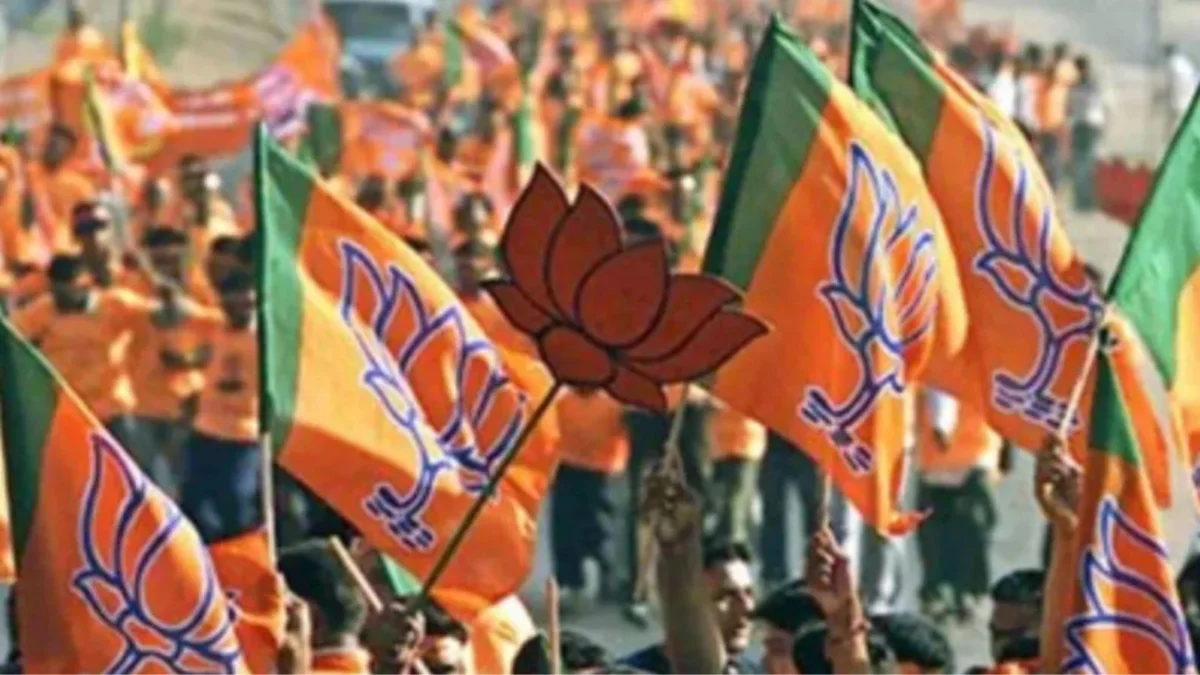
New Delhi, September 13, 2026 – As Punjab braces for its Assembly elections anticipated in February next year, the Bharatiya Janata Party (BJP) is meticulously crafting an exhaustive campaign strategy aimed at transforming its electoral fortunes in the politically volatile state. With an ambitious agenda, the party plans to launch a multi-faceted attack on its opponents, focusing on a broad spectrum of issues ranging from internal security and the pervasive threat of terrorism to the entrenched problems of crime, corruption, drug abuse, and soaring unemployment. This comprehensive approach seeks to leverage both anti-incumbency sentiments and deeply rooted social concerns, with a particular emphasis on caste dynamics.
The BJP’s strategic blueprint for Punjab draws heavily from its recent electoral experiences in Delhi and West Bengal, where the party attempted to coalesce middle-class anxieties, welfare messaging, and a strong anti-incumbency narrative. However, in Punjab, the party intends to amplify its focus on the state’s significant Scheduled Caste (SC) population, which constitutes over 30% of the electorate, recognizing its pivotal role in electoral outcomes.
A senior BJP leader, speaking on condition of anonymity, articulated the core tenets of the impending campaign: "Beyond the ‘three Cs’ – crime, corruption, and chitta (drugs) – which will remain central, the issue of caste will be critically interwoven, given Punjab’s substantial SC population. We anticipate that reflections of our successful campaigns in Delhi and West Bengal will decisively take shape on the ground in Punjab." This statement underscores the party’s intent to adapt proven strategies while tailoring them to the unique socio-political fabric of Punjab.
Youth at the Forefront of BJP’s Outreach
Party insiders reveal that a significant thrust of the BJP’s campaign will be directed towards the youth demographic, a critical segment grappling with severe socio-economic challenges. The party plans to prominently feature the alarming rates of drug abuse, the scarcity of meaningful employment opportunities, and what it describes as a precipitous decline in law and order. Allegations of an "alarming rise" in extortion cases across the state are also expected to become a key talking point, aiming to tap into widespread public fear and dissatisfaction.
Simultaneously, the BJP is preparing for a "positive outreach" centered around the revered Dalit saint, Sant Ravidas. This initiative is a specific component of the party’s broader national campaign to connect with and empower Dalit communities, and its integration into the Punjab strategy highlights the party’s attempt to build bridges across social strata.
A BJP leader from Punjab elaborated on this dual approach: "The ongoing national outreach around Sant Ravidasji is a special component of our campaign. Issues like rampant drug abuse and corruption, which neither the ruling Aam Aadmi Party (AAP) nor the Congress can credibly defend themselves against, will undeniably provide the BJP with a significant vantage point against both parties." This indicates a calculated effort to corner the incumbent AAP and the principal opposition Congress on governance issues while simultaneously fostering goodwill through cultural and spiritual engagement.
Reviving Historical Grievances and Challenging Opponents
A significant element of the BJP’s strategy involves rekindling historical grievances, particularly its long-standing attacks on the Congress party over the 1984 anti-Sikh riots. A party leader cited the Congress’s historical support for figures like former party leader Sajjan Kumar, who faced accusations related to the riots, as an issue that, in the BJP’s strategic assessment, can be effectively leveraged to target the Congress in Punjab and resonate with Sikh voters.
The AAP government, currently at the helm in Punjab, is also poised to face a barrage of attacks from the BJP. These attacks are expected to center on allegations of links with pro-Khalistan elements and a severe breakdown in the state’s law-and-order situation. "The AAP government will be compelled to answer for its blatant support to Khalistani elements, whom they are openly garlanding and inducting into their fold, as well as for the palpable fear among the populace due to unbridled extortion, a phenomenon we had never witnessed before their ascension to power," asserted another BJP leader, underscoring the severity of the charges.
Chronology: A Path to the Upcoming Electoral Battle
The political landscape of Punjab has witnessed tumultuous shifts over the past decade, significantly altering the traditional power dynamics. The BJP, historically a junior partner in an alliance with the Shiromani Akali Dal (SAD), found itself isolated after the SAD walked out of the National Democratic Alliance (NDA) in September 2020. This dramatic split was precipitated by widespread protests against the now-repealed farm laws, which deeply alienated the BJP from Punjab’s influential farmer community.
The 2022 Assembly elections marked a watershed moment. Campaigning independently for the first time in decades, the BJP struggled to gain traction, winning only two seats out of 117. The election saw the meteoric rise of the Aam Aadmi Party (AAP), which secured a stunning 92 seats, decimating both the Congress (reduced to 18 seats from 77) and the SAD (winning just three seats, down from 15). This outcome established AAP as the dominant political force, while the BJP was relegated to a marginal player.
Since then, the BJP has been engaged in a painstaking effort to expand its footprint and establish itself as an independent force in Punjab. This has involved increased central leadership visits, heightened focus on central government schemes, and a concerted push to connect with diverse communities across the state. The recent meeting between SAD president Sukhbir Singh Badal and Prime Minister Narendra Modi in Parliament last month has ignited intense speculation about a potential rapprochement between the former allies. BJP sources indicate that the party is actively weighing the implications of such an alliance in its calculations, with clarity expected by the end of September.
The groundwork for the BJP’s official Punjab campaign launch is currently underway, with a formal kick-off anticipated around the festive season of Diwali. Preceding this, a statewide program linked to the Centre’s "Nasha Mukt Bharat" (Drug-Free India) initiative is scheduled to run between September 18 and 30. This critical program is expected to be spearheaded by Union Home Minister Amit Shah, signaling the central government’s direct involvement and the high priority accorded to the issue of drug abuse in Punjab.
Supporting Data: Understanding Punjab’s Complex Electoral Tapestry
Punjab’s political landscape is intricate, shaped by its unique demographics, socio-economic challenges, and historical narratives.
Demographic Dynamics and Caste Arithmetic:
The state’s demographic composition is crucial, with the Scheduled Caste (SC) population exceeding 30%, making it one of the highest proportions in India. This substantial voter bloc is not monolithic, comprising various sub-castes with distinct political affiliations and grievances. Historically, different parties have attempted to court this segment, but a unified appeal has often proven elusive. The BJP’s renewed emphasis on Sant Ravidas, a revered figure for many Dalit communities, is a calculated move to consolidate a significant portion of this vote. Beyond SCs, Punjab also has a significant Jat Sikh population, traditionally aligned with the Akali Dal, and Hindu voters, who have historically leaned towards the BJP or Congress.
Socio-Economic Woes:
The "three Cs" – crime, corruption, and chitta (drugs) – are not merely campaign slogans but reflect deep-seated societal issues. Punjab has long grappled with a severe drug crisis, which has ravaged its youth and impacted families across economic strata. This issue is not only a public health concern but also a major driver of social unrest and crime. Unemployment, particularly among the educated youth, further exacerbates the problem, creating a fertile ground for frustration and disillusionment. The alleged rise in extortion cases, as highlighted by the BJP, points to a perceived breakdown in law enforcement and a climate of fear that could sway voters.
Electoral Performance – A Reality Check for BJP:
The BJP’s historical performance in Punjab underscores the formidable challenge it faces. In the 2017 Assembly elections, in alliance with SAD, the BJP won three seats. The 2022 elections, contested independently, saw its tally drop to two seats. This represents a minuscule share of the 117-member assembly, highlighting the party’s struggle to translate its national popularity into state-level electoral success in Punjab. Its vote share has remained modest, primarily concentrated in urban Hindu-dominated pockets. The AAP’s landslide victory in 2022 drastically altered the electoral calculus, demonstrating a public appetite for change and a rejection of traditional parties. The Congress, despite its strong performance in 2017, saw its support erode significantly, while the SAD, once a dominant force, was reduced to a marginal presence.
The Weight of History: 1984 Riots and Khalistan Allegations:
The 1984 anti-Sikh riots remain an open wound in Punjab’s collective memory. The BJP’s decision to revive this issue is a strategic attempt to target the Congress’s historical baggage and appeal to Sikh sentiments, particularly those who feel justice has been denied. Similarly, the allegations of AAP’s links with pro-Khalistan elements tap into sensitivities surrounding national security and separatism, issues that resonate deeply with a segment of the electorate and provide the BJP with a platform to project itself as a strong defender of national unity.
Official Responses and Strategic Posturing
The BJP’s multi-pronged strategy is not merely a collection of issues but a carefully calibrated narrative designed to corner its adversaries and present itself as the only viable alternative.
BJP’s Stance:
From the BJP’s perspective, the campaign themes are a direct response to the prevailing realities in Punjab. Senior party leaders consistently emphasize that the state is facing an existential crisis due to unchecked drug abuse, rampant corruption, and a deteriorating law-and-order situation. "We are not inventing these issues; they are the lived experiences of every Punjabi family," asserted a party spokesperson, aiming to frame the campaign as a reflection of public sentiment. The party’s decision to involve Union Home Minister Amit Shah in the "Nasha Mukt Bharat" campaign is a clear signal of the central government’s commitment and a powerful political statement, aiming to project strength and decisiveness in tackling the drug menace. The cultural outreach through Sant Ravidas is intended to counter the perception of the BJP as an urban-centric party and build a broader social base, particularly among Scheduled Caste communities.
Anticipated Responses from Opponents:
The Aam Aadmi Party (AAP), as the incumbent, is expected to mount a robust defense of its governance record. While facing criticism on law and order and drug control, the AAP government is likely to highlight its initiatives in education, healthcare, and infrastructure, attempting to shift the narrative towards its developmental agenda. On the allegations of Khalistan links, the AAP has consistently denied such claims, often attributing them to political vendetta and an attempt to destabilize a democratically elected government. They are likely to portray the BJP’s attacks as divisive politics aimed at communal polarization.
The Congress, though weakened, will likely attempt to counter the BJP’s historical attacks on the 1984 riots by pointing to its own efforts towards justice and rehabilitation, and by highlighting other contemporary issues where the BJP might be vulnerable. They might also criticize the BJP for attempting to revive communal tensions for political gain and question the efficacy of central government schemes in Punjab. Both AAP and Congress are expected to paint the BJP as an outsider party that does not understand the nuances of Punjab’s unique cultural and political identity, a common tactic against a party with limited historical presence.
Implications: The Road Ahead for Punjab Politics
The BJP’s ambitious campaign strategy and potential alliance maneuvers carry significant implications for the future of Punjab’s political landscape, the fortunes of the involved parties, and potentially the state’s relationship with the Centre.
BJP’s Prospects and Challenges:
For the BJP, the upcoming elections are a crucial test of its ability to independently expand its base beyond its traditional urban Hindu support. The comprehensive campaign strategy, if executed effectively, could allow the party to tap into diverse voter segments, including disillusioned youth, Scheduled Castes, and those concerned about governance. However, the party faces significant hurdles. Its historical association with the now-repealed farm laws still evokes resentment among rural voters, particularly farmers. Overcoming the perception of being an "outsider" party and building trust within the predominantly Sikh population remains a formidable challenge. The success of the "Nasha Mukt Bharat" initiative, led by Amit Shah, will be critical in demonstrating the party’s commitment and efficacy.
The SAD Alliance Conundrum:
The potential alliance with the Shiromani Akali Dal (SAD) is perhaps the most significant strategic calculation for the BJP. For the BJP, an alliance with SAD offers immediate access to the Akalis’ traditional panthic (Sikh religious) electorate, including their influence over various deras (religious sects) and halqas (constituencies). This could provide the much-needed rural penetration and Sikh voter support that the BJP currently lacks. However, such an alliance also comes with risks. The SAD, while "keener on an alliance than the BJP" according to sources, finds itself in a precarious position. It must navigate a delicate balance between aligning with the BJP, which could alienate sections of its core Sikh support base still resentful over the farm laws, and appearing too sympathetic to radical elements, particularly given the rise of outfits like Khadoor Sahib MP Amritpal Singh’s Akali Dal Waris Punjab De. A misstep could further erode SAD’s already diminished influence. For the BJP, the decision hinges on whether the gains from an alliance outweigh the potential backlash from its own nationalist base or the dilution of its independent identity.
Impact on Punjab’s Political Landscape:
The aggressive campaigning by the BJP, coupled with the potential SAD-BJP alliance, is poised to intensify the multi-cornered contest in Punjab. It could force the AAP to double down on its governance narrative and welfare schemes, while the Congress will be compelled to find a distinct voice amidst the clamor. The election is likely to be fought fiercely on issues of identity, governance, security, and socio-economic development. The outcome will not only determine the state’s next government but also reshape the political alignments and narratives for years to come. A stronger BJP presence, whether independently or through an alliance, could lead to a more direct influence of central policies and potentially alter the dynamics of center-state relations.
In conclusion, the BJP’s comprehensive campaign for the 2027 Punjab Assembly elections represents a pivotal moment for the party and the state. By meticulously weaving together issues of governance, social justice, historical grievances, and national security, and by carefully considering its alliance options, the BJP aims to carve out a significant space in a state where it has historically played a secondary role. The coming months will reveal whether this elaborate strategy can truly transform its electoral fortunes and usher in a new political era for Punjab.
