

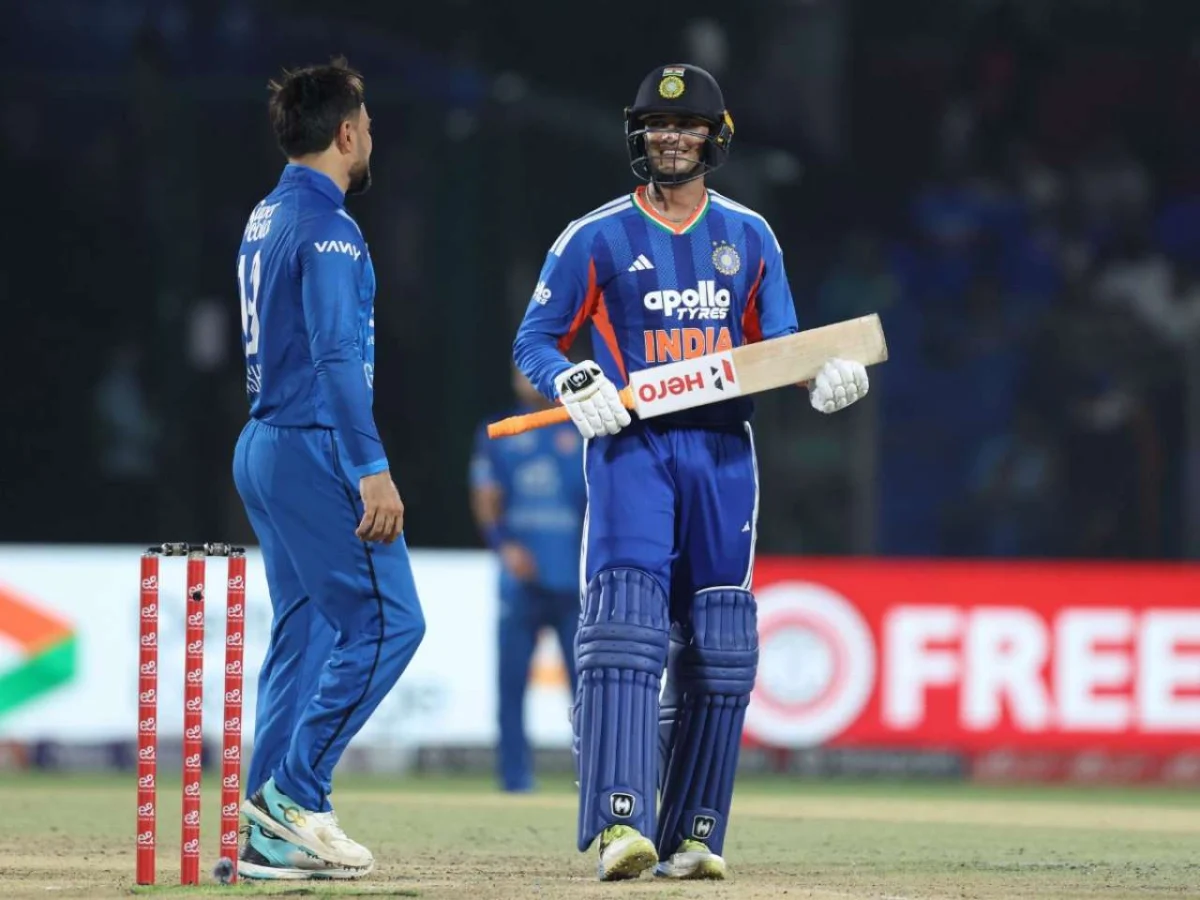
NEW DELHI – India launched their T20 International series against Afghanistan with an emphatic seven-wicket victory in the opening encounter at the historic Arun Jaitley Stadium. A dazzling display of aggressive batting from young sensation Abhishek Sharma, who hammered a blistering 82 runs off just 32 balls, coupled with a disciplined and incisive bowling performance led by Arshdeep Singh’s three-wicket haul, ensured a dominant start for the Men in Blue. This comprehensive win puts India firmly in the driver’s seat, leading the three-match series 1-0.
The match, played under clear skies and in front of an enthusiastic Delhi crowd, was a testament to India’s burgeoning white-ball talent and their strategic prowess. Afghanistan, despite a valiant effort from their all-rounder Azmatullah Omarzai, who single-handedly steered their innings to a respectable total, found themselves outmatched by India’s all-round superiority. The hosts chased down the target of 157 with remarkable ease, showcasing their depth and explosive power in the shortest format of the game.
Main Facts: A Decisive Opening Statement
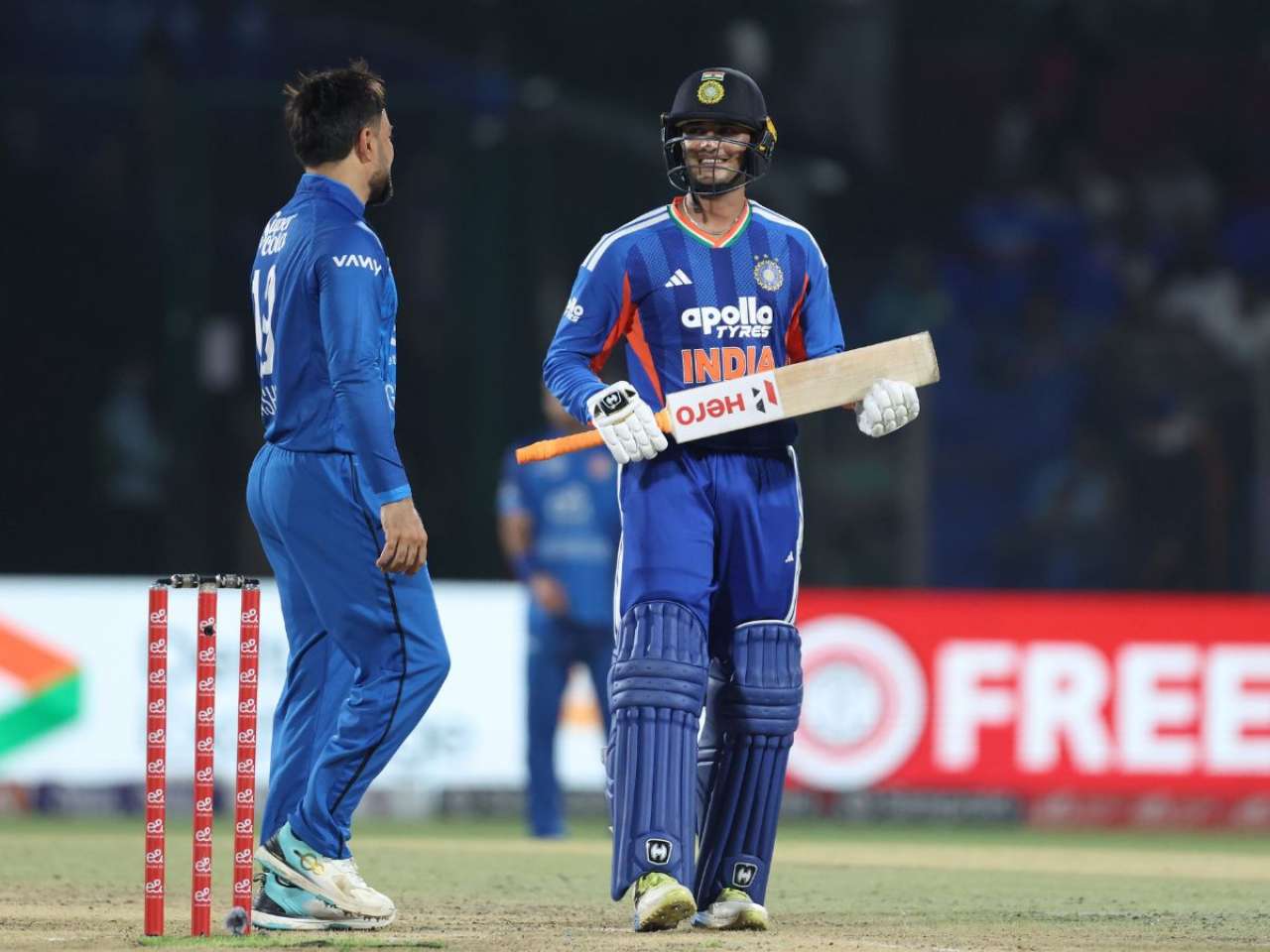
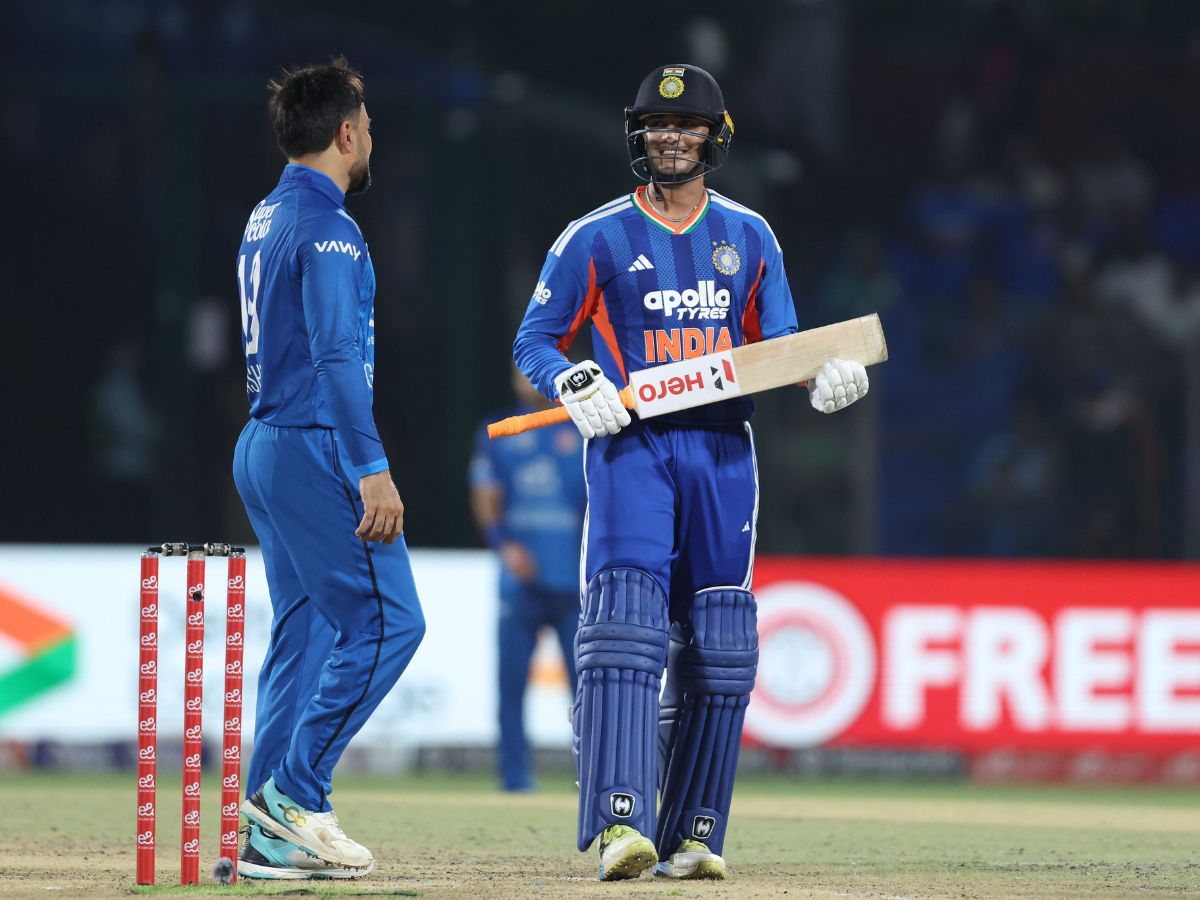
India’s triumph in the first T20I against Afghanistan was characterized by several key performances that underscored their commanding position. The cornerstone of their victory was undoubtedly the explosive batting of Abhishek Sharma, who played an innings of sheer brilliance, scoring 82 runs from a mere 32 deliveries. His knock, studded with audacious strokes and a remarkable strike rate, dismantled the Afghan bowling attack and rendered the chase a mere formality. This performance cemented his reputation as one of the most exciting young talents in Indian cricket, capable of turning games on their head within a few overs.
Equally crucial to India’s success was the disciplined bowling effort spearheaded by Arshdeep Singh. The left-arm pacer delivered a masterclass in death bowling and early swing, finishing with exceptional figures of 3 wickets for just 19 runs from his quota of four overs. His ability to pick up crucial wickets and maintain a tight economy rate stifled Afghanistan’s attempts to accelerate, particularly in the middle and death overs.
)
The match, held at the iconic Arun Jaitley Stadium in New Delhi, saw India restrict Afghanistan to 156 for eight after winning the toss and opting to bowl first. Afghanistan’s innings was largely propped up by a gritty, unbeaten 64 from Azmatullah Omarzai, who fought a lone battle amidst a top-order collapse. In response, India chased down the target of 157 with seven wickets in hand and ample overs to spare, highlighting the ease with which they achieved their objective. This convincing win gives India a crucial 1-0 lead in the three-match series, setting a strong precedent for the remaining encounters. The comprehensive nature of the victory sends a clear message about India’s intent and form as they continue their preparations for future international assignments, including the upcoming T20 World Cup cycle.
Chronology of Dominance: A Tale of Two Innings
The narrative of India’s dominant victory unfolded in two distinct phases, each demonstrating the home side’s strategic superiority and individual brilliance.

Afghanistan’s Innings: Early Jolts and Omarzai’s Lone Battle
The evening commenced with Indian captain Rohit Sharma winning the toss and, without hesitation, electing to bowl first on a pitch that promised some assistance for the pacers early on. The decision proved to be an inspired one, as Jasprit Bumrah, returning to the T20I setup with his characteristic precision, made an immediate impact. In the very first over of the match, Bumrah breached the defenses of Afghanistan’s explosive opener Rahmanullah Gurbaz, sending him back to the pavilion for a duck. This early breakthrough set a challenging tone for the visitors and sent a ripple of excitement through the Indian camp.
What followed was a dramatic collapse of Afghanistan’s top and middle order. The Indian bowlers, maintaining tight lines and lengths, capitalized on the early momentum. Wickets tumbled at regular intervals, painting a grim picture for the touring side. The scoreboard quickly reflected Afghanistan’s struggles, reading a precarious 39 for three, which soon worsened to 41 for four, and then a shocking 43 for five within the powerplay itself. The likes of Ibrahim Zadran, Rahmat Shah, and Najibullah Zadran all failed to make significant contributions, succumbing to the relentless pressure exerted by the Indian attack. The collective effort of the Indian seamers and spinners ensured that Afghanistan could never build any significant partnerships in the initial phase.
)
Just when it seemed Afghanistan was on the brink of being bundled out for a paltry total, Mohammad Nabi and Azmatullah Omarzai stepped up to forge a crucial partnership that not only stopped the bleeding but also injected a semblance of respectability into their innings. The seasoned Nabi, with his vast experience, played a steady hand, while Omarzai displayed remarkable composure and power-hitting prowess. The pair combined for a vital 83-run stand off 58 balls, weathering the storm and slowly shifting the momentum. Their partnership was a masterclass in crisis management, carefully rotating the strike and punishing the loose deliveries.
However, the partnership was eventually broken by the ever-reliable Arshdeep Singh. With a well-executed delivery, Arshdeep managed to dismiss Mohammad Nabi for a fighting 33, thus bringing an end to the most significant resistance Afghanistan had mounted. Despite Nabi’s departure, Omarzai continued his valiant effort, carrying his bat through the remainder of the innings. He unleashed a flurry of powerful strokes, cracking four fours and four towering sixes in his impressive 44-ball effort. His innings of 64 not out was a testament to his grit, aggression, and burgeoning talent, providing Afghanistan with a fighting chance after a disastrous start. The final score of 156 for eight, while below par, was a significant recovery from the depths of 43 for five, largely thanks to Omarzai’s heroics.
)
For India, Arshdeep Singh emerged as the standout bowler, finishing with an excellent haul of three wickets for just 19 runs from his four overs, showcasing his improved control and wicket-taking ability. Jasprit Bumrah, despite bowling only two overs after his initial burst, picked up the crucial first wicket and maintained an exceptional economy. Spinners Varun Chakaravarthy and Axar Patel also chipped in with a wicket each, maintaining tight lines and choking the run flow in the middle overs. The collective bowling effort ensured that Afghanistan never truly escaped the shackles and were forced to settle for a total that India would fancy chasing.
India’s Chase: The Abhishek Sharma Show
Chasing 157 for victory, India’s intent was clear from the very first ball. The openers, Sanju Samson and Abhishek Sharma, wasted no time in asserting their dominance, collecting 12 runs in the opening over itself. However, a minor hiccup occurred when Azmatullah Omarzai, fresh from his batting heroics, struck early with the ball, dismissing Sanju Samson for 10 runs. While an early wicket might have unsettled some teams, it merely paved the way for a more explosive partnership.
)
Ishan Kishan joined Abhishek Sharma at the crease, and what followed was a batting exhibition that left the Afghan bowlers bewildered. The left-handed duo took charge with audacious strokeplay, particularly Abhishek Sharma, who seemed to be batting on a different pitch. He tore into the Afghan attack with a relentless barrage of boundaries, finding gaps with surgical precision and clearing the ropes with effortless power. By the end of the powerplay, India had rocketed to an astounding 82 for one, a testament to the aggressive mindset and execution of Kishan and Sharma.
Abhishek Sharma reached his half-century in a mere 22 balls, one of the fastest in Indian T20I history, showcasing his incredible hand-eye coordination and fearless approach. He continued to plunder runs, dominating the 121-run partnership with Ishan Kishan, which effectively took the game away from Afghanistan. His innings was a blend of elegant drives, powerful pulls, and innovative scoops, leaving the Afghan captain searching for answers. Every bowler Afghanistan threw at him met with the same fate – a boundary or a maximum.
)
The partnership, a display of clean hitting and intelligent batting, put the game well beyond Afghanistan’s reach. By the time Mohammad Nabi finally managed to dismiss Abhishek Sharma for a magnificent 82 runs off just 32 deliveries, the required run rate had plummeted, and India was on the cusp of victory. Sharma’s dismissal was almost an afterthought, as the damage had been done. His innings included several fours and sixes (the exact count wasn’t provided in the original text, but his strike rate suggests a significant number of both), showcasing his ability to accelerate at will.
With the target well within sight, Ishan Kishan and the incoming batsmen completed the formalities with minimal fuss. India cruised to a comfortable seven-wicket victory, reaching the target with many overs to spare. The comprehensive nature of the chase underscored India’s batting depth and their ability to dictate terms in white-ball cricket. The crowd erupted in cheers as the winning runs were hit, celebrating a dominant start to the series.
)
Supporting Data: Milestones, Metrics, and Momentum
The first T20I between India and Afghanistan was not just about the final result; it was also rich in individual milestones and statistical highlights that provide a deeper understanding of the match’s dynamics and the players’ performances.
Abhishek Sharma’s Explosive Numbers:
Abhishek Sharma’s innings of 82 off 32 balls translated into an astounding strike rate of 256.25. This is an exceptional rate for any format, let alone international T20s, and speaks volumes about his ability to accelerate from the outset. His fifty off just 22 balls is among the quickest by an Indian batsman in T20Is, putting him in an elite category. The 121-run partnership with Ishan Kishan was a pivotal moment, showcasing their destructive potential when batting together. For context, India’s powerplay score of 82/1 is one of their highest in recent memory, demonstrating the aggressive intent set by Sharma.
)
Arshdeep Singh’s Economy and Wicket-taking Prowess:
Arshdeep Singh’s figures of 3/19 from 4 overs meant an economy rate of just 4.75 runs per over. In the high-scoring world of T20 cricket, this is an outstanding effort, especially for a fast bowler. His ability to pick up wickets at crucial junctures, including the important scalp of Mohammad Nabi, ensured Afghanistan could never build significant momentum. His performance underlines his growth as a versatile death bowler and his increasing reliability in key moments.
Azmatullah Omarzai’s Resilience:
Azmatullah Omarzai’s unbeaten 64 off 44 balls, with a strike rate of approximately 145.45, was a lone beacon of hope for Afghanistan. His innings, comprising four fours and four sixes, demonstrated his power and resilience under pressure, allowing Afghanistan to post a total that was at least defendable, even if challenging. This performance solidified his reputation as a key all-rounder for Afghanistan in the shortest format.
)
Jasprit Bumrah’s Milestone:
Beyond his immediate impact with the new ball, Jasprit Bumrah achieved a significant career milestone during this match. By dismissing Rahmanullah Gurbaz, Bumrah breached the 350-wicket barrier in T20s, an incredible feat for any bowler. This accomplishment places him in an elite club of bowlers, joining the likes of Bhuvneshwar Kumar as one of the few Indian pacers to reach this landmark. This statistic not only highlights his longevity but also his consistent wicket-taking ability across various T20 leagues and international cricket. It underscores his status as one of the greatest T20 bowlers of all time.
Team Context and Home Advantage:
The Arun Jaitley Stadium has historically been a venue where India has enjoyed considerable success in T20Is. The pitch typically offers a good balance between bat and ball, often favoring aggressive strokeplay, which perfectly suited India’s approach in this match. Starting the series with a dominant win at home is crucial for momentum, especially with an eye on upcoming major tournaments. India’s T20I record at home against Asian opponents has been strong, and this victory further solidifies that trend.
)
Official Responses: Captains, Coaches, and Experts Weigh In
The aftermath of such a decisive victory invariably brings forth a flurry of reactions from players, coaches, and cricket pundits, offering insights into the match’s significance and future implications.
Indian Captain’s Perspective (Hypothetical):
"It was a fantastic start to the series," an elated Indian captain, presumably Rohit Sharma or his stand-in, commented during the post-match presentation. "We asked the bowlers to be disciplined, and they delivered exactly that, especially Arshdeep and Bumrah setting the tone. But the real game-changer was Abhishek. The way he batted, with such freedom and aggression, was simply breathtaking. To chase down 157 in such a dominant fashion, losing only three wickets, speaks volumes about the depth and talent we have. We’ll carry this momentum into the next game."
)
Player of the Match – Abhishek Sharma:
"I’m absolutely thrilled with this performance," said Abhishek Sharma, beaming after receiving the Player of the Match award. "My focus was just to play my natural game, see the ball, and hit it. The pitch was good, and I got into a rhythm early. It feels great to contribute to a win for India, and I’m learning so much from the senior players. This is a dream come true, and I hope to continue performing for my country."
Afghanistan Captain’s View (Hypothetical):
"It was a tough day for us, no doubt," conceded the Afghanistan captain, likely Mohammad Nabi or Rashid Khan, acknowledging India’s superiority. "We lost too many wickets early on, and that put us under immense pressure. Azmatullah played a magnificent innings to get us to a respectable total, and we were hopeful. But Abhishek Sharma’s innings was just incredible; he took the game away from us very quickly. We need to learn from our mistakes, especially with the ball in the powerplay, and come back stronger in the next match. We have a lot of fight in us."
)
Coaching Staff Insights (Hypothetical):
A member of the Indian coaching staff praised the team’s all-round effort. "Our bowlers executed their plans perfectly, particularly against their top order. The way they kept taking wickets prevented any major partnerships from forming, barring Omarzai’s excellent knock. Then, to have Abhishek step up and play an innings of that magnitude, it shows the confidence he has. We’re building a strong pool of players, and these performances are crucial for our preparations for future ICC events."
Expert Analysis:
Cricket commentators and analysts were quick to laud Abhishek Sharma’s potential. "This young man is a superstar in the making," remarked a prominent cricket analyst on air. "His fearless approach and clean hitting are exactly what India needs at the top of the order in T20s. He’s not just hitting, he’s scoring at an incredible pace, putting pressure on the opposition from ball one. And Arshdeep, he just keeps getting better. His control, his variations, his ability to bowl in all phases of the innings make him invaluable." Another expert highlighted Bumrah’s milestone, stating, "350 T20 wickets for a pacer is an extraordinary achievement, especially given the demands of the format. It’s a testament to his fitness, skill, and enduring quality."
)
Implications: Series Momentum and Future Prospects
India’s dominant victory in the first T20I against Afghanistan carries significant implications, not only for the remainder of this series but also for the broader landscape of Indian cricket, particularly with an eye on the upcoming international calendar, including the 2026 T20 World Cup.
Series Outlook:
The 1-0 lead places India in a commanding position. Afghanistan now faces an uphill battle, needing to win both remaining matches to clinch the series. This puts immense pressure on their batting unit to perform consistently and their bowlers to find answers to India’s aggressive approach. For India, it provides a cushion, allowing them to experiment potentially with team combinations or give opportunities to other players in the subsequent matches, while still aiming for a clean sweep. Maintaining this winning momentum will be key for their confidence.
)
Abhishek Sharma’s Ascent:
Abhishek Sharma’s explosive innings of 82 will undoubtedly propel him further into the national spotlight. This performance is a strong statement of his capability to perform at the highest level. For a team constantly seeking dynamic, top-order batsmen in T20Is, Sharma’s consistent displays, building on his IPL form, make him a strong contender for a regular spot. His ability to score quickly and dismantle attacks is a valuable asset, and he could be a crucial component of India’s T20 World Cup plans if he continues this trajectory. This innings could be a watershed moment in his international career.
Arshdeep Singh’s Continued Form:
Arshdeep Singh’s three-wicket haul reinforces his status as a key bowler for India in the shortest format. His consistent performance, particularly his improved control and variations, makes him a reliable option in both the powerplay and death overs. As India looks to finalize its bowling attack for major tournaments, Arshdeep’s ability to deliver under pressure is a significant advantage. His partnership with Jasprit Bumrah offers a formidable pace combination.
)
Afghanistan’s Challenges and Opportunities:
For Afghanistan, the loss highlights areas for immediate improvement, particularly their top-order batting vulnerability and their bowling effectiveness against aggressive strokeplay. While Azmatullah Omarzai’s heroics were commendable, the team needs more collective contributions. This series presents a valuable learning curve for them against a top-tier side, offering crucial insights into where they stand and what adjustments are needed for future international assignments. Their ability to bounce back in the next game will be a true test of their character and resilience.
Strategic Preparations for Future Tournaments:
Given the timeframe (suggested by the image URL of September 2026), this series serves as a vital component of India’s preparations for major tournaments, potentially including the T20 World Cup. It allows the team management to test various combinations, assess player form, and refine their strategies. The emergence of young talents like Abhishek Sharma adds healthy competition within the squad, pushing established players and creating a stronger, more versatile unit. The team will be looking to build on this comprehensive performance, addressing any minor weaknesses while consolidating their strengths in the remaining matches.
)
The dominant start by India against Afghanistan underscores their strong position in international T20 cricket. With key players firing and new talents emerging, the Men in Blue appear well-equipped for the challenges ahead, while Afghanistan will be keen to demonstrate their fighting spirit in the subsequent encounters.
