

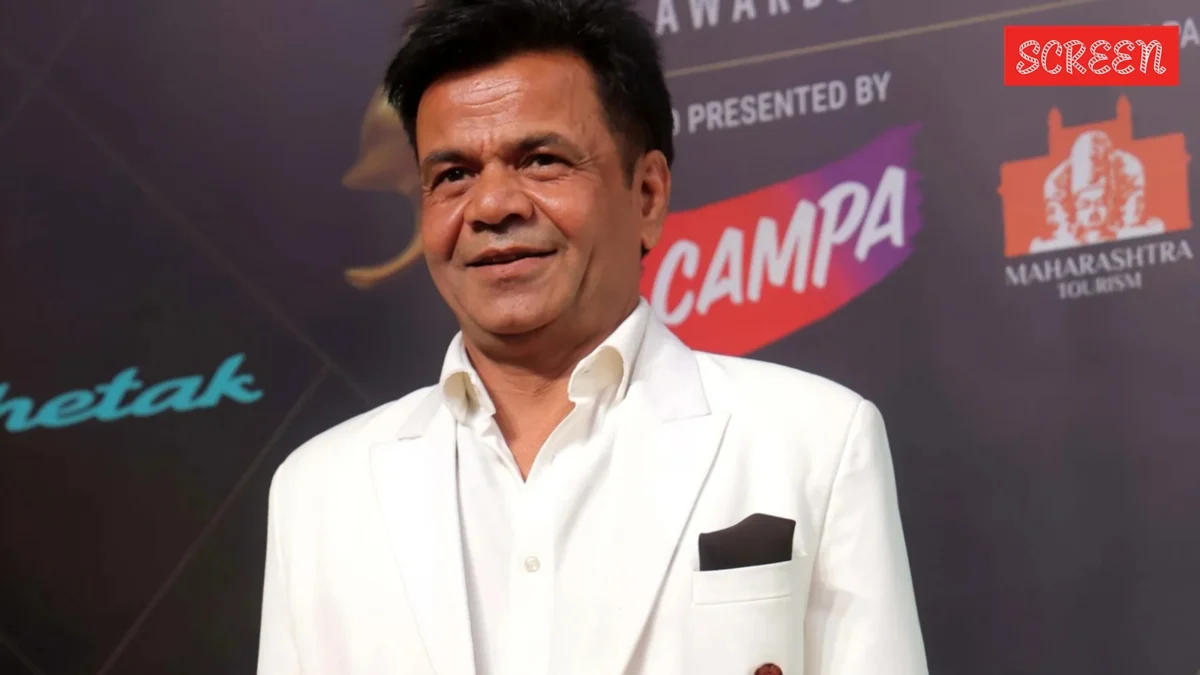
New Delhi: In a significant development concerning the protracted legal battle of actor Rajpal Yadav, the Supreme Court of India has granted him a two-week extension to present a concrete proposal for settling an outstanding debt amounting to approximately Rs 11 crore. As a testament to his commitment and a move to demonstrate his bona fide, the apex court has directed Yadav to deposit Rs 2 crore with its registry within the same timeframe. This decision marks a crucial juncture in a case that has seen multiple legal proceedings and has raised questions about the actor’s financial commitments and compliance with court orders.
The ongoing litigation stems from a financial dispute dating back to 2010, when the complainant, M/s Murali Projects Pvt Ltd, alleges that Rajpal Yadav, along with his wife Radha Rajpal Yadav and their company, had availed financial assistance for a film project. The subsequent failure to honor financial obligations led to a series of cheque bounce cases, culminating in the current Supreme Court intervention. The latest order, issued on Tuesday, September 15, 2026, signals a last chance for the actor to resolve the matter amicably and avoid further stringent legal actions.
The Genesis of the Dispute: A Film’s Financial Fallout
The roots of this complex legal entanglement can be traced back to 2010, when Rajpal Yadav reportedly sought financial aid for a film venture. According to the complainant, M/s Murali Projects Pvt Ltd, the actor, his wife, and their associated company entered into an agreement in 2012, acknowledging a debt that was to be repaid. This agreement stipulated a repayment of around Rs 11 crore, inclusive of interest.
To purportedly settle a portion of this financial assistance, Yadav is alleged to have issued seven post-dated cheques in 2013, each for Rs 1.05 crore. However, these cheques were subsequently dishonored upon presentation, triggering the legal proceedings that have now reached the highest judicial forum in the country. The complainant has consistently maintained that these dishonored cheques represent a significant portion of the outstanding dues, and the actor’s repeated failure to honor his financial commitments has fueled the prolonged legal battle.
A Chronology of Legal Battles: From Lower Courts to the Apex Court
The journey of this case through the Indian judicial system has been arduous and marked by a series of appeals and convictions.
- 2018: A magisterial court convicted Rajpal Yadav in multiple cheque bounce cases. He was initially sentenced to six months’ imprisonment.
- 2019: A sessions court upheld the conviction by the magisterial court.
- April 2018 (Magisterial Court): Conviction by a magisterial court in cheque bounce cases.
- 2019 (Sessions Court): Sessions court upheld the conviction by the magisterial court.
- July 10, 2026: The Delhi High Court reviewed the appeals filed by Rajpal Yadav and his wife challenging the 2019 sessions court decision. The High Court upheld the convictions in multiple cheque bounce cases. In its detailed 108-page verdict, the High Court noted Yadav’s consistent failure to honor his undertakings regarding payments to M/s Murali Projects Pvt Ltd. The court observed that despite earnest efforts to facilitate an amicable resolution, the actor had "categorically refused to make any further payment." Consequently, the High Court sentenced Yadav to three months’ imprisonment in each of the seven cheque bounce cases. The court also clarified that approximately Rs 2 crore already paid by the actor would be adjusted against the total dues. The sentence was kept in abeyance for two months to allow Yadav time to approach the appellate court. The High Court also directed Yadav to pay more than Rs 1 crore to the complainant in each of the seven complaints, after adjusting the already paid amount.
- September 8, 2026: The Supreme Court issued a notice on Rajpal Yadav’s plea. The apex court had previously stated that exemption from surrendering would be granted subject to the deposit of Rs 5 crore with the registry.
- September 15, 2026 (Present Hearing): The Supreme Court, while extending Yadav’s exemption from surrendering until October 5, 2026, has given him a final opportunity of two weeks to present a concrete proposal for payment. The court has also mandated the deposit of Rs 2 crore with the apex court registry as a demonstration of his intent.
The High Court’s judgment on July 10, 2026, was particularly stern. It refused to condone the "extraordinary" delay of over five years in filing appeals against the conviction. The court explicitly stated that Yadav’s conduct "does not inspire confidence" and highlighted that previous court orders had not been complied with. The court rejected Yadav’s plea for release on probation, finding no infirmity in the lower court’s sentencing order. Out of the fine amount ordered, Rs 1.04 crore was to be given to the complainant and Rs 25,000 to the state in each case. Furthermore, the court ordered Yadav’s wife, Radha Rajpal Yadav, to pay around Rs 5.5 lakh as a fine to the complainant in each case, with a default sentence of three months’ simple imprisonment in case of non-payment.
Supporting Data and Financial Commitments
The case hinges on the quantum of the outstanding debt and the actor’s ability to meet his financial obligations. The complainant alleges that the initial financial assistance in 2010 was Rs 5 crore. However, due to the dishonored cheques and subsequent interest accumulation, the total outstanding amount, as per the 2012 agreement, has escalated to approximately Rs 11 crore.
The seven cheques issued by Yadav, each valued at Rs 1.05 crore, collectively amount to Rs 7.35 crore. This figure, when combined with the principal amount and accrued interest, forms the basis of the Rs 11 crore claim. The High Court’s order to pay over Rs 1 crore in each of the seven complaints, after adjusting the already paid Rs 2 crore, further underscores the significant financial liability.
Rajpal Yadav, through his legal counsel, has previously claimed to have suffered substantial financial losses, reportedly stating he incurred Rs 250 crore in losses over 13 years. He has also expressed sentiments of being a victim and stated, "Nobody can buy me." These assertions, however, have not swayed the courts from their stance on the need for repayment of dues. The counsel has also indicated that Yadav’s friends in the entertainment industry have been instrumental in helping him during his previous stints in prison.
Official Responses and Judicial Observations
The Supreme Court bench, comprising Chief Justice Surya Kant and Justices Joymalya Bagchi and V Mohana, has expressed its displeasure with the actor’s conduct. Chief Justice Surya Kant remarked, "He is perfect at doing drama but this court. Earlier orders of the court have not been complied with." This observation reflects a growing impatience within the judiciary regarding the repeated non-compliance of court directives by the actor.
The decision to grant a "last opportunity" coupled with the mandate to deposit Rs 2 crore is a clear indication of the court’s desire to see tangible progress in resolving the dispute. The deposit of Rs 2 crore is intended to serve as a "bona fide" gesture, demonstrating Yadav’s seriousness in addressing the financial liability. The extension of his exemption from surrendering until October 5, 2026, provides a crucial window for him to formulate and present a viable repayment plan.
The complainant’s counsel, senior advocate Ajit Sinha, representing M/s Murali Projects Pvt Ltd, has emphasized their concern over the unfulfilled commitments. Their primary focus remains on the recovery of the dues, and they have expressed their apprehension due to Yadav’s past actions of not honoring his obligations.
Implications and Future Outlook
The Supreme Court’s directive has significant implications for Rajpal Yadav’s legal and professional standing. The Rs 2 crore deposit is a substantial financial commitment, and the presentation of a "concrete proposal" will be closely scrutinized by the court. Failure to meet these conditions could lead to the revocation of his exemption from surrendering and further legal repercussions, including potential imprisonment.
This case also highlights the broader challenges faced by individuals and companies in enforcing financial agreements and recovering dues through the legal system. The protracted nature of the litigation underscores the complexities and delays that can be inherent in such processes.
The upcoming hearing on October 5, 2026, will be pivotal. The Supreme Court’s final decision will likely depend on the actor’s ability to demonstrate genuine intent and a credible plan to settle his long-standing financial obligations. The judicial system, while granting a final chance, is clearly signaling its expectation of a swift and decisive resolution to this decade-long dispute. The entertainment industry will be watching closely as this legal drama unfolds, with the actor’s future resting on his ability to navigate this critical phase of his legal battle.
