

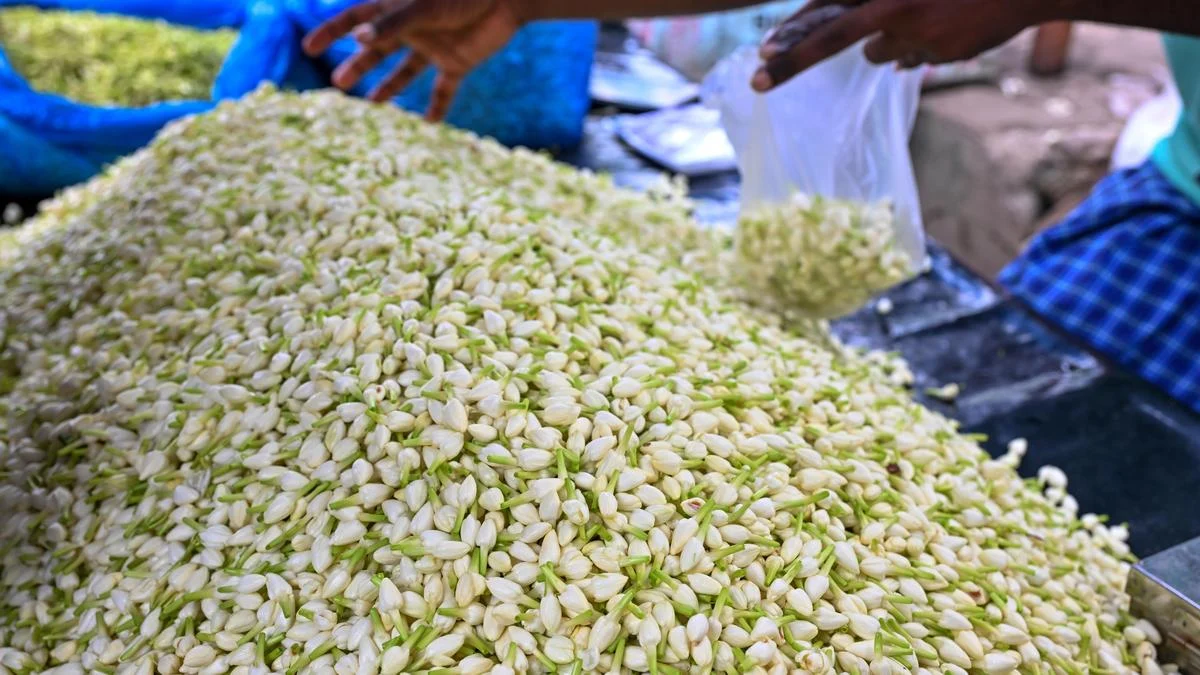
Madurai, a city steeped in history and spirituality, pulsates with an undying love for flowers. From the hallowed corridors of its ancient temples to the intimate rituals of home worship and the vibrant artistry of garland-making, flowers are not merely adornments but integral to the very fabric of Madurai’s cultural identity. On any given festival day, the city transforms into an olfactory paradise, perfumed by a vibrant tapestry of blossoms that journey from surrounding villages and even more distant locales. This symbiotic relationship between Madurai and its floral bounty is a testament to a tradition that is both deeply rooted and dynamically evolving.
The Grandeur of Floral Dedication: A Festival’s Flourishing Embrace
The sheer scale of floral consumption during significant celebrations in Madurai is astonishing. The upcoming Kumbabishekam of the Sri Meenakshi Sundareswarar Temple, a cornerstone of the city’s spiritual calendar, exemplifies this. An estimated five tonnes of meticulously chosen flowers are being dedicated to the temple’s adornment. This floral deluge is destined to grace the towering gopurams, sacred corridors, sanctum sanctorum, and ceremonial flagpoles with garlands, creating an awe-inspiring spectacle of colour and fragrance.
The palette for this grand occasion is as diverse as it is vivid. Champak (sampangi), the regal red, white, and pink oleander (arali), the delicate star jasmine (iruvatchi), and a riot of marigolds in yellow, white, and orange hues are being meticulously arranged. Adding an exotic touch, colourful anthuriums contribute their unique, sculpted beauty to the sacred spaces. This lavish display underscores the profound connection Madurai holds with flowers, a connection that transcends mere decoration and permeates every facet of its celebratory spirit. From the iconic Chithirai festival and the serene Theppam festival to the devotional observance of Navarathri Golu and countless other local festivities, flowers are the silent, fragrant orchestrators of joy, vibrancy, and spiritual resonance.
The Shifting Seasons of Scent: A Vendor’s Insight into Nature’s Calendar
While the commitment to floral abundance remains constant, the specific varieties gracing the city’s markets ebb and flow with the changing seasons, the vagaries of the weather, and the geographical origins of their cultivation. This dynamic is intimately understood by the city’s dedicated flower vendors, whose livelihoods are intrinsically tied to nature’s rhythm.
M. Sundar, a seasoned vendor with nearly 18 years in the trade, articulates this intricate dance with the seasons. "Now it is the season for wild jasmine (mullai), but it is coming to an end," he explains. "Around the Tamil months of Purattasi and Aippasi, Spanish jasmine (pichi) will start." For Sundar and his contemporaries, the market itself becomes a living calendar, a testament to the predictable yet ever-fascinating cycle of floral availability. As one fragrant treasure begins to recede, another emerges, ensuring a continuous, albeit shifting, supply that caters to the city’s insatiable demand.
This seasonal fluidity dictates not only the types of flowers available but also their sourcing. Flowers that might be abundant in one month could be scarce in the next, necessitating a keen understanding of regional agricultural patterns and a robust network of suppliers. The Mattuthavani Flower Market, a bustling hub of this floral trade, witnesses this constant negotiation between supply and demand, dictated by the earth’s own timetable.
The Enduring Allure of Jasmine: A Fragrant Export from Madurai’s Outskirts
Among the pantheon of flowers that grace Madurai, jasmine holds a particularly cherished position. The city’s deep affection for this intoxicatingly fragrant bloom is inextricably linked to the exceptional quality of jasmine cultivated in Valayankulam, a region on the city’s periphery. This locally grown jasmine, renowned for its potent aroma and delicate beauty, embarks on a journey far beyond Madurai’s borders. It finds its way to markets across India and even reaches international shores, solidifying Madurai’s reputation as a significant source of this coveted flower.
Sundar’s own journey into the flower trade began in his youth, following in the footsteps of his father. He recalls a time when pichi, mullai, and jasmine were the dominant offerings. "Several varieties that are now familiar to customers were not as popular then," he observes, highlighting the evolution of consumer preferences and market trends. He notes, "Flowers such as manoranjitham and some varieties of roses have become common only in the last five or six years." This evolution reflects a growing diversity in the market, driven by both changing tastes and enhanced horticultural practices that bring a wider array of blossoms within reach.
Chrysanthemums and Roses: Blooms of Celebration and Shifting Popularity
During the fervor of temple festivals and other significant societal events, the demand for chrysanthemums (sevandhi) surges. These cheerful blossoms are primarily sourced from villages like Vikramangalam and their surrounding hamlets, underscoring the vital role of rural agriculture in supplying the city’s floral needs. Depending on the prevailing season, other regions like Hosur also contribute to Madurai’s floral mosaic.

K. Selva Vignesh, another flower seller with approximately 15 years of experience, shares a similar narrative of evolution within the trade. His family’s business, established by his grandfather, has provided him with a unique vantage point to witness the transformations in the flower market. He has grown up amidst the scent of blossoms and the intricacies of the trade, observing firsthand how consumer demands and market dynamics have shifted over the years.
The Dawn of the Flower Trade: A Daily Ritual of Arrival and Exchange
The day in the Mattuthavani Flower Market commences well before the city awakens. Different varieties of flowers arrive at staggered hours, each with its own specific schedule. Jasmine, with its delicate nature, typically begins its arrival around 7:00 AM or 7:30 AM. In contrast, some varieties of roses, perhaps more robust or requiring earlier harvesting, can start making their appearance as early as 3:00 AM.
Festival days amplify the criticality of these timings. When demand skyrockets and supply chains face constraints, vendors like Sundar and Vignesh are compelled to explore sources beyond their usual networks. The urgency of meeting the fervent demand often necessitates sourcing flowers from other markets, a logistical challenge that highlights the resilience and adaptability of this vital trade. The smooth functioning of these markets is crucial for the seamless flow of floral offerings, ensuring that every ritual and celebration is imbued with the beauty and fragrance of fresh blooms.
Vignesh vividly recalls an instance when the price of jasmine reached a staggering ₹5,000 per kilogram. "That was when I realised how much demand there was for jasmine outside," he recounts, his voice tinged with the memory of that extraordinary surge. This anecdote serves as a powerful illustration of the immense value and widespread appeal of certain flowers, particularly those that have become synonymous with Madurai’s cultural identity.
Festival-Specific Blooms: A Tapestry of Traditions and Tastes
The floral landscape of Madurai is further diversified by the specific demands of different festivals. During Vinayaka Chaturthi, for example, bermuda grass (arugampul) and crown flower (erukkalam) take center stage, chosen for their symbolic significance in the worship of Lord Ganesha. Similarly, the fragrant screw pine (thazhampoo) holds a special place during the Varalakshmi Viratham festival, typically observed in August, where its intoxicating aroma is believed to invoke blessings and prosperity.
Wedding seasons introduce their own unique set of floral requirements, often leaning towards romantic and elaborate arrangements. Temple festivals, on the other hand, can trigger an immediate and substantial demand for flowers that are integral to the elaborate garlands and decorations adorning the deities and the temple premises. This intricate interplay between religious observances, cultural traditions, and the availability of specific floral species creates a vibrant and ever-changing market.
Post-Pandemic Realities: Adapting to a New Market Landscape
The flower trade in Madurai, like many other sectors, has navigated the profound shifts brought about by the COVID-19 pandemic. One vendor reminisces about a time when the market operated almost continuously, with flowers arriving at all hours, even in the pre-dawn darkness. This era of constant activity has given way to a different reality. Today, the market landscape has evolved, characterized by a greater number of sellers and a revised operational rhythm.
Despite these changes, the enduring spirit of Madurai’s floral culture remains remarkably intact. As one walks through the city during a festival, the timeless scenes of devotion and celebration unfold: bundles of flowers being reverently carried home, vendors calling out their prices with practiced ease, and delicate strings of jasmine finding their place of honor in women’s hair. These are the enduring images that encapsulate the soul of Madurai, a city where flowers are not just traded but cherished, celebrated, and woven into the very essence of life. The floral heartbeat of Madurai continues to beat strong, a testament to its rich cultural heritage and its unwavering connection to the beauty and fragrance of nature.
