

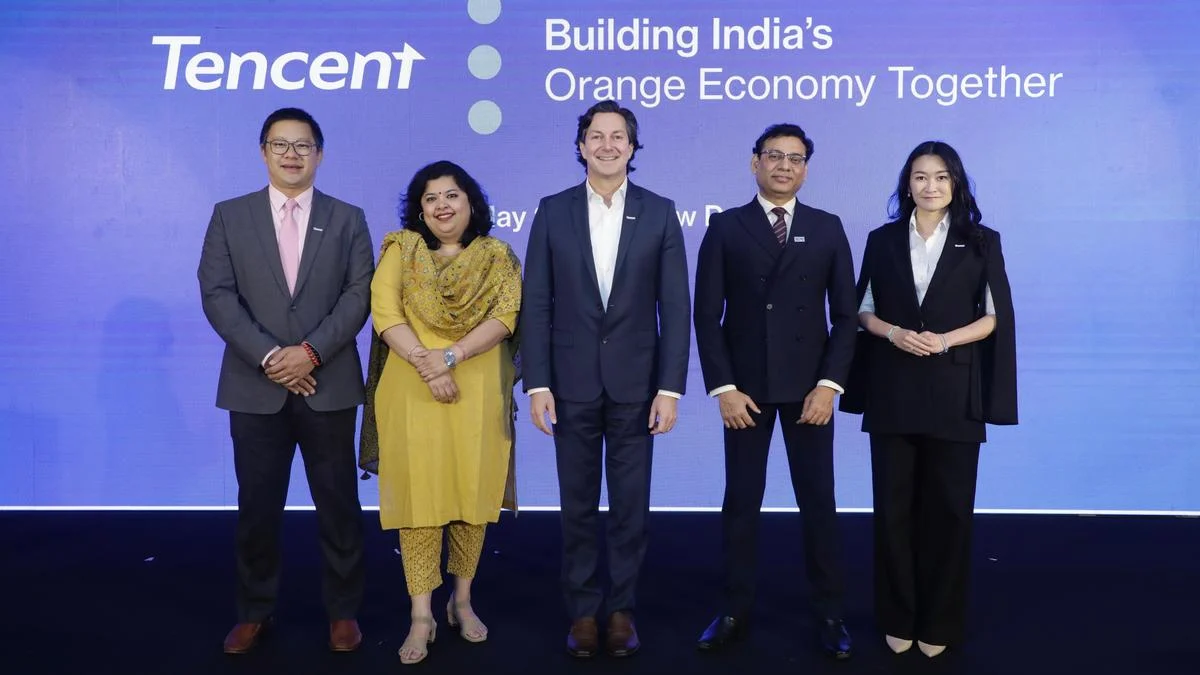
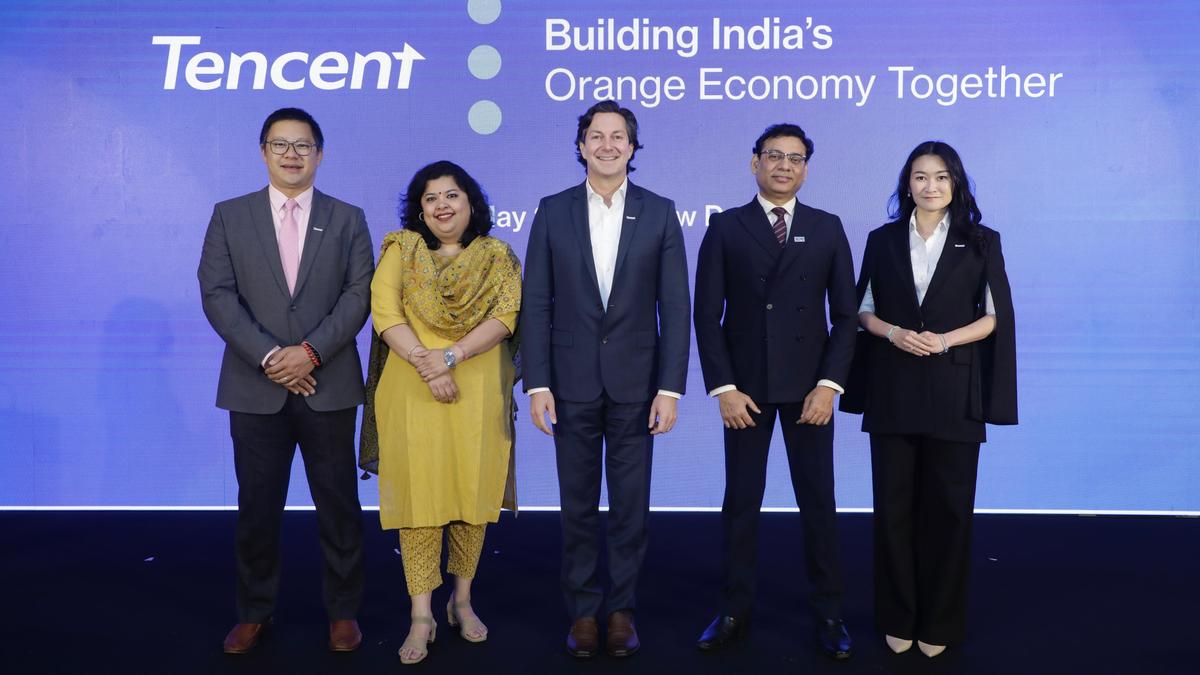
NEW DELHI, India – May 15, 2026 – In a move set to significantly bolster India’s rapidly expanding creative economy, Chinese technology giant Tencent today announced a multi-year, multi-million rupee commitment to support the nation’s gaming and Animation, Visual Effects, Gaming, and Comics (AVGC) sector. Signifying a strategic re-entry into the Indian market, Tencent officially inked two landmark Memoranda of Understanding (MoUs) with the Services Export Promotion Council (SEPC) and the Game Developers Association of India (GDAI). This collaboration, beginning with an initial investment exceeding ₹100 million in resources and programs, aims to cultivate talent, foster innovation, and integrate Indian creative enterprises into global value chains.
The partnership is poised to inject vital capital and expertise into what is increasingly referred to as India’s "Orange Economy," a vibrant ecosystem of creative industries that holds immense potential for economic growth and job creation. By focusing on curriculum development, industry training, mentorship, and developer engagement, Tencent seeks to empower a new generation of Indian creators and developers, positioning India as a formidable force in the global digital entertainment landscape.
A Strategic Infusion into India’s Creative Core
Tencent’s commitment marks a pivotal moment for India’s AVGC sector, which has been earmarked by the government as a sunrise industry with significant export potential. The initial investment of over ₹100 million is not merely financial but encompasses a comprehensive suite of resources and programs designed to address critical areas within the ecosystem. This includes the development of cutting-edge curricula, bespoke industry training modules, and robust mentorship programs tailored to nurture nascent talent and upskill existing professionals.
The three-year MoU with the Services Export Promotion Council (SEPC) underscores a shared vision to strengthen national capacity building and facilitate crucial industry dialogue. Crucially, this collaboration aims to equip Indian AVGC companies with the necessary tools and networks to access lucrative international value chains, enabling them to export their creative prowess to a global audience.
Concurrently, the partnership with the Game Developers Association of India (GDAI) will center on robust developer engagement initiatives. A cornerstone of this collaboration will be the launch of a National Game Jam, an annual event designed to tap into India’s vast student talent pool, targeting over 10,000 participants annually. Complementing this, train-the-trainer programs will extend reach to educators across numerous colleges, ensuring a sustainable pipeline of skilled professionals. Tencent and GDAI will also actively participate in the prestigious Indian Game Developers Conference (IGDC), further integrating into the local developer community and fostering knowledge exchange.
Beyond these foundational partnerships, Tencent has expressed its intent to explore broader collaborations with local institutions. These opportunities span a wide spectrum, including internships, professional exposure programs, and knowledge exchange initiatives, all geared towards holistically strengthening the AVGC ecosystem.
Danny Marti, Head of Public Policy and Global Affairs at Tencent, articulated the company’s strategic vision. "Our goal goes beyond investing in programmes. We want to work with local partners to build practical pathways for talent, creators, and studios. By combining India’s creative strengths with Tencent’s expertise, we hope to support a more connected and globally competitive AVGC ecosystem," Marti stated, emphasizing the long-term, collaborative nature of their re-engagement with the Indian market.
A Chronology of Engagement: From Past Challenges to Future Prospects
Tencent’s latest announcement is not an isolated event but rather a significant chapter in its complex history with the Indian market. The company, a global powerhouse in gaming, social media, and digital services, has had a checkered past in India, largely influenced by geopolitical tensions and regulatory shifts.
Early Ventures and Market Penetration: Tencent initially made significant inroads into the Indian digital landscape through investments in various startups, including prominent players in e-commerce, social media, and fintech. Its gaming arm, Tencent Games, also saw immense success with titles like PUBG Mobile, which garnered a massive user base and dominated the mobile gaming charts. This period showcased Tencent’s understanding of the Indian consumer’s digital appetite and its ability to localize content effectively.
The Geopolitical Headwinds (2020-2023): The landscape dramatically shifted in 2020 following border skirmishes between India and China. In response, the Indian government implemented a series of bans on Chinese-linked apps, citing national security concerns. PUBG Mobile was among the prominent applications banned, leading to a significant setback for Tencent’s direct market presence. While the game later returned in a localized format (Battlegrounds Mobile India) through a different publisher, the incident highlighted the inherent risks and complexities of operating in a sensitive geopolitical environment. This period necessitated a strategic reassessment for many Chinese technology firms looking at India.
Strategic Re-evaluation and India’s AVGC Push (2023-2025): In the years following the bans, both the Indian government and global tech giants have been recalibrating their strategies. India, recognizing the immense potential of its creative sector, actively began promoting the AVGC industry. The formation of an AVGC Promotion Task Force by the Ministry of Information and Broadcasting in 2022 signaled a clear intent to foster growth, attract investment, and develop a skilled workforce. Initiatives like "Make in India" and "Digital India" have provided a supportive policy framework for indigenous innovation and foreign collaboration.
For Tencent, re-entering a market as vast and digitally savvy as India remained a strategic imperative. The company began exploring avenues for engagement that aligned with India’s national priorities and offered a more collaborative, ecosystem-building approach rather than solely focusing on direct consumer-facing products. The focus on education, skill development, and industry support represents a more sustainable and less politically contentious pathway for Tencent to contribute to and benefit from India’s digital growth story.
The Genesis of the MoUs (Late 2025 – Early 2026): Discussions between Tencent, SEPC, and GDAI would have matured over several months, focusing on areas of mutual benefit. Tencent’s global expertise in game development, publishing, and digital ecosystems, combined with India’s burgeoning talent pool and government support for the AVGC sector, created a fertile ground for collaboration. The signing of these MoUs on May 15, 2026, therefore, represents the culmination of careful strategic planning and a renewed commitment from Tencent to invest in India’s creative future, moving beyond previous challenges to forge a new path of partnership.
Data-Driven Potential: The Metrics of India’s Creative Economy
The timing of Tencent’s investment aligns perfectly with the explosive growth trajectory of India’s AVGC sector, underpinned by compelling demographic and economic data.
India’s Gaming Market – A Juggernaut in the Making:
India is already one of the largest and fastest-growing gaming markets globally.
- Current Valuation: Reports indicate the Indian gaming market is currently valued at approximately $2.6 billion, with projections to reach over $8.6 billion by 2027-2028.
- User Base: India boasts over 450 million online gamers, a number expected to surge past 600 million within the next three years. This massive user base is predominantly driven by mobile gaming, accounting for over 90% of the market.
- Mobile Dominance: Affordable smartphones, cheap data, and localized content have fueled this explosion. Tencent’s expertise in mobile gaming development and publishing is directly relevant to this dominant segment.
- Growth Drivers: Increased disposable income, digital literacy, and the COVID-19 pandemic accelerating digital adoption have all contributed to this unprecedented growth.
The Broader AVGC Sector – A Tapestry of Creativity:
The AVGC sector encompasses animation, visual effects, gaming, and comics – a diverse set of industries with significant overlap and synergy.
- Market Size: The Indian AVGC sector, as a whole, is estimated to be around $3.5-4 billion, with robust annual growth rates exceeding 20-25%.
- VFX and Animation: India has emerged as a global hub for VFX and animation outsourcing, with numerous international projects being executed by Indian studios. However, the focus is shifting towards creating original Indian intellectual property (IP).
- Economic Contribution: The "Orange Economy" (or creative economy) is a significant, albeit often underestimated, contributor to India’s GDP. Global estimates suggest creative industries can contribute up to 10% of a nation’s GDP and account for millions of jobs. India’s government aims to substantially increase this contribution.
- Job Creation: The AVGC sector is a significant employer, particularly for young, digitally skilled individuals. Estimates suggest the sector could create over 2 million direct and indirect jobs by 2030, a figure Tencent’s investment could accelerate.
Tencent’s Global Footprint and Expertise:
- Global Gaming Leader: Tencent is one of the world’s largest video game companies by revenue, owning or having significant stakes in leading developers like Riot Games (League of Legends), Supercell (Clash of Clans), and Epic Games (Fortnite). Its global revenue from gaming alone runs into tens of billions of dollars annually.
- Ecosystem Building: Beyond gaming, Tencent’s prowess extends to social media (WeChat), cloud computing, AI, and digital content, making it a holistic digital ecosystem builder. This comprehensive expertise is invaluable for India’s nascent ecosystem.
- Investment Strategy: Tencent has a history of strategic investments in promising markets and technologies worldwide, often focusing on long-term growth and local partnerships.
Addressing the Skill Gap:
Despite the growth, a significant skill gap persists in India’s AVGC sector. The industry needs a continuous supply of highly trained professionals in areas like game design, programming, animation, VFX artistry, and technical art. Tencent’s focus on curriculum development and train-the-trainer programs directly addresses this critical need, ensuring that the burgeoning talent pool receives world-class education and practical exposure.
Official Responses: A Chorus of Optimism and Strategic Alignment
The announcement has been met with widespread optimism from all stakeholders, each highlighting the strategic significance of the partnership from their unique vantage points.
Tencent’s Vision for India:
Danny Marti’s statement reflects Tencent’s long-term commitment to fostering local talent and creating a sustainable ecosystem. "We see immense creative energy and a demographic dividend in India that is unmatched globally. Our re-entry is not just about investment; it’s about a deep, collaborative engagement to empower Indian creators. We believe in the power of local storytelling and innovation, and our expertise can provide the platforms and pathways for these stories to reach a global audience," Marti elaborated. He underscored Tencent’s commitment to respecting local cultural nuances and contributing positively to the Indian digital economy.
SEPC’s Mandate for Global Reach:
Dr. Sunil Kumar, Director General of the Services Export Promotion Council (SEPC), lauded the partnership as a catalyst for India’s services exports. "This MoU with Tencent is a game-changer for Indian AVGC companies. Our mandate is to facilitate the global integration of India’s services sector, and this collaboration directly supports that. By strengthening national capacity and opening doors to international value chains, we anticipate a significant surge in the export of Indian-made games, animated content, and VFX services. It’s about showcasing India’s creative brilliance on the world stage and generating substantial foreign exchange," Dr. Kumar stated, emphasizing the economic benefits.
GDAI’s Focus on Grassroots Innovation:
Rajat Agarwal, President of the Game Developers Association of India (GDAI), expressed enthusiasm for the impact on the developer community. "The National Game Jam, targeting 10,000 students annually, is a phenomenal initiative. It’s at these grassroots levels that true innovation sparks. Combined with the train-the-trainer programs, this partnership will democratize access to high-quality game development education across the country. Our developers will gain invaluable insights from Tencent’s global experience, helping us build world-class, uniquely Indian IPs. This is a huge step towards making India a global hub for game development," Agarwal commented, highlighting the focus on skill development and community building.
Government’s Endorsement of the Orange Economy (Hypothetical):
While specific government officials were not quoted in the initial release, a hypothetical response from a relevant ministry spokesperson would likely underscore the administration’s support for such foreign direct investment in strategic sectors. "The government’s vision for the ‘Orange Economy’ is clear: to make India a global creative powerhouse. Investments like Tencent’s validate our efforts and commitment to fostering innovation and skill development. This partnership aligns perfectly with our ‘Skill India’ and ‘Make in India’ initiatives, creating opportunities for our youth and propelling India’s digital economy forward. We welcome such collaborations that bring global expertise while empowering local talent," a senior official from the Ministry of Information and Broadcasting might state, reflecting the government’s policy objectives.
Industry Analyst Perspective (Hypothetical):
"This is a very astute move by Tencent," noted Ms. Priya Sharma, a leading technology analyst specializing in emerging markets. "After the previous challenges, Tencent has clearly adopted a more nuanced, ecosystem-centric approach. Investing in talent and infrastructure, rather than just products, positions them as a long-term partner in India’s growth story. For India, it brings much-needed capital, global best practices, and a clear pathway for its AVGC sector to mature and compete internationally. The sheer scale of India’s talent pool, combined with Tencent’s experience, could unlock unprecedented value," Sharma concluded, offering an expert assessment of the strategic implications.
Implications: Reshaping India’s Creative Landscape
Tencent’s multi-year investment carries profound implications for India’s AVGC sector, for Tencent itself, and for the broader global digital entertainment industry.
For India’s AVGC Sector:
- Talent Development and Skill Enhancement: The most immediate and significant impact will be on bridging the persistent skill gap. Curriculum development, specialized training, and mentorship from a global leader like Tencent will significantly elevate the quality of education and practical skills available to Indian students and professionals. This will produce a workforce capable of creating world-class content.
- Global Competitiveness and Market Access: By working with SEPC to facilitate access to international value chains, Indian AVGC studios will gain invaluable exposure and opportunities to collaborate on global projects and export their unique content. This could transform India from primarily an outsourcing hub to a creator of original, globally recognized intellectual property.
- Economic Growth and Job Creation: The investment will directly contribute to the "Orange Economy," spurring economic activity, fostering entrepreneurship, and creating a multitude of direct and indirect jobs across various creative and technical roles. This aligns with national goals of employment generation and economic diversification.
- Innovation and IP Creation: The National Game Jams and developer engagement programs will act as incubators for innovation, encouraging young minds to experiment, develop new concepts, and potentially create the next generation of successful Indian games and animated series. This bottom-up approach to innovation is crucial for a thriving creative ecosystem.
- Infrastructure Development: While not explicitly stated, such partnerships often lead to indirect investments in technological infrastructure, studios, and development facilities, further enhancing India’s AVGC capabilities.
For Tencent:
- Strategic Re-establishment in a Key Market: This partnership provides Tencent with a robust and less contentious pathway to re-establish a significant presence in one of the world’s largest and fastest-growing digital markets. By focusing on ecosystem development, Tencent builds goodwill and a sustainable foundation.
- Access to a Vast Talent Pool: India’s demographic dividend and large English-speaking, technically proficient workforce offer Tencent an unparalleled talent pool. This collaboration allows Tencent to tap into this resource, potentially influencing its global content pipeline and development strategies.
- Diversification of Global Strategy: Investing in India’s creative sector diversifies Tencent’s global footprint and reduces reliance on any single market. It also positions Tencent as a benevolent ecosystem builder, enhancing its brand image internationally.
- Insights into Emerging Market Dynamics: Direct engagement with Indian developers and educational institutions will provide Tencent with invaluable insights into the unique preferences, cultural nuances, and technological adoption patterns of the Indian consumer, informing future product development and market strategies.
Challenges and Opportunities Ahead:
- Geopolitical Sensitivity: While the current approach is more collaborative, the geopolitical climate between India and China remains a factor. Tencent will need to continuously navigate this sensitivity, ensuring transparency and demonstrating a clear commitment to India’s national interests.
- Cultural Adaptation: Success hinges on understanding and integrating India’s diverse cultural landscape into content creation and training methodologies. True localization, not just translation, will be critical.
- Competition: The Indian AVGC sector is becoming increasingly competitive, with both domestic players and other international companies vying for market share and talent. Tencent’s programs must offer distinct advantages.
- Long-term Sustainability: Ensuring the programs and partnerships create sustainable value beyond the initial investment will be crucial. This requires continuous evaluation, adaptation, and strong local leadership.
- Regulatory Support: Continued proactive support from the Indian government, through policies and incentives, will be vital for maximizing the impact of such partnerships and fostering a conducive environment for growth.
Future Outlook:
Tencent’s investment is a powerful signal of confidence in India’s creative future. As India continues its digital transformation, propelled by a young, digitally-native population and robust government support for the creative industries, partnerships of this nature are indispensable. This collaboration has the potential to elevate India not just as a consumer market, but as a significant global producer of innovative, high-quality digital entertainment, fulfilling the promise of its burgeoning Orange Economy and shaping the future of digital content worldwide. The coming years will undoubtedly witness a dynamic evolution in India’s AVGC landscape, with Tencent playing a pivotal role in its ascent.
