

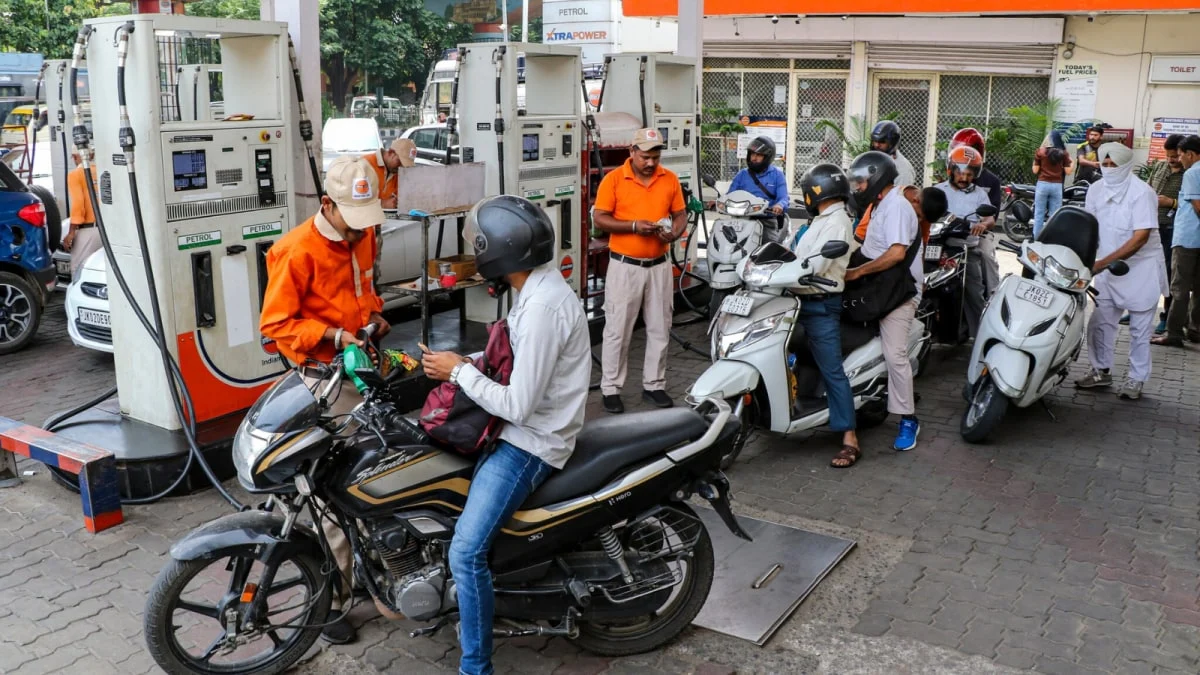
New Delhi, India – May 15, 2026, 15:02 IST – The latest nationwide surge in petrol and diesel prices, which saw a uniform increase of Rs 3 per litre on Friday, has once again brought into sharp focus the complex and often perplexing landscape of fuel taxation across India. While citizens grapple with the renewed burden on their wallets, a granular analysis reveals a reality far more nuanced than simple political categorisations. The long-standing debate over whether fuel is cheaper in states governed by the Bharatiya Janata Party (BJP) or its allies, versus those ruled by opposition parties, continues to be debunked by ground realities. Instead, a complex patchwork of state-level Value Added Tax (VAT) and local levies emerges as the primary determinant, creating vast disparities in consumer prices from one state border to another.
The hike, which took effect from the morning of May 15, 2026, pushed petrol prices in many regions well past the psychological Rs 100-per-litre mark, and diesel prices commensurately higher. However, the exact pinch felt by motorists and businesses remains starkly divergent, dependent almost entirely on the state in which they reside or refuel. This intricate web of taxation highlights the inherent challenges of cooperative federalism in India, where states wield significant autonomy in fiscal matters, particularly concerning revenue-generating commodities like petroleum products.
Unpacking India’s Fuel Pricing Mechanism: A Multi-Layered Approach
To truly comprehend the current disparities, it is essential to understand how fuel prices are structured in India. The journey of a litre of petrol or diesel from crude oil to the consumer’s tank involves several stages, each adding to the final retail price:
- Crude Oil Cost: The international price of crude oil is the foundational cost. India imports a significant portion of its crude oil requirements, making global market fluctuations a critical factor.
- Refining Cost: Public and private sector refineries process crude oil into petrol and diesel. This includes operational costs, processing charges, and profit margins.
- Freight and Transportation: The cost of transporting refined products from refineries to depots across the country.
- Central Excise Duty: The Union government imposes an excise duty, which is a fixed amount per litre, irrespective of the crude oil price. This duty is a significant revenue generator for the Centre, funding various national infrastructure projects and welfare schemes.
- Dealer Commission: This is the margin paid to petrol pump owners for their operational costs and profit.
- State-Level VAT/Sales Tax: This is the most significant variable component. Each state government levies its own VAT or sales tax on petrol and diesel. Unlike excise duty, which is fixed, VAT is often calculated as a percentage of the base price (including excise and dealer commission), meaning that any increase in the base price automatically leads to a higher VAT collection for the state. Some states also impose additional cess or surcharges.
- Local Levies: In some municipalities or districts, additional local taxes might be applied, further contributing to the variation.
It is this seventh component – the state-level VAT and other local levies – that creates the substantial price differences observed across states, transforming a nationwide hike into a geographically uneven burden.
The Latest Price Revision: A Chronology of Economic Realities
The Rs 3 per litre hike announced on May 15, 2026, was not entirely unexpected by industry analysts, though it certainly caught many consumers off guard. For several weeks leading up to the announcement, global crude oil prices had shown an upward trend, driven by geopolitical tensions in Eastern Europe and the Middle East, coupled with a stronger-than-anticipated global economic recovery. Oil-producing nations had also maintained production cuts, further tightening supply.
The central government, through the Ministry of Petroleum and Natural Gas, cited these international dynamics as the primary driver behind the revision. "The upward trajectory in global crude benchmarks necessitates a recalibration of domestic fuel prices to ensure the financial health of our public sector oil marketing companies and maintain the stability of supply chains," stated a spokesperson for the ministry, speaking on condition of anonymity. "While we are mindful of the impact on citizens, these adjustments are crucial to reflect the prevailing international market conditions and prevent a larger financial strain in the long run."
This latest revision marked the third such increase within the fiscal quarter, indicating a period of sustained pressure on international energy markets. Each previous hike had similarly sparked debates and highlighted the existing discrepancies, but the magnitude of the May 15th increase brought the issue into sharper national focus, intensifying calls for greater transparency and, from some quarters, a unified national fuel pricing policy.
Diverse Realities Across BJP-Ruled States: A Complex Tapestry
A closer examination of states governed directly by the BJP or where the party holds the Chief Minister’s office despite being in an alliance reveals a picture far from uniform. The notion that BJP-ruled states inherently offer cheaper fuel is a simplistic generalization that the data refutes.
Among the states enjoying relatively lower fuel prices, Delhi stands out. Despite being a Union Territory with its own unique administrative structure, it often serves as a benchmark for urban fuel costs. On May 15, 2026, petrol prices in Delhi remained below the Rs 100-per-litre mark at Rs 97.77, with diesel at Rs 90.67. Goa and Uttarakhand, both BJP-governed states, also maintained comparatively lower rates. Goa recorded petrol at Rs 96.43 and diesel at Rs 88.11, while Uttarakhand saw petrol at Rs 96.66 and diesel at Rs 89.82. These states have typically adopted a policy of lower VAT rates, or have, at times, reduced state taxes to cushion consumers from central hikes, often driven by political considerations or a robust alternative revenue base. Arunachal Pradesh (Petrol: 95.66, Diesel: 84.30) and Tripura (Petrol: 98.56, Diesel: 87.44) also fell into this relatively cheaper category.
However, a significant number of BJP-ruled states are also among India’s costliest fuel markets. Madhya Pradesh, for instance, continued to record petrol prices above Rs 110 per litre (Rs 110.62) and diesel at Rs 94.83, placing it squarely among the most expensive states. Rajasthan, another BJP bastion, was not far behind, with petrol at Rs 107.97 and diesel at Rs 93.43. Maharashtra, ruled by a BJP-led alliance, also saw high prices, with petrol at Rs 106.68 and diesel at Rs 93.29.
Other BJP-governed states like Bihar (Petrol: 108.55, Diesel: 94.79), Odisha (Petrol: 104.57, Diesel: 96.11), and Chhattisgarh (Petrol: 100.39, Diesel: 93.33) also presented a higher cost burden compared to their counterparts in the north. Even states like Uttar Pradesh (Petrol: 97.55, Diesel: 90.68), Gujarat (Petrol: 97.55, Diesel: 93.21), and Haryana (Petrol: 98.47, Diesel: 90.94), while not the absolute highest, were still significantly more expensive than Delhi, Goa, or Uttarakhand. This internal inconsistency within BJP governance underscores that state-specific revenue needs, fiscal priorities, and political calculations often override any broader party-line approach to fuel taxation.
BJP Alliance States: A Mixed Bag of Fortunes
The picture for states governed by BJP allies is equally varied. Some of the highest fuel prices in the country are currently observed in these regions. Andhra Pradesh, under the governance of the TDP-led National Democratic Alliance (NDA), remains a prime example. Petrol prices in parts of the state soared past Rs 111 per litre (Rs 111.33), with diesel at Rs 99.14, making it one of the most expensive states for both commodities. This is largely attributed to a high VAT regime designed to bolster state revenues for various development projects and welfare schemes.
In the northeastern region, NDA-led states such as Meghalaya (Petrol: 97.82, Diesel: 86.20), Nagaland (Petrol: 98.91, Diesel: 87.39), and Sikkim (Petrol: 101.94, Diesel: 89.18) fell into the mid-to-high range of fuel prices. Puducherry, a Union Territory also governed by a BJP-led alliance, maintained comparatively moderate rates at Rs 100.13 for petrol and Rs 91.72 for diesel. The diversity even within allied states further solidifies the argument that local fiscal policies, rather than overarching political ideology, dictate fuel pricing.
Opposition-Ruled States: Highs and Lows Defy Easy Classification
Similarly, several states governed by opposition parties continue to feature among India’s costlier fuel markets following the latest hike, shattering any illusion that opposition rule automatically translates to cheaper fuel.
Congress-ruled Telangana, for instance, recorded petrol prices at an exorbitant Rs 110.89 per litre and diesel at Rs 98.96, placing it among the states with the highest fuel costs. Kerala, where the Congress-led United Democratic Front (UDF) recently assumed power in the 2026 Assembly elections, also presented a significant burden to consumers, with petrol at Rs 110.58 and diesel at Rs 99.46. The newly elected TVK-led alliance in Tamil Nadu, with actor-turned-politician Vijay at its helm, saw its major cities grapple with petrol at Rs 103.67 and diesel at Rs 95.47, comfortably above the national average. Karnataka, another Congress-ruled state, also remained on the expensive side, with petrol at Rs 106.17 and diesel at Rs 94.10. These southern states, irrespective of their political affiliations, have historically maintained higher VAT rates, often citing the need for robust state revenues to fund their extensive social welfare programs and infrastructure development.
Conversely, some opposition-ruled states have managed to keep fuel prices relatively lower. Punjab, governed by the Aam Aadmi Party (AAP), and Himachal Pradesh, where the Congress is in power, were less expensive compared to their southern counterparts, though prices there too had risen after the latest revision. Punjab recorded petrol at Rs 97.27 and diesel at Rs 85.71, while Himachal Pradesh saw prices at Rs 96.12 for petrol and Rs 88.54 for diesel. Jharkhand, ruled by a JMM-Congress alliance, was in the mid-to-high range with petrol at Rs 100.44 and diesel at Rs 94.66. Mizoram, another opposition-led state, had petrol at Rs 100.87 and diesel at Rs 89.11.
The Extremes: Where Fuel is Cheapest and Costliest
To summarise, the states offering the most economical fuel options after the May 15th hike included:
- Arunachal Pradesh: Petrol Rs 95.66, Diesel Rs 84.30
- Goa: Petrol Rs 96.43, Diesel Rs 88.11
- Uttarakhand: Petrol Rs 96.66, Diesel Rs 89.82
- Delhi: Petrol Rs 97.77, Diesel Rs 90.67
- Punjab: Petrol Rs 97.27, Diesel Rs 85.71
These states generally benefit from lower VAT rates and fewer additional local levies, reflecting either a deliberate policy choice to ease consumer burden or a different fiscal strategy for revenue generation.
At the other end of the spectrum, the states grappling with the highest fuel prices were:
- Andhra Pradesh: Petrol Rs 111.33, Diesel Rs 99.14
- Telangana: Petrol Rs 110.89, Diesel Rs 98.96
- Kerala: Petrol Rs 110.58, Diesel Rs 99.46
- Madhya Pradesh: Petrol Rs 110.62, Diesel Rs 94.83
- Bihar: Petrol Rs 108.55, Diesel Rs 94.79
- West Bengal: Petrol Rs 108.74, Diesel Rs 95.13
- Rajasthan: Petrol Rs 107.97, Diesel Rs 93.43
- Maharashtra: Petrol Rs 106.68, Diesel Rs 93.29
In these regions, higher VAT rates, sometimes coupled with additional cess or surcharges, significantly inflate the final retail price, placing a disproportionate burden on consumers and businesses.
Official Reactions and Political Commentary: The Blame Game Continues
The latest fuel price hike and the subsequent analysis of state-wise disparities have inevitably reignited the perennial political blame game between the Centre and state governments.
From the Central Government:
A senior official from the Union Finance Ministry, requesting anonymity, reiterated the Centre’s position. "Our excise duties are crucial for funding national priorities, particularly infrastructure development that benefits all states. Moreover, a significant portion of the excise duty collected is devolved to the states as per the recommendations of the Finance Commission," the official stated. "States have complete autonomy to adjust their VAT rates. If they wish to provide relief to their citizens, they have the power to reduce their state taxes, as some states have demonstrated." This stance places the onus squarely on state governments to manage retail prices.
From BJP State Leaders:
Chief Ministers of high-tax BJP-ruled states defended their policies. The Chief Minister of Madhya Pradesh, during a press conference, stated, "Our government is committed to the welfare of our people. The revenues generated from fuel taxes are directly invested in crucial sectors like health, education, and rural development. We are undertaking massive infrastructure projects that require significant funding. We must balance the need for development with the challenges of global energy prices." This highlights the trade-off between fiscal prudence and direct consumer relief.
From Opposition Leaders:
Opposition leaders were quick to condemn both the central and state governments for the spiralling prices. The Chief Minister of Telangana, a Congress leader, issued a sharp critique: "The Central government must first reduce its exorbitant excise duties, which are primarily responsible for pushing fuel prices so high. They are collecting record revenues while burdening the common man. States are then forced to levy VAT to meet their own budgetary needs, which have been strained by inadequate central grants and the after-effects of economic slowdowns. It’s a double whammy for our citizens." The leader of the TVK-led alliance in Tamil Nadu echoed similar sentiments, calling for a "federal approach to fuel pricing" that prioritises the consumer.
Industry experts also weighed in, with Dr. Ramesh Kumar, an energy economist, suggesting, "The current fragmented taxation system is inefficient and creates economic distortions. While states have legitimate revenue needs, a more harmonized approach, perhaps bringing fuel under the Goods and Services Tax (GST) regime, could offer a long-term solution. However, this requires significant political consensus, which has been elusive."
Economic and Societal Implications: Far-Reaching Consequences
The sustained high prices and inter-state variations in fuel costs have far-reaching implications for India’s economy and its citizens.
Impact on Consumers and Households: For the average Indian household, fuel price hikes directly translate into increased commuting costs and, more broadly, inflationary pressure on essential goods. Transportation costs for food, vegetables, and other daily necessities directly impact retail prices, eroding purchasing power and disproportionately affecting lower and middle-income groups. This can lead to reduced discretionary spending and a general slowdown in consumer-driven economic activity.
Ripple Effects on Business and Logistics: The logistics and transportation sectors are particularly vulnerable. Trucking companies, cab services, and public transport operators face higher operational costs, which they invariably pass on to consumers through increased fares and freight charges. Manufacturing industries reliant on transportation for raw materials and finished goods also see their costs rise, potentially leading to reduced competitiveness and, in some cases, job losses. The agricultural sector, dependent on diesel for irrigation pumps and farm machinery, also bears a significant burden, impacting food production costs.
State Revenues vs. Public Burden: For state governments, fuel taxes are a critical and relatively easy source of revenue. Reducing VAT rates means foregoing substantial funds that could be used for social welfare programs, infrastructure development, or debt servicing. This creates a difficult balancing act: maintaining fiscal health versus alleviating public burden. The political cost of high fuel prices is often weighed against the financial benefits of robust tax collections.
Potential for Fuel Tourism and Smuggling: The wide price disparities across state borders often lead to phenomena like "fuel tourism," where motorists deliberately cross into a neighbouring state to refuel at a cheaper rate. In more extreme cases, it can incentivise illegal smuggling of fuel across state lines, leading to revenue losses for higher-tax states and creating an unregulated market. This distorts local economies and makes enforcement challenging.
The Road Ahead: Towards a More Uniform Policy?
The recurring debate over fuel prices and their disparate impact across states underscores the urgent need for a more coherent and equitable national policy. While the Centre champions its right to collect excise duty and states defend their autonomy over VAT, the consumer is caught in the crossfire.
The long-discussed possibility of bringing petrol and diesel under the ambit of the Goods and Services Tax (GST) has been championed by many economists as a potential solution. A uniform GST rate across the country would eliminate state-level variations and potentially stabilise prices. However, states have been reluctant to agree, fearing a loss of their fiscal autonomy and a significant dent in their revenue streams, which are often heavily reliant on fuel taxes. The compensation mechanism for such a transition remains a contentious point.
As India navigates its economic growth trajectory, the question of fuel pricing will continue to be a critical determinant of inflation, economic stability, and public sentiment. The intricate interplay of global crude prices, central taxation, and diverse state-level levies creates a complex mosaic that demands not just immediate relief measures, but also a long-term, collaborative strategy to ensure energy affordability and fiscal sustainability for all. Until then, the cost of filling up a tank will remain a stark reminder of India’s unique federal fiscal challenges.
