

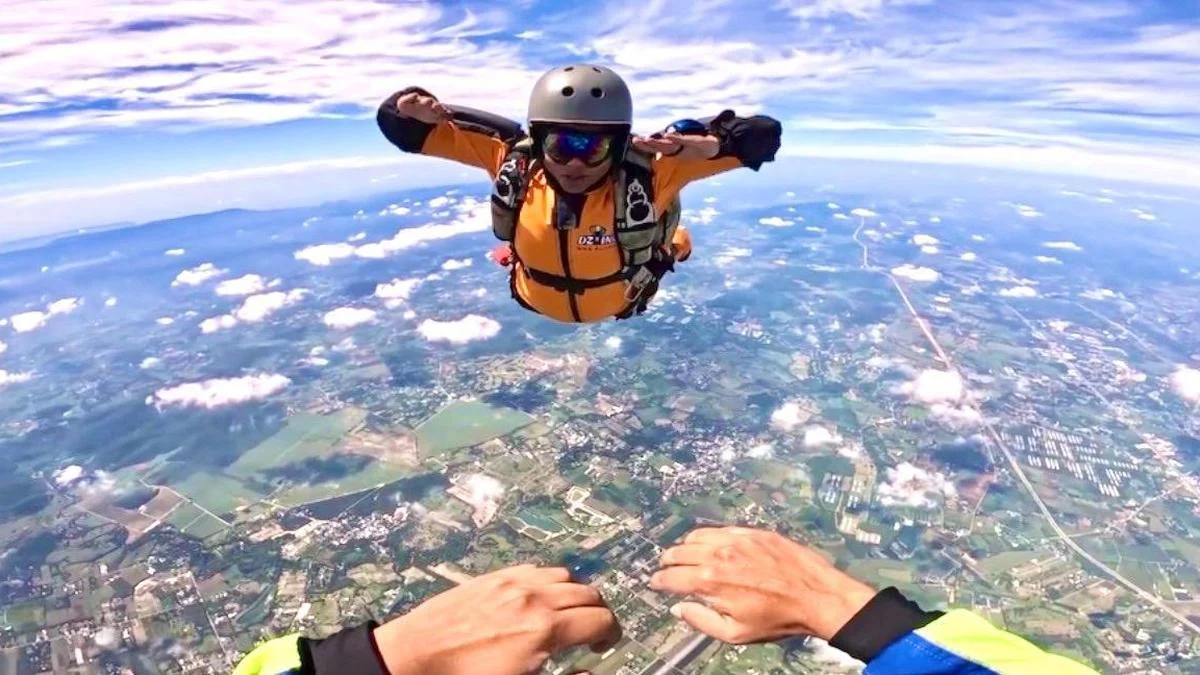
Visakhapatnam, Andhra Pradesh – At 37, Divya Surepalli has etched her name in the nascent landscape of Indian civilian aviation, achieving a milestone that speaks volumes about perseverance, courage, and the dismantling of societal barriers. In 2024, she became the first licensed civilian woman skydiver from Andhra Pradesh, a distinction that places her among an elite and remarkably small cohort of fewer than 20 women nationwide who have ventured beyond the exhilarating, yet fleeting, experience of a tandem jump to pursue the sport with professional certification. This accomplishment underscores the arduous and largely uncharted territory for women aspiring to engage with skydiving as a disciplined sport in India.
Surepalli, whose roots are firmly planted in Visakhapatnam, carries a postgraduate degree in Environmental Engineering from Germany, a testament to her academic prowess and international exposure. Yet, the allure of the skies had been a persistent whisper in her life for years, long before it coalesced into a tangible aspiration. Her initial encounter with the possibility of experiencing a skydive occurred during a visit to the United States. "At that point, I only wanted to experience a tandem jump," she recalls, referring to the introductory jump where a student is harnessed to an experienced instructor. Fate, however, had a different plan. Unfavorable weather conditions thwarted her attempt, but the disappointment served as an unexpected catalyst. The seed of pursuing skydiving with proper training and certification was sown, beginning to germinate into a concrete ambition.
The Arduous Path to Certification: A Global Pursuit
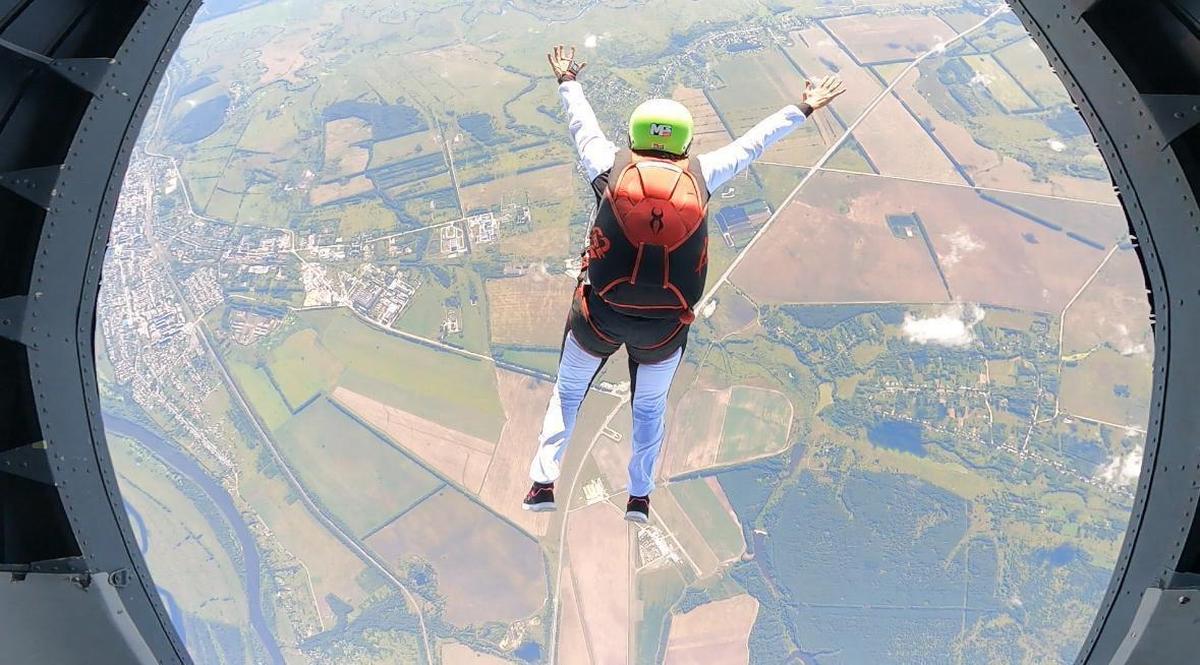
The journey from a fleeting desire to a licensed skydiver was far from straightforward, demanding international travel and a significant investment of time and resources. A pivotal moment arrived when Surepalli, accompanied by Shweta Parmar, one of India’s pioneering civilian women skydivers, embarked on a trip to Moscow. Their destination was Drop Zone Krutitcy, a renowned skydiving facility located on the outskirts of the city, where Surepalli intended to complete her Accelerated Freefall (AFF) course. The AFF program is a comprehensive training regimen designed to teach individuals the fundamentals of skydiving and prepare them for solo jumps, culminating in a license.
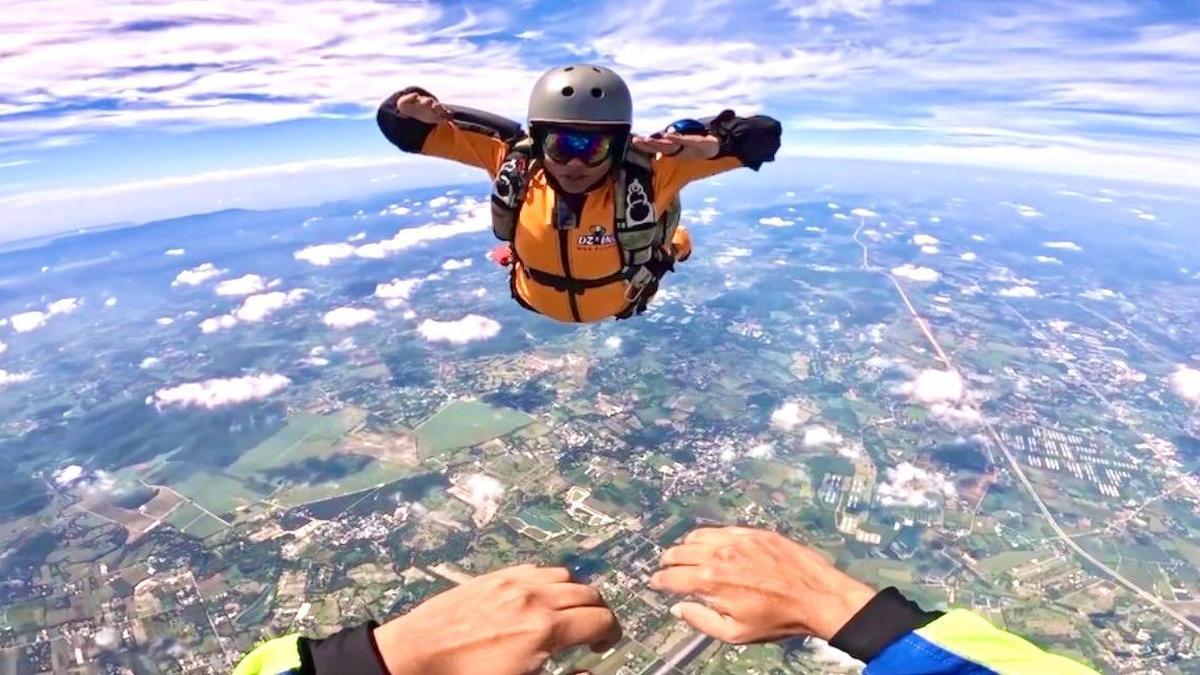
However, the capricious nature of weather, a constant challenge in outdoor sports, once again intervened. After successfully completing the initial stages of her AFF course, worsening weather conditions forced a premature halt to her training in Moscow. "I finished my AFF there, but the conditions deteriorated soon after," Surepalli explains. "To complete the remaining jumps required for my license, I had to relocate." This unforeseen interruption necessitated a second leg of her training, with Thailand emerging as her subsequent "classroom."
Understanding the A Licence: The Foundation of Solo Skydiving
To achieve an A licence, the foundational certification for solo skydivers, rigorous criteria must be met. This typically involves a minimum of 25 successful jumps, demonstrating proficiency in various aerial maneuvers, including specific freefall techniques and precise canopy control. Beyond practical skills, candidates must also pass written or oral assessments that gauge their understanding of skydiving theory, safety procedures, and equipment management. A crucial aspect of the A licence is the ability to pack one’s own parachute, a fundamental skill that underscores self-reliance and responsibility in the sport. Surepalli, having logged a total of 29 jumps, successfully met all these demanding requirements, earning her the coveted A licence. This certification grants her the autonomy to jump at affiliated drop zones globally, without the need for direct supervision, signifying a significant leap in her skydiving journey.
Navigating the Turbulence: Overcoming Fear and Setbacks
The path to Surepalli’s A licence was punctuated by significant challenges, both technical and psychological. Midway through her AFF course, a disorienting and severe spin during a freefall jump profoundly shook her confidence. "That incident shook my confidence more than I expected," she admits. The incident sparked not a fear of the sky itself, but a gnawing doubt about her own judgment and ability to handle unexpected situations. It was during this period of introspection and self-doubt that the crucial role of mentorship came to the fore.

Her instructor and mentor, Alex Troshyn, played an instrumental role in helping her regain her footing. "I had withdrawn and was staying in my hostel," she recalls. "He came to speak with me and reminded me that setbacks are part of training, not signs of failure. That conversation helped me return to the process." This supportive intervention was vital in helping her to process the experience and re-engage with the demanding training regimen, transforming a potential turning point into a learning opportunity.
Thailand presented its own unique set of challenges, each demanding quick thinking and precise execution. During one particular jump, shifting winds significantly altered her planned landing trajectory when she was approximately 1,000 feet above ground level. Faced with a rapidly narrowing set of options, she had to make an immediate decision between landing on a potentially hazardous asbestos roof, entering a swampy area (which training explicitly advised against due to the risks of water immersion and equipment damage), or aiming for a cluster of trees. While the roof carried a high probability of serious injury, and the swamp was a definite no-go, the trees offered a possibility of a controlled impact. She chose the trees, accepting the risk of impact over the certainty of severe injury. Remarkably, her landing, though precipitated by a moment of extreme uncertainty, was controlled.
Another jump in Thailand required a late correction to avoid a series of electric poles situated perilously close to the designated landing zone. Surepalli explains that crosswinds are a common occurrence in Thailand, particularly at drop zones situated at lower altitudes. "At 12,000 feet, you have less freefall time than you would at 14,000 feet, as in Moscow," she notes. "That reduces the margin available for adjustments." These incidents, while stressful, served to reinforce the critical importance of discipline and the ability to maintain clarity of thought under immense pressure.
The Pillars of Support: Family and Community
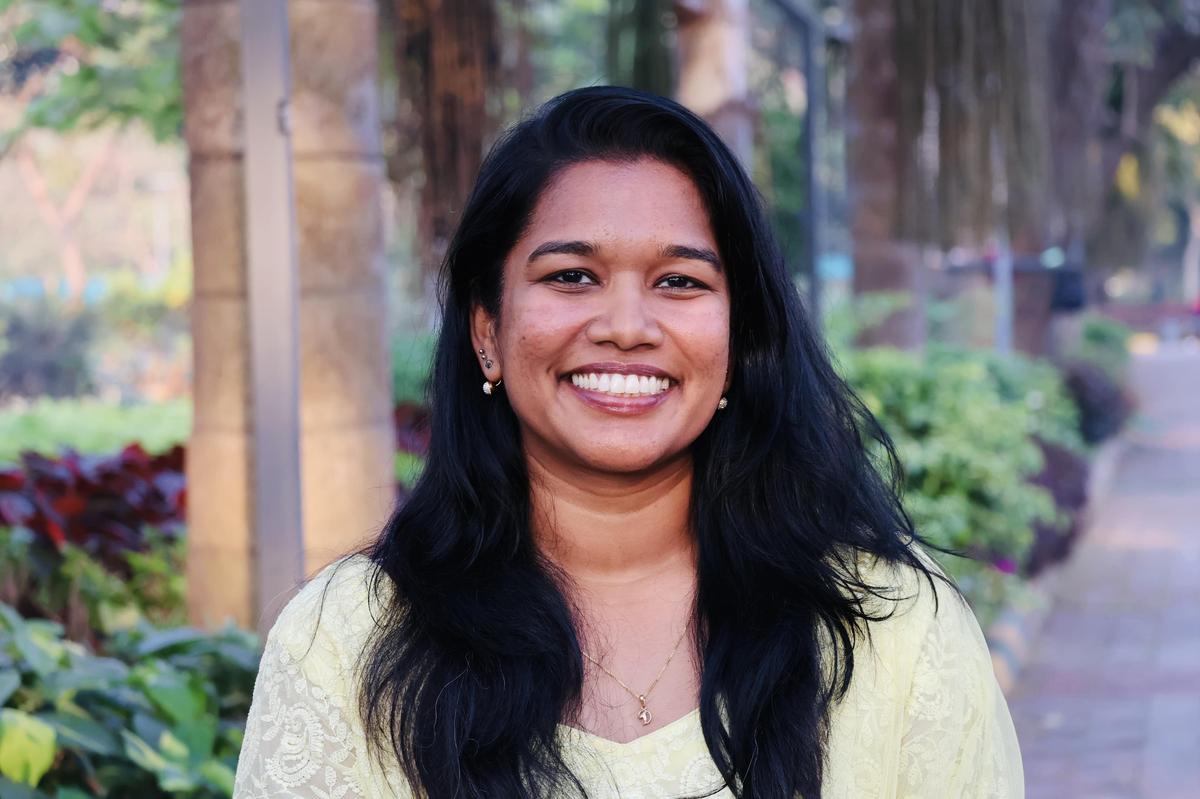
Beyond the technical demands of skydiving, Surepalli underscores the profound significance of robust mentorship and unwavering support systems. Family acceptance, she reveals, was not an immediate or easy hurdle to overcome. Convincing her mother, in particular, required time and patience. The eventual agreement came with a specific condition: "She asked me to video call her before and after every jump," Divya shares. "She wanted to see that I was safe. That reassurance mattered to both of us." This demonstration of maternal concern highlights the emotional toll that such a high-risk sport can take on loved ones, and the importance of open communication and mutual understanding.
Furthermore, Surepalli is now an active participant in an informal network of civilian women skydivers across India. This community serves as a vital platform for sharing advice, discussing training experiences, and offering mutual encouragement. This sense of camaraderie is invaluable in a sport that, while growing, still presents unique challenges for women.
The Economic and Social Hurdles: Access and Gender Dynamics
One of the most significant impediments to the widespread adoption of skydiving in India is the prohibitive cost and limited access to facilities. Currently, only one drop zone in the country offers tandem jumps, and crucially, none are equipped to issue civilian licenses. This necessitates aspiring skydivers to travel abroad for certification, a requirement that dramatically escalates the financial investment. Surepalli estimates that obtaining her initial A licence cost approximately ₹5 lakh. While subsequent license levels are comparatively less expensive, this substantial initial outlay places the sport well beyond the financial reach of the vast majority of the Indian population.
Gender also introduces another complex layer of challenges. "It is a male-dominated space and stereotypes are very real," Surepalli observes candidly. "There were moments when I felt dismissed. At the same time, I also encountered men who were supportive and professional. Both experiences exist." She acknowledges that during periods of self-doubt, the support from these allies made a tangible and positive difference.
A Transformed Perspective: Beyond the Thrill
Despite the common perception of skydivers as thrill-seekers, Surepalli describes herself as fundamentally shy, quiet, and ambiverted. These inherent traits might seem at odds with the adrenaline-fueled image of the sport. However, skydiving has profoundly altered this perception, both for others and, more importantly, for herself. "It changed how I respond to situations," she states. "There is a heightened awareness that carries into everyday life. It has helped me become clear about what deserves attention and what does not." This newfound clarity and enhanced situational awareness are perhaps among the most enduring benefits of her pursuit.
Maintaining physical fitness remains a cornerstone of her routine, with daily runs serving as a steady counterbalance to the intensity and physical demands of skydiving. For Divya Surepalli, her achievement is not framed as a conquest or a mere pursuit of thrills. Instead, it is defined by a quiet resolve, unwavering persistence, meticulous training, and the profound satisfaction of completing a journey that was once postponed by the whims of the weather, ultimately reaching new heights and inspiring others to look up.
