

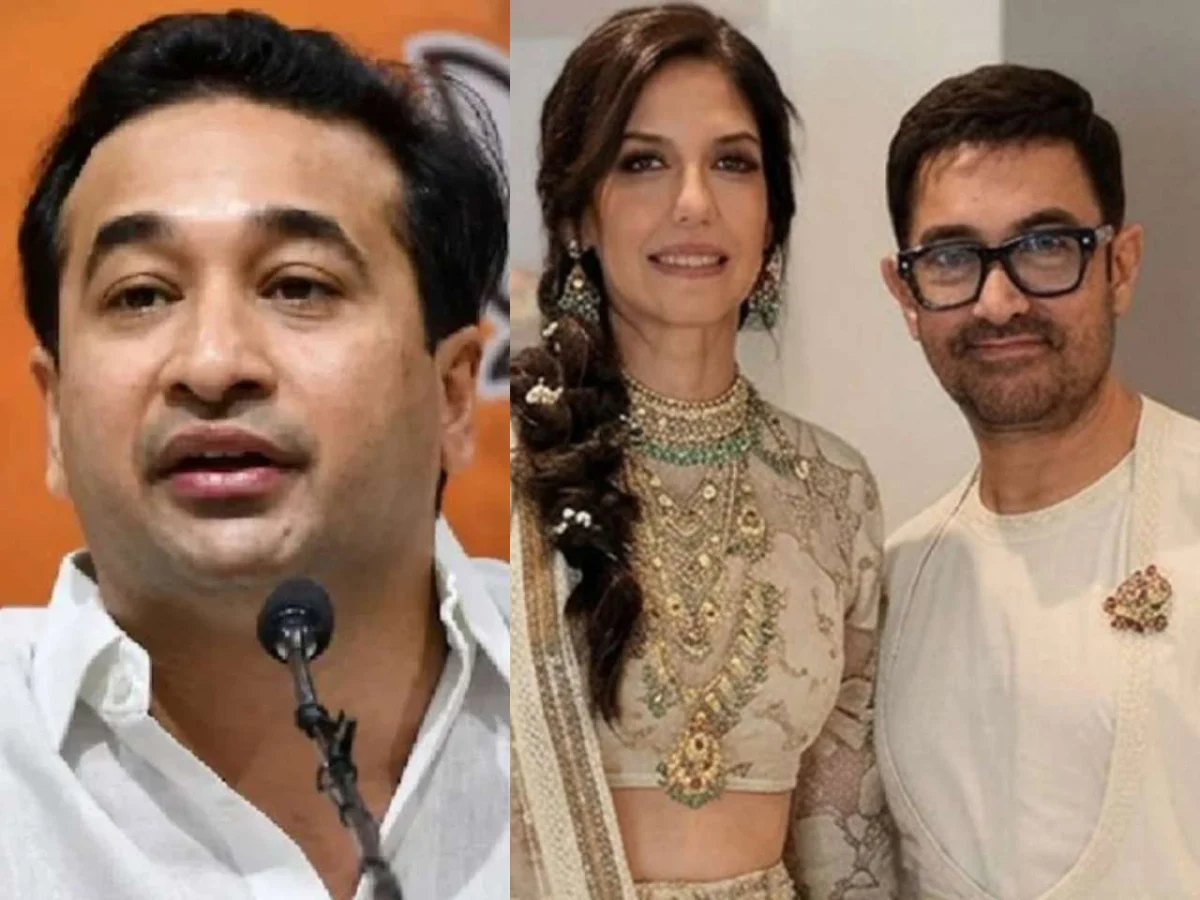
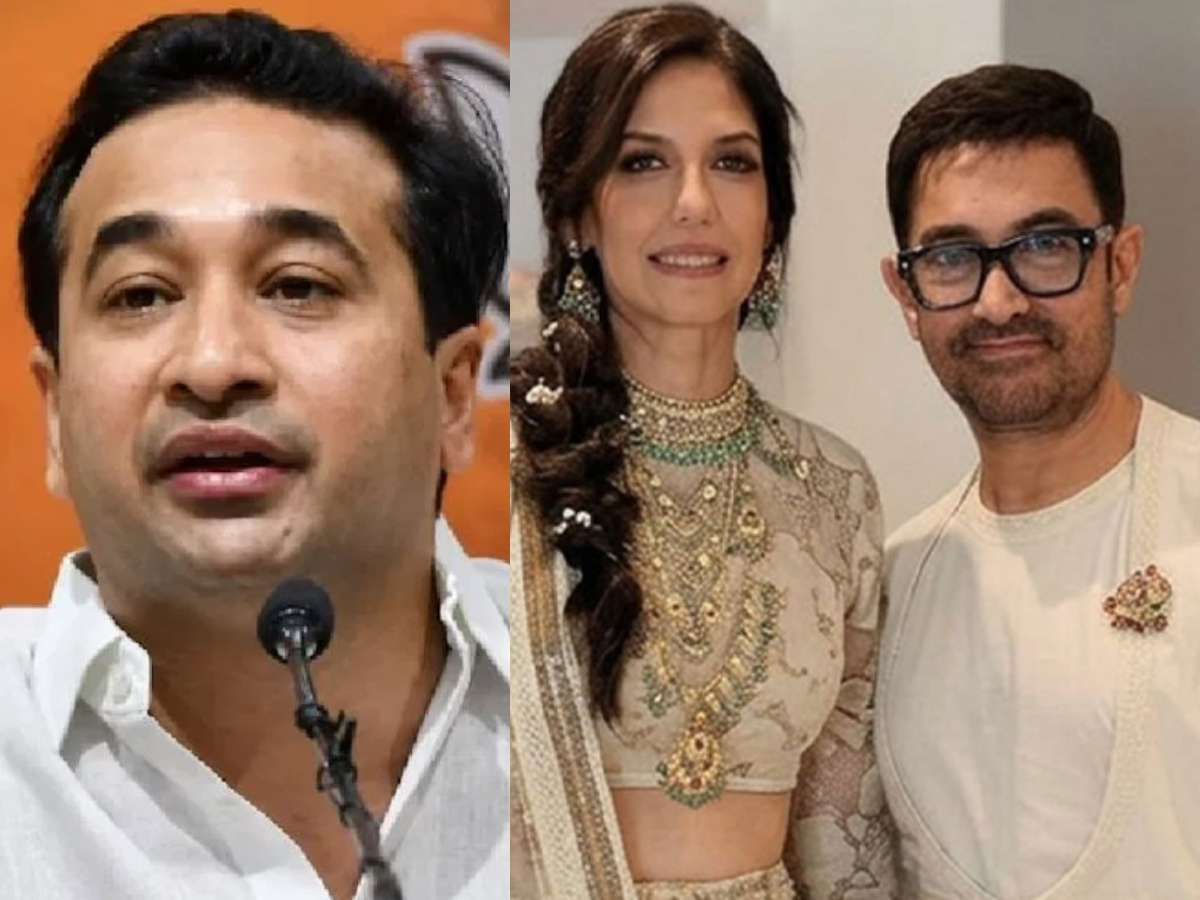
Mumbai, India – July 12, 2024 – The recent third marriage of Bollywood superstar Aamir Khan has ignited a firestorm of political commentary, with a prominent minister from India’s ruling Bharatiya Janata Party (BJP) directly accusing the actor of becoming a "brand ambassador of love jihad." Nitesh Rane, a Maharashtra minister and MLA, has publicly urged the Hindu community to reconsider their patronage of actors like Khan, linking his personal life choices to a controversial and politically charged narrative.
The controversy erupted following Khan’s marriage to Gauri Spratt on July 5, a union that followed his previous marriages to Reena Dutta and Kiran Rao. While Khan’s personal life has often been a subject of public interest, this latest matrimonial step has drawn sharp criticism from a political faction that views it through a lens of religious identity and alleged societal manipulation.
The Minister’s Accusation and Call to Action
Maharashtra Minister Nitesh Rane, speaking to reporters in Shirdi, Ahilyanagar district, minced no words in his condemnation. "When celebrities take such decisions in their personal lives, Hindu society should think about it," Rane stated, emphasizing his personal opinion. He then directly posed the question, "Who is the brand ambassador of love jihad? Is Aamir Khan not becoming one?"
Rane’s remarks suggest a deliberate attempt to link Khan’s marital choices to the contentious concept of "love jihad," a term primarily used by right-wing Hindu nationalist groups. These groups allege that Muslim men engage in relationships and marriages with women from other religions with the ulterior motive of converting them to Islam. By framing Khan’s marriage within this narrative, Rane appears to be appealing to a specific segment of society and invoking sentiments of religious solidarity and potential grievance.
)
Furthermore, Rane explicitly advised the Hindu community to exercise caution and critical judgment when engaging with the work of celebrities like Aamir Khan. "Those Hindu youths who watch his movies should have considerate views before making such actors big," he implored. This statement carries significant weight, as Aamir Khan is one of India’s most popular and influential film stars, with a massive following across all demographics, including Hindu communities. The minister’s call to boycott or re-evaluate the consumption of his films suggests a potential attempt to leverage political influence to impact the actor’s professional standing.
Rane also highlighted that discussions surrounding whether Khan’s third marriage should be viewed through the prism of "love jihad" were "gradually gaining ground." This assertion implies that the minister believes his perspective is shared by a growing number of people or that he intends to foster such a narrative. He concluded his remarks with a direct appeal: "Hindu society should ponder over whether to watch such people’s movies or not," urging those who consider such personalities as celebrities to "reassess their views."

Understanding "Love Jihad" and its Political Context
The term "love jihad" is a sensitive and politically charged one, primarily originating from and propagated by right-wing Hindu outfits. It alleges a deliberate and organized conspiracy by Muslim men to lure Hindu women into relationships and subsequent marriages with the sole objective of their religious conversion to Islam. While proponents of this theory often present anecdotal evidence and interpret interfaith relationships through this lens, secular organizations and many legal experts have dismissed it as a baseless conspiracy theory, often used to fuel communal tensions and foster distrust between religious communities.
The use of this term by a ruling party minister in the context of a celebrity’s personal life underscores the increasing politicization of personal relationships and religious identity in India. It reflects a broader trend where cultural and social issues are often framed within a political and ideological battleground, particularly concerning interfaith relationships.
)
Aamir Khan’s Marital History: A Chronology
Aamir Khan’s personal life, while generally kept private, has seen significant milestones in his marital journey. Understanding this history provides context to the current controversy.
-
First Marriage: Reena Dutta (1986-2002)
Aamir Khan’s first marriage was to Reena Dutta. The couple, who were childhood sweethearts, tied the knot in 1986. They have two children together: Junaid Khan, who has also ventured into filmmaking, and Ira Khan, who has explored theatre and direction. Their marriage, which lasted for 16 years, ended in divorce in 2002. The separation was reportedly amicable, with both parties moving on to pursue their respective lives.)
-
Second Marriage: Kiran Rao (2005-2021)
Following his divorce from Reena Dutta, Aamir Khan found love again with filmmaker Kiran Rao. They met on the sets of the critically acclaimed film "Lagaan," where Rao worked as an assistant director. The couple married in 2005. Their union was seen as a significant partnership in the Indian film industry, with both contributing to creative projects. They have a son, Azad Rao Khan, whom they co-parented. After 16 years of marriage, Aamir Khan and Kiran Rao announced their separation in 2021 through a joint statement, emphasizing that they would continue to remain devoted parents to their son and collaborate on professional endeavors. -
Third Marriage: Gauri Spratt (July 5, 2024)
Aamir Khan’s relationship with Gauri Spratt became public knowledge during his 60th birthday celebrations in March last year. Spratt, who works in the wellness and beauty industry, was introduced to the media as Khan’s partner. The couple exchanged vows in an intimate ceremony at Khan’s residence in Pali Hill, Bandra, Mumbai, on July 5, 2024. The marriage has been described as a private affair, with close friends and family in attendance.)
Broader Implications and Societal Discourse
The controversy surrounding Aamir Khan’s third marriage and the minister’s accusations extend beyond the personal lives of celebrities. They highlight several critical societal and political undercurrents:
-
Politicization of Personal Choices: The incident underscores a growing trend where personal decisions, particularly those involving relationships and marriage, are increasingly being viewed and judged through a political and religious lens. This can stifle individual freedom and create an atmosphere of moral policing.
)
-
Communal Polarization: The invocation of "love jihad" by a political figure, especially in relation to a prominent personality, can exacerbate existing communal tensions and mistrust between religious communities. It risks fueling a narrative of victimhood and aggression, potentially leading to further division.
-
Influence of Celebrities: Celebrities often hold significant cultural influence. When their personal lives become subjects of political debate, it can have a ripple effect on public opinion and discourse. The call to boycott films, though unlikely to have a substantial impact on Khan’s career given his stature, signals an attempt to leverage this influence for political ends.
)
-
Freedom of Religion and Personal Liberty: The controversy also touches upon fundamental rights, including the freedom to marry and practice one’s religion. Critics of the "love jihad" narrative argue that it infringes upon the right to personal liberty and promotes a narrow, exclusionary view of interfaith relationships.
-
Role of Media and Public Discourse: The media plays a crucial role in shaping public perception. The way this story is reported and discussed can either contribute to a more nuanced understanding of the issues or amplify divisive rhetoric. The original article itself presents the minister’s statement prominently, which can give it wider reach and legitimacy in the eyes of some.
)
Official Responses and Reactions (Hypothetical/Anticipated)
As of the current reporting, official responses from Aamir Khan or his representatives have not been publicly disclosed. Given the sensitivity of the allegations, it is plausible that Khan’s team may choose to remain silent, opting to not engage with political controversy. However, any statement or silence will be interpreted by different factions.
It is also possible that other political parties or social organizations may weigh in on the matter. Secular groups and liberal commentators are likely to condemn Rane’s remarks as divisive and an infringement on personal liberty. Conversely, right-wing organizations might support Rane’s stance, viewing Khan’s marriage as further evidence of their claims.
)
The Maharashtra government, of which Nitesh Rane is a part, may also face pressure to distance itself from his statements or to publicly endorse them. The ruling BJP’s stance on such issues often reflects a broader ideological agenda, making it unlikely for the party to reprimand Rane unless the controversy escalates to a point where it significantly damages their public image or electoral prospects.
Conclusion
Aamir Khan’s third marriage has inadvertently become a focal point for a contentious political narrative. The accusation of him being a "brand ambassador of love jihad" by Maharashtra minister Nitesh Rane is a stark illustration of how personal lives are increasingly being drawn into the ambit of religious and political ideologies in contemporary India. While Aamir Khan, a globally recognized figure, navigates his personal journey, the controversy highlights the ongoing debate surrounding interfaith relationships, individual freedoms, and the potent influence of political rhetoric in shaping societal perceptions. The coming days will likely see further reactions and discussions, underscoring the complex interplay of celebrity, religion, and politics in India.
