

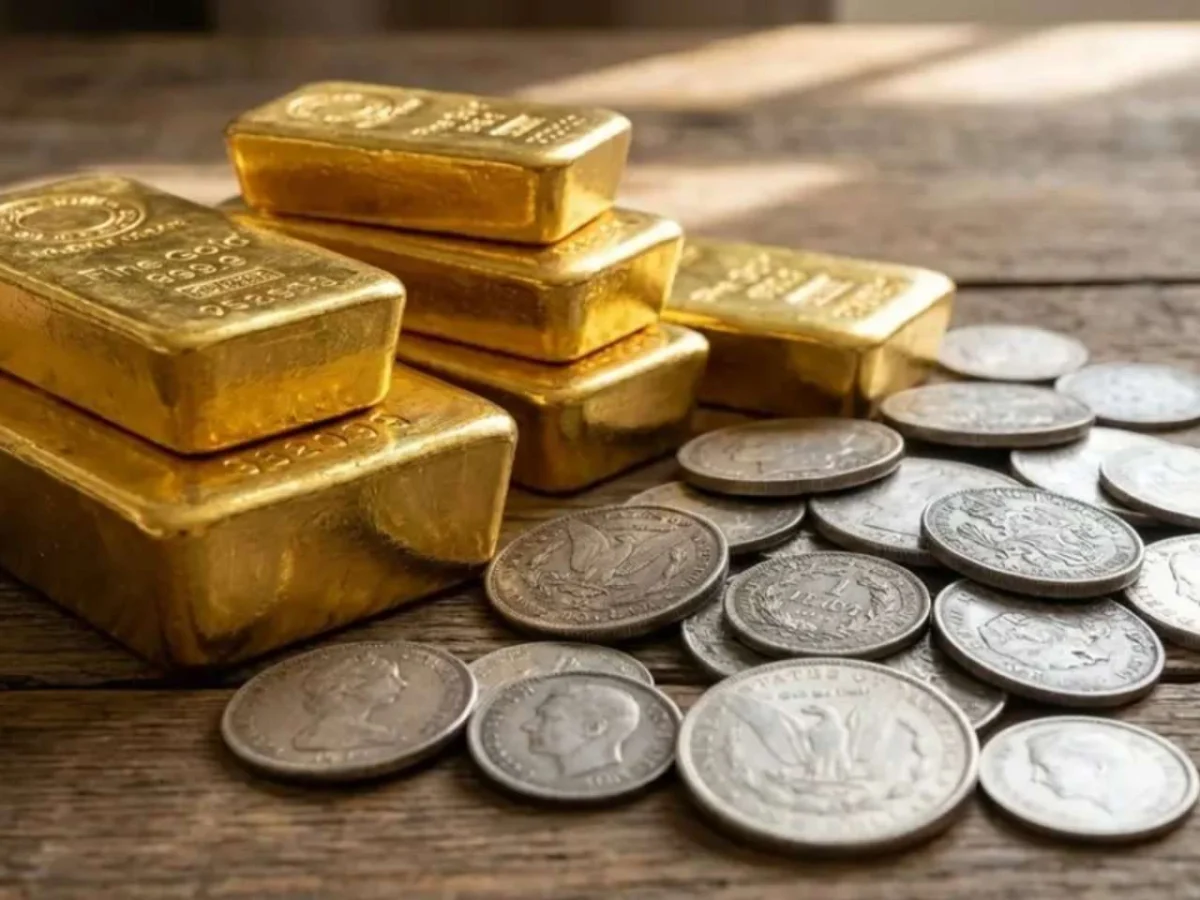
NEW DELHI, India – June 28, 2026 – India’s vibrant precious metals market continues its dynamic trajectory, with gold and silver prices registering significant movements today. Influenced by a complex interplay of global economic shifts, burgeoning local demand, and fluctuating currency rates, investors and consumers alike are closely monitoring the daily pulse of these coveted commodities. As of June 28, 2026, the market presents a nuanced picture, reflecting both international trends and India’s unique cultural and economic landscape.
Current Market Snapshot: Gold and Silver Prices on June 28, 2026
The morning trading on June 28, 2026, has seen gold prices experience a notable uptick, largely attributed to persistent global inflationary pressures and sustained investor demand for safe-haven assets. This increase underscores the enduring appeal of gold amidst a backdrop of economic uncertainty in various parts of the world.
Silver, often referred to as "poor man’s gold" but increasingly vital in industrial applications, has also shown robust performance. Its dual role as an investment vehicle and an industrial metal subjects its prices to a distinct set of market forces, which today have pushed its value upward.
Gold Prices: A Detailed Snapshot Across Major Indian Cities
The price of gold in India is a critical indicator for millions, from retail investors to the vast jewellery industry. Today’s rates reveal a consistent upward trend, with minor variations reflecting local taxes, logistics, and specific regional demand patterns.
)
As of June 28, 2026, the national average for 24-carat gold (999 purity) stands at approximately Rs 14,395 per gram. For 22-carat gold (91.67% purity), which remains the preferred choice for jewellery due to its durability and malleability, the price is around Rs 13,195 per gram. These figures highlight the premium associated with higher purity and reflect the current global valuation of the yellow metal.
City-Wise Gold Rates: Nuances Across India
The slight differentials in gold prices across major Indian metropolitan areas are a regular feature of the market. These variations are typically a function of local demand, state-specific taxes, transportation costs, and the operational overheads of regional bullion associations.

-
Gold Prices in Delhi:
- The current price of 24K gold in Delhi is Rs 14,410 per gram.
- The current price of 22K gold in Delhi is Rs 13,210 per gram.
- Delhi, as a major commercial and consumption hub, often sees slightly higher prices due to significant demand from both retail buyers and a thriving jewellery manufacturing sector.
-
Gold Prices in Mumbai:
)
- The current price of 24K gold in Mumbai is Rs 14,395 per gram.
- The current price of 22K gold in Mumbai is Rs 13,195 per gram.
- Mumbai, India’s financial capital, often sets the benchmark for national gold prices, with its rates closely aligning with the national average. Its role as a major port also influences import costs.
-
Gold Prices in Kolkata:
- The current price of 24K gold in Kolkata is Rs 14,395 per gram.
- The current price of 22K gold in Kolkata is Rs 13,195 per gram.
- Kolkata, a city with deep cultural ties to gold and a historically significant jewellery market, mirrors Mumbai’s prices today, reflecting a balanced supply-demand dynamic.
-
Gold Prices in Chennai:
)
- The current price of 24K gold in Chennai is Rs 14,586 per gram.
- The current price of 22K gold in Chennai is Rs 13,370 per gram.
- Chennai consistently exhibits some of the highest gold prices in the country. This is primarily due to the exceptionally strong cultural affinity for gold in South India, where it is an integral part of weddings, festivals, and traditional investments, leading to higher local demand.
Silver Prices: Market Overview and Regional Uniformity
Silver, while less expensive than gold, holds substantial economic and cultural value in India. It serves as both an accessible investment option and a popular choice for ornaments, especially in regions where silver jewellery is deeply ingrained in tradition.
As of June 28, 2026, the price of 999 pure silver (fine silver) in India is approximately Rs 2,40,100 per kilogram. Sterling silver (925 purity), commonly used for jewellery and silverware, is priced at Rs 2,40,000 per kilogram. The marginal difference between 999 and 925 purity silver reflects the slight alloy content in the latter, which enhances its durability for crafting purposes.
)
City-Wise Silver Rates: A Picture of Consistency
Unlike gold, silver prices often display greater uniformity across major Indian cities due to less pronounced regional demand disparities and more standardized logistics.
- Silver Price in Delhi Today:
- The current price of Silver 999 in Delhi is Rs 2401 per 10 grams.
- Silver Price in Mumbai Today:
- The current price of Silver 999 in Mumbai is Rs 2401 per 10 grams.
- Silver Price in Kolkata Today:
- The current price of Silver 999 in Kolkata is Rs 2401 per 10 grams.
- Silver Price in Chennai Today:
- The current price of Silver 999 in Chennai is Rs 2401 per 10 grams.
- The consistent pricing across these cities indicates a relatively stable national market for silver today, with demand and supply well-balanced.
Decoding the Drivers: Factors Influencing Precious Metal Prices
The prices of gold and silver are not arbitrary figures but rather the outcome of a complex interplay of domestic and international forces. Understanding these factors is crucial for anyone engaging with the precious metals market.
)
Global Market Dynamics: The International Influence
The primary driver of gold and silver prices in India remains the international market. Global benchmarks, such as those traded on the COMEX and the London Bullion Market, exert significant influence.
- Geopolitical Tensions and Economic Uncertainty: In times of global instability, be it political conflicts, trade wars, or widespread economic downturns, investors flock to gold as a traditional "safe haven" asset. Its intrinsic value and perceived stability make it a preferred store of wealth when other assets, like stocks or bonds, seem volatile. The current global environment in mid-2026, characterized by lingering geopolitical hotspots and uneven economic recoveries, continues to fuel this demand.
- Central Bank Policies and Interest Rates: The monetary policies of major central banks, particularly the U.S. Federal Reserve, play a pivotal role. Higher interest rates typically make non-yielding assets like gold less attractive compared to interest-bearing instruments. Conversely, low interest rates or quantitative easing measures tend to support gold prices. Analysts suggest that the current cautious stance by several central banks, balancing inflation control with economic growth, is creating a supportive environment for precious metals.
- Strength of the US Dollar: Gold is typically priced in US dollars. A weaker dollar makes gold cheaper for buyers holding other currencies, thereby increasing demand and pushing up dollar-denominated prices. Conversely, a stronger dollar can make gold more expensive, potentially dampening demand. The current trajectory of the US Dollar against a basket of major currencies is a critical input for today’s gold prices.
- Inflationary Pressures: Gold is widely considered a hedge against inflation. When the purchasing power of fiat currencies erodes due to rising prices, gold tends to retain or increase its value. The ongoing inflationary trends observed globally in 2026 are undoubtedly contributing to the heightened demand for gold as an inflation buffer.
Domestic Demand and Cultural Significance: India’s Unique Contribution
India is one of the world’s largest consumers of gold, and domestic factors significantly impact prices.
)
- Festive and Wedding Season Demand: Gold’s cultural importance in India is unparalleled. It is an indispensable part of weddings, religious festivals like Diwali and Akshaya Tritiya, and other auspicious occasions. This seasonal demand often creates predictable peaks in buying activity, driving up local prices. While June is not typically a peak festive season, residual wedding demand and early preparations for upcoming festivals can still contribute.
- Investment Demand: Beyond cultural significance, gold and silver are considered traditional investment assets in India, particularly in rural areas where they serve as a primary form of savings and financial security. As a tangible asset, it provides a sense of security against economic uncertainties.
- Government Policies: Import duties, taxes (like GST), and regulations imposed by the Indian government on precious metals can directly influence their domestic prices. Changes in these policies are closely watched by traders and consumers.
Currency Fluctuations: The Rupee-Dollar Equation
The exchange rate between the Indian Rupee (INR) and the US Dollar (USD) is a critical determinant of gold and silver prices in India. Since most international transactions for precious metals are settled in USD, a depreciation of the Rupee against the Dollar makes imports of gold and silver more expensive in INR terms, directly increasing their domestic prices. The current strength or weakness of the Rupee plays a direct role in today’s price structure.
Industrial Demand for Silver: A Unique Driver
Silver, unlike gold, has significant industrial applications, making its price sensitive to global manufacturing and technological advancements.
)
- Electronics and Technology: Silver is an excellent conductor of electricity and heat, making it indispensable in electronics, solar panels, and various high-tech components.
- Medical and Photography: Its antibacterial properties make it useful in medical applications, and it remains crucial in traditional photography.
- Green Energy Transition: The global push towards renewable energy, particularly solar power, is projected to steadily increase industrial demand for silver in the coming years, creating a strong floor for its prices.
A Brief Chronology of Recent Trends
The precious metals market leading up to June 28, 2026, has been characterized by a blend of volatility and resilience. Over the past quarter, gold has demonstrated a steady upward trajectory, shaking off earlier concerns about rising interest rates as inflation proved more persistent than anticipated. This trend was further bolstered by sporadic geopolitical flare-ups that reignited safe-haven buying.
Silver, too, has mirrored gold’s upward climb, albeit with sharper daily fluctuations, reflecting its dual nature. Strong industrial output figures from key global economies in Q1 and Q2 2026 provided consistent support for silver’s demand, while its investment appeal shadowed gold’s performance. The cumulative effect of these factors has contributed to the elevated prices observed today.
)
Expert Perspectives and Official Sentiments
Market analysts are largely optimistic about the near-term outlook for precious metals, though they caution about potential headwinds. "The underlying inflationary pressures, coupled with a cautious global economic outlook, continue to provide a strong tailwind for gold," notes Dr. Rhea Sharma, a leading commodities analyst based in Mumbai. "We are seeing sustained interest from institutional investors looking to diversify portfolios and hedge against currency debasement."
Regarding official sentiments, while no direct statements on gold or silver prices are typically issued, the Reserve Bank of India’s (RBI) stance on inflation and currency management indirectly impacts the market. Economic observers note that the RBI’s ongoing efforts to maintain price stability and manage the Rupee’s volatility against major currencies are critical. Any policy shifts, such as changes in interest rates or interventions in the forex market, could influence the cost of importing precious metals and, consequently, their domestic prices. Government initiatives aimed at formalizing gold trade and reducing illicit flows also play a role in shaping market dynamics and transparency.
)
Implications for Stakeholders
Today’s prices carry significant implications for various stakeholders within the Indian economy.
For Consumers
For individuals planning to purchase gold for weddings, festivals, or as gifts, the current high prices represent a significant financial outlay. While many view gold as an essential part of cultural celebrations, the elevated rates might lead some to opt for lighter jewellery, postpone purchases, or explore alternative investments. For those looking to sell old gold, the current market offers attractive returns.
)
For Investors
For investors, both retail and institutional, gold and silver continue to serve as crucial components of a diversified portfolio. The sustained upward trend reinforces their role as safe-haven assets and inflation hedges. Investors are increasingly looking at digital gold and silver options, as well as exchange-traded funds (ETFs) and sovereign gold bonds (SGBs), which offer exposure to these assets without the hassles of physical storage and security.
For Jewelers and Traders
The jewellery industry, a major employer in India, faces a complex scenario. High raw material costs can squeeze profit margins and potentially dampen retail sales volumes. Jewelers must strategically manage their inventory, hedge against price fluctuations, and innovate with designs and marketing to attract customers. The slight city-wise variations also necessitate localized pricing strategies.
)
Broader Economic Impact
At a macroeconomic level, India’s substantial imports of gold and silver contribute significantly to its import bill, impacting the current account deficit. High international prices, combined with strong domestic demand, can exacerbate this situation. Conversely, a robust and transparent precious metals market can also attract foreign investment and contribute to economic activity through trade and manufacturing.
The Outlook: What Lies Ahead?
Looking ahead, the precious metals market is expected to remain highly sensitive to a confluence of global and domestic factors. International geopolitical developments, the trajectory of inflation, interest rate decisions by major central banks, and the strength of the US dollar will continue to be critical determinants. Domestically, upcoming festive seasons, economic growth projections, and any shifts in government policy regarding precious metals will play a significant role.
)
While the appeal of gold as a safe haven and inflation hedge is likely to endure, silver’s dual role means its fortunes will also be tied to the health of global industrial production and the pace of the green energy transition. Investors and consumers are advised to stay informed, conduct thorough research, and consult financial advisors before making significant decisions in this dynamic market. The prices observed on June 28, 2026, serve as a testament to the ever-evolving nature of India’s precious metals landscape.
Find your daily dose of All Latest News including Sports News, Entertainment News, Lifestyle News, explainers & more. Stay updated, Stay informed- Follow DNA on WhatsApp.
