

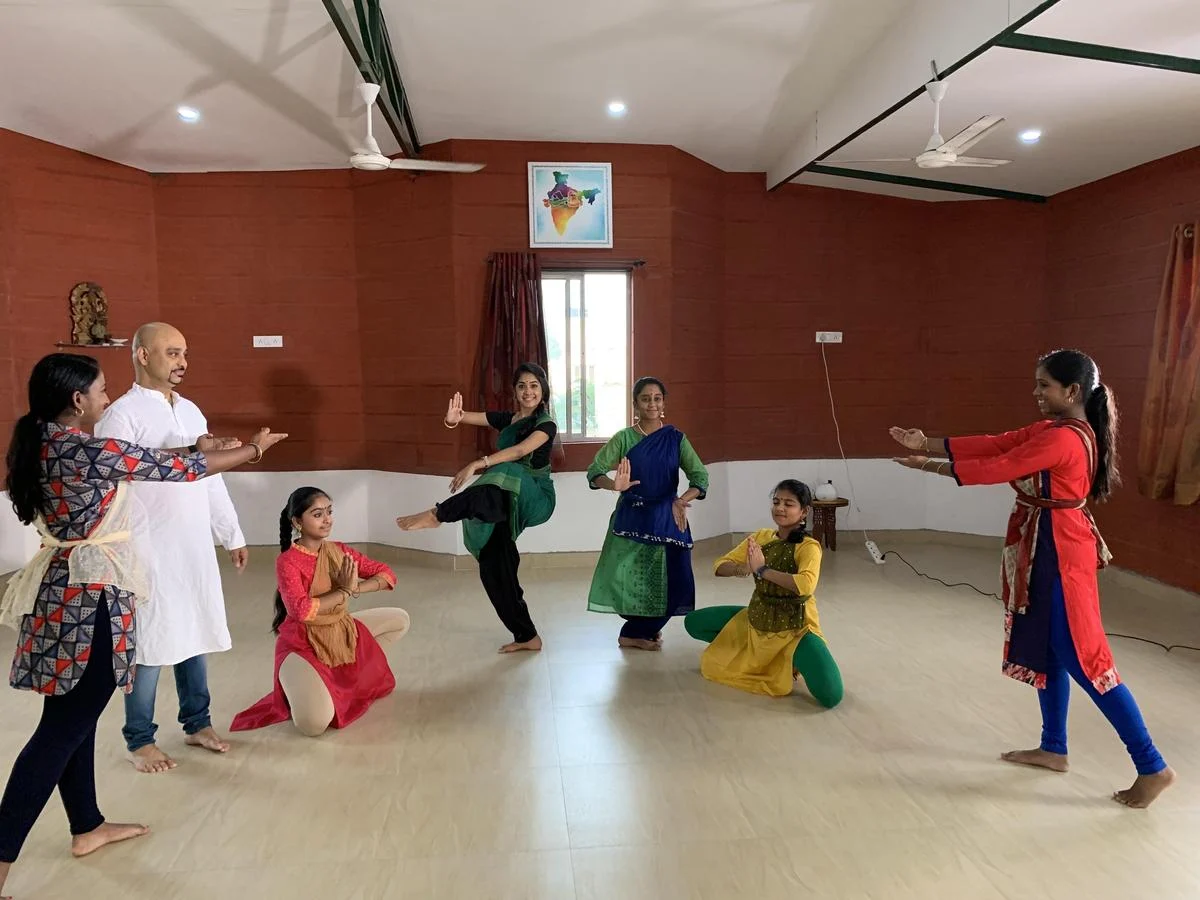
Chennai, India – In a significant stride for classical Indian dance, the renowned Bharatanatyam guru, composer, and choreographer, Madurai R. Muralidharan, presents "Saptatala Lahari," a monumental three-day festival dedicated to the intricate and often overlooked Sapta Sudi tala system. This ambitious undertaking, commencing on June 19th at the esteemed Krishna Gana Sabha, promises to unravel the profound rhythmic architecture of Bharatanatyam by showcasing seven distinct margams, each meticulously choreographed and performed within seven unique talas from this ancient framework.
For centuries, Bharatanatyam has thrived on a delicate equilibrium of tradition, scholarly depth, creative expression, and innovative evolution. While rhythm, or tala, stands as one of the cornerstones of this classical dance form, the extensive exploration of the Sudi Sapta tala system within the conventional margam structure has historically remained a relatively rare pursuit. It is within this context that Muralidharan’s vision for "Saptatala Lahari" emerges as a pivotal moment, seeking to illuminate and celebrate the vast, untapped rhythmic landscape that has long been an intrinsic part of Bharatanatyam’s heritage.
A Deeper Dive into the Rhythmic Core: Muralidharan’s Vision
Madurai R. Muralidharan, a name synonymous with artistic excellence and pedagogical innovation in Bharatanatyam, has dedicated a significant portion of his career to dissecting and reinterpreting the complex rhythmic structures of the dance form. Recognizing the inherent potential and rhythmic richness within the 35 Sudi Sapta talas – the seven primary talas, each divisible into five categories based on the number of angas (limbs) – Muralidharan embarked on a multi-faceted journey to weave these intricate rhythmic patterns into the fabric of the traditional Bharatanatyam repertoire.
His commitment to this exploration is not new. Prior to the current festival, Muralidharan had already achieved a remarkable feat by presenting 19 distinct margams, each set to a different tala drawn from the Sapta Sudi tala system. This cumulative effort underscores his deep-seated belief in the dance form’s capacity for rhythmic diversity and his dedication to expanding its theoretical and practical boundaries. "Saptatala Lahari" represents a significant continuation of this legacy, with the presentation of seven additional margams that will bring his total to an impressive 26 margams in 26 distinct talas. This cumulative achievement is a testament to his profound understanding and artistic mastery of both Bharatanatyam and Carnatic music.
The Festival Unveiled: A Symphony of Rhythms and Repertoire
The "Saptatala Lahari" festival is structured to provide audiences with a comprehensive and immersive experience of the Sapta Sudi tala system within the Bharatanatyam context. Each of the seven featured margams will be a carefully crafted exploration of a specific tala, demonstrating its unique character and rhythmic intricacies through the established Bharatanatyam repertoire.
The talas selected for this festival represent a fascinating cross-section of the Sapta Sudi system, each offering a distinct rhythmic challenge and aesthetic. These include:
- Sankeerna Jathi Eka Talam – 9 aksharas: This complex tala, characterized by its intricate subdivision of the beat, promises a display of sophisticated rhythmic patterns.
- Misra Jathi Triputa Talam – 11 aksharas: Known for its blended rhythmic feel, this tala allows for nuanced expressions and dynamic variations.
- Chathusra Jathi Matya Talam – 10 aksharas: A well-structured tala, it provides a strong framework for intricate footwork and expressive movements.
- Chathusra Jathi Jhampa Talam – 7 aksharas: This tala, with its distinct rhythmic accents, can evoke a sense of urgency or grace depending on its execution.
- Chathusra Jathi Triputa Talam – 8 aksharas: Offering a different rhythmic cadence than its 11-akshara counterpart, this tala will showcase further rhythmic possibilities.
- Thisra Jathi Rupaka Talam – 5 aksharas: A shorter and often more agile tala, it lends itself to swift and dynamic choreographies.
- Sankeerna Jathi Jhampa Talam – 12 aksharas: The most complex of the featured talas, this will undoubtedly be a highlight, showcasing the dancers’ and choreographer’s highest level of rhythmic proficiency.
Each margam, a complete dance recital comprising a traditional sequence of Bharatanatyam items, will adhere to the established structure, beginning with the auspicious Pushpanjali (an offering of flowers), followed by the foundational Alarippu (a rhythmic invocation). The festival will then progress through the intricate rhythmic patterns of the Kavithuvam and Jathiswaram, culminating in the emotional depth and narrative complexity of the Varnam. The program will further explore devotional and lyrical aspects through Padams, and conclude with the vibrant and energetic Tillana, a piece known for its dazzling rhythmic sequences.

Beyond the rhythmic exploration, "Saptatala Lahari" also places a significant emphasis on the melodic aspect of Bharatanatyam. The festival incorporates several uncommon ragas, carefully chosen to complement and enhance the unique rhythmic character of each specific tala. This thoughtful selection of ragas promises to create a richer, more layered, and aesthetically profound experience for the audience, highlighting the symbiotic relationship between melody and rhythm in classical Indian dance.
A National and International Convergence of Talent
The "Saptatala Lahari" festival is not merely a showcase of choreography and rhythmic innovation; it is also a celebration of the Bharatanatyam fraternity. The festival features performances by accomplished dancers hailing from across the country and even from abroad, bringing together a diverse ensemble of artists united by their passion for this classical art form. This collaborative spirit fosters a rich exchange of ideas and interpretations, further enriching the artistic tapestry of the event.
The meticulously planned schedule ensures that audiences can immerse themselves in the festival’s offerings over the three days. The performances are slated to commence each day with early afternoon sessions and continue into the evening, allowing ample opportunity to witness the diverse talents on display.
Detailed Performance Schedule:
Day 1: June 19th
- 5:30 PM: Performance by K. Sree Mourya
- 7:15 PM: Performance by Kavya Muralidharan
Day 2: June 20th
- 5:00 PM: Performances by Priyanka Sai Sankar and Padmavati Sai Sankar
- 7:15 PM: Performance by Aishwarya Valli Kakulapati
Day 3: June 21st

- 10:30 AM: Ensemble performance by Sriranjani Swaminathan, Lakshmi Ananthanarayan, Rekha Garg, and Amritha Narayan
- 5:00 PM: Performance by Shravya Suresh
- 7:15 PM: Performance by Harini N.S.
Adding to the prestige and intellectual discourse surrounding the festival, each day will be graced by the presence of eminent artistes who will serve as chief guests. Their participation signifies the importance and recognition of Muralidharan’s endeavor within the broader classical arts community.
The Significance of the Sapta Sudi Tala System
The Sapta Sudi tala system, a foundational element of Carnatic music and by extension, Bharatanatyam, comprises seven principal talas: Dhruva, Matya, Rupaka, Triputa, Jhampa, Atita, and Dindhima. Each of these talas is further categorized into five Jathis (or Gathis) based on the arrangement of Laghu (the primary unit of counting in a tala). These Jathis are Thisra (three beats), Chathusra (four beats), Khanda (five beats), Misra (seven beats), and Sankeerna (nine beats). This system results in a theoretical total of 35 distinct talas, offering an immense palette of rhythmic possibilities.
Historically, Bharatanatyam margams have predominantly been performed within a few of the more commonly encountered talas, such as Adi Tala (a derivative of Eka Tala) and Rupaka Tala. While these talas are integral and allow for profound artistic expression, the Sapta Sudi system offers a richer and more nuanced rhythmic vocabulary. Muralidharan’s work seeks to excavate and revitalize this often-underutilized rhythmic heritage, demonstrating that the traditional margam structure can be dynamically infused with a wider array of talas, thereby expanding the dance form’s rhythmic repertoire and its expressive potential.
A Legacy of Innovation and Dedication
Madurai R. Muralidharan’s journey in Bharatanatyam is marked by a relentless pursuit of artistic excellence and a deep commitment to pedagogical innovation. His approach to teaching and choreography is characterized by a meticulous attention to detail, a profound understanding of the theoretical underpinnings of the dance form, and a creative flair that allows him to imbue classical traditions with fresh perspectives.
His students, who will be performing at "Saptatala Lahari," are a testament to his effective teaching methodology. They embody the rigorous training and artistic sensibility that Muralidharan instills, ready to showcase their mastery of complex rhythmic patterns and their ability to translate abstract musical concepts into compelling dance movements. The presence of Kavya Muralidharan, his daughter and a prominent dancer in her own right, further highlights the intergenerational commitment to preserving and propagating this rich artistic legacy.
The festival not only serves as a platform for performance but also as an educational endeavor, offering a rare opportunity for connoisseurs, students, and practitioners of Bharatanatyam to witness and engage with the intricacies of the Sapta Sudi tala system in practice. It is an invitation to delve deeper into the rhythmic soul of the dance, to appreciate its mathematical precision and its boundless artistic potential.
"Saptatala Lahari" stands as a significant contribution to the ongoing evolution of Bharatanatyam. By systematically exploring and presenting the Sapta Sudi talas within the traditional margam framework, Madurai R. Muralidharan is not just curating a festival; he is actively enriching the dance form’s vocabulary, pushing its boundaries, and ensuring that its rhythmic heritage continues to resonate with contemporary audiences. This endeavor is a powerful reminder that even in deeply rooted traditions, there exists a universe of unexplored beauty waiting to be discovered and celebrated.
