

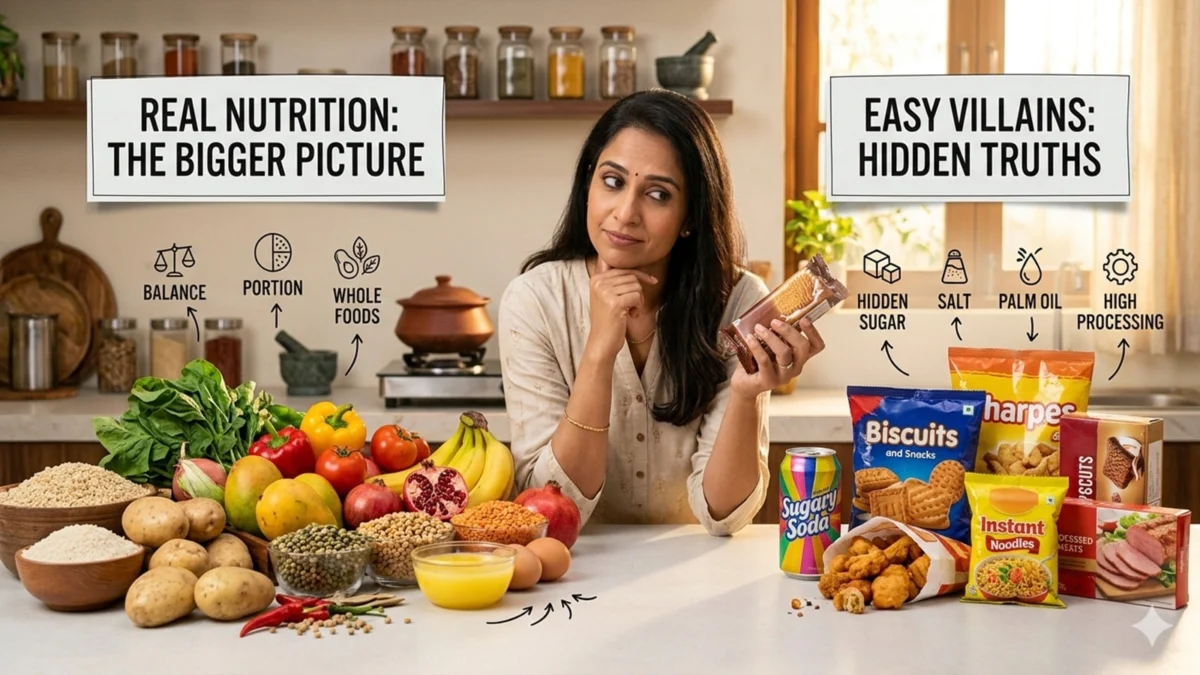
New Delhi, June 13, 2026 – In an era saturated with dietary advice and trending health fads, the conversation around what constitutes a "healthy" or "unhealthy" meal has become increasingly complex. While many readily identify overtly oily or fried items as dietary nemeses, a deeper, more insidious threat lurks within the seemingly innocuous foods we consume daily. Cookbook author Krish Ashok has ignited a crucial discussion, highlighting a peculiar behavioral pattern among Indians: our tendency to embrace "easy villains" when it comes to nutrition, often overlooking the pervasive and hidden fats that quietly undermine our well-being.
Ashok, in a candid conversation with gastroenterologist Dr. Pal Manickam on the podcast The Gut Feeling, articulated this observation with striking clarity. "When they see something oily, they feel it’s oily and say, ‘Okay, I’ve avoided this now.’ But you never intuitively think a biscuit is oily now. Biscuit is just a lot of fat, and it’s usually saturated fat because it’ll be palm oil," he explained. This cultural inclination towards readily identifiable culprits, he suggests, allows us to sidestep the more nuanced and pervasive issue of hidden fats, particularly those found in processed and packaged foods.
Edwina Raj, Head of Services – Clinical Nutrition & Dietetics at Aster CMI Hospital, Bangalore, corroborates Ashok’s assertion. She points out that the human mind often seeks simpler explanations, and blaming a single, visible ingredient is far less demanding than grasping the intricate tapestry of nutritional science. "Foods like rice, potatoes, ghee, eggs, or mangoes are often unfairly blamed for weight gain, diabetes, or poor health, even though these foods can be healthy when eaten in the right quantity and balance," Raj tells indianexpress.com. This simplification, she notes, is exacerbated by the relentless spread of misinformation across social media and the rise of fleeting diet trends, fostering an unwarranted fear of traditional foods that have sustained Indian communities for generations.
The Rise of the "Easy Villain" Mentality
The concept of "easy villains" in our diet is a testament to our innate desire for straightforward solutions. In a world bombarding us with conflicting health messages, it’s psychologically comforting to pinpoint a specific food or ingredient as the sole source of our health woes. This narrative, while easy to digest, often distracts from the more complex and systemic issues that contribute to poor health outcomes.
The traditional Indian diet, rich in diverse grains, pulses, vegetables, and healthy fats from sources like ghee and mustard oil, has historically been associated with robust health. However, the advent of the processed food industry and changing lifestyles have introduced new challenges. As Ashok eloquently puts it, the fat in a biscuit, often derived from palm oil – a saturated fat – is far less conspicuous than the visible oil in a samosa. This subtle infiltration of unhealthy fats into our daily consumption patterns, disguised within otherwise appealing products, represents a significant public health concern.
Raj elaborates on this phenomenon, stating that the simplified blame game often leads to the demonization of nutrient-rich foods. "We tend to see something visibly ‘fatty’ and immediately categorize it as unhealthy. This overlooks the fact that fats are essential for our bodies, and the problem lies in the type and quantity of fat consumed, as well as the overall dietary pattern," she explains. This misdirected focus allows the truly problematic elements of our modern diet to fly under the radar, contributing to a silent epidemic of lifestyle-related diseases.
Unpacking the Nuance: Beyond the Obvious Culprits
The underlying issue, as highlighted by Edwina Raj, is not typically a single food item but rather the holistic eating pattern and lifestyle choices individuals adopt. This is where the "easy villain" mentality falters, as it fails to account for the cumulative impact of various dietary and lifestyle factors.
"Ultra-processed foods are usually more harmful than natural foods because they contain high amounts of sugar, salt, unhealthy fats, preservatives, and artificial ingredients," Raj warns. These foods, often engineered for maximum palatability and shelf-life, are the silent architects of many modern health problems. The list of culprits, according to Raj, should prominently feature packaged snacks, sugary drinks, instant noodles, processed meats, bakery products, and deep-fried fast foods.
The insidious nature of these ultra-processed items lies in their design. They are often "designed to taste addictive and can increase the risk of obesity, diabetes, heart disease, fatty liver, and inflammation when consumed regularly." This engineered addictiveness makes them difficult to moderate, leading to overconsumption and a cascade of negative health consequences. The convenience and widespread availability of these products further exacerbate the problem, making them a staple in many households, often at the expense of more nutritious, home-cooked meals.
Another critical, yet often overlooked, factor is portion control. Raj emphasizes that even ostensibly healthy foods can become detrimental when consumed in excessive quantities. This highlights the importance of mindful eating and understanding appropriate serving sizes, a concept often lost in the pursuit of identifying a singular "bad" food.
Furthermore, Raj points out the collective tendency to ignore other significant contributors to lifestyle diseases. "Lack of sleep, stress, low physical activity, smoking, and alcohol also play a major role in lifestyle diseases, but people often ignore these factors and focus only on one ‘bad’ food," she observes. This selective focus, driven by the allure of an "easy villain," prevents individuals from adopting a truly comprehensive approach to health and well-being.
The Long Shadow of Hidden Fats
The true danger of hidden fats lies in their ubiquity and their ability to become a regular, almost unnoticed, part of our daily intake. Unlike a visible serving of fried food, which might prompt a conscious decision to limit consumption, the fats embedded within biscuits, pastries, sauces, salad dressings, and even some seemingly healthy snacks operate on a different level of awareness.
These hidden fats are often saturated or trans fats, which have been conclusively linked to an increased risk of cardiovascular disease. Palm oil, a common ingredient in many processed foods due to its affordability and texture-enhancing properties, is particularly high in saturated fat. While moderation is key for all fats, the constant, often unconscious, consumption of saturated fats from a variety of sources can significantly impact cholesterol levels and contribute to arterial plaque buildup.
The food industry, driven by consumer demand for convenience and taste, has become adept at incorporating these fats without overtly advertising their presence. This marketing strategy, coupled with a lack of widespread nutritional literacy, creates an environment where consumers are often unaware of the true fat content of the foods they are purchasing and consuming. The "easy villain" narrative, which focuses on the obvious, allows this complex and insidious issue to persist.
Supporting Data and Expert Consensus
The concerns raised by Krish Ashok and Edwina Raj are not isolated observations; they are supported by a growing body of scientific evidence and expert consensus. Numerous studies have highlighted the detrimental health effects of excessive consumption of ultra-processed foods, which are typically laden with unhealthy fats, added sugars, and sodium.
The World Health Organization (WHO) has consistently warned about the global rise in obesity and non-communicable diseases (NCDs), with diet playing a pivotal role. The organization’s guidelines emphasize the reduction of free sugars, salt, and unhealthy fats, and the promotion of whole foods, fruits, and vegetables. The focus on these broader dietary principles underscores the inadequacy of fixating on individual "villain" foods.
Research published in leading medical journals, such as The Lancet and the British Medical Journal, has repeatedly demonstrated a strong correlation between the consumption of ultra-processed foods and increased risks of obesity, type 2 diabetes, cardiovascular disease, and certain types of cancer. These studies often point to the combination of high calorie density, low nutrient density, and the presence of unhealthy fats, sugars, and salt as the primary drivers of these adverse health outcomes.
The gut microbiome, a complex ecosystem of microorganisms residing in our digestive tract, is also significantly impacted by dietary choices. Diets rich in processed foods and unhealthy fats can disrupt the balance of gut bacteria, leading to inflammation and contributing to a range of health issues. Edwina Raj’s reference to "The Gut Feeling" podcast highlights this emerging understanding of the intricate connection between diet, gut health, and overall well-being.
Official Responses and Public Health Initiatives
While the focus on "easy villains" might be a personal coping mechanism, public health bodies and governmental organizations are increasingly adopting a more holistic approach to dietary guidance. The Indian Council of Medical Research (ICMR) and the National Institute of Nutrition (NIN) have been instrumental in developing dietary guidelines for Indians, emphasizing balance, moderation, and the consumption of nutrient-dense foods.
These guidelines consistently advocate for:
- Increased consumption of whole grains, fruits, vegetables, and legumes: These provide essential fiber, vitamins, and minerals.
- Moderate intake of healthy fats: Prioritizing unsaturated fats from sources like nuts, seeds, and vegetable oils.
- Limiting processed and ultra-processed foods: Recognizing their high content of unhealthy fats, sugar, and salt.
- Reduced intake of added sugars and sodium: Crucial for managing blood pressure and preventing metabolic disorders.
- Emphasis on home-cooked meals: Offering greater control over ingredients and preparation methods.
The government, through various health campaigns and public awareness programs, aims to educate the populace about making informed food choices. However, the pervasive influence of marketing by the food industry and the ease with which misinformation spreads online pose significant challenges to these initiatives. The "easy villain" mentality, if left unaddressed, can hinder the effectiveness of these public health efforts.
Implications for Individual and Public Health
The implications of embracing "easy villains" over a nuanced understanding of nutrition are far-reaching. For individuals, it can lead to a cycle of restrictive dieting, nutrient deficiencies, and a perpetual state of anxiety around food. By unfairly demonizing traditional foods, we risk losing valuable cultural culinary heritage and the inherent health benefits these foods offer when consumed appropriately.
The perpetuation of the "easy villain" myth also allows the food industry to continue producing and marketing products high in hidden unhealthy fats, sugar, and salt, as long as they don’t overtly appear "oily" or "fatty" in the conventional sense. This creates an uneven playing field, where consumers are often unaware of the true nutritional impact of their choices.
On a broader public health level, the continued focus on simplistic dietary narratives hinders progress in tackling the growing burden of NCDs. Without a widespread understanding of the pervasive nature of hidden fats and the cumulative impact of ultra-processed foods, efforts to promote healthier populations will remain suboptimal.
The path forward, as advocated by experts like Edwina Raj, lies in cultivating a more informed and critical approach to food. This involves:
- Reading food labels diligently: Understanding ingredient lists and nutritional information.
- Prioritizing whole, unprocessed foods: Building meals around fruits, vegetables, whole grains, and lean proteins.
- Being mindful of portion sizes: Practicing mindful eating and recognizing satiety cues.
- Adopting a holistic lifestyle: Integrating regular physical activity, adequate sleep, and stress management.
- Seeking credible nutritional advice: Consulting registered dietitians and nutritionists for personalized guidance.
Ultimately, the "easy villain" is not a specific food but rather the simplistic approach we sometimes take towards our health. Unmasking the pervasive influence of hidden fats and embracing a comprehensive understanding of nutrition is paramount to achieving sustainable well-being in our increasingly complex food landscape. The journey towards a healthier diet requires moving beyond the readily identifiable culprits and confronting the subtle, yet significant, threats that lie hidden in plain sight.
