

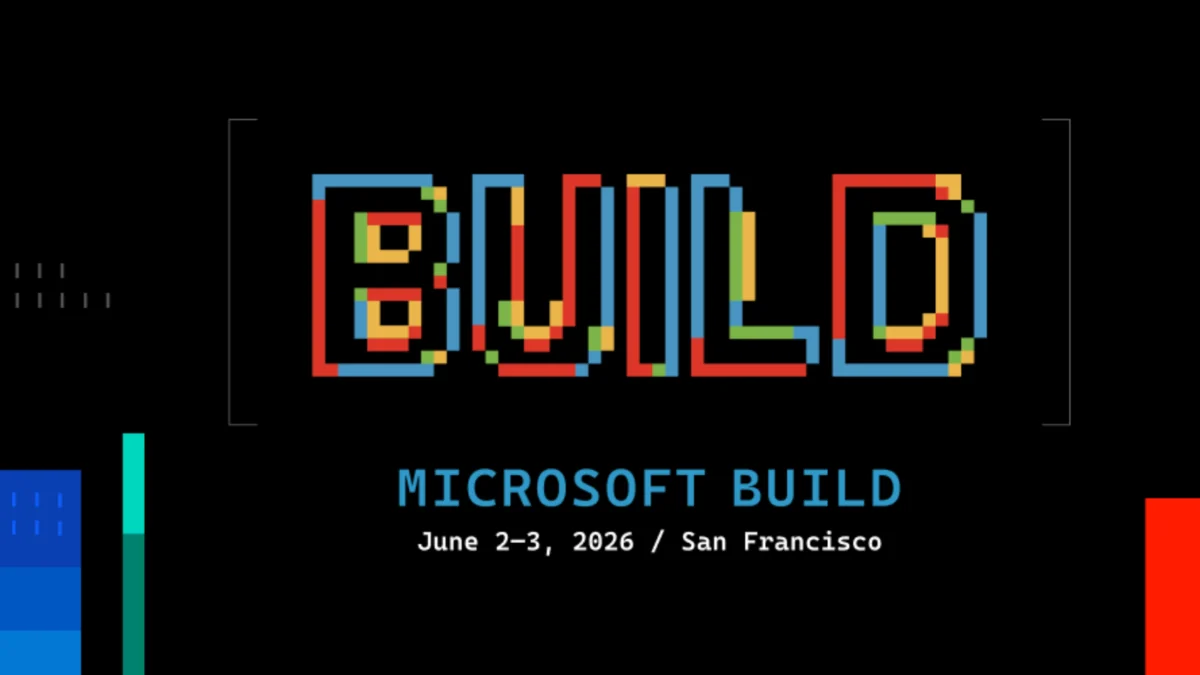
San Francisco, USA – As the global technology landscape continues its rapid, AI-driven evolution, all eyes turn to Microsoft’s annual developer conference, Build 2026. Scheduled to unfold in San Francisco on June 2 and 3, this pivotal event arrives on the heels of Google’s I/O and just ahead of Apple’s Worldwide Developers Conference (WWDC), positioning itself as a crucial marker in the ongoing artificial intelligence arms race. With a formidable presence across enterprise, consumer, and developer ecosystems, Microsoft is poised to unveil its latest advancements and strategic roadmap, solidifying its vision for an AI-integrated future.
The conference will kick off with a highly anticipated opening keynote at 10 AM Pacific Time on Tuesday, June 2 (corresponding to 10:30 PM IST). While the opportunity to attend in person comes with a price tag of nearly $1100, Microsoft has ensured global accessibility, offering free live streaming of the entire event via its official website and YouTube channel. This digital outreach underscores the company’s commitment to engaging its vast developer community worldwide, irrespective of geographical or financial barriers.
As anticipated with virtually every major technology gathering this year, artificial intelligence is slated to dominate the agenda. Microsoft, a pioneering force in the mainstreaming of AI, has meticulously woven AI capabilities into the fabric of its diverse product and service portfolio. Build 2026 is therefore expected to offer an unprecedentedly clear articulation of the company’s overarching AI strategy, with a particular emphasis on its expansive Copilot ecosystem and the burgeoning realm of AI agents. The insights shared during these two days will not only shape the trajectory of Microsoft’s offerings but also provide critical guidance for developers, businesses, and consumers navigating the complex, yet exhilarating, new era of intelligent computing.
The Stage is Set: Chronology of Innovation and Anticipation
Microsoft Build has historically served as a critical platform for the company to showcase its innovations, engage with its developer community, and outline its strategic priorities. From its origins as a conference primarily focused on Windows and Azure, Build has evolved to encompass a broader spectrum of Microsoft’s ecosystem, reflecting the company’s transformation under CEO Satya Nadella. This year, the event gains additional significance, taking place amidst a fierce competitive landscape where AI leadership is increasingly seen as the ultimate prize.
A History of Developer Engagement: Since its inception, Build has been a cornerstone for Microsoft’s developer relations. It’s where new SDKs, APIs, and frameworks are introduced, enabling millions of developers to build applications that leverage Microsoft technologies. The conference has witnessed the unveiling of major Windows iterations, advancements in Azure cloud services, and the strategic shifts that have defined Microsoft’s journey from a desktop software giant to a cloud-first, AI-powered entity. This deep-rooted commitment to developers is precisely why Build 2026 is the ideal venue for Microsoft to present its most ambitious AI plans yet, as it’s the developers who will ultimately build the next generation of AI-infused applications.
Microsoft’s AI Trajectory: Microsoft’s journey into the forefront of AI is marked by several strategic milestones. Its substantial investment in OpenAI, the creator of ChatGPT, has been a game-changer, providing Microsoft with early access to cutting-edge large language models (LLMs) and solidifying its position as a key player in generative AI. This partnership has rapidly translated into a suite of AI services within Azure, making advanced AI capabilities accessible to businesses of all sizes. The subsequent rollout of Copilot across Microsoft 365 applications, Windows, and Edge has fundamentally altered how users interact with their software, introducing AI as an integral part of daily productivity workflows. More recently, the announcement of Copilot+ PCs, devices specifically designed with dedicated AI acceleration hardware, signals Microsoft’s intent to integrate AI not just at the software level, but deeply into the hardware architecture itself. These pre-Build announcements serve as a powerful prelude, setting the stage for even deeper AI integrations and revelations at the conference.
The Competitive Context: Build 2026 also takes place in the shadow of major announcements from its rivals. Google’s I/O conference, held just weeks prior, heavily emphasized its Gemini AI model, showcasing advancements in multi-modal AI and its integration across Android, ChromeOS, and Google Workspace. The search giant’s clear intent to push AI into every corner of its ecosystem puts pressure on Microsoft to demonstrate its own unique advantages and robust capabilities. Following Build, Apple’s WWDC is anticipated to reveal the iPhone maker’s long-awaited comprehensive AI strategy, likely focusing on on-device AI and privacy-preserving approaches. This sequence of major tech conferences underscores the current "AI arms race," where each company vies to establish its dominance and define the future of intelligent technology. Build 2026, therefore, is not just an internal showcase for Microsoft; it is a critical statement to the entire industry, asserting its vision and leadership in the AI domain.
Supporting Data and Emerging Themes: The AI Imperative
At the heart of Build 2026 lies the profound imperative to further integrate, refine, and democratize artificial intelligence. Microsoft’s leadership has consistently articulated a vision where AI empowers individuals and organizations, and this year’s conference is expected to provide substantial evidence of that commitment through several key thematic pillars.
The Evolution of Copilot: From Assistant to Autonomous Agent
One of the most closely watched aspects of Build 2026 will undoubtedly be the continued evolution of Microsoft’s Copilot. CEO Satya Nadella has articulated a strategic shift, envisioning Copilot not merely as a helpful assistant, but as an intelligent "system" capable of handling more complex, longer-duration tasks with increasing independence. This conceptual leap marks a significant advancement in Microsoft’s AI strategy.
This transformation is already manifesting through the widespread adoption of "Agent Mode" across various Microsoft 365 Copilot tools, including Word, Excel, and PowerPoint. Unlike traditional chatbots that require explicit, step-by-step instructions, agentic AI systems are designed to understand user intent, break down complex tasks into sub-tasks, execute them, and even learn from interactions to improve future performance. For instance, an agentic Copilot in Word could be tasked with "Draft a comprehensive marketing report based on Q1 sales data, incorporating competitive analysis from recent emails, and suggesting key strategic recommendations." The agent would then autonomously gather data from various sources (Excel spreadsheets, Outlook emails), synthesize information, structure the report, and present a draft for review, significantly reducing manual effort. Similarly, in Excel, an agent could analyze large datasets to identify trends, create visualizations, and even propose predictive models, all with minimal prompting.
The implications of this shift are profound. Agentic AI promises to revolutionize productivity by offloading routine, time-consuming cognitive tasks from users, allowing them to focus on higher-level strategic thinking and creativity. This move towards more autonomous AI agents is expected to extend across Microsoft’s entire software ecosystem, including a deeper integration within the Windows operating system itself. Developers will be crucial in leveraging these new agentic capabilities, creating custom agents or enhancing existing ones to cater to specific industry needs or complex workflows. Build 2026 will likely delve into the developer tools and frameworks that enable the creation and deployment of these advanced AI agents, fostering a new generation of intelligent applications.
Expanding the AI Toolkit for Developers: OpenClaw and Beyond
Beyond the transformative vision for Copilot, Build 2026 is poised to unveil a rich array of new tools and models specifically designed to empower developers in the AI era. The conference, after all, is built for them.
A notable highlight is the expected discussion around OpenClaw, an AI agent tool that has garnered significant attention within the developer community. Peter Steinberger, its creator, is scheduled to host a breakout session, suggesting that Microsoft may be looking to integrate or promote OpenClaw’s capabilities within its broader developer ecosystem. Tools like OpenClaw represent the cutting edge of AI agent development, allowing for more flexible and powerful automation of complex tasks across different applications and services. Its prominence at Build signals Microsoft’s commitment to supporting open-source initiatives and providing developers with diverse options for building intelligent solutions.
Furthermore, industry reports indicate that Microsoft could introduce a new coding model aimed at expanding the adoption and capabilities of GitHub Copilot. GitHub Copilot has already transformed the coding landscape by providing AI-powered code suggestions, auto-completions, and even entire function generation. A new, more advanced model could significantly enhance its accuracy, context awareness, and ability to handle more complex programming challenges, further boosting developer productivity and potentially lowering the barrier to entry for new programmers. This aligns with Microsoft’s broader strategy of making AI an indispensable companion for every developer, from novice to expert.
Beyond coding, the conference is also expected to showcase new AI models focused on core capabilities such as reasoning, image generation, and speech. Enhanced reasoning models could lead to more sophisticated AI agents capable of deeper understanding and problem-solving, moving beyond pattern recognition to genuine logical inference. Improvements in image generation models, possibly building upon DALL-E technology, could empower creators with more versatile and controllable tools for visual content creation, impacting fields from graphic design to gaming. Similarly, advancements in speech models could lead to more natural language interfaces, more accurate transcription services, and more robust voice-controlled applications, improving accessibility and human-computer interaction across the board. These foundational AI models are the building blocks upon which a new generation of intelligent applications will be constructed, and Build 2026 is where developers will learn how to wield them.
Windows in the AI Era: The Looming Question of Windows 12
For years, Microsoft has maintained a relative silence regarding the prospect of a full-fledged Windows 12. However, Build 2026 presents a prime opportunity to offer a glimpse into the future of its flagship operating system, particularly as the competitive landscape for computing platforms continues to evolve. While a complete, formal announcement of Windows 12 is considered unlikely, the company could very well provide an early look at upcoming features, demonstrating how Windows is adapting to the pervasive influence of AI.
The pressure on Microsoft to innovate in the OS space is palpable, especially following Google’s strategic moves to increasingly converge Android and ChromeOS, blurring the lines between mobile and desktop experiences and leveraging AI across both. This convergence suggests a future where the operating system is not just a platform for applications but an intelligent orchestrator of user experiences, deeply integrated with AI.
Microsoft has already embarked on this path, integrating numerous AI features into Windows through Copilot and other tools. The dedicated Copilot button on new keyboards, for instance, underscores the company’s commitment to making AI instantly accessible. Features like AI-powered photo editing, intelligent search, and enhanced accessibility tools are already part of the Windows experience. However, this growing presence of AI has elicited mixed reactions from users. While many welcome the enhanced capabilities and productivity gains, others have voiced concerns about the potential intrusiveness of AI, data privacy implications, and the increased system resource demands. Some users feel that the AI integrations can sometimes feel forced or unnecessary, adding complexity rather than genuine utility.
Against this backdrop, Build 2026 might focus on showcasing a more refined and purposeful integration of AI within Windows, rather than simply unveiling an entirely new version. This could involve demonstrating how AI will power the "next generation" of Windows features, perhaps emphasizing a more modular, cloud-connected, and AI-centric approach to the OS. Discussions might revolve around "AI explorers" within the OS, deeper integration with Copilot+ PC capabilities, or new developer APIs that allow applications to seamlessly tap into Windows’ underlying AI infrastructure. The emphasis would be on making Windows a truly intelligent platform, capable of anticipating user needs, automating tasks, and providing a more personalized and proactive computing experience, all while addressing user concerns about control and privacy.
Official Responses and Strategic Imperatives
While specific announcements remain under wraps until the keynote, Microsoft’s broader strategic imperatives and official stance on AI have been consistently communicated, providing a clear framework for what to expect at Build 2026.
Nadella’s Vision for AI: Microsoft CEO Satya Nadella has been the primary architect and vocal proponent of the company’s AI-first strategy. His statements from recent earnings calls and public appearances repeatedly underscore the belief that AI represents a fundamental platform shift, akin to the internet or mobile. Nadella views Copilot as central to this shift, evolving from a simple assistant into an autonomous "system" that will fundamentally change how people interact with technology and achieve productivity. His emphasis on "democratizing AI" and "empowering every person and every organization" through intelligent tools reflects a commitment to broad accessibility and practical utility. At Build, Nadella is expected to elaborate on this vision, providing updates on the company’s recent developments and plans, likely framing these advancements within the context of a new era of human-computer interaction driven by AI.
The Developer-Centric Approach: Build, by its very nature, is a conference for developers, and Microsoft’s strategy revolves around empowering this community to build the next generation of AI-powered applications. The official messaging consistently highlights the availability of robust tools, platforms, and services within Azure AI that enable developers to integrate cutting-edge AI capabilities into their own solutions. This includes access to state-of-the-art large language models, machine learning frameworks, data analytics tools, and comprehensive SDKs and APIs. Microsoft understands that its success in the AI era hinges on the innovation spurred by its developer ecosystem. Therefore, official responses and keynotes will undoubtedly focus on how developers can leverage new Copilot capabilities, agentic frameworks, and advanced AI models to create impactful and intelligent applications. This includes providing clear pathways for integrating AI into existing workflows, building new AI-first applications, and ensuring scalability and security through Azure.
Strategic Omissions: Gaming Not a Core Focus: In a clear strategic delineation, gaming is explicitly not expected to feature prominently at Build 2026. This decision aligns with recent statements from Microsoft executives, including Xbox CEO Asha Sharma, who earlier this year confirmed that the company would scale back plans for Copilot integration into gaming, specifically halting development for consoles and phasing it out on mobile. This move underscores a deliberate focus for Build: the conference is primarily dedicated to enterprise, productivity, developer tools, and the underlying cloud infrastructure. While gaming remains a significant part of Microsoft’s overall business, its unique development cycles and target audience often warrant separate events, such as the Xbox Games Showcase. Therefore, any Xbox-related announcements or discussions about gaming AI are highly unlikely to take centre stage at this year’s developer conference, allowing the spotlight to remain firmly on the AI advancements impacting productivity, coding, and the broader Windows ecosystem. This clear demarcation helps maintain the conference’s focus and prevents dilution of its core message.
Implications: What Build 2026 Means for the Future of Tech
The announcements and strategic directions articulated at Microsoft Build 2026 will reverberate far beyond the walls of the Moscone Center, shaping the future trajectory for developers, businesses, consumers, and Microsoft’s position in the global technology landscape.
For Developers: Build 2026 marks a new inflection point for the developer community. The emphasis on agentic AI, new coding models, and advanced foundational AI capabilities will necessitate a shift in skill sets and development paradigms. Developers will need to move beyond traditional coding to mastering prompt engineering, understanding AI agent orchestration, and leveraging AI models as integral components of their applications. The conference will provide a roadmap for this transition, offering new tools, APIs, and frameworks within Azure AI to build truly intelligent software. This means new opportunities for innovation, but also the imperative to adapt and reskill in a rapidly evolving field.
For Businesses: The profound evolution of Copilot into an autonomous system promises unprecedented gains in productivity and automation for enterprises. Businesses leveraging Microsoft 365 will find their workflows streamlined, decision-making enhanced by AI-driven insights, and complex tasks executed with greater efficiency. This will drive a demand for internal AI governance strategies, new training programs for employees, and a re-evaluation of business processes to maximize the benefits of AI agents. The implications extend to customer service, data analysis, content creation, and strategic planning, all potentially transformed by intelligent automation.
For Consumers: The deeper integration of AI into Windows and Microsoft’s broader ecosystem means a more intuitive, proactive, and personalized computing experience. Users can expect their devices and software to anticipate needs, automate routine tasks, and offer intelligent assistance that feels less like a tool and more like a capable partner. However, this also brings forth crucial discussions around data privacy, algorithmic transparency, and the potential for AI to feel intrusive if not implemented thoughtfully. Microsoft’s approach to balancing utility with user control and ethical considerations will be paramount in winning consumer trust.
For Microsoft’s Position: Build 2026 is a critical opportunity for Microsoft to solidify its leadership in the enterprise AI space and reinforce its "AI everywhere" strategy. By showcasing robust developer tools, compelling Copilot advancements, and a vision for an AI-centric Windows, Microsoft aims to differentiate itself from competitors like Google and Apple. The strategic depth of its AI offerings, coupled with its extensive cloud infrastructure (Azure) and enterprise reach, positions Microsoft as a dominant force. The conference will also serve as a barometer of its ability to translate cutting-edge AI research into practical, scalable, and user-friendly products that resonate across diverse markets.
The Broader AI Landscape: Beyond Microsoft’s immediate interests, Build 2026 contributes significantly to the ongoing global dialogue around artificial intelligence. The discussions around agentic AI will help define new industry standards and benchmarks for intelligent automation. The emphasis on developer tools will influence the direction of AI education and research. Furthermore, the conference implicitly raises critical ethical considerations – how do we ensure AI is developed responsibly? What are the societal impacts of increasingly autonomous systems? While not explicitly an ethics conference, the innovations presented will invariably fuel these broader conversations, pushing the entire tech industry to consider the societal implications of its advancements.
In conclusion, Microsoft Build 2026 is poised to be more than just a developer conference; it is a declaration of intent. As Microsoft lays out its comprehensive vision for an AI-powered future, the technology world will be watching closely. The innovations unveiled, the strategic directions articulated, and the tools provided to developers will undoubtedly shape the next generation of software, redefine productivity, and leave an indelible mark on the unfolding narrative of artificial intelligence. The stage is set for a transformative two days that will underscore Microsoft’s commitment to leading the charge in the AI revolution.
