

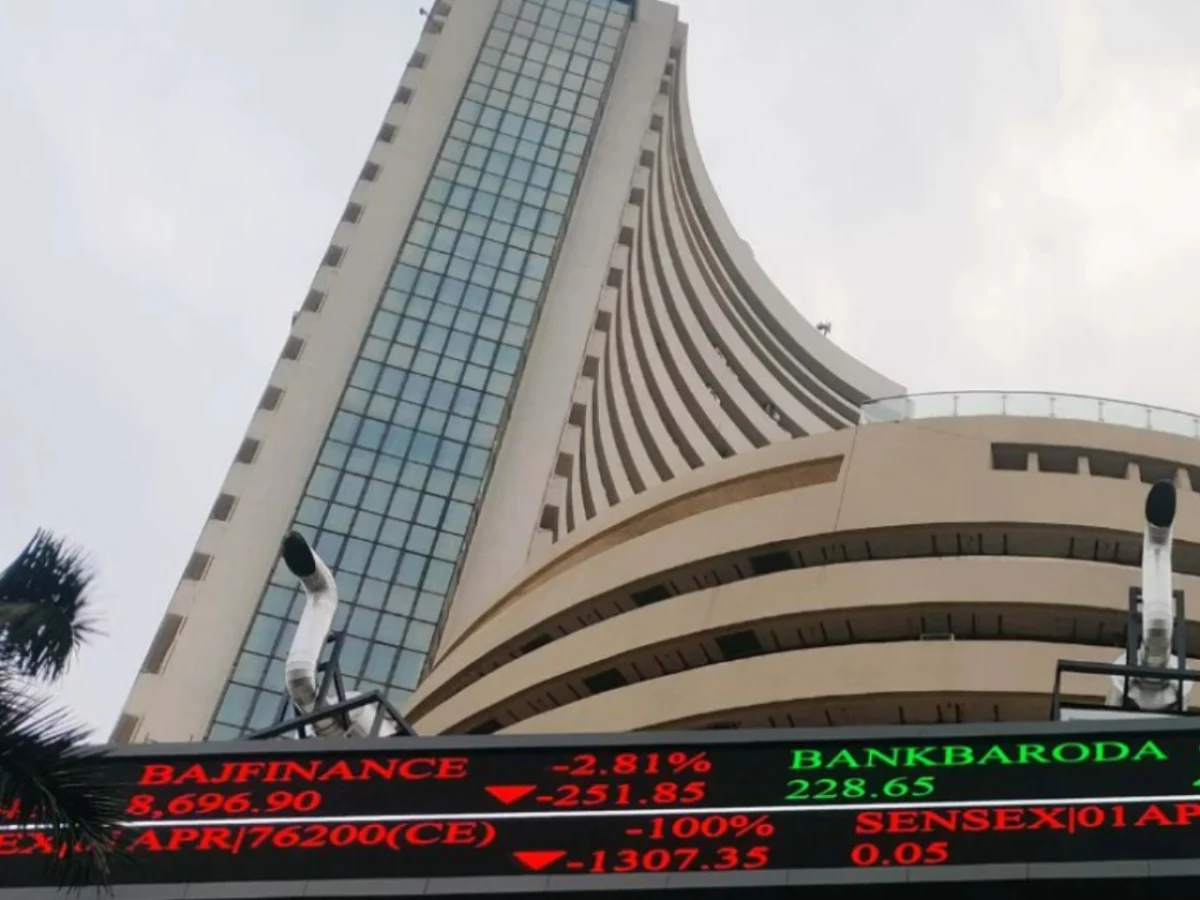
Mumbai, India – Indian benchmark equity indices concluded Friday’s trading session with significant gains, defying a backdrop of mixed global cues. The robust performance was primarily spearheaded by a resurgence in the technology sector and a sustained rally in financial stocks, signaling a renewed investor confidence in domestic growth drivers.
The S&P BSE Sensex, the bellwether index of the Bombay Stock Exchange, surged by an impressive 649.18 points, or 0.84%, to close well above its previous levels. Concurrently, the NSE Nifty 50, representing the National Stock Exchange, climbed 161.10 points, marking a 0.67% increase. This strong upward momentum, evident by mid-afternoon at 1:54 PM IST, reflected a broad-based positive sentiment across various sectors of the Indian economy. The day’s trading activity underscored the market’s resilience and its capacity to carve out independent trajectories even when global factors present a more cautious outlook.
A Day of Robust Gains: Market Dynamics Unfold
The trading day commenced with an immediate display of strength, as both the Sensex and Nifty opened firmly in positive territory, maintaining levels above their prior closing marks. This initial enthusiasm set the tone for the session, with buyers quickly dominating the market landscape. As the day progressed, the momentum intensified, culminating in the significant mid-day surge that captivated investors and analysts alike.
The rally was notably broad-based but with distinct leadership. Heavyweight stocks from the Information Technology (IT) and Financial Services sectors emerged as the primary catalysts for the market’s upward trajectory. Leading the charge were IT behemoths like Tech Mahindra and Tata Consultancy Services (TCS), whose shares saw substantial gains, reflecting renewed optimism about the sector’s future prospects. Similarly, Reliance Industries, a conglomerate with significant interests across various sectors including energy, retail, and digital services, also contributed significantly to the indices’ rise.
)
The financial sector, a perennial powerhouse of the Indian market, also demonstrated remarkable strength. Major banking institutions such as Kotak Mahindra Bank, HDFC Bank, ICICI Bank, Axis Bank, and the State Bank of India (SBI) all traded firmly in the green, indicating healthy underlying fundamentals and investor trust in the banking system’s stability. Other notable gainers across various sectors included Hindustan Unilever (HUL), Infosys, Mahindra & Mahindra (M&M), HCLTech, and Bajaj Finance, showcasing a diversified participation in the rally.
However, not all stocks participated in the celebratory mood. A handful of prominent companies experienced downward pressure, tempering the overall market enthusiasm for some segments. Tata Steel, for instance, witnessed a decline, as did Bharti Airtel, which fell by 0.91%. UltraTech Cement, Eternal, Sun Pharma, and NTPC also closed lower, highlighting that even in a broadly bullish market, specific company or sectoral challenges can lead to divergent performances. These declines underscore the nuanced nature of market movements, where individual stock performances can be influenced by specific industry headwinds, company-specific news, or profit-booking activities.

The Engines of Growth: Dissecting the Rally’s Underpinnings
The current surge in India’s equity market is not an isolated event but rather the culmination of several positive domestic developments converging with a perceptible shift in global investor sentiment. Experts point to a confluence of factors that have collectively propelled the Sensex and Nifty to their recent highs.
The IT Sector’s Resurgence: A Global Re-evaluation
A prime driver behind the recent market buoyancy has been the renewed and robust interest in Indian IT stocks. After a period of cautious sentiment, global dynamics appear to be shifting in favor of technology companies. Piyush Jhunjhunwala, Founder & CEO of Stockify, highlights that expectations of higher global expenditures in the technology sector are fueling this optimism. As economies worldwide continue their digital transformation journeys, the demand for IT services, software development, and digital solutions remains robust. Indian IT firms, known for their cost-effectiveness, skilled talent pool, and delivery excellence, are well-positioned to capitalize on this global demand.
)
Furthermore, a reduction of worries over interest rates in major economic regions, particularly the United States and Europe, has provided a significant tailwind for growth-oriented sectors like IT. Lower interest rates typically reduce borrowing costs for companies, encouraging investment and expansion, and also make future earnings streams more attractive to investors. Positive earnings projections for the IT segment have further solidified investor confidence, with many anticipating strong financial performances in the upcoming quarters. This confluence of global demand, easing monetary policy concerns, and strong corporate outlook has made Indian IT stocks a compelling investment proposition once again.
Financial Powerhouses: Stability and Growth
The consistent strength of the financial sector, encompassing banks and non-banking financial companies (NBFCs), reflects the robust health of the broader Indian economy. A healthy credit growth cycle, improving asset quality for banks, and strong domestic consumption are key factors supporting this sector. As the economy expands, demand for credit for both corporate expansion and retail consumption increases, directly benefiting financial institutions. Furthermore, regulatory stability and prudent risk management practices adopted by Indian financial entities have bolstered investor trust, making them attractive long-term investments.
)
Macroeconomic Underpinnings: A Foundation of Confidence
Beyond specific sectors, the overarching macroeconomic environment in India has played a critical role in fostering investor confidence. Jhunjhunwala emphasizes that continuous domestic institutional purchases (DIIs) have provided a strong structural support to the market, counteracting any potential outflows from foreign institutional investors (FIIs). DIIs, comprising mutual funds, insurance companies, and pension funds, have consistently channeled domestic savings into the equity market, acting as a stabilizing force.
Coupled with this, solid macroeconomic indicators, such as a resilient GDP growth rate, improving manufacturing and services Purchasing Managers’ Indices (PMIs), and healthy industrial output figures, paint a picture of an economy on a steady growth path. The stability in inflation, a key concern for central banks globally, has also helped improve investors’ confidence. When inflation is contained, the purchasing power of consumers is preserved, and the central bank has greater flexibility in its monetary policy decisions, contributing to a more predictable economic environment.
)
Abhishek Bhilwaria, Partner at BhilwariaFinserv, further elaborates on specific triggers. He highlights that the rally was significantly driven by strong first-quarter tech earnings. He points to Tech Mahindra’s reported 28.4% surge in consolidated net profit as a prime example of the stellar performance seen in the sector. This strong corporate performance, combined with optimism stemming from softer-than-expected US inflation data, created a powerful positive feedback loop, encouraging further buying interest. The prospect of easing inflationary pressures in the world’s largest economy often signals a less aggressive stance from the US Federal Reserve, which can be highly beneficial for emerging markets like India, by potentially reducing the risk of capital outflows.
Global Crosscurrents: Navigating a Complex Landscape
While domestic factors have been overwhelmingly positive, the global economic landscape remains complex, presenting both opportunities and potential headwinds for the Indian market. Investors are keenly observing international developments, particularly those related to crude oil prices, inflation trends in major economies, and the monetary policy stance of global central banks.
)
US Inflation and Fed Policy: The Global Ripple Effect
The softer-than-expected US inflation data mentioned by Bhilwaria is a critical global cue. Lower inflation in the US often reduces the pressure on the Federal Reserve to raise interest rates aggressively. A less hawkish Fed is generally good news for emerging markets. When the Fed raises rates, it makes dollar-denominated assets more attractive, potentially leading to capital outflows from emerging economies. Conversely, a stable or dovish Fed can encourage capital inflows into markets like India, boosting liquidity and supporting equity valuations. However, the market remains on tenterhooks regarding the Fed’s next move, with expectations of a September hike still priced in, albeit with varying degrees of certainty.
The Crude Oil Conundrum: Geopolitical Tensions and Economic Impact
On the other hand, the global crude oil market presents a significant area of concern. Akshat Siddhant, Lead Quant Analyst at Mudrex, notes that crude oil is poised for a substantial weekly gain of over 11%, trading above $79 a barrel. This sharp increase is largely attributed to escalating geopolitical tensions, specifically US strikes on an Iranian tanker and former President Trump’s warnings about Iranian infrastructure. These events have revived fears over the security of supply through the Strait of Hormuz, a critical chokepoint for global oil shipments.
)
For a major oil importer like India, rising crude oil prices pose a direct threat to macroeconomic stability. Higher oil prices can inflate the import bill, widen the current account deficit, and exert upward pressure on domestic inflation, particularly for fuel and transportation costs. This, in turn, could force the Reserve Bank of India (RBI) to adopt a more hawkish monetary policy stance to curb inflation, potentially impacting economic growth. Siddhant’s observation that "higher oil prices have reinforced expectations that the Fed will keep rates elevated for longer, with markets pricing in a roughly 51% chance of a September hike" underscores the interconnectedness of global markets and the cascading effects of geopolitical events. The crucial $80 level for oil will be closely watched, as breaching it could signal further inflationary pressures globally.
Precious Metals’ Plunge: A Shift in Safe-Haven Dynamics
In contrast to crude oil’s ascent, precious metals have witnessed a decline. Gold is trading below $4,000, down over 3% this week, while silver has slid below $56, losing more than 7%. This retreat in safe-haven assets typically suggests an increase in risk appetite among investors, who might be shifting funds from perceived safe havens to riskier, growth-oriented assets like equities. Alternatively, the decline could be linked to rising real interest rates globally, which make non-yielding assets like gold less attractive. Siddhant cautions that gold must hold the $4,000 level to avoid further downside, indicating a critical juncture for the precious metal.
)
Technical Outlook: A Cautious Optimism
Despite the broadly positive sentiment, a degree of caution persists among technical analysts. Sachin Gupta, VP-Technical Research at Choice Broking, notes that global cues remain negative, which could potentially temper investor sentiment during specific trading hours. However, he highlights the resilience of the domestic market: "Despite the weak overseas backdrop, the domestic market continues to hold above important technical support levels, suggesting that the broader trend remains stable."
Gupta’s analysis points to underlying strength in the Indian market, as it has managed to maintain crucial support levels, indicating a sustained buying interest at lower valuations. Nevertheless, he adds a caveat: "However, the absence of strong follow-through buying and persistent profit booking near higher levels may keep the market confined to a range-bound trajectory through the session." This suggests that while the market’s foundation is solid, a decisive breakout might require more significant positive triggers or a sustained surge in buying volume to overcome resistance levels and prevent consolidation or minor pullbacks.
)
Strategic Playbook for Investors: Charting the Path Forward
In this dynamic market environment, where domestic strengths are pitted against global uncertainties, investors are advised to adopt a well-thought-out strategy. Expert opinions converge on the importance of fundamental analysis, diversification, and a long-term perspective.
Beyond Momentum: The Imperative of Fundamental Investing
Piyush Jhunjhunwala strongly advises against buying shares based solely on momentum, a common pitfall for retail investors. "Markets normally experience rotations between sectors, which means that leaders today may not be leaders tomorrow," he explains. This highlights the cyclical nature of market leadership, where different sectors come into prominence at various stages of the economic cycle. Instead, he advocates for a disciplined approach: "Therefore, rather than trying to take advantage of short-term fluctuations, investors should make investments in companies with solid fundamentals, high visibility of earnings, and good corporate governance practices."
)
Solid fundamentals encompass a company’s financial health (strong balance sheet, low debt, healthy cash flow), operational efficiency, competitive advantage, and sustainable business model. High visibility of earnings implies a clear growth trajectory and predictable revenue streams, giving investors confidence in future profitability. Good corporate governance practices, including transparent reporting, ethical leadership, and accountability, are crucial for long-term value creation and protecting shareholder interests. These factors collectively contribute to the intrinsic value of a company, which is often a more reliable indicator for long-term investment success than short-term price movements.
The Imperative of Diversification: Spreading Risks and Opportunities
Reiterating the significance of diversification, Jhunjhunwala emphasizes that investors should not limit themselves to a few sectors. A diversified portfolio, spread across different sectors, asset classes (equities, debt, gold, real estate), and even geographies, helps mitigate risk. If one sector underperforms, the positive performance of another can cushion the overall portfolio. This strategy is particularly relevant in the current environment, where global cues can rapidly shift market sentiment, making concentration in a single area potentially risky.
)
Monitoring Key Indicators: Staying Informed and Agile
Abhishek Bhilwaria advises investors to closely monitor corporate quarterly results. These earnings reports provide crucial insights into the health and growth prospects of individual companies and sectors. Strong earnings can reinforce investment theses, while weaker-than-expected results might necessitate portfolio adjustments.
Equally important is tracking global macroeconomic cues and the policies of central banks, particularly the US Federal Reserve. Decisions regarding interest rates, quantitative easing, or tightening can significantly impact capital flows to emerging markets like India. Global events, such as geopolitical tensions affecting oil prices or trade disputes, also have far-reaching implications. Investors need to balance their portfolio exposure to align with these evolving conditions, being agile enough to adapt to new information while sticking to their long-term investment goals.
)
Long-Term Vision in a Dynamic Market
Ultimately, the consensus among experts is that successful investing in India’s dynamic market requires patience and a long-term perspective. "Only those investors who remain calm and take a long-term view are likely to benefit from the changes in the economic and financial situation of the country in the future," Jhunjhunwala concludes. The Indian economy, despite its inherent volatility, possesses strong structural growth drivers, including a large domestic market, a young demographic, and ongoing government reforms. By focusing on quality companies, diversifying portfolios, and riding out short-term fluctuations, investors can position themselves to capitalize on India’s promising growth trajectory. The current IT-led rally, while exhilarating, serves as a reminder that market leadership can shift, making a fundamentally sound, diversified, and patient approach the most prudent path to wealth creation.
