

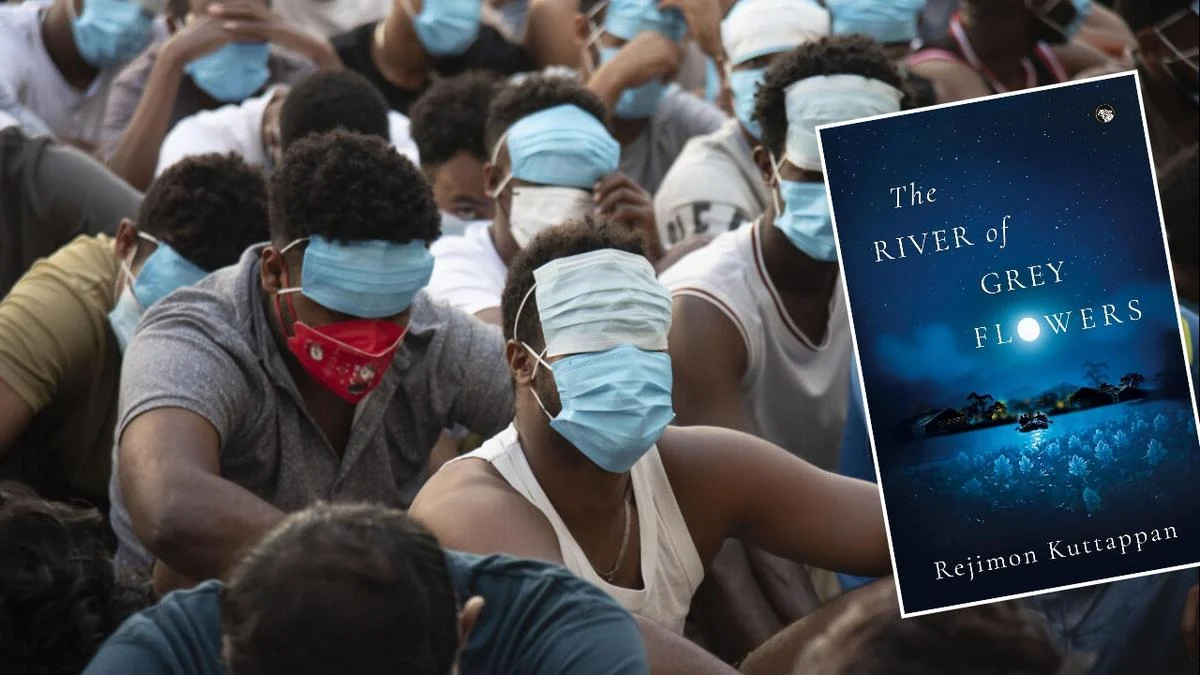
The journey from the sun-drenched coastal town of Ramanathapuram in Tamil Nadu to the treacherous, fog-shrouded jungles of the Myanmar-Thailand border is not merely a geographical transition; for many, it is a descent into a modern-day purgatory. In his latest novel, The River of Grey Flowers, journalist and author Rejimon Kuttappan strips away the veneer of the "overseas job opportunity" to reveal a harrowing landscape of human trafficking, cyber-crime, and systemic brutality.
Based on the real-life testimonies of survivors rescued from scam centers across Southeast Asia, the book serves as both a gripping narrative and a devastating sociological document. It highlights a burgeoning global crisis where thousands of educated youths from developing nations are lured by the promise of white-collar success, only to find themselves enslaved in high-tech dungeons.
Main Facts: The Anatomy of a Modern Tragedy
At the heart of the narrative is John Easow, the son of a Dalit fisherman. Like thousands of others, John’s aspirations are modest yet urgent: he seeks a graphic design job in Dubai to provide for his new bride and elevate his family’s social standing. Armed with a "Samsonite knock-off" and a heart full of hope, he boards a flight from Chennai. However, the promised "Dubai office" never materializes. Instead, John is trafficked through a network of agents, ending up in a fortified compound in the lawless border zones of Myanmar.
The novel opens with a visceral scene: a midnight boat ride across the Moei River. This river, which separates Thailand and Myanmar, serves as a literal and metaphorical Styx. On the boat are five escapees, clinging to a "thin sliver of hope." They are the lucky ones, fleeing a world where human life is measured in "targets" and "conversion rates."
These scam centers, often referred to as "compounds," are essentially digital sweatshops. Workers are held captive by armed militias—often a mix of local ethnic armed groups and transnational criminal syndicates. Their "job" is to execute "Pig Butchering" (Sha Zhu Pan) scams: creating fake social media personas to groom victims globally, building romantic or professional trust, and eventually coercing them into fraudulent cryptocurrency investments.
Chronology: The Evolution of the Scam Compound Industry
The crisis depicted in Kuttappan’s work did not emerge in a vacuum. Its evolution follows a specific geopolitical and economic timeline:

- The Casino Era (Pre-2020): Lawless zones in Cambodia (Sihanoukville) and Myanmar (Myawaddy) were initially hubs for physical casinos catering to Chinese gamblers. These areas operated with relative autonomy from central governments.
- The Pandemic Shift (2020–2022): The COVID-19 pandemic and subsequent travel restrictions decimated the physical gambling industry. Criminal syndicates pivoted to online fraud. Simultaneously, the 2021 military coup in Myanmar created a power vacuum, allowing border militias to expand illegal operations in exchange for providing the junta with a buffer against pro-democracy rebels.
- The Recruitment Pivot (2022–Present): As the need for English-speaking, tech-savvy "scammers" grew, syndicates expanded their recruitment beyond China and Vietnam. They began targeting India, Sri Lanka, the Philippines, and various African nations, using legitimate-looking job postings for "Customer Support" or "Data Entry" in hubs like Dubai or Bangkok.
- The Rescue Wave (2024–2025): Growing international pressure and high-profile escapes led to increased media scrutiny. Authors like Kuttappan, who have been at the forefront of reporting these stories, began synthesizing these experiences into broader narratives to alert the public.
Supporting Data: A Global Crisis in Numbers
The scale of the "cyber-slavery" industry is staggering. According to a 2023 report by the United Nations Office on the High Commissioner for Human Rights (OHCHR), at least 120,000 people in Myanmar and another 100,000 in Cambodia may be held in situations where they are forced to carry out online scams.
- The Indian Context: The Indian Ministry of External Affairs (MEA) has issued multiple advisories warning citizens against "fake job offers" in Southeast Asia. As of early 2024, reports indicated that over 5,000 Indians were suspected of being trapped in these centers.
- The Financial Toll: The FBI’s Internet Crime Complaint Center (IC3) reported that investment fraud, including pig butchering scams, caused losses of over $3.3 billion in the United States alone in 2022, a figure that has likely risen as the sophistication of the scripts—mentioned in Kuttappan’s novel—has improved.
- The Human Toll: Kuttappan describes the "tiger bench"—a notorious torture device where victims are forced to sit in a way that causes excruciating pain and permanent joint damage. Other reports from the UN and NGOs confirm the use of electric shocks, water dungeons, and starvation as "disciplinary measures" for those who fail to meet their daily scamming quotas.
Inside the Compound: The Psychology of Enslavement
In The River of Grey Flowers, Kuttappan excels at describing the sensory deprivation and psychological erosion of the captives. The compound is a place that "smells of sweat, metal, dust, and something acidic—broken hope."
The narrative details how men move like "zombies caught in a time loop." The irony is sharp: while these men are trapped in "cold, airless bunkers," they are simultaneously "connected" to the entire world via high-speed internet. They use pre-written scripts to simulate love and friendship, all while their own identities are being systematically erased. This "mind-numbing work" is a form of cognitive violence; the workers are forced to become the very predators they once feared, blurring the lines between victim and perpetrator.
The brotherhood forged in these bunkers is the only thing that keeps the protagonist, John, sane. His motivation is his wife back home, and the "sporadic, hushed calls" he manages to make are his only tether to his former life. Kuttappan’s background as a journalist specializing in labor migration shines through in these details; he understands that for a migrant worker, the shame of failure is often as heavy as the physical chains of captivity.
Official Responses and the Geopolitical Maze
The difficulty in addressing these scam centers lies in their location. Most are situated in "Special Economic Zones" or border areas controlled by Border Guard Forces (BGF) or ethnic militias that are nominally under the Myanmar military’s oversight but effectively operate as independent criminal states.
- Diplomatic Hurdles: The Indian government has worked with Thai and Myanmar authorities to facilitate rescues, but the ongoing civil war in Myanmar makes ground operations nearly impossible. Rescues often depend on back-channel negotiations or the payment of "fines" (essentially ransoms) by families back home.
- Law Enforcement: Interpol has issued "Orange Notices" regarding this phenomenon, labeling it a global human trafficking crisis. In India, the Central Bureau of Investigation (CBI) and state police departments have conducted raids to dismantle the domestic networks of agents who facilitate the trafficking.
- The Role of Tech Giants: Since the scams originate on platforms like Facebook, WhatsApp, and Telegram, there is increasing pressure on tech companies to implement better detection for fraudulent profiles and to cooperate with international law enforcement to track the movement of illicit funds.
Implications: The Long Shadow of the Scam Center
The implications of this crisis, as highlighted by The River of Grey Flowers, extend far beyond the immediate physical danger.

1. The Trauma of the Returnee: Survivors often return home to find themselves burdened by debt (taken to pay for the initial travel or later ransoms) and severe PTSD. The social stigma of having been a "scammer" can prevent reintegration.
2. The Erosion of Digital Trust: As these operations become more sophisticated, using AI to generate voices and images, the fabric of digital trust is being shredded. This has a cooling effect on legitimate digital economies and social interactions.
3. Caste and Class Vulnerability: Kuttappan’s choice to make John a Dalit fisherman’s son is a poignant commentary on who is most at risk. In India, the lack of local economic opportunities and the desperation to escape historical marginalization drive young men into the arms of traffickers. The "Samsonite knock-off" is a symbol of an aspiration that is exploited by a global criminal architecture.
Conclusion: A Necessary Witness
Rejimon Kuttappan’s The River of Grey Flowers is more than a thriller; it is an act of bearing witness. By grounding his fiction in the "gut-wrenching details" of real testimonies, he ensures that the voices of those trapped in the water dungeons and "tiger benches" of Myanmar are not silenced by the hum of the servers they are forced to operate.
As the novel concludes with the harrowing escape across the Moei River, the reader is left with the haunting image of the "grey, lifeless compound." It serves as a reminder that in the age of global connectivity, the most profound distances are not geographical, but the gap between our digital lives and the brutal human cost required to maintain the darker corners of the internet. For the "John Easows" of the world, the river of grey flowers continues to flow, and the world must decide whether to look away or to act.
