

KOCHI, INDIA – In the annals of global internet history, the narrative often gravitates towards Silicon Valley’s garages, venture capital infusions, and world-changing behemoths. Yet, beneath the surface of this dominant story lies a rich tapestry of forgotten innovations, born from unlikely places and driven by individual foresight. One such chapter, long obscured by time and memory, has recently been brought to light, revealing a pioneering spirit that predated many of today’s ubiquitous digital platforms.
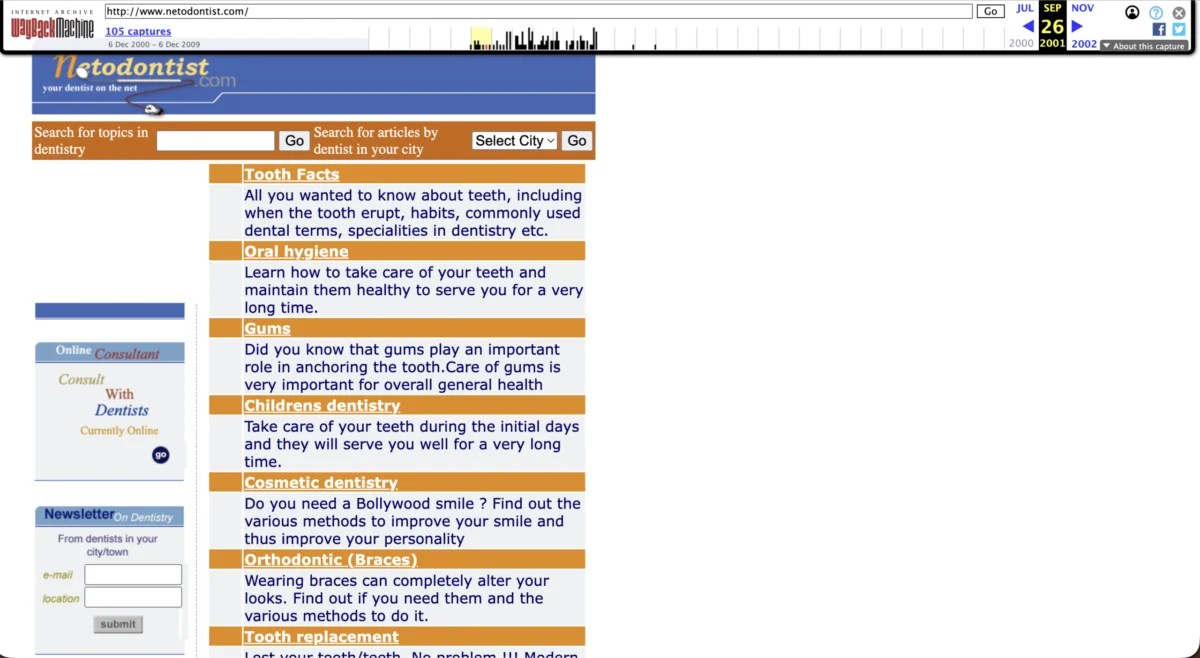
Dr. Benosh Haris, a dental surgeon based in Kochi, Kerala, found himself embarking on an unexpected journey of digital archaeology after a seemingly innocuous question from his eldest child. "Recently, my eldest child asked me what I was doing 25 years ago. I told her I had built a website for dentists with something like a social networking platform. She wasn’t very impressed," Dr. Haris recounted with a smile. This simple query, however, served as a catalyst, prompting him to delve into old web archives and rediscover a venture he had quietly ceased operations on over two decades prior. The forgotten project, named Netodontist.com, was far from ordinary; it was a visionary platform that conceptualized professional networking and browser-based telemedicine years before these concepts became mainstream.
Dr. Haris’s journey stands in stark contrast to the archetypal startup narrative. Operating from a modest clinic in Edapally, Kochi, as early as 2000, he was meticulously crafting a web platform that would eventually incorporate features strikingly similar to modern professional networking communities and online consultation services. The technological backdrop of his endeavors was a far cry from today’s high-speed internet. He vividly recalls performing much of the development on a 512 kbps internet connection, a speed that reliably supported uploads only after the stroke of midnight, a testament to the perseverance required to innovate in a nascent digital landscape.
For years, Netodontist.com remained a phantom limb of Dr. Haris’s past, forgotten even by its creator. "If you had come to me a year ago, I wouldn’t have thought any of this was newsworthy. I needed an AI to validate it and tell me it was interesting work. I had just quietly shut everything down, moved to Bombay, got on with my career, and more or less forgotten about it," he admitted. The AI’s recognition, however, underscored a profound truth: what Dr. Haris had forgotten was, in fact, one of the most unusual and prescient chapters in India’s early internet history, a story now partly resurrected through archived snapshots preserved on the venerable Wayback Machine.
The Genesis of a Vision: A Forgotten Chapter in India’s Digital Dawn
The early 2000s in India presented a vastly different digital landscape than the one we know today. Internet penetration was low, connection speeds were glacial by modern standards, and the concept of online business or professional communities was largely unexplored, especially outside of a few metropolitan hubs. In Kochi, a bustling port city but not yet a major tech center, Dr. Haris’s ambition to build a sophisticated online platform was nothing short of audacious.
The inspiration for Netodontist.com did not spring from a meticulously crafted business plan or a market analysis report, but from a profoundly personal encounter. Dr. Haris revealed that the idea germinated after a patient found him through a basic personal website he had set up on Tripod, a popular free web hosting platform of the era. This seemingly minor event triggered an immediate and profound realization: the internet possessed an unparalleled power to connect a dentist in Kerala with a stranger anywhere in the world.
"Most people knew about email and would visit a few websites, but they didn’t understand its business value or its potential for connectivity," Dr. Haris observed, articulating the widespread digital illiteracy of the time. This ‘eureka moment’ illuminated the vast, untapped potential of the internet for professional interaction and patient outreach, particularly within the medical community. While the vision was clear, the path to realizing it in the Kochi of 2001 was fraught with challenges. Digital awareness was still embryonic, and early adopters for Netodontist were found not in Kerala, but in more digitally advanced cities like Bengaluru, Mumbai, and even Dubai.
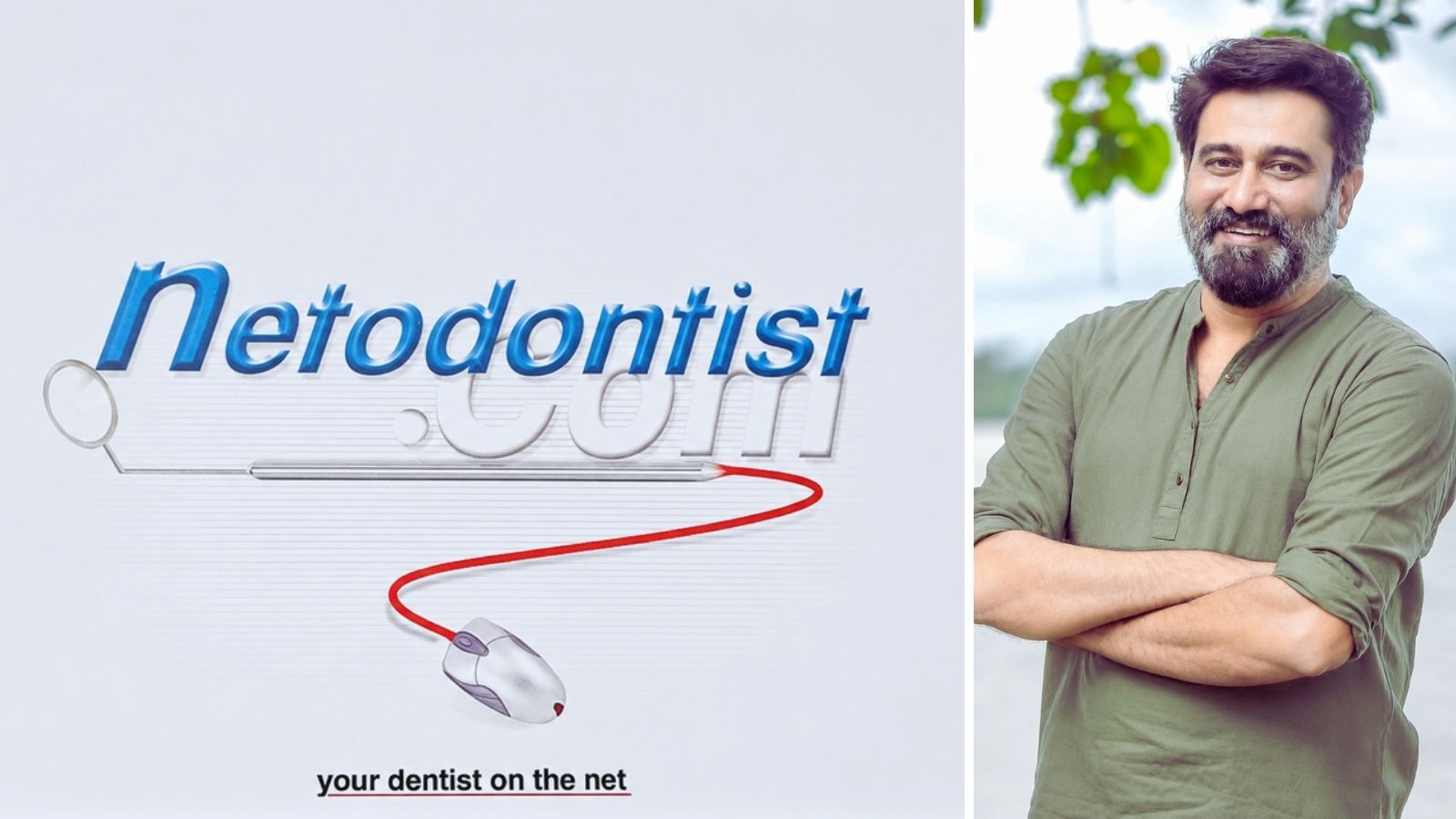
Over the next three years, Dr. Haris, operating on a shoestring budget, painstakingly built a multi-layered digital ecosystem designed exclusively for dental professionals. He achieved this feat with the help of a dedicated programmer and a designer, whom he openly admits he couldn’t always pay in full. The platform had a public-facing component that facilitated connections between patients and practitioners, but its true innovation lay in its professional side, a members-only community called the "Dentist Club."
Pioneering Professional Networking and Telemedicine
Netodontist.com’s foresight becomes strikingly clear when its features are juxtaposed against the timeline of global digital innovation. Its "Dentist Club" was fully operational in 2001, an astonishing two years before LinkedIn, the world’s most prominent professional networking platform, launched in May 2003. Similarly, Sermo, often cited as the first major social network for physicians in the US, didn’t arrive until 2005.
The Dentist Club: A Blueprint for Professional Communities
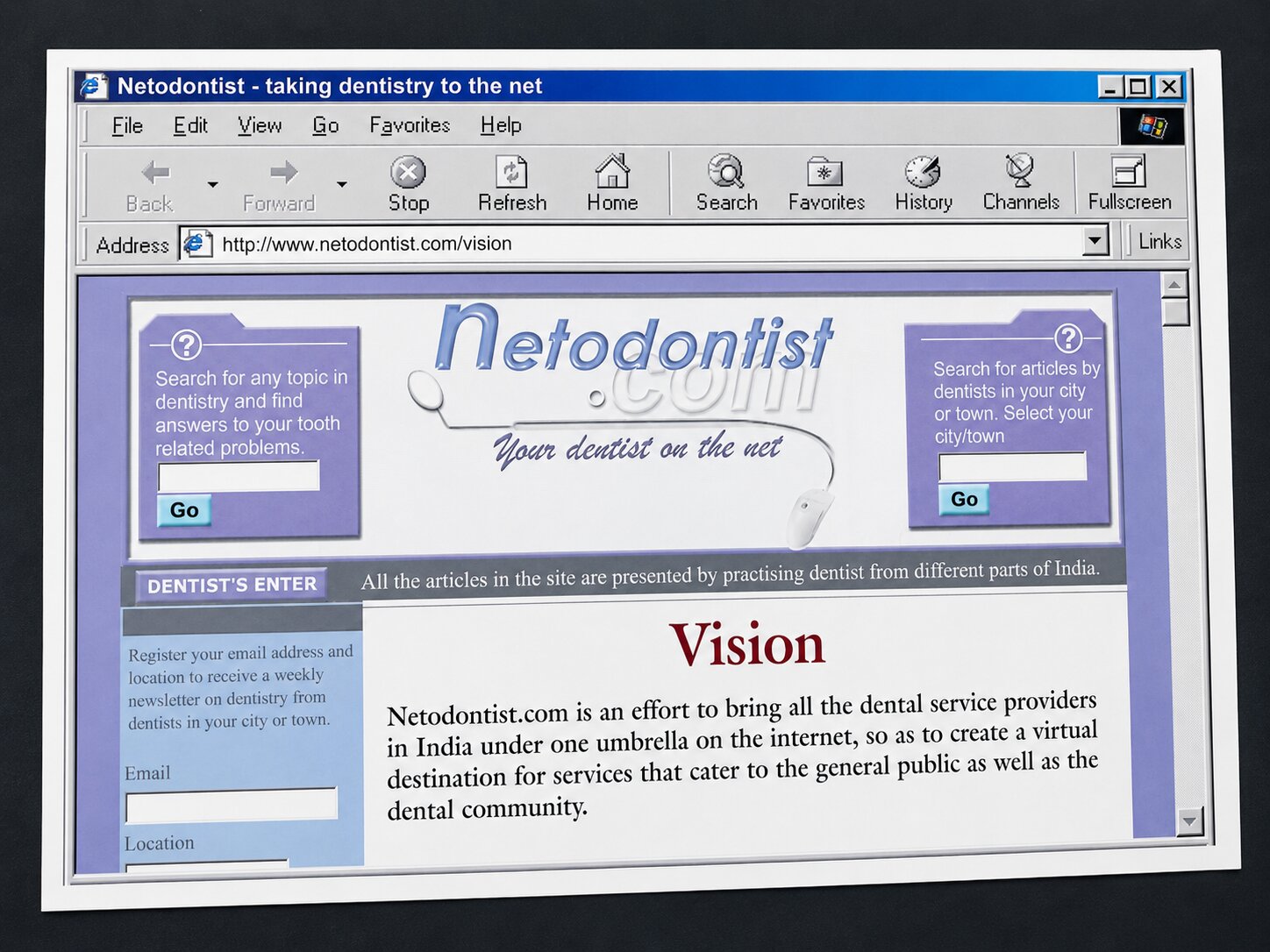
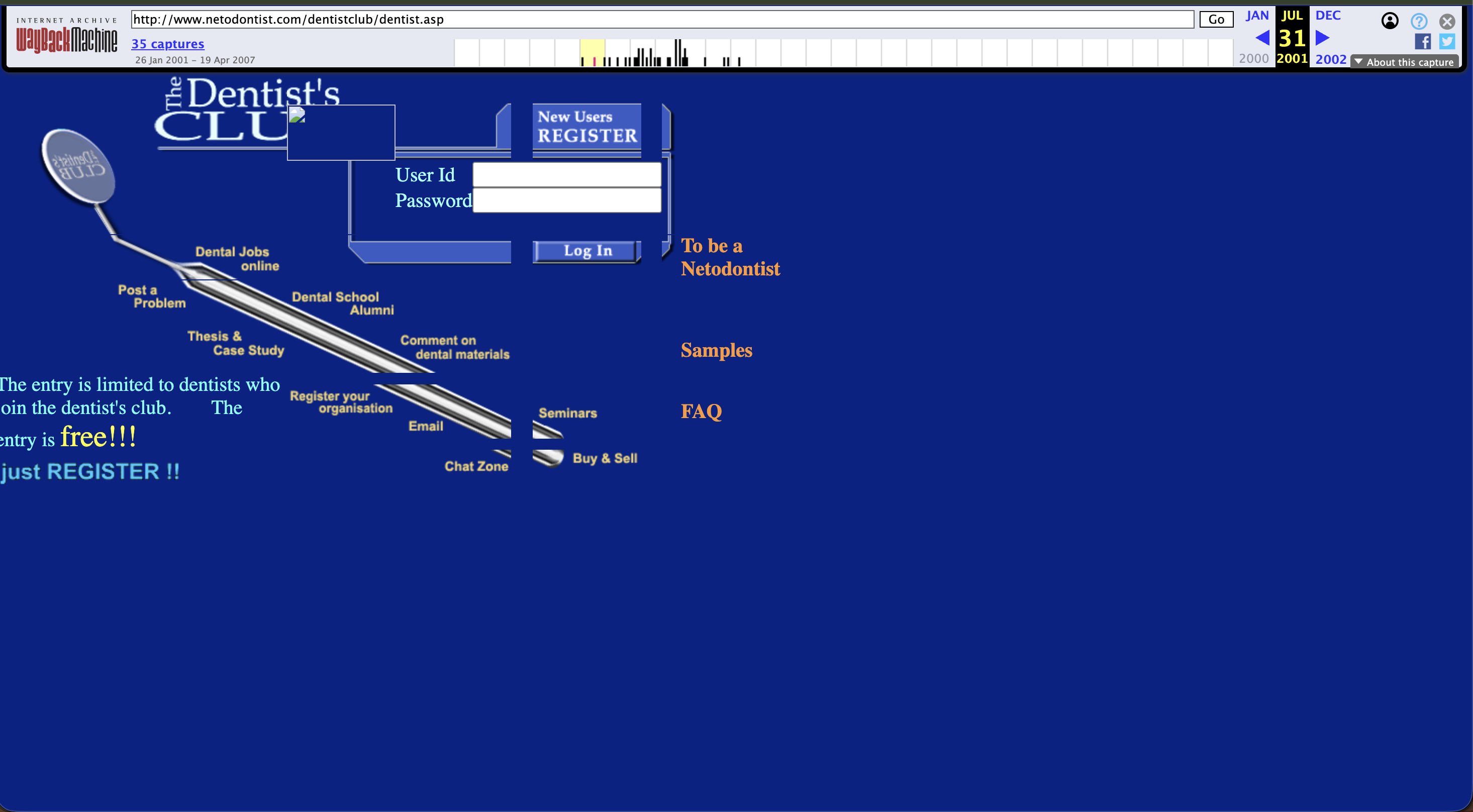
Archived snapshots meticulously preserved by the Wayback Machine offer compelling evidence of Netodontist’s advanced features. The Dentist Club was a sophisticated, members-only portal that served as an end-to-end professional infrastructure for the dental industry. To register, members were required to provide a professional registration number, a crucial step in ensuring the verified professional integrity of the community – a concept now fundamental to platforms like LinkedIn.
Within this digital sanctuary, dentists could engage in a variety of activities that would seem commonplace today but were truly extraordinary for their time. Members could:
- Join college alumni groups: Fostering connections and camaraderie among former classmates, a feature central to professional identity.
- Post and browse dental job listings: Creating a specialized marketplace for employment within the industry.
- Share thesis work and clinical case studies: Facilitating knowledge exchange and continuous professional development.
- Participate in live Q&A forums: Enabling real-time discussion and problem-solving among peers.
- Utilize a B2B equipment marketplace: Allowing dental suppliers and practitioners to transact within the platform, streamlining procurement.
Dr. Haris’s inspiration for these features was deeply personal and practical. "I thought about what I, as a dentist, actually needed. I had just passed out of dental college and wanted to stay in touch with my alumni, the people I had studied with," he explained. This intrinsic understanding of professional needs allowed him to organically shape a platform that transcended basic connectivity, evolving into a comprehensive system designed to support an entire industry.
At its zenith, the Dentist Club boasted an impressive 400 to 500 members. In a country that, at the time, had an estimated 70,000 to 80,000 registered dentists, this represented a small but significant penetration, especially considering the near-total absence of a marketing budget and the prevailing low digital literacy. It was a testament to the inherent value proposition that resonated with those early digital adopters.
The Online Consultant: Glimpse of Telemedicine’s Future
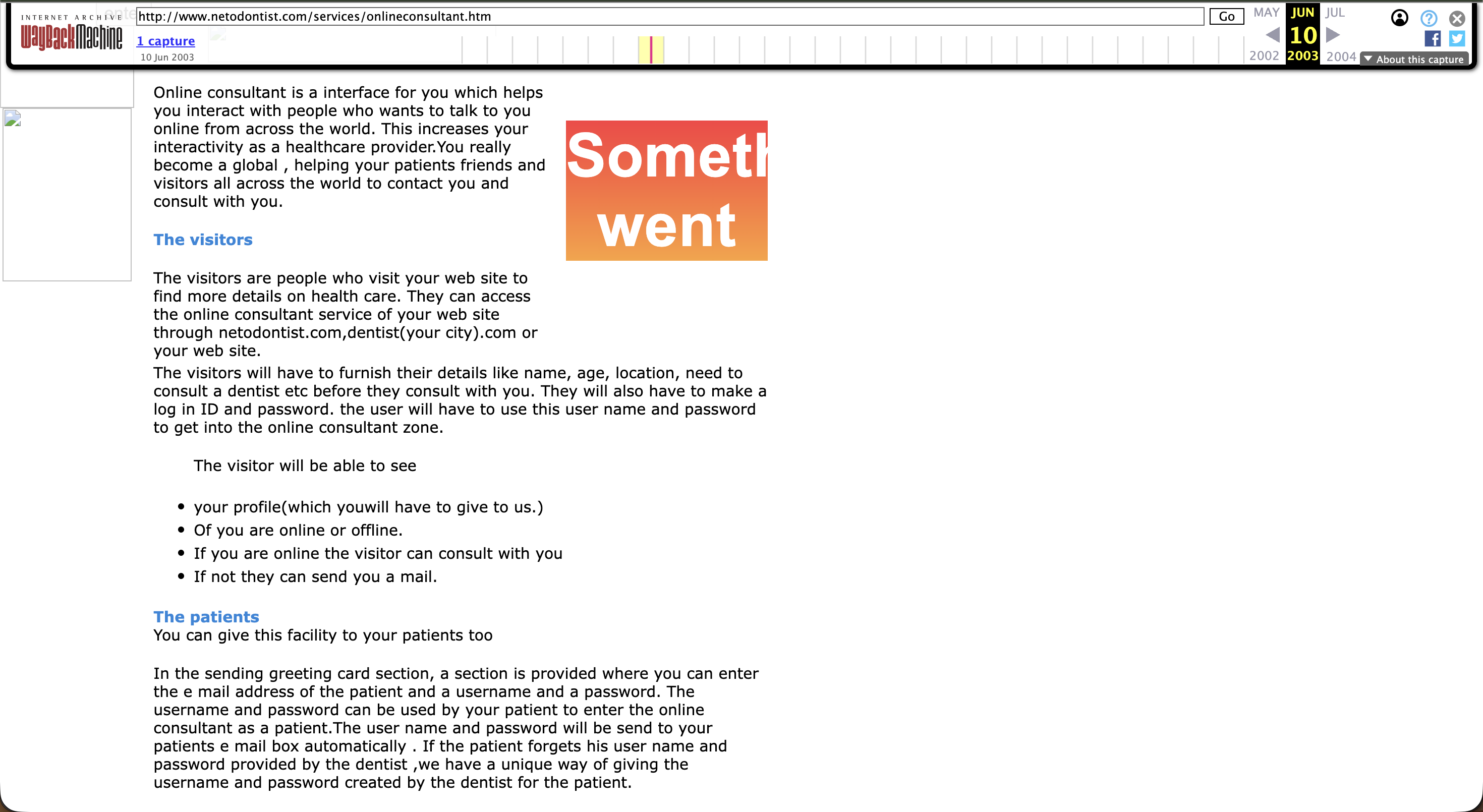
Netodontist’s second major innovation was its "Online Consultant" module, which was deployed in 2003. This was not merely a static contact page or an email form; it was a lightweight, browser-based live chat interface that empowered solo practitioners to conduct real-time digital consultations with patients from anywhere in the world. The system was equipped with a custom desktop control panel, complete with color codes and audio alerts, designed to efficiently manage incoming queries.
Jothish Narayanan, director at Kochi-based IT company Sorice Solutions, whose career "actually started with Dr. Haris," vividly recalls the incremental development process. "We didn’t build everything at once. We started with the CRM and began marketing it… Initially, the platform focused on helping dentists manage appointments, reminders, greeting cards, job postings and thesis sharing. The online consultant feature for doctor-patient interaction came later," Narayanan explained.
This pioneering move into browser-based remote consultations was remarkably ahead of its time. Such virtual interactions would only become commonplace years later, dramatically accelerating during the COVID-19 pandemic in 2020, when telemedicine saw widespread global adoption. "I believed online consultation would become a massive driver, but that only really materialised during COVID in 2020," Narayanan reflected, highlighting the profound temporal gap between Netodontist’s vision and market readiness.
Ameen Mohammad, the independent UI/UX designer who worked on the platform, echoed the sentiment of community building. "The biggest idea was bringing practitioners and students together so they could share ideas, knowledge and information within a community. It was designed to support collaboration and communication among dental professionals," he recollected, emphasizing the platform’s foundational ethos.
The Architects of the Vision: The Bootstrap Team Amidst Constraints
Behind Dr. Haris’s singular vision was a small, dedicated team that embodied the true spirit of bootstrapping. Jothish Narayanan and Jaykrishnan, the programmers, and Ameen Mohammad, the designer, worked under conditions that would be unimaginable to today’s well-funded tech startups.
Narayanan’s career began with Dr. Haris, following a reference after completing his computer studies. He vividly described the working environment: "Haris used to do his practice in the mornings, so I would go there in the evenings, around 6 pm, when he was done with patients. That’s when he would hand over his computers to us; there were no laptops yet. Another person, Jaykrishnan, and I used to work on it together, coding in HTML and ASP.NET, using MS SQL for the database." This image of programmers working on desktop computers after clinic hours, using foundational web technologies, paints a vivid picture of grassroots innovation.
Ameen Mohammad, the designer, also highlighted the technical constraints that shaped the platform’s development. "Considering we were working on a dial-up connection that offered slower speeds then, we had to take those limitations into account while designing the platform," he explained. This meant prioritizing lightweight design and functionality, ensuring the platform remained usable even under challenging internet conditions. Both Narayanan and Mohammad consistently remarked on how "ahead of its time" the platform was, with features unheard of among internet users in small towns during that era. Their collective efforts, driven by shared belief and Dr. Haris’s relentless vision, allowed Netodontist to take shape despite immense resource limitations.
The Harsh Realities of Early Innovation: The Unheeded Vision
Despite its groundbreaking features and a clear value proposition for the dental community, Netodontist.com ultimately failed to achieve sustained growth or attract the necessary investment to scale. This setback was not due to a flaw in its concept but rather a confluence of factors inherent in the nascent Indian internet ecosystem of the early 2000s.
The Funding Gap and Market Indifference
Dr. Haris’s attempts to secure external funding met with disheartening indifference. He approached two venture capital firms, including one called Ant Factory, only to be told to "come back in a year," a promise that never materialized. The prevailing investment climate in India at the time was vastly different from the robust startup ecosystem of today. "The idea of building something over time and proving its worth didn’t exist in that environment; the expectation was that a business had to be profitable from day one," Dr. Haris stated, devoid of bitterness. This short-sighted view by potential investors stifled innovation that required a longer gestation period to mature and gain traction.
Attempts to generate revenue through advertising also proved futile. Despite having a targeted network capable of reaching 70,000 dental professionals across India – a demographic that spent thousands of rupees monthly on materials and equipment – dental product brands, such as 3M, showed little interest. The concept of digital advertising and its potential reach within niche professional communities was simply too novel for the market to grasp.
The fundamental challenge, as Dr. Haris articulated, was not the global non-existence of these concepts but their invisibility and lack of understanding within India’s nascent digital sphere. Terms like "professional networking" and "software-as-a-service" (SaaS) were yet to enter the mainstream vocabulary of Indian businesses or consumers. This linguistic and conceptual void made it incredibly difficult to explain the platform’s value proposition to potential investors, advertisers, and even prospective users. In essence, Dr. Haris wasn’t just pitching a product; he was trying to convince people of an entirely new way of leveraging the internet, a paradigm shift that few were ready to embrace.
The Price of Being Ahead of Your Time
Dr. Haris is clear-eyed about the scale of what he built. He acknowledges the modest numbers: 400 members at peak and approximately 200-250 patient transactions over three years. These figures, while not independently verifiable through surviving records due to data loss, underscore the bootstrap nature of the operation. "I won’t claim I had the foresight to want the entire world using it, because the money was hard to come by, and building and marketing these systems was very costly. It was an absolute bootstrap," he affirmed.
The comparison he draws is poignant: "The difference between Facebook and Netodontist is that they had Eduardo Saverin and Peter Thiel." This highlights the critical role of early investment and strategic backing in transforming a good idea into a global phenomenon. Without the necessary capital, market education, and infrastructure, even the most innovative concepts can wither on the vine.
The tragic consequence of Netodontist’s shutdown in 2003 was the loss of all original digital records. The server was decommissioned, and the data, including member profiles, discussions, and consultation logs, vanished. What survives today are fragments: a printed brochure from 2000, several archived association websites Dr. Haris built as part of his marketing strategy, and crucially, the digital ghosts of Netodontist itself, preserved by the Wayback Machine. These archives serve as invaluable testaments to a vision that was, perhaps, simply too early for its own good.
Netodontist’s Enduring Significance: A Legacy of Foresight
Whether Netodontist was truly ahead of its time is a question that the surviving archives answer with a resounding yes. From a small clinic in Kochi, Dr. Benosh Haris and his lean team were not merely dabbling with technology; they were experimenting with profound ideas that would define the future of digital interaction. Their work on verified professional communities, comprehensive professional resource portals, and browser-based consultations laid conceptual groundwork for platforms that would emerge and thrive years, even decades, later.
Netodontist.com stands as a compelling, albeit largely forgotten, case study in the history of innovation, particularly in emerging economies. It underscores the critical importance of market readiness and timing in determining the success of even the most brilliant and prescient ideas. The lack of venture capital, the nascent internet infrastructure, and the general unawareness of digital possibilities created an environment where such a forward-thinking platform could not flourish, despite its intrinsic merit.
Dr. Haris’s story is a tribute to the quiet pioneers who, driven by vision and necessity, built foundational ideas without the fanfare, mainstream recognition, or financial success that often accompany groundbreaking innovation. His recent rediscovery, spurred by a child’s innocent question and validated by artificial intelligence, offers a powerful narrative about the hidden gems in our collective digital past. It reminds us that innovation often begins not in grand corporate campuses, but in humble settings, fueled by individual curiosity and an unwavering belief in the transformative power of technology.
While Netodontist.com may not have changed the world at scale, it profoundly demonstrated foresight and served as a tangible precursor to many digital services we now take for granted. It stands as a testament to grassroots innovation in unexpected places, a vital, if overlooked, chapter in India’s journey towards digital literacy and technological prowess. The story of Netodontist.com is not just about what might have been, but about what was – a powerful early example of India’s entrepreneurial spirit shaping the digital future, one midnight upload at a time.
