

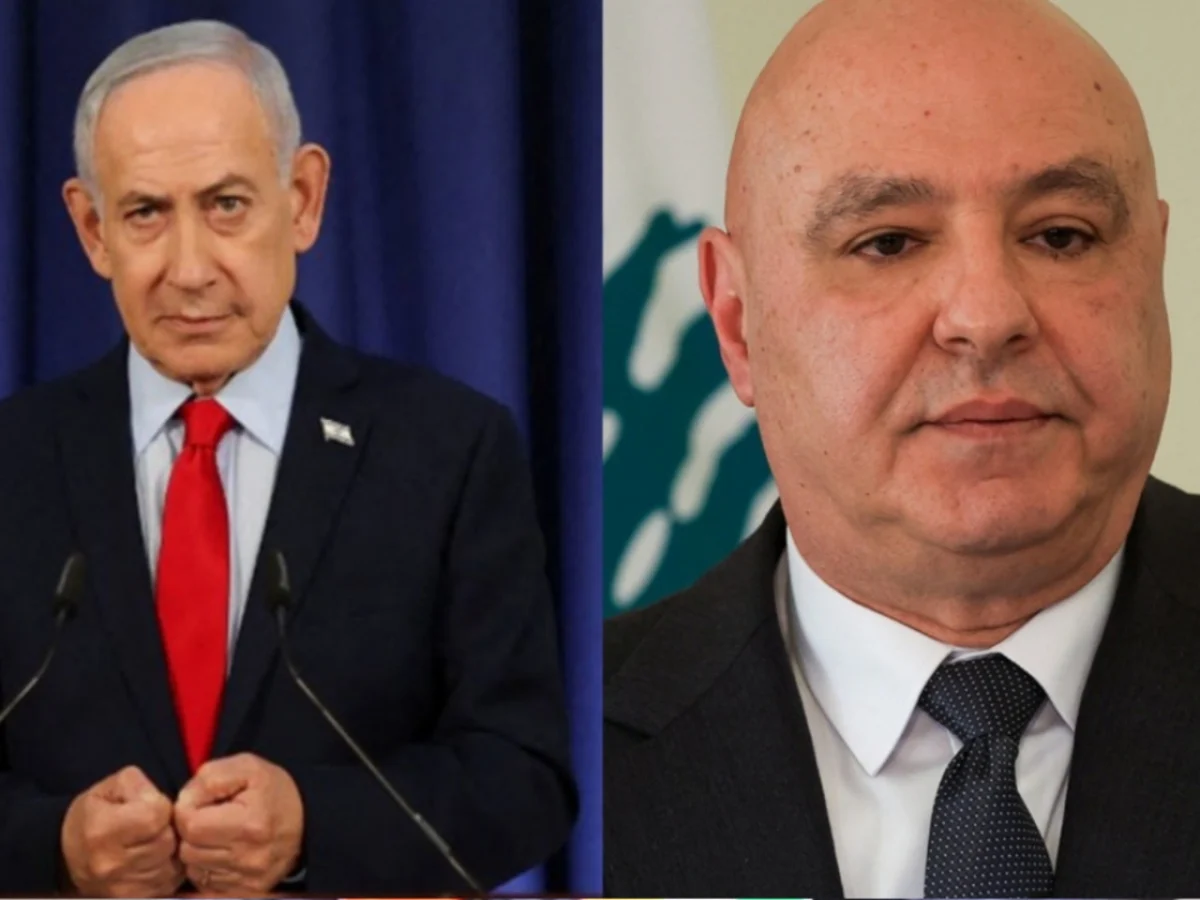
Washington D.C. – In a significant diplomatic initiative, the United States is currently hosting Israeli and Lebanese officials in Washington for a three-day summit aimed at consolidating an existing ceasefire and advancing efforts toward a comprehensive and lasting peace and security agreement between the two historically adversarial nations. This renewed push for dialogue underscores Washington’s commitment to de-escalating regional tensions and fostering stability in the Middle East.
The high-stakes negotiations, facilitated by the U.S. State Department, are designed to enable Israel and Lebanon to engage as sovereign states, seeking common ground on a range of security and political issues. The talks, which commenced earlier this week, mark a crucial juncture in a region frequently plagued by cycles of violence and entrenched mistrust.
Main Facts of the Washington Summit
The current three-day peace summit in Washington represents a concentrated effort by the United States to mediate a more robust and enduring framework for stability between Israel and Lebanon. The primary objective is not merely to maintain the existing, often fragile, ceasefire, but to build momentum towards a broader settlement that could fundamentally alter the dynamics of their contentious relationship.
The U.S. delegation, leading the facilitative efforts, is spearheaded by Counsellor Dan Holler and Assistant Secretary of Defense for International Security Affairs Dan Zimmerman. Their joint leadership signifies the dual military and political dimensions inherent in these complex discussions. According to State Department officials, the agenda is structured to address both immediate security concerns and the broader political aspirations for peace. The format includes an opening joint military-political session, followed by a dedicated military meeting to delve into specific security protocols and border issues, and will conclude with a political closing round focused on a long-term vision.
)
This structured approach reflects the understanding that security arrangements are intrinsically linked to political will and vice versa. The explicit goal, as articulated by a State Department official, is to "end the cycle of violence for good," a sentiment that resonates deeply given the decades of intermittent conflict and tension that have characterized the Israel-Lebanon border.
The decision to host these talks in Washington for three consecutive days underlines the seriousness and urgency with which the United States views the need for progress. It provides an uninterrupted forum for sustained engagement, away from the immediate pressures of their respective capitals. High-level engagement preceding these talks also highlighted their importance, with U.S. Secretary of State Marco Rubio having reportedly spoken with Israeli Prime Minister Benjamin Netanyahu and Lebanese President Joseph Aoun to solidify the ceasefire and plan these future discussions. Following these calls, the U.S. also launched a CENTCOM monitoring mechanism, designed to provide real-time updates on any potential fighting in Lebanon, further emphasizing the proactive measures being taken to prevent renewed hostilities.

Chronology of Diplomacy
The current Washington summit is not an isolated event but rather the latest chapter in a long and often arduous history of diplomatic engagement between Israel and Lebanon, frequently under international mediation. Understanding the timeline of these efforts provides crucial context for the present talks.
Precursors to the Washington Talks
The relationship between Israel and Lebanon has been defined by conflict, unresolved border disputes, and the presence of powerful non-state actors. While a formal peace treaty has never been signed, a cessation of hostilities has largely been in place since the 2006 Lebanon War, albeit punctuated by sporadic skirmishes and heightened tensions. Previous U.S. administrations have, at various junctures, attempted to broker stability, most notably through efforts related to maritime border demarcation, which saw some success in recent years. These prior engagements, though sometimes limited in scope, have laid foundational experiences for the current comprehensive approach.
)
The immediate impetus for the current round of talks appears to stem from a confluence of factors, including ongoing regional instability, a desire to prevent any escalation along the shared border, and a recognition by all parties that a durable peace is preferable to a perpetual state of latent conflict. Secretary of State Marco Rubio’s direct engagement with both Prime Minister Netanyahu and President Aoun was a critical preliminary step, indicating a top-down commitment from both sides to explore diplomatic avenues. These calls served to reinforce the existing ceasefire and establish the framework for the Washington summit. The subsequent activation of a CENTCOM monitoring mechanism further underscores the U.S.’s dedication to maintaining the ceasefire on the ground while diplomatic efforts proceed. This mechanism provides a vital layer of real-time intelligence, aiming to pre-empt and de-escalate potential incidents that could derail the fragile peace process.
The Washington Summit: Day-by-Day
The three-day summit in Washington has been meticulously planned to maximize the potential for progress. Upon their arrival, both Israeli and Lebanese delegations were reportedly greeted with the full diplomatic courtesies extended by the U.S. State Department, setting a professional and constructive tone.
)
- Day One: The Joint Military-Political Session. The talks began with a combined session led by Counsellor Holler and Assistant Secretary Zimmerman. This opening round was crucial for setting the overall strategic direction and identifying shared objectives. Discussions likely covered broad principles of security, sovereignty, and the desire for a stable border. Initial statements from U.S. officials emphasized the role of the United States as a facilitator, allowing both sovereign states to articulate their positions and concerns directly. This joint forum is essential for establishing a baseline understanding and identifying areas of potential convergence.
- Day Two: Dedicated Military Session. Following the joint opening, the second day was allocated for a specialized military session. This segment brought together defense and security officials from both nations, focusing on the technical and operational aspects of maintaining peace. Key topics would include specific border demarcation issues (particularly unresolved land disputes), mechanisms for preventing cross-border incidents, the role of UNIFIL (United Nations Interim Force in Lebanon), intelligence sharing protocols (if any), and de-escalation strategies in the event of future tensions. The inclusion of Assistant Secretary Zimmerman, a high-ranking defense official, in the U.S. delegation underscores the gravity of these security discussions.
- Day Three: Political Closing Round. The final day is designed to synthesize the outcomes of the military discussions and translate them into a broader political framework. This session aims to lay the groundwork for a comprehensive peace and security agreement. Discussions are expected to cover potential confidence-building measures, economic cooperation opportunities that could arise from improved relations, and a roadmap for future engagements. While a full peace treaty might be a distant goal, the objective for this round is to secure tangible commitments and a clear path forward for ongoing dialogue, possibly through joint working groups or regular high-level consultations.
Beyond Washington: Future Outlook
The conclusion of the three-day summit in Washington is unlikely to mark the end of the diplomatic process. Instead, it is envisioned as a critical stepping stone. U.S. officials have indicated that these talks aim to "build momentum for a broader settlement," implying that the discussions will continue beyond this initial round. Future engagements could involve technical teams, follow-up meetings in other neutral venues, or the establishment of permanent communication channels. The United States is expected to maintain its role as a key facilitator, offering its good offices and expertise to guide the process forward. The success of these initial talks will largely be measured by the willingness of both sides to commit to ongoing dialogue and concrete steps toward de-escalation and cooperation.
Supporting Data and Context
The current Israel-Lebanon peace talks are embedded within a complex web of historical grievances, geopolitical rivalries, and internal challenges facing both nations. A deeper understanding of these factors is crucial for appreciating the significance and difficulty of the ongoing negotiations.
)
The Enduring Conflict: A Historical Perspective
The state of war between Israel and Lebanon formally dates back to the 1948 Arab-Israeli War. While an armistice agreement was signed in 1949, full peace has never been achieved. The relationship has been characterized by multiple wars (1967, 1973, 1982, 2006), military occupations, cross-border raids, and proxy conflicts. Key flashpoints include the unresolved status of the Shebaa Farms and the village of Ghajar, small territories claimed by both Syria and Lebanon, but controlled by Israel.
The "cycle of violence" referred to by U.S. officials is a stark reality for communities on both sides of the Blue Line (the UN-demarcated line of withdrawal). This cycle is exacerbated by the presence and influence of non-state actors, most notably Hezbollah, a powerful Shiite political party and militant group in Lebanon. Hezbollah, designated a terrorist organization by the U.S. and Israel, maintains a significant military arsenal and political sway, operating largely independently of the Lebanese state’s full control. Its ideological opposition to Israel and its strategic alliance with Iran present profound challenges to any comprehensive peace agreement that requires disarmament or significant shifts in regional alignments. Any peace initiative must grapple with Hezbollah’s role and its implications for Lebanese sovereignty and Israeli security.
)
US Regional Strategy
The United States’ intensive diplomatic engagement with Israel and Lebanon is not an isolated initiative but forms part of a broader, recalibrated strategy for promoting stability and de-escalation across the Middle East. Washington’s objectives are multi-faceted:
- Countering Regional Instability: The U.S. seeks to prevent the Israel-Lebanon border from becoming another flashpoint in an already volatile region, particularly in the context of broader U.S.-Iran tensions.
- Protecting Allies: Ensuring the security of its regional allies, particularly Israel, remains a cornerstone of U.S. foreign policy.
- Promoting Sovereignty: By enabling Israel and Lebanon to negotiate as sovereign states, the U.S. aims to strengthen state institutions and diminish the influence of non-state actors that often destabilize the region.
- Economic Interests: Long-term stability in the Middle East is vital for global energy markets and trade routes.
While distinct from the Abraham Accords, which normalized relations between Israel and several Arab nations, these talks share a common thread: fostering diplomatic solutions to long-standing conflicts. The U.S. views itself as an essential "honest broker," leveraging its diplomatic weight and historical ties to both nations to create an environment conducive to dialogue and compromise.
)
The Geopolitical Landscape
The context for these talks is further shaped by the internal political and economic realities of Israel and Lebanon, as well as the broader geopolitical currents.
- Lebanon’s Internal Crisis: Lebanon is currently grappling with one of the most severe economic crises in modern history, compounded by political paralysis, widespread corruption, and the aftermath of the Beirut port explosion. This instability makes any substantial political concession or long-term commitment challenging, as the government’s legitimacy and capacity are severely strained. The presence of a large Syrian refugee population further complicates its socio-economic fabric.
- Israel’s Political Climate: Israel, while relatively stable, also faces its own political dynamics, including coalition governments and internal security concerns. Any agreement with Lebanon would need to garner broad domestic support and address legitimate security anxieties.
- Regional Power Plays: The influence of regional powers, particularly Iran, Syria, and Saudi Arabia, cannot be overstated. Iran’s support for Hezbollah in Lebanon directly impacts the security equation for Israel and adds a layer of complexity to any peace negotiations. Syria’s ongoing civil war and its strained relationship with Lebanon also cast a long shadow.
Crucially, the news article also highlights US-Iran talks in Switzerland, mediated by Qatar and Pakistan. This seemingly separate development is highly relevant as it underscores a broader, multi-pronged U.S. diplomatic strategy to de-escalate tensions across the Middle East. The agreement on a 60-day roadmap toward a final deal, the waiver of Iranian oil sanctions, the reported release of some frozen assets, and the establishment of a Lebanon de-confliction cell and a Strait of Hormuz communication line all point to a concerted effort to manage regional flashpoints. While Tehran has denied that nuclear talks were held and emphasized the technical nature of the discussions, the fact that such high-level engagements are occurring simultaneously with the Israel-Lebanon talks suggests a holistic U.S. approach to stabilizing the region by addressing multiple interconnected conflicts and rivalries. This broader diplomatic offensive creates a more favorable environment for progress on the Israel-Lebanon front, as reduced regional tensions can lessen the impetus for proxy conflicts.
)
Official Responses and Statements
The success of diplomatic initiatives often hinges on the public and private commitments of the participating parties. While the Washington talks are ongoing, various statements and inferred positions provide insight into the official stances.
Statements from the US State Department
U.S. officials have consistently framed their role as that of an impartial facilitator. Counsellor Dan Holler and Assistant Secretary Dan Zimmerman have emphasized the importance of direct dialogue between the two sovereign nations. The State Department has reiterated that the "shared goal is to end the cycle of violence for good," highlighting the moral imperative behind these efforts. The structured format of the talks – joint military-political, dedicated military, and political closing rounds – was designed to ensure that both immediate security concerns and long-term political objectives are addressed systematically. The U.S. also emphasizes that it is enabling, not dictating, the negotiations, respecting the sovereignty of both Israel and Lebanon.
)
Israeli Perspectives
For Israel, the primary concern in any negotiation with Lebanon is national security. This includes preventing cross-border attacks, ensuring the integrity of its northern border, and, crucially, addressing the threat posed by Hezbollah. Israeli Prime Minister Benjamin Netanyahu’s involvement in preliminary calls with Secretary Rubio underscores the high strategic importance Israel places on these discussions. While official statements during the talks are usually reserved, Israel’s historical position has been to seek secure and recognized borders, and to ensure that Lebanon does not serve as a launching pad for attacks by hostile non-state actors. Any agreement would likely require robust security guarantees and effective mechanisms to prevent arms smuggling and militant infiltration.
Lebanese Positions
Lebanon approaches these talks from a position marked by internal fragility and a strong emphasis on national sovereignty. President Joseph Aoun’s engagement with Secretary Rubio signals Lebanon’s willingness to participate in dialogue despite its domestic challenges. Lebanon’s key concerns typically revolve around the full demarcation of its land borders, the return of disputed territories (like Shebaa Farms), and ensuring its territorial integrity. The complex internal political landscape, particularly the influence of Hezbollah, means that any agreement reached by the official Lebanese delegation would need to navigate sensitive domestic political considerations to gain broad acceptance. Lebanon also often seeks international support for its economic recovery and stability, which could be implicitly linked to progress in peace talks.
)
International Reactions
While specific international reactions to the ongoing Washington talks have been limited pending their outcome, the international community generally welcomes efforts to de-escalate tensions in the Middle East. The United Nations, which maintains the UNIFIL peacekeeping force along the Blue Line, would undoubtedly view progress positively. European Union nations, many of whom have significant economic and humanitarian interests in Lebanon, would also likely support any initiative that contributes to regional stability and alleviates humanitarian crises. The involvement of Qatar and Pakistan in the parallel US-Iran talks also suggests a broader regional and international appetite for mediation and conflict resolution.
Implications and Challenges
The Washington summit carries significant implications for regional stability, but it also confronts formidable challenges rooted in decades of animosity and complex geopolitical realities.
)
Potential for Breakthroughs
Even if a comprehensive peace treaty remains a long-term aspiration, the very act of direct, high-level talks between Israeli and Lebanese officials, facilitated by the U.S., represents a significant breakthrough. Potential positive outcomes from these three days could include:
- Strengthened Ceasefire Mechanisms: The talks could lead to more robust and explicit protocols for de-escalation, incident reporting, and communication channels to prevent misunderstandings from escalating into conflict.
- Confidence-Building Measures (CBMs): Agreements on minor, non-controversial CBMs, such as humanitarian cooperation, joint efforts on environmental issues along the border, or even cultural exchanges (however limited initially), could begin to chip away at decades of mistrust.
- Framework for Future Negotiations: The summit could establish a clear roadmap for continued dialogue, perhaps through dedicated working groups on specific issues (e.g., land border demarcation, security arrangements) or regular high-level meetings.
- Reduced Regional Tensions: Progress on the Israel-Lebanon front, especially if viewed in conjunction with the US-Iran talks, could signal a broader trend towards de-escalation in the Middle East, benefiting regional security as a whole.
- Enhanced Lebanese Sovereignty: By engaging the Lebanese state directly, these talks could indirectly bolster the authority of official Lebanese institutions vis-à-vis non-state actors, though this remains a delicate balance.
Significant Hurdles and Obstacles
Despite the potential for progress, numerous deeply entrenched obstacles threaten to impede a lasting resolution:
)
- Deep-Seated Mistrust: Decades of conflict, loss of life, and propaganda have fostered profound mistrust on both sides. Overcoming this will require sustained effort and tangible demonstrations of good faith.
- The Role of Hezbollah: Hezbollah’s military and political power within Lebanon presents the most formidable obstacle. As a non-state actor deeply antagonistic to Israel and aligned with Iran, its willingness to abide by any state-level agreements and potentially disarm is highly questionable. Its inclusion in or exclusion from the peace process is a constant dilemma.
- Unresolved Border Disputes: While the maritime border was largely settled, key land disputes, such as the Shebaa Farms and Ghajar, remain contentious. These are not merely territorial but carry significant symbolic and strategic weight.
- Internal Political Instability: Lebanon’s severe economic crisis and political fragmentation mean that any government’s ability to make significant concessions or guarantee the implementation of agreements is severely constrained. Israel also faces its own domestic political pressures.
- Regional Dynamics: The broader geopolitical competition between Iran and its adversaries, as well as the ongoing Syrian conflict, inevitably casts a shadow over the Israel-Lebanon relationship. External actors can either destabilize or facilitate peace, depending on their interests.
- The Nature of "Peace": A "ceasefire" is a cessation of hostilities, but a "peace agreement" implies full diplomatic relations, open borders, and economic cooperation. Moving from the former to the latter is a monumental leap that requires fundamental shifts in public opinion and political will, which currently seem far off.
Long-Term Vision for Regional Peace
The Washington talks, coupled with the U.S.’s engagement with Iran, highlight a comprehensive, albeit challenging, long-term vision for regional peace in the Middle East. This vision seeks to move beyond crisis management to proactive conflict resolution and the establishment of stable, secure relationships between states. For Israel and Lebanon, even incremental progress could pave the way for a future where their shared border is a zone of peace rather than a line of confrontation.
The road ahead is undoubtedly long and fraught with difficulties. However, the commitment of the United States to facilitate these discussions, enabling direct engagement between sovereign states, offers a glimmer of hope. The success of these initial three days will determine not only the immediate future of Israel-Lebanon relations but also the viability of a broader diplomatic strategy aimed at transforming the Middle East from a region of perpetual conflict into one characterized by greater stability and cooperation.
