

BENGALURU – In the quiet, unassuming village of Ummari in Uttar Pradesh, a discovery has been made that bridges the gap between environmental catastrophe and the future of biotechnology. Researchers from the University of Delhi and the CSIR-Institute of Microbial Technology (IMTECH) have identified a new species of bacteria thriving in soil saturated with Hexachlorocyclohexane (HCH), one of the world’s most notorious and persistent organic pollutants.
The microbe, aptly named Microbacterium pollutisoli, represents more than just a taxonomic addition to the tree of life. It serves as a biological testament to resilience, carrying within its genetic code the blueprints for next-generation antibiotics, vitamins, and cellular protectants.
Main Facts: A Diamond in the Toxic Rough
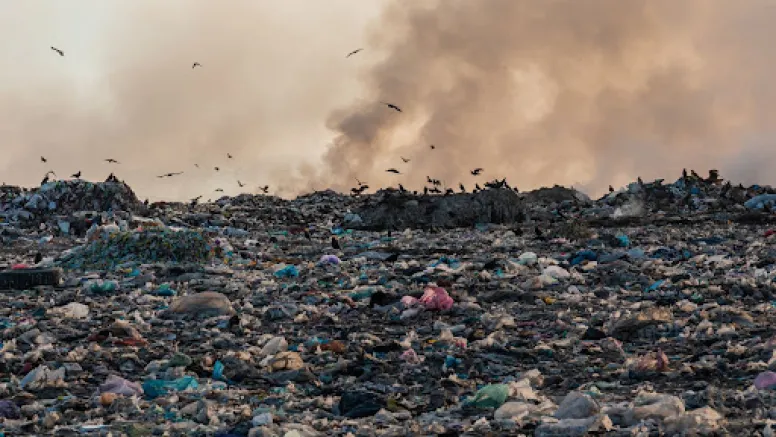
The discovery of Microbacterium pollutisoli centers on a site that most living organisms would find inhospitable. For decades, the soil in Ummari has been a dumping ground for HCH, a pesticide banned globally under the Stockholm Convention due to its extreme toxicity and tendency to bioaccumulate in the food chain. HCH is a known carcinogen and a persistent environmental hazard that lingers in the earth for generations.
Despite these harsh conditions, the research team isolated a specific strain of yellow-pigmented, rod-shaped bacteria. While the microbe does not directly "eat" or degrade the HCH pesticide—a process known as bioremediation—it has evolved a suite of survival mechanisms that allow it to flourish in high-stress, alkaline, and chemically contaminated environments.
The most significant finding lies in the bacterium’s genome. Scientists discovered "biosynthetic gene clusters" (BGCs) within the organism. These are specialized groups of genes that act as a factory for secondary metabolites. In the case of M. pollutisoli, these clusters are capable of producing:

- Carotenoids: Natural pigments used in the production of vitamins and antioxidants.
- Ectoine: A high-value "extremolyte" used in skincare and medicine to protect cells from osmotic stress and dehydration.
- Beta-lactones: A class of chemical compounds currently being studied for their potent antibacterial and anti-cancer properties.
Chronology: The Journey from Soil Sample to Scientific Breakthrough
The path to identifying M. pollutisoli was a meticulous multi-year effort that combined old-school field biology with cutting-edge genomic technology.
Phase 1: Field Sampling (The Groundwork)
The process began with the collection of soil samples from the Ummari dumpsite. Researchers targeted the "subsurface" layer, digging to a depth of 30 centimeters. This depth is critical because it represents an environment where oxygen levels are lower and pesticide concentrations are often at their most stable and lethal.
Phase 2: Isolation and Cultivation
Once in the lab, the soil was subjected to various enrichment cultures. The goal was to see which organisms would grow when placed under the stress of HCH-rich media. Among the survivors, a specific colony of shiny, yellow, circular bacteria caught the attention of the Delhi and Chandigarh-based teams. This strain was initially labeled as a potential candidate for a new species.
Phase 3: Polyphasic Testing (The Verification)
To confirm that the bacteria was indeed a new species and not a known variant, the researchers employed "polyphasic taxonomy." This involved:
- Morphological Analysis: Observing the physical shape (short rods) and colony characteristics.
- Physiological Testing: Testing the limits of its survival (temperature, pH, and salinity).
- Biochemical Profiling: Determining which sugars the bacteria could digest (e.g., maltose and lactose).
- Genomic Sequencing: The final and most definitive step, where the entire DNA sequence was mapped and compared against global databases.
Phase 4: Formal Naming and Publication
After years of analysis, the team concluded the microbe was distinct from its closest relative, Microbacterium invictum. The findings were formalized with the name Microbacterium pollutisoli, derived from the Latin pollutus (contaminated) and solum (soil).

Supporting Data: The Biological Blueprint of a Survivor
The classification of M. pollutisoli as a new species is backed by rigorous quantitative data. In microbiology, the "gold standard" for defining a species is the Average Nucleotide Identity (ANI).
Genomic Distinctions
When compared to its nearest known relative, Microbacterium invictum, the new species showed an ANI of only 83%. In the world of microbiology, two organisms are generally considered the same species only if they share 95% or more of their genomic identity. This 12% gap represents millions of years of evolutionary divergence.
Environmental Tolerance
The data revealed that M. pollutisoli is an incredibly hardy organism:
- Temperature Range: It remains viable and grows at temperatures as low as 12°C and as high as 46°C, with an optimal growth peak at 30°C.
- pH Levels: It thrives in alkaline conditions, showing growth up to pH 10.0.
- Salinity: It can tolerate salt concentrations (NaCl) of up to 7%, a trait often found in organisms that have adapted to chemically stressed soils where mineral salts accumulate.
Biochemical Signature
Unlike many of its relatives in the Microbacterium genus, M. pollutisoli possesses the unique ability to metabolize specific carbohydrates. It can successfully ferment and utilize maltose, lactose, and D-galactose. Furthermore, its cell wall contains a specific signature of fatty acids and polar lipids that act as a protective barrier against the toxic HCH molecules surrounding it in the wild.
Official Responses and Scientific Context
While formal statements from government environmental agencies are pending, the research community has hailed the discovery as a milestone in "bioprospecting"—the search for plant and animal species from which medicinal drugs and other commercially valuable compounds can be obtained.

Lead researchers from the University of Delhi emphasized that this discovery highlights the hidden value of India’s contaminated sites. "We often view pesticide dumps as ‘dead zones,’" noted a researcher involved in the study. "But from a microbial perspective, these are high-pressure evolutionary laboratories. The organisms that survive here have developed unique chemical tools to stay alive. Those tools—those genes—are exactly what we need to solve modern problems in medicine and industry."
Experts in the field of microbial ecology suggest that M. pollutisoli is likely part of a larger, undiscovered "microbiome of resistance" in Uttar Pradesh. The CSIR-IMTECH team has indicated that further studies are required to determine exactly how these bacteria interact with HCH and whether their biosynthetic gene clusters can be "turned on" in a laboratory setting to mass-produce antibiotics or vitamins.
Implications: Why a Tiny Microbe Matters for the Future
The discovery of Microbacterium pollutisoli carries profound implications across three major sectors: Medicine, Industry, and Environmental Science.
1. The Search for New Antibiotics
We are currently in a global "superbug" crisis, where existing antibiotics are losing their effectiveness. M. pollutisoli contains gene clusters for beta-lactones. Historically, compounds in this family have shown the ability to inhibit the growth of harmful bacteria and even interfere with the progression of certain cancer cells. By studying how this microbe produces these chemicals, scientists may be able to synthesize new classes of drugs to treat drug-resistant infections.
2. High-Value Biotechnology
The presence of genes for ectoine and carotenoids is of massive interest to the pharmaceutical and cosmetic industries. Ectoine is a "stress-protection" molecule. It is used in eye drops to treat dry eye syndrome, in creams to treat eczema, and in stabilizing biological enzymes. Currently, ectoine production is expensive; a new, hardy bacterial source could potentially lower production costs. Similarly, the natural yellow pigments (carotenoids) produced by the bacteria are essential precursors for Vitamin A and are used as natural dyes and antioxidants.

3. Understanding Evolutionary Adaptation
Perhaps the most significant implication is what M. pollutisoli tells us about the resilience of life. The fact that a new species has emerged and thrived in soil poisoned by human activity suggests that nature is constantly finding ways to adapt to the "Anthropocene"—the current geological age viewed as the period during which human activity has been the dominant influence on climate and the environment.
4. A Model for Bioremediation
While M. pollutisoli does not currently "clean up" the HCH, its ability to live in its presence makes it a perfect candidate for "co-culture" bioremediation. Scientists could potentially engineer this bacteria or use it alongside other HCH-degrading microbes to create a robust system for decontaminating the soil in Ummari and similar sites across India.
Conclusion
The story of Microbacterium pollutisoli is a reminder that even in the most polluted corners of the planet, life finds a way to innovate. By turning their gaze toward a toxic dumpsite in Uttar Pradesh, Indian researchers have uncovered a biological treasure chest. As the world faces mounting challenges in health and environmental sustainability, the answers may very well lie 30 centimeters deep in the contaminated soil of a small village, carried by a tiny, yellow, rod-shaped survivor.
