

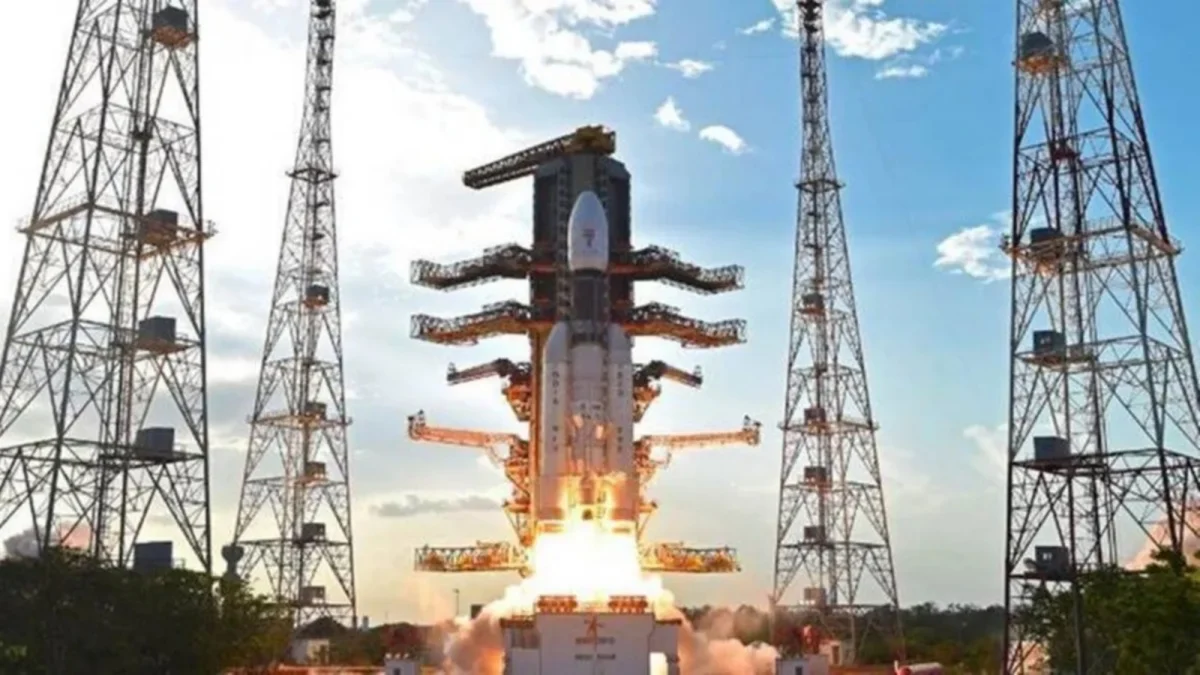
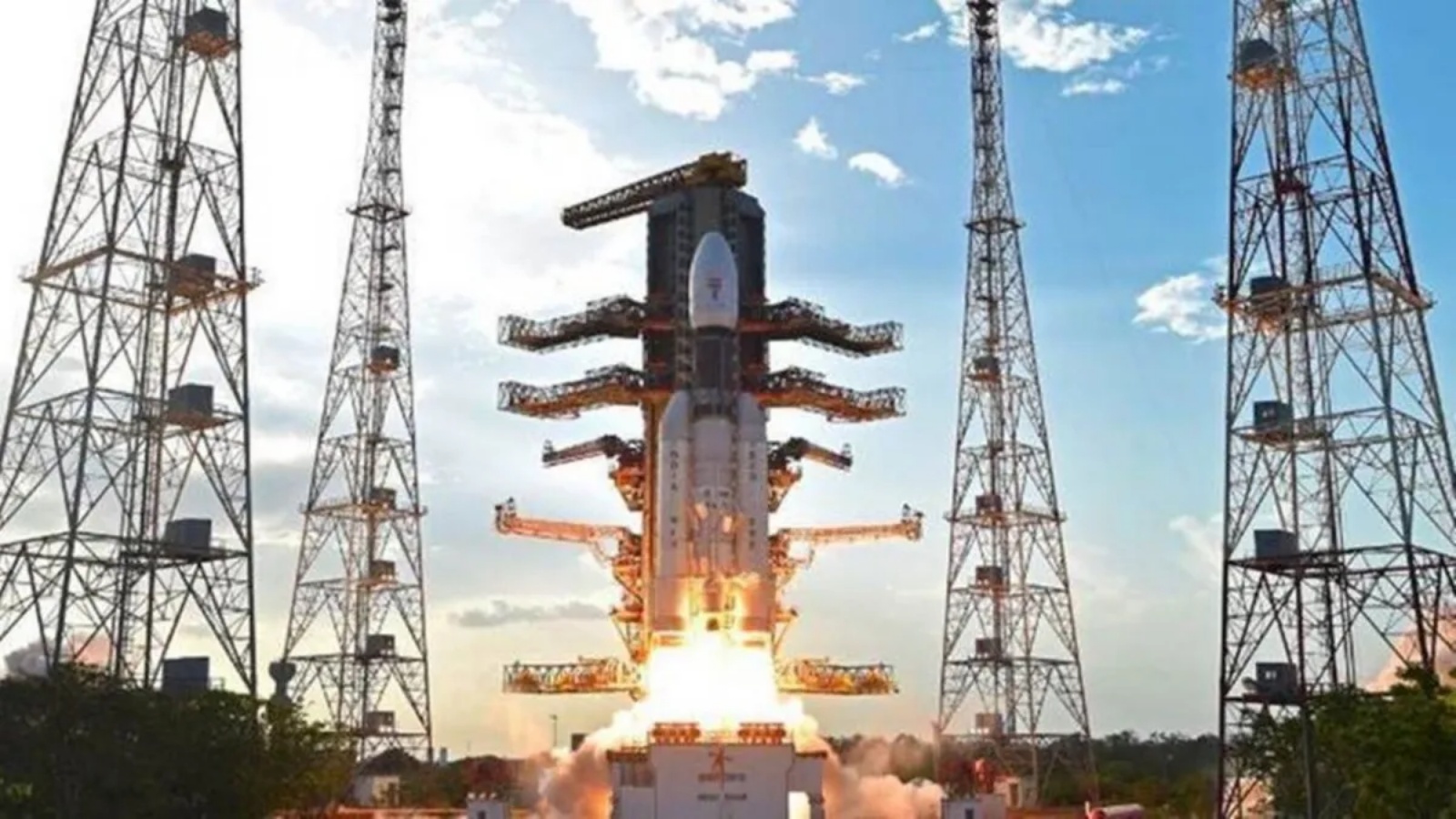
SRIHARIKOTA – In the quiet pre-dawn hours of September 4, 2026, the silence of the Andhra Pradesh coastline will be shattered by the roar of the GSLV F17. For the Indian Space Research Organisation (ISRO), this is not merely another routine deployment; it is a mission of redemption. Following a grueling seven-month operational hiatus and a string of technical setbacks that have clouded the agency’s recent record, the launch of the EOS-05 (Earth Observation Satellite-05) represents a critical turning point for India’s celestial ambitions.
The mission, scheduled for liftoff at 02:55 AM IST from the Satish Dhawan Space Centre (SDSC-SHAR), marks the return of the GSLV (Geosynchronous Satellite Launch Vehicle) to the launchpad. Carrying the GISAT-1A—now rebranded under the EOS nomenclature—the mission aims to place India’s first-ever agile earth observation satellite into a geostationary orbit, a feat that has eluded the agency in previous attempts.
Main Facts: The Mission and the Machine
The EOS-05 mission is centered on the deployment of the Geo Imaging Satellite-1A (GISAT-1A). Unlike the majority of India’s Earth observation fleet, which operates in Low Earth Orbit (LEO) at altitudes of 500 to 800 kilometers, the EOS-05 is destined for a much higher vantage point. It will reside in a Geosynchronous Transfer Orbit (GTO), eventually reaching a Geostationary Orbit (GEO) approximately 36,000 kilometers above the Earth’s surface.
Key Mission Parameters:
- Launch Vehicle: GSLV F17 (Geosynchronous Satellite Launch Vehicle).
- Payload: EOS-05 (formerly GISAT-1A).
- Launch Date: September 4, 2026.
- Launch Time: 02:55 AM IST.
- Launch Site: Second Launch Pad, Sriharikota.
- Mission Life: Estimated 10 years.
The primary objective of EOS-05 is to provide near real-time imaging of the Indian subcontinent. Because the satellite will remain stationary relative to a point on Earth, it can monitor specific regions of interest continuously. This "eye in the sky" capability is designed to support disaster management, agricultural monitoring, forestry management, and national security surveillance. The satellite is equipped with multi-spectral and hyper-spectral imagers capable of capturing high-resolution data across various frequency bands.
Chronology: A Season of Setbacks
To understand the weight of the September 4 launch, one must look back at the turbulent 24 months that preceded it. Between 2025 and mid-2026, ISRO’s historically high success rate faced an unprecedented challenge. Out of six missions attempted in this period, three ended in failure or "partial success" where the satellites failed to reach their intended orbits.
The 2021 Failure (EOS-03)
The predecessor to the current mission, the EOS-03 (GISAT-1), was launched in August 2021. The mission progressed smoothly through the first and second stages. However, as the rocket entered the vacuum of space, the Cryogenic Upper Stage (CUS) failed to ignite. A Failure Analysis Committee (FAC) later determined that a technical anomaly in a pressure-regulating valve led to a drop in pressure in the liquid hydrogen tank, preventing the engine from firing. The satellite, worth hundreds of crores, was lost.
The January 12 Debacle (PSLV-C62)
The most recent blow to the agency occurred on January 12, 2026. In what was expected to be a routine flight for ISRO’s "workhorse," the PSLV-C62 mission aimed to place the EOS-N1 satellite into orbit. An "anomaly" in the third stage of the rocket prevented the satellite from being injected into the correct orbit. This failure was particularly stinging, as the PSLV has long been considered one of the most reliable medium-lift launchers in the world.
The Seven-Month Hiatus
Following the January failure, ISRO entered a period of introspection and rigorous internal auditing. No launches were conducted for seven months. During this time, engineering teams at the Vikram Sarabhai Space Centre (VSSC) and the Liquid Propulsion Systems Centre (LPSC) have been meticulously reviewing the GSLV’s cryogenic systems to ensure that the valve failures of 2021 and the stage anomalies of 2026 do not recur.
Supporting Data: The Technical Complexity of GSLV
The GSLV F17 is a three-stage launch vehicle. The first stage uses solid fuel, the second uses liquid fuel, and the third is the complex Cryogenic Upper Stage (CUS) which uses liquid oxygen and liquid hydrogen.
Cryogenic technology is notoriously difficult to master. The fuel must be stored at extremely low temperatures—minus 253 degrees Celsius for hydrogen and minus 183 degrees Celsius for oxygen. The plumbing, valves, and seals must operate perfectly under these cryogenic conditions while withstanding the intense vibrations of a rocket launch.
Why Geosynchronous Orbit Matters
Most Earth Observation (EO) satellites, like the Cartosat or Risat series, are in LEO. These satellites circle the Earth every 90 minutes. While they provide very high-resolution images, they only pass over a specific location like New Delhi or Mumbai for a few minutes once every few days.
In contrast, EOS-05 in a geostationary orbit provides:
- Continuous Observation: It stays fixed over India, allowing for 24/7 monitoring of cloud movements, floods, or forest fires.
- Rapid Revisit: It can re-image a disaster zone every few minutes, providing crucial data for rescue operations.
- Spectral Depth: By carrying hyperspectral sensors, it can identify the chemical composition of crops or the health of a forest from 36,000 km away.
Official Responses and the Culture of Transparency
The Indian space community has raised questions regarding the transparency of recent failure reports. While the 2021 failure was attributed to a valve malfunction, the full report on the January 2026 PSLV-C62 anomaly has yet to be released to the public.
Officials within ISRO, speaking on the condition of anonymity, suggest that the agency has been under immense pressure to balance its ambitious schedule—including the upcoming Gaganyaan (human spaceflight) and Chandrayaan missions—with the fundamental need for launch reliability.
"The seven-month gap was a conscious decision," an official stated. "We needed to verify every sub-system. The GSLV has earned a reputation as the ‘Naughty Boy’ of ISRO in the past due to its inconsistency. With EOS-05, we are not just launching a satellite; we are proving that the GSLV is a reliable platform for heavy payloads."
In a brief statement on Monday, ISRO confirmed that the integration of the satellite with the launch vehicle is complete and that the countdown is expected to begin 24 hours prior to the September 4 liftoff. The agency also noted that another significant mission, NVS-03 (a navigation satellite), is currently parked at the spaceport and is slated for a November launch, provided the September mission is successful.
Implications: Strategic, Economic, and Scientific
The success of the EOS-05 mission carries profound implications for several sectors of the Indian economy and national security infrastructure.
1. Disaster Management and Climate Resilience
India is increasingly prone to extreme weather events, including cyclones, flash floods, and prolonged droughts. The EOS-05 will act as a sentinel, providing the National Disaster Management Authority (NDMA) with real-time data to track the progression of cyclones or the extent of flooding in the Brahmaputra basin. This data is vital for early warning systems that save thousands of lives.
2. National Security and Border Monitoring
While ISRO maintains a civilian focus, the ability to monitor borders in near real-time is a strategic necessity. A geostationary observation satellite allows for the tracking of large-scale movements or changes in terrain without the "blind spots" inherent in the orbital cycles of LEO satellites.
3. The Commercial Launch Market
ISRO’s commercial arm, NewSpace India Limited (NSIL), has been aggressively seeking international contracts to launch heavy satellites. However, commercial clients demand a track record of reliability. If the GSLV F17 succeeds, it will bolster confidence in India’s ability to handle complex, high-orbit missions, potentially opening up a lucrative market for launching communication and weather satellites for other nations.
4. Internal Morale and the Road to Gaganyaan
The psychological impact on the scientific community cannot be understated. ISRO is currently preparing for the Gaganyaan mission, which will send Indian astronauts into space. Reliability is the cornerstone of human spaceflight. A successful EOS-05 launch would restore internal confidence and demonstrate that the technical "glitches" of the past two years have been identified and rectified.
Conclusion: A Pre-Dawn Test of Resolve
As the clock ticks down to 02:55 AM on September 4, the eyes of the global space community will be on Sriharikota. The GSLV F17 mission is a litmus test for ISRO’s engineering resilience. After seven months of silence and a string of orbital heartbreaks, the agency is looking to the stars once more.
The launch of EOS-05 is more than a technical maneuver; it is an assertion of India’s status as a premier spacefaring nation. If the cryogenic stage ignites as planned and the "Eye in the Sky" finds its home 36,000 kilometers above the equator, it will mark the end of a difficult chapter and the beginning of a new era in Indian Earth observation. For ISRO, the stakes have never been higher, and the pre-dawn sky of September 4 will hold the answer to whether the agency has truly mastered its most challenging machine.
