

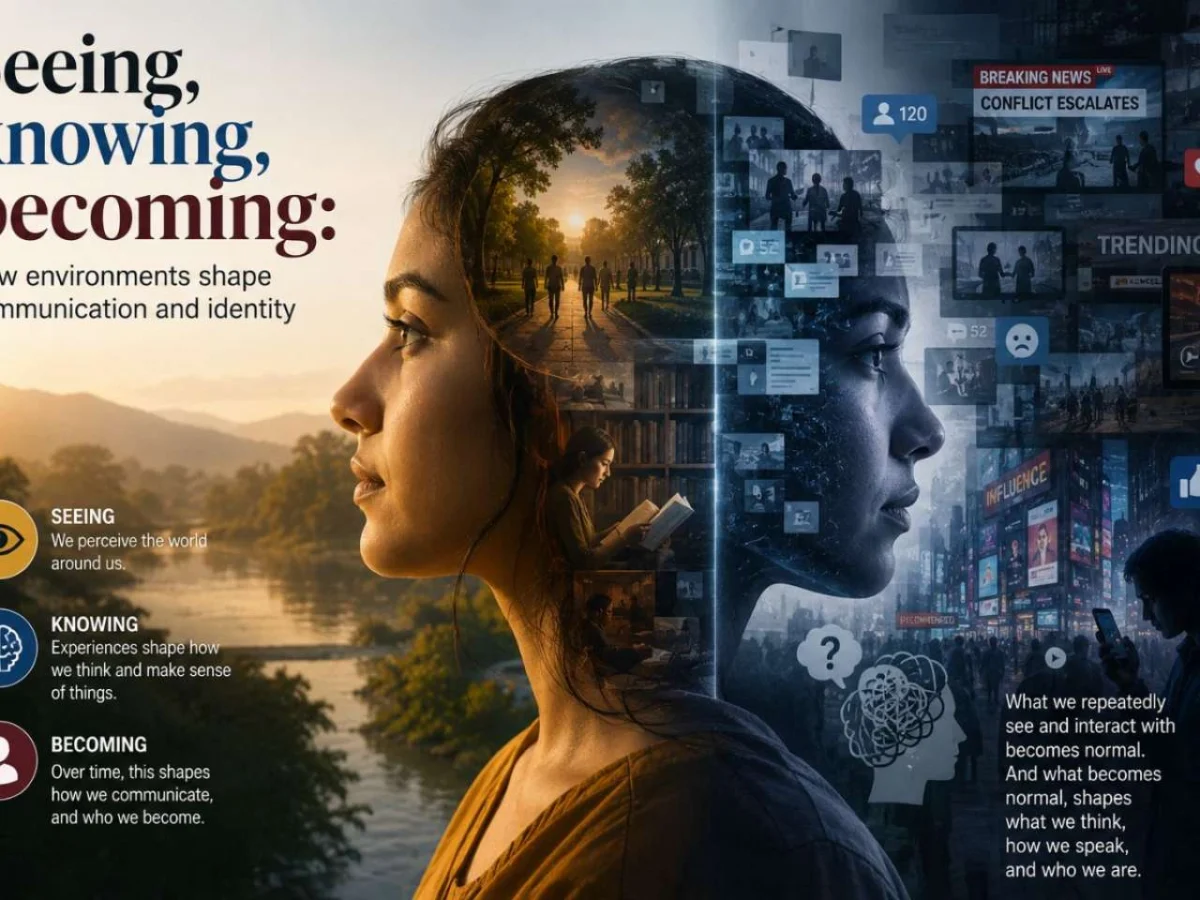
In an era saturated with curated content and constant digital immersion, the very fabric of our communication and the essence of our identity are being subtly, yet profoundly, reshaped. Far from being purely internal constructs, these fundamental aspects of self are deeply intertwined with the world we repeatedly see, hear, and experience. This enduring philosophical truth, echoing from ancient wisdom to contemporary media studies, underscores the urgent need to understand the invisible forces shaping who we are and how we connect.
The Illusion of Autonomy: Identity and Communication as Environmental Byproducts
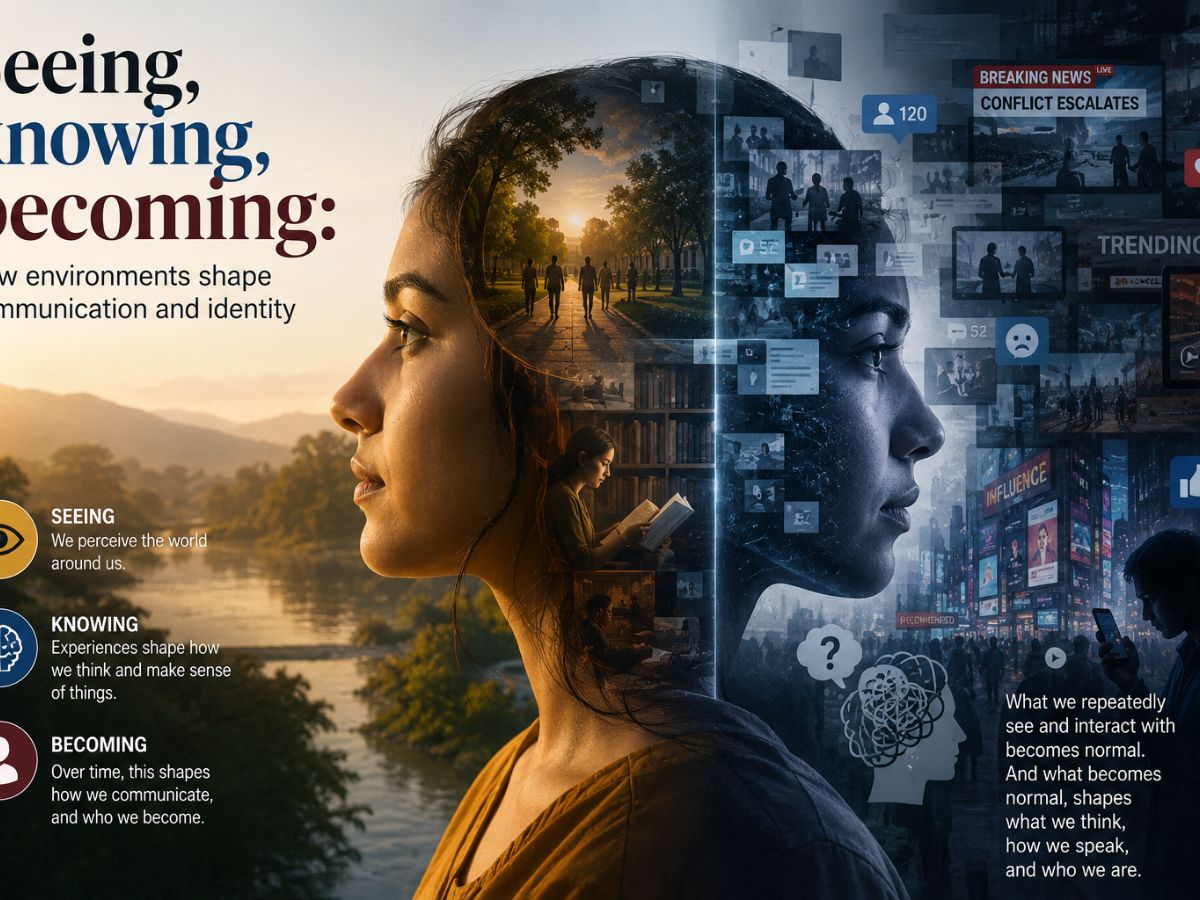)
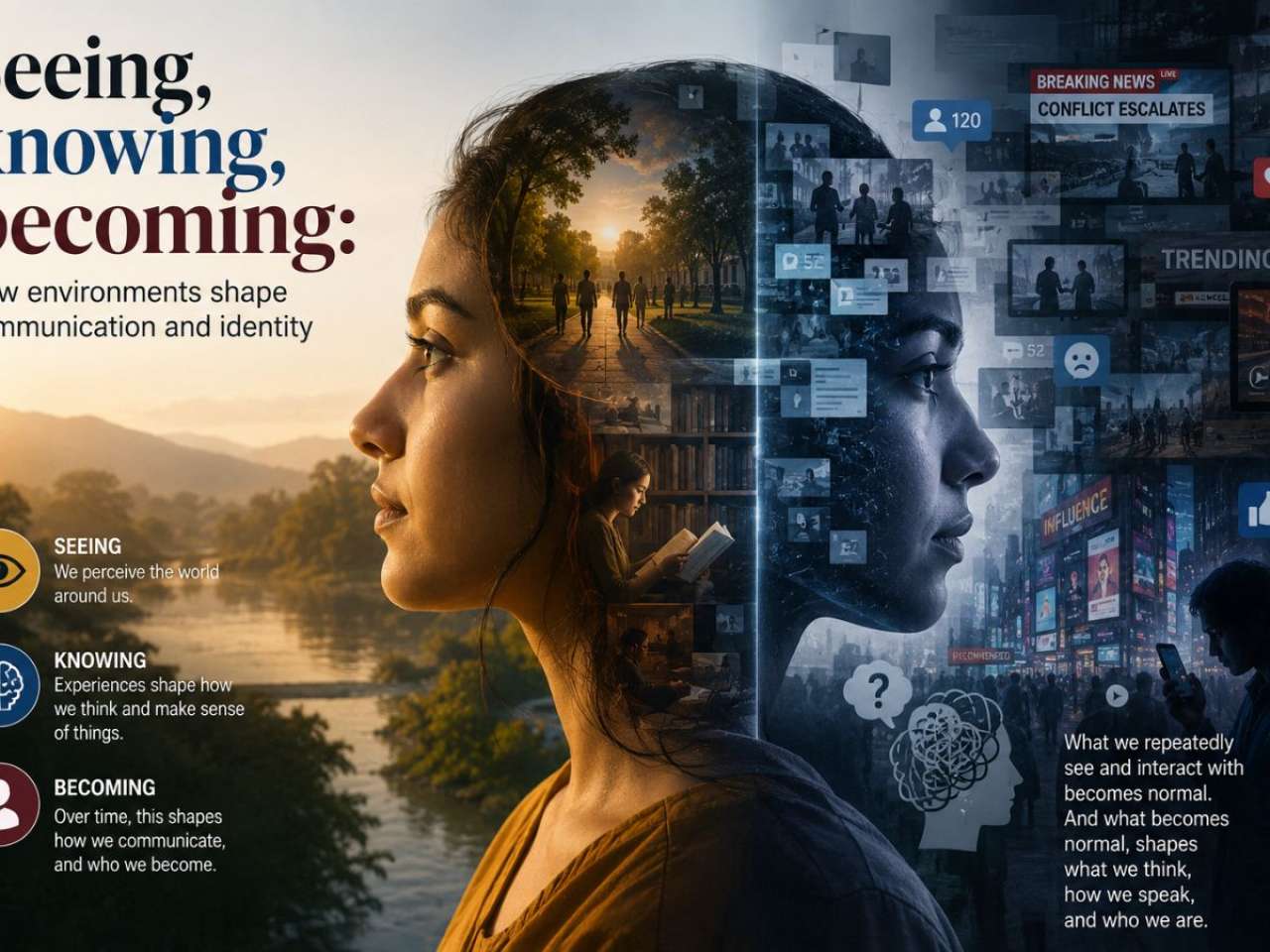
We often conceive of communication as a conscious act of self-expression, a direct conduit for our inner thoughts and feelings. Similarly, identity is frequently perceived as an immutable core, a stable, self-derived essence that pre-exists our interactions with the world. However, this perspective overlooks a crucial reality: both communication and identity are far more fluid and contingent than we typically acknowledge. They are continuously molded, often unconsciously, by the relentless stream of stimuli we encounter. What we see, what we hear, what we engage with – these are not mere passive inputs of information; they actively structure our cognitive frameworks, influence our linguistic choices, and ultimately, contribute to the person we become.

This understanding is not a modern revelation. Ancient philosophical traditions, particularly within the Indian subcontinent, recognized this profound connection centuries ago. The Nyaya Sutra, a cornerstone of Indian logic and epistemology, posits pratyaksha (perception) as the primary pathway to valid knowledge. It asserts that knowledge originates from the sensory contact between the individual and the external world. What is perceived – what is seen, heard, or experienced – forms the bedrock upon which all subsequent inference, judgment, and reasoning are built. This establishes a clear, hierarchical sequence: sensory stimulus precedes cognition, and cognition, in turn, informs articulation.
)
Extending this concept, the Yoga Sutra delves into the formation of the mind, defining it as a tapestry of vrittis – mental fluctuations. These fluctuations, as articulated in the foundational verse "yogah chittavrittinirodhah" (Yoga Sutra 1.2), arise from impressions formed through sensory engagement and lived experiences. Over time, repeated exposure to these stimuli leaves deeper imprints, known as samskaras. These samskaras are not inert; they actively shape our tendencies, preferences, and habitual patterns of response. Consequently, our identity, in this philosophical framework, is not a static, self-generated entity but rather an accumulated construct, a mosaic of our environmental interactions.
)
The Amplified Echo Chamber: Media’s Role in Shaping Perception
)
While the philosophical underpinnings of environmental influence are ancient, the contemporary media landscape has undeniably amplified this phenomenon to an unprecedented degree. We are now immersed in an environment of constant, curated, and often unexamined exposure. Digital platforms, social media feeds, algorithmically tailored content, and an incessant deluge of information create a dense ecosystem of stimuli. These environments are far from neutral; they actively privilege certain forms of expression, amplify specific linguistic patterns, and normalize particular ways of conceptualizing the world.
)
The impact of this sustained exposure is profound. It shapes not only how individuals communicate but also how they perceive themselves and their place in the world. Consider the increasingly homogenized language that pervades online spaces. Words, phrases, and even entire idioms circulate with remarkable speed, acquiring shared meaning and acting as powerful signifiers of belonging. What might have begun as a descriptive term or a casual preference can, through repeated exposure and social reinforcement, morph into a fundamental marker of self-definition. This is not a superficial trend; it is a direct consequence of repeated engagement with particular linguistic architectures, which, over time, become ingrained as natural, expected, and even essential for effective participation in the digital sphere.
)
The formation of opinions and the crystallization of ideological stances are similarly susceptible to these environmental influences. Exposure to a narrow spectrum of viewpoints can foster a false sense of consensus, while consistent immersion in specific narratives can shape what individuals deem credible or legitimate. The Nyaya emphasis on perception as the genesis of knowledge suggests that when the scope of what is perceived becomes restricted, so too does the capacity for nuanced reasoning. In essence, our thought processes are increasingly shaped by the limits and biases of our exposure.
)
The Accumulation of Influence: From Samskaras to Identity Formation
)
The Yoga Sutra’s concept of samskaras provides a crucial layer to this analysis. A single exposure might inform, but sustained exposure is what truly forms. The cumulative effect of our environmental interactions leaves indelible cognitive and emotional residues that subtly guide our behavior. Preferences, which we may perceive as intrinsic or deeply personal, often emerge as the product of accumulated exposure. Likewise, our sense of identity, which we might consider stable and self-defined, is in a perpetual state of formation, continuously molded by the world around us.
)
This dynamic has significant implications for institutions, particularly those involved in education and public communication. If our cognitive frameworks and modes of expression are indeed shaped by our environments, then the deliberate design of these environments becomes paramount. What is made visible, what is emphasized, and what is repeated within these spaces will inevitably influence not only what individuals know but also how they think and how they articulate that thinking.
)
Rethinking Education and Communication in the Age of Influence
)
For higher education institutions, this presents a compelling challenge. While the focus has traditionally been on content delivery and skill development, the communicative environment in which learning occurs often receives less attention. However, if exposure fundamentally shapes cognition, then the quality of discourse, the diversity of perspectives, and the nature of intellectual engagement within an academic setting become central to the educational process itself. A sterile or overly uniform communicative environment risks limiting the very intellectual growth it aims to foster.
)
Similarly, the realm of media and public communication faces a critical juncture. The pervasive trend towards compressing complex information into short, easily digestible formats, while enhancing accessibility, carries the inherent risk of diminishing nuance and oversimplification. When our exposure is primarily to simplified representations of reality, our capacity for complex, critical thought can atrophy. Communication may become more efficient, but it may also become less substantive, less capable of grappling with the multifaceted nature of contemporary issues.
)
Navigating the Currents: Towards Conscious Environmental Design
)
The challenge, therefore, is not to attempt the impossible task of eliminating external influence. Instead, it lies in cultivating a profound awareness of this influence. It requires recognizing that what we repeatedly see will shape what we think, and what we think will, in turn, shape what we say. In an era where our environments are increasingly mediated and meticulously curated, this heightened awareness is not merely beneficial; it is essential for individual autonomy and societal progress.
)
Communication and identity do not spring forth in a vacuum. They are dynamically formed at the intricate intersection of exposure, interpretation, and repetition. The crucial question is not whether we are influenced by the world around us – we unequivocally are. The pertinent inquiry is whether we are actively attentive to how that influence operates and whether we are deliberate in shaping the environments that, in turn, shape us. By fostering this awareness, we can move from being passive recipients of environmental conditioning to becoming active architects of our own communicative and personal evolution.
