

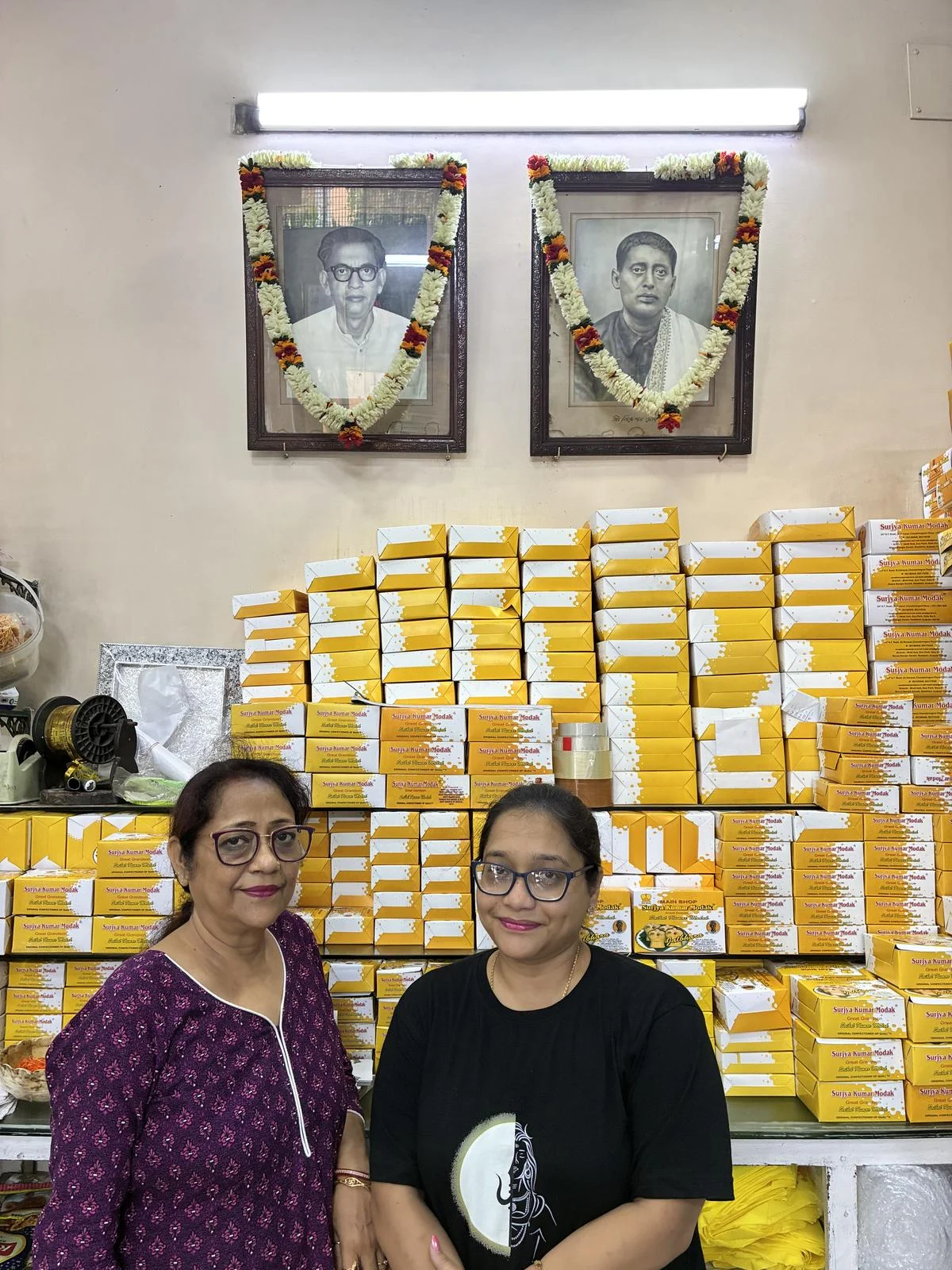
CHANDANNAGAR, WEST BENGAL – History, it is often said, has many hiding places. In the quiet, cobblestoned lanes of Chandannagar, a former French colonial enclave on the banks of the Hooghly River, history has chosen to settle inside a confection no larger than the palm of a hand. For over two centuries, this river town has entrusted its collective memory to the Jalbhara Sandesh—a sweet that appears unassuming on the outside but conceals a liquid heart, a feat of culinary engineering that has baffled and delighted generations.
On June 26, 2026, this "water-filled" delicacy was officially granted the Geographical Indication (GI) tag. The recognition serves as a formal acknowledgement of a legacy started nearly 220 years ago by Surjya Kumar Modak and his son, Siddheshwar. The GI tag confirms what locals have known for centuries: the Jalbhara is inseparable from the soil, water, and culture of Chandannagar.
I. Main Facts: The Sweet That Defied Physics
The Jalbhara Sandesh is more than a dessert; it is a cultural artifact. Its name literally translates to "filled with water," though the "water" is actually a fragrant, viscous syrup. The magic of the Jalbhara lies in its construction—a delicate shell of chhena (fresh cottage cheese) that somehow holds a reservoir of liquid without becoming soggy or leaking.

The GI Recognition
The awarding of the GI tag in 2026 marks a pivotal moment for the Modak family, who have guarded the original recipe through six generations. This legal protection ensures that only sweets produced in this specific region, following traditional methods, can bear the name "Chandannagar Jalbhara." This move is expected to bolster the local economy, protect the brand from domestic imitations, and facilitate smoother international exports.
A Survivor of Eras
The Jalbhara has outlived empires. It survived the departure of the French administrators in 1950, the fading of the landed gentry (the zamindars), the scarcity of sugar during world wars, and the radical shifts in the Bengali palate brought about by globalization. Today, it travels the world—not just in the hand luggage of nostalgic expatriates, but via express couriers to the United States, Europe, and the Middle East.
II. Chronology: From a Zamindar’s Prank to a National Treasure
To understand the Jalbhara, one must trace the timeline of Bengali confectionery, which was revolutionized by European influence.

18th Century: The Portuguese Influence
The story begins with a culinary accident. The arrival of the Portuguese in nearby Bandel introduced the technique of curdling milk with acidic agents. Prior to this, Indian sweets were primarily made from condensed milk (khoya) or flour. The local moiras (confectioners) initially viewed curdled milk as "spoiled," but they soon realized its potential. This gave birth to chhena, the foundation of the modern Bengali sandesh.
1843-1844: The Birth of a Legend
The specific origin of the Jalbhara is dated back to the Bengali year 1250 (circa 1843-44). Surjya Kumar Modak, a master confectioner in the Telinipara neighborhood, received a peculiar commission. The matriarch (grihini) of the local Telinipara zamindar household wanted a sweet that would surprise her newlywed son-in-law.
Surjya and his son Siddheshwar devised a plan. They crafted a mold inspired by the talshansh (the translucent kernel of the ice apple). Using high-quality chhena, they created a hollow sphere and filled it with a blend of aromatic rose extract and liquid jaggery (dolo). When the unsuspecting groom bit into the sweet, the syrup burst forth, staining his traditional silk panjabi. The resulting laughter of the household women marked the birth of the Jalbhara.

Early 20th Century: The Tagore Connection
The sweet’s fame eventually reached the highest echelons of Bengali intelligentsia. Nobel Laureate Rabindranath Tagore was a frequent visitor to Chandannagar, often staying at the historic Patal Bari, a house whose lower floors were submerged in the Hooghly during monsoons.
During one such visit, Tagore sampled the Modak family’s creations. While he loved the Jalbhara, he was particularly struck by another sweet made of tiny, pearl-like grains of chhena. He named it Motichur Sandesh (unrelated to the gram-flour laddu of the same name). This endorsement by the "Bard of Bengal" cemented the Modak shop’s status as a pilgrimage site for food lovers.
2026: The GI Milestone
After years of documentation and advocacy by heritage enthusiasts and the Modak family, the Indian government recognized the unique geographical and historical link of the sweet to Chandannagar, granting it the GI status.

III. Supporting Data: The Science and Craft of the Sandesh
What makes the Jalbhara unique is the "shell-to-syrup" ratio and the specific consistency of the chhena.
The Anatomy of the Sweet
- The Shell: Made from finely kneaded chhena and a precise amount of sugar. The kneading process is critical; if too soft, the liquid leaks; if too hard, it loses its melt-in-the-mouth quality.
- The Filling: Traditionally, this consists of rose-infused syrup. However, the winter version—highly coveted by connoisseurs—uses Nolen Gur (date palm jaggery), which gives the sweet an amber hue and a smoky, earthy sweetness.
- The Mold: The sweets are still shaped using traditional wooden or stone molds that give them their signature "ice apple" look.
Technical Resilience
According to Gitasree Modak, a sixth-generation family member, the outer shell has a unique molecular consistency. "The shell never absorbs the liquid inside. Even in the height of the Bengal summer, it can remain intact for four to five days without refrigeration," she explains. This durability was essential in an era before cold chains and remains a key factor in its exportability.
Pricing and Varieties
While the classic Jalbhara remains the bestseller (priced at approximately ₹65 per piece), the shop has innovated to stay relevant:

- Mango Jalbhara: Filled with Alphonso pulp (₹90).
- Seasonal Variants: Strawberry, black currant, and green mango.
- Modern Twists: Chocolate and Cadbury-inspired versions to appeal to younger generations.
IV. Official Responses: Preserving a 220-Year Legacy
The Modak family today operates from their main shop at 247, Grand Trunk Road East, Barasat Chandannagar. The business is currently managed by the fifth-generation owner, Saibal Kumar Modak, his wife Madhuri, and their daughters, Bhagyasree and Gitasree.
The Family’s Perspective
For the Modaks, the GI tag is not just a business tool but a shield for their ancestors’ honor. "For international business, we needed official recognition," says Gitasree Modak. "Earlier, everyone knew it as Surjya Modak’s Jalbhara. Now it has become Chandannagar’s Jalbhara. It places our town on the global map, and that makes us very happy."
Madhuri Modak emphasizes the importance of sourcing. Despite the scale of their operations, they continue to procure milk and chhena from trusted local suppliers in the Hooghly suburbs to maintain the exact fat content and texture required for the original recipe.

Logistics and Export
The shop has embraced the digital age. They now partner with international couriers like DHL to navigate the food safety regulations of various countries.
- Domestic Reach: At least six to seven major consignments are dispatched weekly to Bengaluru, Delhi, Hyderabad, and Mumbai.
- International Reach: A significant portion of their production is exported to the United States, where a dedicated vendor distributes the sweets across several states.
V. Implications: Heritage, Economy, and the Future
The GI tag for the Jalbhara Sandesh has implications that extend far beyond the walls of a sweet shop.
Economic Revitalization
Chandannagar, with its French-style promenade (The Strand) and colonial architecture, has long been a tourist destination. The GI tag provides a "gastronomic tourism" hook, encouraging visitors to travel the 45 kilometers from Kolkata specifically for the authentic Jalbhara experience. This, in turn, supports local artisans, dairy farmers, and allied industries.

Cultural Preservation
In an era of mass-produced, factory-made confectionery, the Jalbhara stands as a testament to the "slow food" movement. It represents a time when a confectioner could also be a poet (Surjya Modak’s poetry collection, Geet Gobindo, is still preserved in the French Museum in Chandannagar). The GI tag ensures that the craft—the specific way the chhena is kneaded, the temperature of the syrup, the hand-pressing into the mold—is not lost to automation.
Legal Protection against "Lookalikes"
The market is currently flooded with "Jalbhara-style" sweets. Many shops in Kolkata and other parts of West Bengal produce liquid-filled sandesh. However, the GI tag now provides the Modak family and the Chandannagar Confectioners’ Association the legal standing to challenge products that claim to be "Chandannagar Jalbhara" but do not meet the geographic or qualitative standards.
Conclusion: The Oldest Trick in the Town
As the sun sets over the Hooghly River, illuminating the French colonial facades of the Strand, a queue forms outside the Surjya Kumar Modak shop. A tourist takes a bite of the Jalbhara, and just as it happened in the zamindar’s house two centuries ago, the syrup bursts forth. The look of surprise and the subsequent laughter remain unchanged.

The GI tag may have arrived in 2026, but the Jalbhara had long ago secured its place in the hearts of the people. It remains a sweet that refuses to be contained by borders, just as its liquid center refuses to be absorbed by its shell—a perfect, sugary metaphor for the enduring spirit of Chandannagar.
