BUSINESS
Global crude oil markets were rattled on Monday as escalating military actions in the Middle East, specifically Iranian strikes against Gulf states in retaliation for recent U.S. operations in Tehran, triggered a significant spike in prices. The critical Strait of Hormuz, a vital artery for global energy supplies, found itself once again at the heart of geopolitical instability, prompting fears of wider conflict and severe disruptions to international trade.
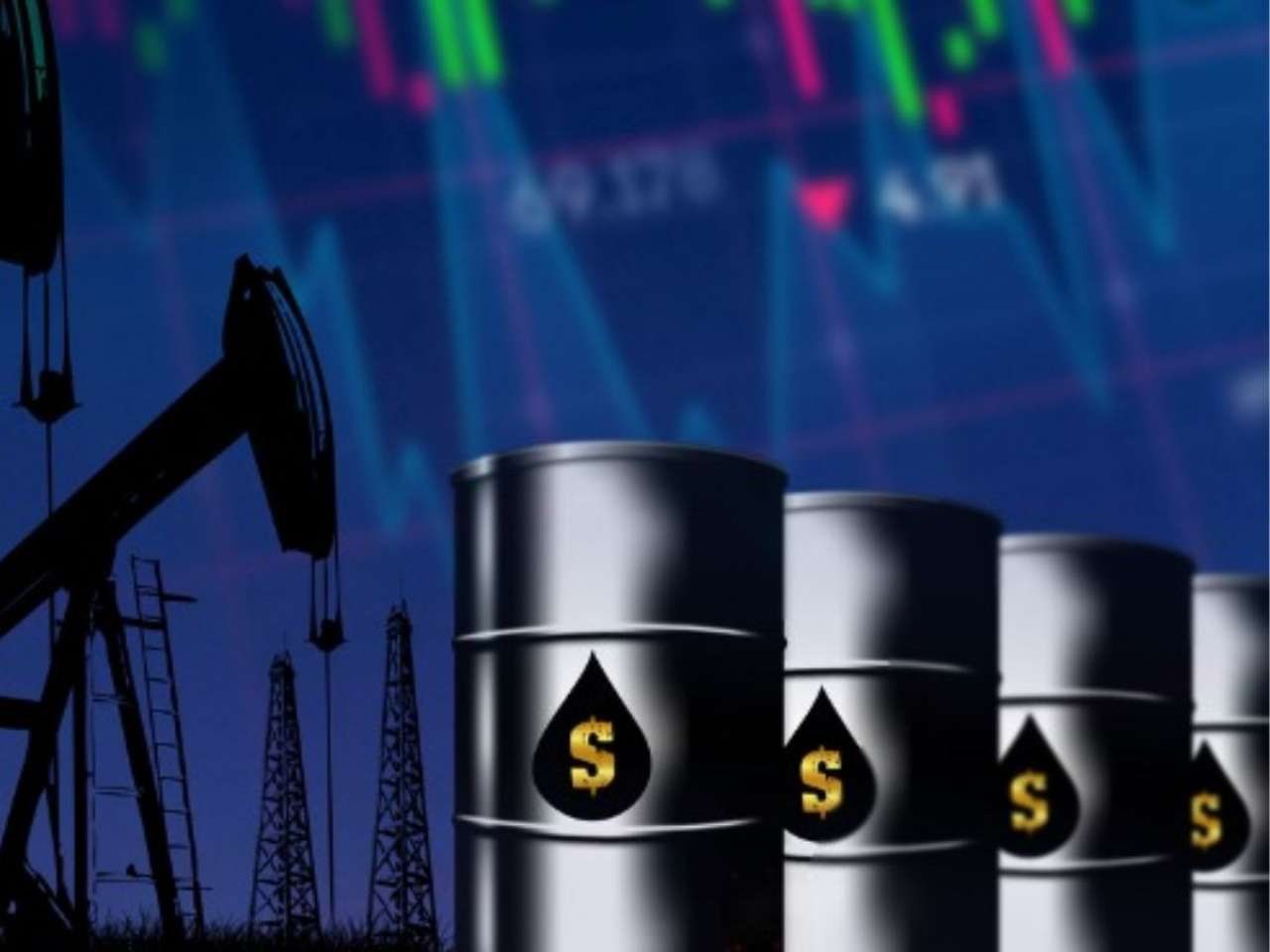
At the time of filing, Brent Crude, the international benchmark, surged to USD 79.17 per barrel, marking a substantial rise of USD 3.16, or 4.16 per cent. Simultaneously, West Texas Intermediate (WTI) crude oil futures climbed to USD 74.47, gaining USD 3.06 or 4.29 per cent. These sharp increases underscore the immediate economic repercussions of heightened tensions in a region that holds a disproportionate share of the world’s proven oil reserves and export capacity. The price movements reflect not just current supply concerns but also a significant geopolitical risk premium being factored into the market.
The recent wave of military actions has plunged the region into deeper uncertainty, drawing sharp condemnation from the Organization of Islamic Cooperation (OIC) and sparking urgent calls for de-escalation from the international community. The tit-for-tat strikes represent a dangerous escalation in the long-standing animosity between the United States and Iran, threatening to unravel fragile regional stability and impact global economic recovery.
)
The Spark: A Chronology of Escalation
The current crisis is the latest chapter in a protracted and complex geopolitical rivalry, rooted in historical grievances, ideological differences, and strategic competition for influence in the Middle East. To understand the recent surge in hostilities, it is crucial to trace the sequence of events that culminated in Monday’s market shock.
Deep Roots of Conflict:
The foundational tensions between the United States and Iran intensified significantly after the 1979 Iranian Revolution, which saw the overthrow of the U.S.-backed monarchy. Decades of mutual distrust, economic sanctions, and proxy conflicts across the region have characterized their relationship. A brief period of potential rapprochement emerged with the 2015 Joint Comprehensive Plan of Action (JCPOA), or Iran nuclear deal, which saw Iran limit its nuclear program in exchange for sanctions relief. However, the U.S. withdrawal from the deal in 2018 under the Trump administration, followed by the re-imposition of stringent sanctions, reignited and exacerbated tensions, leading to a series of confrontations in the Gulf. Incidents involving tanker seizures, drone shoot-downs, and attacks on oil infrastructure have become disturbingly frequent, underscoring the Strait of Hormuz’s vulnerability.

Recent U.S. Military Action:
The immediate catalyst for Iran’s retaliatory strikes was a fresh round of military operations launched by the United States. On Sunday (local time), U.S. Central Command (CENTCOM) confirmed that its forces had initiated new strikes against Iran. In a statement posted on X, CENTCOM elaborated on the rationale, stating, "At 5 p.m. ET today, US Central Command forces began launching more strikes against Iran to continue degrading their ability to attack civilian mariners and commercial ships freely transiting the Strait of Hormuz. The Commander in Chief has directed the strikes to hold Iranian forces accountable."
These U.S. strikes were reportedly aimed at specific targets within Tehran, designed to diminish Iran’s capacity to threaten international shipping lanes, particularly within the critical Strait of Hormuz. While the exact nature and scale of the targets remain somewhat obscured by military secrecy, the stated objective was clear: to curb what the U.S. perceives as Iran’s destabilizing actions against maritime trade. This move was framed by Washington as a defensive measure to ensure freedom of navigation and protect global commerce.
)
Iran’s Retaliatory Strikes:
True to its established pattern of measured, yet firm, responses to perceived aggressions, Iran swiftly retaliated against the U.S. strikes. On Monday, Iran launched a series of attacks targeting several Gulf states, including Qatar, Oman, Kuwait, the United Arab Emirates, Bahrain, and Jordan. While the specific nature of these attacks (e.g., missile strikes, drone assaults, or other forms of military action) was not immediately detailed in full, their geographical breadth and timing left no doubt as to their retaliatory intent.
These strikes were unequivocally presented by Tehran as a direct response to the U.S. military operations, signaling that Iran views any attack on its territory or assets as a violation warranting reciprocal action. The choice of targeting multiple Gulf states, some of which host U.S. military bases or are closely allied with Washington, further highlights Iran’s strategy of demonstrating its regional reach and its capacity to inflict economic and political costs on its adversaries and their partners. The attacks immediately heightened concerns over the safety of the critical Strait of Hormuz, through which a significant portion of the world’s seaborne oil passes daily.
)
Supporting Data: The Global Energy Lifeline Under Threat
The dramatic jump in oil prices is not merely a knee-jerk reaction; it is a direct reflection of the strategic importance of the Middle East, and specifically the Strait of Hormuz, to global energy security. Understanding the underlying data provides crucial context for the market’s response.
The Strait of Hormuz: A Global Chokepoint:
The Strait of Hormuz is a narrow, 21-mile wide waterway connecting the Persian Gulf with the Arabian Sea and the open ocean. Its strategic significance cannot be overstated. Approximately one-fifth of the world’s total petroleum liquids consumption, or about 21 million barrels per day (b/d), transited the Strait in 2018, according to the U.S. Energy Information Administration (EIA). This includes nearly all of the crude oil and petroleum products exported from Saudi Arabia, Iran, the UAE, Kuwait, and Iraq, as well as virtually all of Qatar’s liquefied natural gas (LNG) exports. Any significant disruption to this chokepoint has immediate and severe consequences for global energy supplies and prices. The cost of shipping insurance for vessels transiting the Gulf has historically spiked during periods of heightened tension, reflecting the increased risk of attack or seizure.
)
Oil Market Dynamics:
Global oil prices are inherently sensitive to geopolitical instability, particularly in major producing regions. The current price increases are driven by several factors:
- Supply Risk Premium: The primary driver is the perceived threat to oil supply from the Persian Gulf. Even if no physical disruption occurs immediately, the risk of disruption leads traders to demand higher prices.
- Strategic Reserves: While major oil-consuming nations maintain strategic petroleum reserves, prolonged disruption in the Strait would quickly deplete these, making the market even more vulnerable.
- Global Demand: Despite ongoing efforts towards renewable energy, the global economy remains heavily reliant on fossil fuels. Strong demand from recovering economies, particularly in Asia, means any supply shock is acutely felt.
- Inflationary Pressures: Rising oil prices feed directly into inflation, increasing costs for transportation, manufacturing, and consumer goods. This poses a significant challenge for central banks already grappling with post-pandemic inflationary trends.
Economic Impact Beyond Oil:
The repercussions extend beyond just crude oil. The Strait of Hormuz is also crucial for the transit of other vital commodities and goods, impacting global supply chains. Increased shipping costs, insurance premiums, and potential delays or rerouting of vessels could affect everything from electronics to agricultural products. For the targeted Gulf states, such instability threatens foreign investment, tourism, and overall economic confidence, potentially leading to capital flight and dampened growth prospects. The broader Middle East, already grappling with various conflicts and economic challenges, stands to suffer further from prolonged regional instability.
)
Official Responses: Condemnation, Warning, and Appeals for Restraint
The latest military exchanges have triggered a wave of strong reactions from key regional and international actors, highlighting the deep divisions and the urgent need for diplomatic intervention.
OIC Condemnation of Iranian Strikes:
The Organization of Islamic Cooperation (OIC), representing 57 Muslim-majority states, issued a forceful condemnation of Iran’s attacks on Gulf nations. In a statement released on Sunday, the OIC General Secretariat unequivocally denounced the Iranian strikes targeting Qatar, Oman, Kuwait, the United Arab Emirates, Bahrain, and Jordan.
)
The organization labeled the attacks a "flagrant and ongoing violation" of national sovereignty and a direct breach of the fundamental principles of good neighbourliness, which are essential for regional peace and stability. The OIC further criticized Iran’s "ongoing disruption of international trade and attacks on commercial vessels," asserting that these actions violate established international law and the charters of both the United Nations and the OIC itself.
The OIC’s statement underscored the severe threat such escalations pose to regional security, reaffirming its "full solidarity with the targeted nations" and explicitly supporting their inherent right to take all necessary measures to safeguard their security and territorial integrity. The General Secretariat reiterated: "The General Secretariat of the Organisation of Islamic Cooperation expresses its strong condemnation and denunciation of the Iranian attacks against the Kingdom of Bahrain, the State of Kuwait, the United Arab Emirates, the State of Qatar, the Sultanate of Oman and the Hashemite Kingdom of Jordan, which constitute a flagrant and ongoing violation of the sovereignty of these states and a breach of the principles of good-neighbourliness based on mutual respect." It further warned that such actions "are likely to undermine international efforts to restore security and stability in the region."
)
United States’ Stance:
The U.S. Central Command’s statements emphasized a policy of accountability and deterrence. By targeting Iran’s capabilities to threaten maritime navigation, Washington aims to send a clear message that attacks on international shipping will not be tolerated. The U.S. administration’s position generally frames its actions as necessary to protect its interests, allies, and the global economy, upholding freedom of navigation in international waters. While the U.S. has consistently stated it does not seek war with Iran, its willingness to conduct military strikes underscores a robust approach to regional security challenges. Further statements from the White House or State Department are likely to reiterate calls for Iran to cease its "destabilizing activities" and engage in de-escalation.
Iran’s Vehement Rebuttal and Warning:
Iran’s Ministry of Foreign Affairs responded to the U.S. strikes with strong condemnation, branding them a "flagrant violation" of the UN Charter. Tehran accused Washington of actively undermining regional stability and violating existing ceasefire agreements. Iran’s statement highlighted its perception of U.S. aggression as the primary driver of instability in the region.
)
Crucially, the Iranian Foreign Ministry issued a stark warning: any country that allows its territory or facilities to be used for attacks against Iran "could become a legitimate target of Iranian defensive strikes." This declaration significantly raises the stakes for U.S. allies in the Gulf who host American military bases. It suggests that Iran views such facilities as complicit in U.S. actions and therefore fair game for retaliation, a dangerous expansion of potential targets. Furthermore, Tehran urged the United Nations to hold the United States accountable for what it described as acts of aggression, seeking international validation for its grievances.
International Calls for De-escalation:
Beyond the immediate parties, the international community has largely reacted with alarm, urging immediate de-escalation. The United Nations Secretary-General is expected to issue statements calling for restraint and the protection of civilian life and international law. European Union leaders, China, and Russia are likely to express concerns over the potential for wider conflict and its impact on global trade and energy markets. Many nations will appeal for a return to diplomatic channels and dialogue to resolve the underlying issues, fearing that a full-blown regional war would have catastrophic global consequences.
)
Implications: A Precarious Path Forward
The latest escalation between the U.S. and Iran, with its immediate economic repercussions and the broader geopolitical fallout, places the Middle East on an even more precarious footing. The implications are far-reaching, touching upon global economics, international law, and regional stability.
Heightened Risk of Wider Regional Conflict:
The most immediate and concerning implication is the increased risk of a wider regional conflict. The tit-for-tat nature of the strikes, combined with Iran’s warning to countries hosting U.S. facilities, creates a dangerous cycle of potential escalation. Any miscalculation or accidental engagement could rapidly spiral out of control, drawing in more regional and international actors. Such a conflict would undoubtedly lead to massive humanitarian costs, refugee crises, and potentially reshape the geopolitical landscape of the entire Middle East for decades.
)
Economic Instability and Global Inflation:
Prolonged instability in the Persian Gulf will inevitably translate into sustained higher oil prices. This would place immense pressure on global economies, especially those heavily reliant on oil imports. Higher energy costs could stifle economic recovery, exacerbate inflationary pressures, and potentially trigger a global recession. Industries dependent on shipping and transportation would face increased operational costs, leading to higher consumer prices across various sectors. The disruption to global supply chains, already fragile from recent crises, would be immense.
Challenges to International Law and Order:
The accusations of violations of national sovereignty, international law, and the UN Charter from both sides underscore a growing disregard for established norms. Iran’s ongoing disruption of international trade and attacks on commercial vessels, as condemned by the OIC, challenge the principles of freedom of navigation and the peaceful resolution of disputes. If unchecked, such actions could erode the international legal framework designed to prevent conflicts and protect global commerce. The effectiveness of international bodies like the UN and OIC in mediating and de-escalating such crises will be severely tested.
)
Impact on Diplomatic Efforts:
The recent military actions will undoubtedly complicate any existing or future diplomatic efforts aimed at de-escalating tensions or reviving the Iran nuclear deal. Trust between the parties is at an all-time low, and the immediate focus will shift from negotiation to crisis management. The prospect of renewed talks appears dim in the current volatile environment, making a peaceful resolution seem increasingly distant.
Shifting Regional Alliances and Power Dynamics:
The targeting of multiple Gulf states by Iran could further solidify alliances against Tehran, potentially leading to increased military cooperation between these states and the U.S. Conversely, Iran’s actions are a clear demonstration of its resolve and its capability to project power, which may influence regional actors’ strategic calculations. The region’s intricate web of alliances and rivalries is under renewed strain, potentially leading to a re-calibration of power dynamics.
)
In conclusion, the current standoff between the United States and Iran, manifested through military strikes and immediate economic shockwaves, represents a critical juncture for global stability. The Strait of Hormuz, a narrow waterway with immense global significance, remains the flashpoint, underscoring the interconnectedness of geopolitics and the world economy. As oil prices surge and condemnations echo across international forums, the urgent imperative for de-escalation and a return to diplomatic engagement has never been clearer. Failure to address this volatile situation effectively risks plunging the region into a wider conflict with devastating and far-reaching global consequences.
(With ANI inputs)