

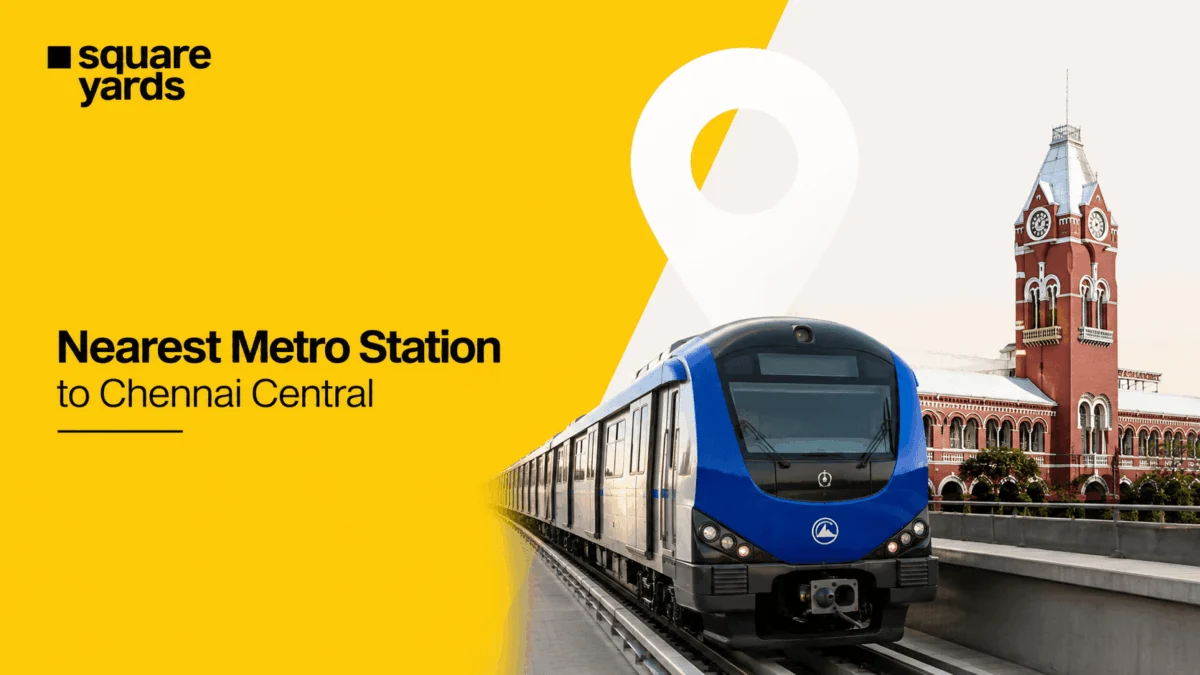
Introduction: The Subterranean Pulse of a Historic Hub
In the landscape of Chennai’s urban evolution, few landmarks command as much gravity as the Puratchi Thalaivar Dr. M.G. Ramachandran Central Railway Station, universally known as Chennai Central. For over a century, its iconic red-brick Gothic-revival facade has served as the primary gateway to South India. However, in the last decade, the narrative of this historic precinct has shifted from the surface to the subterranean.
Today, you don’t merely walk to the metro from Chennai Central; you are seamlessly absorbed into it. The MGR Central Metro Station, a sprawling underground marvel, sits directly beneath the feet of thousands of daily commuters, joined to the railway terminus by a dedicated network of subways. When travelers inquire about the "nearest" metro station, they are often standing directly above the answer. As the only station in the city where the Blue and Green lines intersect, MGR Central has redefined the concept of "proximity," turning a chaotic transit point into a sophisticated multimodal hub.
1. Main Facts: The Architecture of Connectivity
MGR Central Metro Station is not merely a stop on a map; it is the busiest interchange on the Chennai Metro Rail Limited (CMRL) network. Spanning approximately 30,000 square meters and descending three levels deep, it is the largest underground station in the city. Its design was necessitated by the sheer volume of footfall from three distinct sources: long-distance travelers from the Central Railway Station, suburban commuters from the adjacent Moore Market Complex, and local passengers from the Park Town and Park suburban stations.
The station serves as the critical junction for:
- The Blue Line (Line 1): Connecting North Chennai (Wimco Nagar) to the Chennai International Airport.
- The Green Line (Line 2): Connecting the central business districts to the western and southern suburbs (St. Thomas Mount).
This dual-line access provides a connectivity advantage that is currently unmatched by any other residential or commercial locality in Chennai.
2. Chronology: From Colonial Rail to Modern Metro
The transformation of the Chennai Central area has been a century-long endeavor. Originally built in 1873 to de-congest the older Royapuram station, Chennai Central became the face of the Madras Railway. For decades, the area functioned through a traditional ecosystem of buses, cycle rickshaws, and eventually auto-rickshaws.
The real shift began in 2015-2018 during the phased rollout of the Chennai Metro. The construction of the MGR Central Metro Station was an engineering feat, requiring deep excavation in a high-density zone surrounded by heritage structures like the Ripon Building (the seat of the Greater Chennai Corporation) and the Rajiv Gandhi Government General Hospital.
The opening of the underground interchange marked a turning point. It successfully integrated the "old city"—represented by the narrow, bustling lanes of George Town and Park Town—with the "new city" represented by the rapid transit corridors. The dedicated subway at Gate A3 became the umbilical cord between the 19th-century railway platforms and the 21st-century metro concourse.
3. Supporting Data: Navigating the "Nearest" Stations
While MGR Central is the primary station, the geographical layout of the area means several other stations are within a two-kilometer radius. Depending on a traveler’s specific destination or their desire to avoid the peak-hour rush at Central, these alternatives are vital.
Table 1: Metro Stations in the Chennai Central Vicinity
| Metro Station | Line Color | Distance from Central | Walking Time | Key Connectivity |
|---|---|---|---|---|
| MGR Central | Blue & Green | 0 km (Direct) | 2–5 Minutes | Railway Terminus, GH, Ripon Bldg |
| High Court | Blue | ~1 km | 12–15 Minutes | Madras High Court, Broadway, Harbor |
| Egmore | Green | ~1.8 km | 1 stop (4 min) | Egmore Railway Station, Museum |
| Government Estate | Blue | ~2 km | 20–25 Minutes | Anna Salai, Marina Beach, LIC |
Deep Dive into the Stations
I. MGR Central Metro Station (The Interchange)
This is the "zero-distance" option. It features six entry and exit points. For those arriving by train, the most efficient route is through the subway connected to the main railway concourse. It handles not just metro passengers but also serves as a safe pedestrian crossing for those trying to reach the Government General Hospital without braving the treacherous traffic of Poonamallee High Road.
II. High Court Metro Station
Located one stop north on the Blue Line, this station is the gateway to the legal and commercial heart of the city. It is the preferred stop for those heading toward the Parry’s Corner wholesale markets or the Madras High Court. While walkable for those with light luggage, it is primarily a transit point for the legal community.
III. Government Estate Metro Station
Heading south on the Blue Line, Government Estate serves the administrative and recreational side of Chennai. It is the closest metro link to the Marina Beach and the historic Triplicane area. For a traveler arriving at Central who wants a glimpse of the Bay of Bengal, it is a quick, five-minute metro ride.
IV. Egmore Metro Station
The link between Chennai Central and Egmore is perhaps the most functional "short-haul" trip in the city. Egmore is Chennai’s second-largest terminal, handling many south-bound express trains. The Green Line connects these two giants in under four minutes, sparing travelers the notorious "Central-Egmore" auto-rickshaw fare negotiations.
4. Operational Logistics: Timings and Connectivity
For a professional traveler, predictability is more valuable than speed. The MGR Central Metro operates with high frequency, ensuring that even if a passenger misses a train, the next one is only minutes away.
Metro Operating Hours from MGR Central:
- First Train: 05:00 AM (All directions)
- Last Train: 11:00 PM (All directions)
- Peak Hour Frequency: Every 2 to 5 minutes.
- Off-Peak Frequency: Every 7 to 10 minutes.
Accessing Major Hubs from Central:
- To Chennai Airport: Take the Blue Line (Southbound). Travel time: ~40 minutes. No interchange required.
- To Koyambedu (CMBT): Take the Green Line. Travel time: ~20 minutes. No interchange required.
- To T. Nagar (Agada): Take the Blue Line to Nandanam or Teynampet.
- To Anna Nagar: Take the Green Line.
Last-Mile Connectivity Options:
Despite the metro’s efficiency, the "last mile" remains a mix of organized and unorganized transport.
- Walking: The Gate A3 subway is the gold standard for direct access.
- MTC Buses: A massive bus terminus sits outside the railway station, providing budget connectivity to every corner of the city for ₹10–₹25.
- Prepaid Autos/Taxis: Available at the railway station exit, though app-based services (Ola/Uber) are generally preferred for price transparency.
5. Official Context and Urban Impact
Urban planners and CMRL officials have often cited MGR Central as the "success story" of multimodal integration. By placing the metro station at the intersection of two lines and adjacent to the suburban rail and long-distance rail, the city has created a "Transit-Oriented Development" (TOD) zone.
Official responses from CMRL suggest that the integration of the Park Town and Park suburban stations into the metro’s pedestrian ecosystem has reduced the "street-level" foot traffic on Poonamallee High Road, potentially reducing accident rates in one of the city’s most congested zones. Furthermore, the inclusion of extensive CCTV coverage and 24/7 security within the metro complex has made it a "safe zone" for late-night travelers, a stark contrast to the often-overwhelming environment of the main railway platforms.
6. Implications: Real Estate and Economic Shifts
The "Metro Effect" on property values near Chennai Central is a study in contrasts. Unlike the IT corridors of OMR, where lifestyle amenities drive prices, the area around Central is driven by "Pure Access."
Property Value Trends (Approximate):
- Egmore: ₹13,000+ per sq. ft. (Premium residential/commercial).
- Purasawakkam: ₹9,000 – ₹13,000 per sq. ft. (Mid-market residential).
- Triplicane: Up to ₹9,000 per sq. ft. (High-density, affordable).
- Park Town/George Town: Highly variable. While residential demand is lower due to congestion, commercial rents remain among the highest in the city due to the proximity to the harbor and rail hubs.
For investors, the implication is clear: properties within a 2-kilometer radius of MGR Central hold their value not because of "glamour," but because they are immune to the city’s traffic woes. A resident in Egmore can reach the airport, the bus terminus, or the High Court within 30 minutes, regardless of the gridlock on the roads.
7. Conclusion: The Future of the Hub
The MGR Central Metro Station has successfully bridged the gap between Chennai’s colonial past and its high-tech future. It has transformed the area from a place people "pass through" into a highly efficient engine of movement.
However, the experience is not without its challenges. During peak hours, the concourse can feel like a "small stampede," as one commuter described it. The sheer density of people requires a level of "big-station caution"—keeping belongings secure and navigating with purpose.
As Chennai moves toward Phase 2 of its metro expansion, MGR Central will remain the anchor. While newer lines will crisscross the city, the intersection of the Blue and Green lines at the doorstep of the city’s main railway station ensures that this precinct will remain the most important square kilometer in Chennai’s geography. Whether you are a tourist arriving from Bengaluru or a daily commuter from Anna Nagar, the message is the same: in the heart of Chennai, the metro isn’t just a way to travel—it’s the way the city breathes.
