

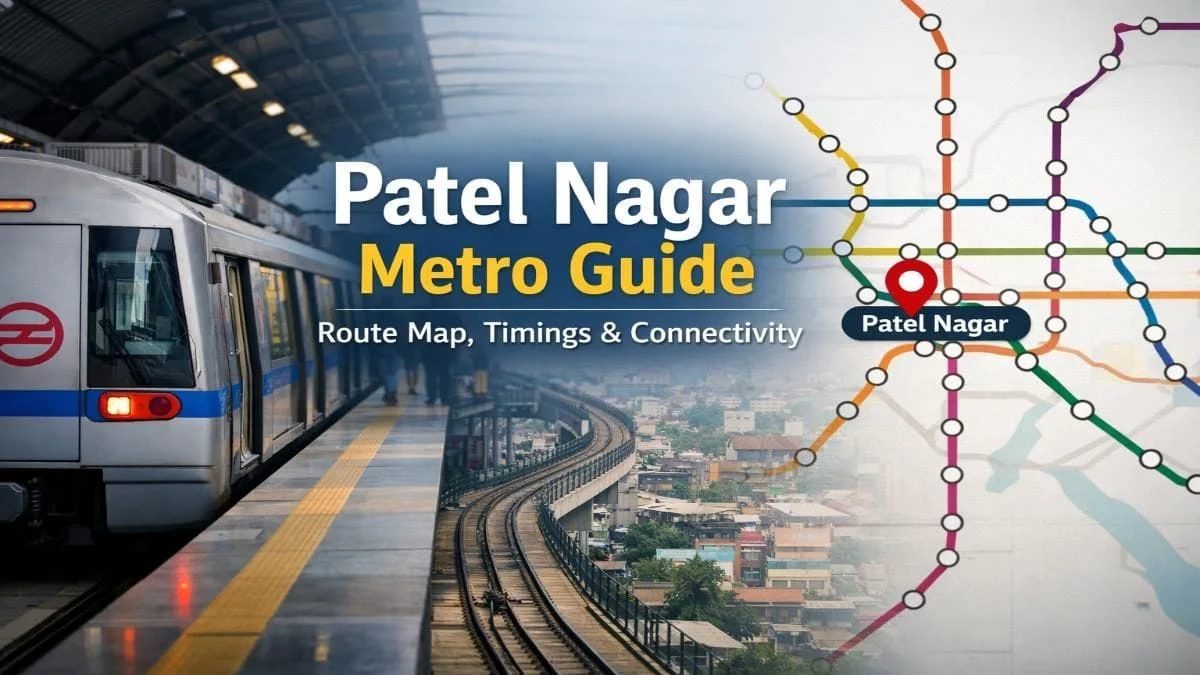
The Delhi Metro Rail Corporation (DMRC) has fundamentally altered the urban fabric of India’s capital since its inception. Among the myriad of stations that dot the sprawling network, the Patel Nagar Metro Station stands out as a critical nodal point. Situated on the Blue Line (Line 3), this station serves as more than just a transit hub; it is the economic and social heartbeat of West Delhi, bridging the gap between residential serenity and commercial vibrancy.
From the UPSC aspirants of Rajinder Nagar to the corporate professionals of Noida and the bustling shopkeepers of Karol Bagh, Patel Nagar Metro Station facilitates the daily aspirations of thousands. This article provides an in-depth analysis of the station’s infrastructure, its chronological development, operational data, and its profound impact on the local real estate market.
1. Key Facts: An Operational Snapshot
The Patel Nagar Metro Station is a testament to the DMRC’s engineering and planning efficiency. Since its commissioning, it has maintained a reputation for being one of the most well-managed elevated stations in the West Delhi circuit.
| Particular | Details |
|---|---|
| Station Name | Patel Nagar Metro Station |
| Line | Blue Line (Line 3) |
| Location | East Patel Nagar, Block 1, Najafgarh Road, New Delhi 110008 |
| Station Code | PN |
| Structure Type | Elevated, Double Track |
| Platforms | 2 Side Platforms (P1: Noida/Vaishali, P2: Dwarka Sec 21) |
| Opening Date | December 31, 2005 |
| Adjacent Stations | Shadipur (West) and Rajinder Place (East) |
| Entry/Exit Gates | 3 Strategic Gates |
| Parking Facilities | Available (Two-wheeler and Four-wheeler) |
| Operational Hours | ~06:00 AM to ~11:00 PM |
| Managed By | Delhi Metro Rail Corporation (DMRC) |
2. Chronology: From 2005 to the Modern Era
The history of Patel Nagar Metro Station is inextricably linked with the expansion of the Blue Line, often referred to as the "lifeline" of the Delhi Metro.
The 2005 Milestone
The station was inaugurated on December 31, 2005, as part of the initial phase of the Blue Line expansion. At the time, West Delhi relied heavily on the Delhi Transport Corporation (DTC) bus network and private vehicles, leading to chronic congestion on the Najafgarh Road. The opening of the station provided an immediate alternative, offering a climate-controlled, rapid transit solution that bypassed the surface-level traffic of the Patel Nagar-Shadipur stretch.
Evolution of the Neighborhood
Post-2005, the "Metro Effect" began to manifest. The area saw a transition from a quiet residential suburb to a high-density urban hub. Over the last two decades, the station has undergone several upgrades, including the installation of high-speed escalators, improved CCTV surveillance, and the integration of digital payment interfaces for smart card recharges.
3. Supporting Data: Navigating the Hub
Patel Nagar Metro Station is strategically positioned on the main Najafgarh Road, serving as a gateway to East, West, and South Patel Nagar.
Entry and Exit Logistics
To manage the heavy footfall, the DMRC designed three specific gates, each catering to a distinct demographic:
- Gate No. 1: Primarily serves the Rajinder Nagar side. This gate is the preferred exit for students attending the numerous IAS and UPSC coaching institutes in the vicinity.
- Gate No. 2: Opens toward the local markets and residential blocks of East Patel Nagar. It is the busiest gate for shoppers and local residents.
- Gate No. 3: Provides access toward the Shadipur side and specific commercial establishments along the main road.
Route Connectivity and Interchanges
Patel Nagar’s position on the Blue Line allows for seamless travel across the National Capital Region (NCR).
- Toward Dwarka: It connects commuters to the industrial and residential hubs of Kirti Nagar, Janakpuri, and eventually Dwarka Sector 21.
- Toward Noida/Vaishali: It provides a direct route to the commercial centers of Connaught Place (Rajiv Chowk), Mandi House, and the corporate offices of Noida Sector 18 and Electronic City.
Key Interchanges:
- Kirti Nagar: For the Green Line (towards Mundka/Bahadurgarh).
- Rajiv Chowk: For the Yellow Line (towards Gurugram or Samaypur Badli).
- Mandi House: For the Violet Line (towards Kashmere Gate or Raja Nahar Singh).
Fare Structure and Timings
The fare is distance-based, ranging from ₹10 to ₹60. Commuters utilizing the Delhi Metro Smart Card benefit from a 10% discount on every journey, with an additional 10% discount during off-peak hours (Sundays and national holidays).
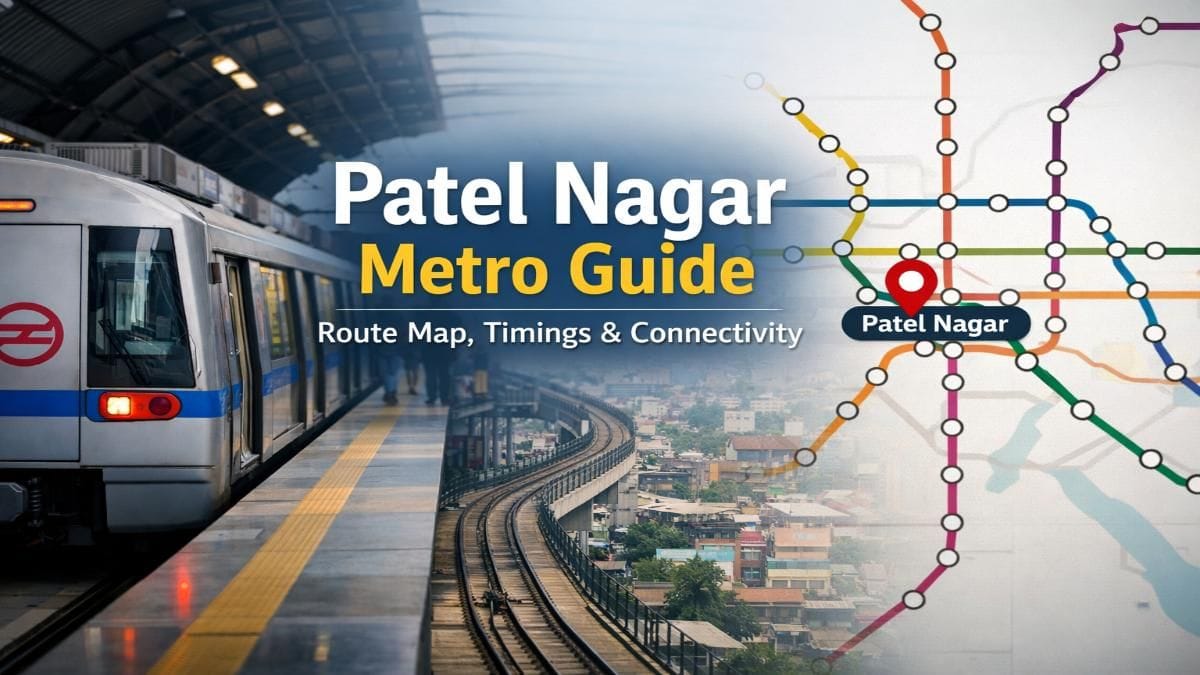
- First Train: Starts at approximately 06:02 AM (Noida/Vaishali) and 06:08 AM (Dwarka).
- Last Train: Departs around 10:54 PM (Noida) and 11:08 PM (Dwarka).
4. Official Responses and Infrastructure Standards
The DMRC has frequently highlighted Patel Nagar as a model for "Elevated Station Management." Official reports suggest that the station maintains high safety standards, with CISF (Central Industrial Security Force) personnel managing security checkpoints 24/7.
Accessibility and Amenities
In line with the Rights of Persons with Disabilities Act, the station is equipped with:
- Tactile flooring for the visually impaired.
- Dedicated lifts and ramps for wheelchair access.
- Standardized signage in Hindi and English.
- Small-scale retail kiosks and ATMs within the concourse area to cater to the immediate needs of travelers.
Parking Management
The parking facility at Patel Nagar is one of the few in the area that offers organized space for both two-wheelers and four-wheelers. Managed by DMRC-authorized contractors, the parking lot serves as a "Park and Ride" facility for residents of nearby colonies who work in distant parts of the city.
5. Socio-Economic Implications: The Real Estate Surge
The most significant impact of the Patel Nagar Metro Station has been on the local real estate economy. The station has turned the neighborhood into one of the most sought-after residential and commercial pockets in West Delhi.
The "Coaching Hub" Phenomenon
Patel Nagar’s proximity to Rajinder Nagar—the epicenter of India’s civil services coaching industry—has created an insatiable demand for rental housing. A 1BHK or studio apartment in the vicinity of the metro station can command rents between ₹18,000 and ₹25,000, significantly higher than similar accommodations in other parts of West Delhi.
Property Valuation Trends
The real estate market here is dominated by builder floors and independent houses.
- East Patel Nagar: Known for its proximity to the metro and markets, 2BHK builder floors are priced between ₹1.3 Crore and ₹1.7 Crore.
- West Patel Nagar: Offering slightly larger plot sizes, prices for 2BHK and 3BHK units often range from ₹1.5 Crore to ₹2 Crore.
- South Patel Nagar: This is the "posh" segment of the area, where premium 3BHK and 4BHK floors can exceed ₹2.5 Crore.
Investment Potential
Investors favor Patel Nagar due to its central location and the "Blue Line Premium." With the metro providing a 15-minute commute to Connaught Place, the capital appreciation of properties within a 1-kilometer radius of the station has consistently outpaced the city’s average growth rate. Furthermore, the availability of freehold land and the trend of converting older DDA flats into modern builder floors with stilt parking and lifts have kept the market buoyant.
6. Last-Mile Connectivity: Reaching the Station
Patel Nagar Metro Station is a case study in effective multi-modal integration.
- E-Rickshaws: These are the backbone of local transit, providing shared rides to East and West Patel Nagar for ₹10–₹20.
- DTC Bus Network: Several bus routes (47, 85, 410, etc.) have designated stops right outside the station gates, linking the metro to areas not directly served by the rail network, such as Baljit Nagar and Anand Parbat.
- Pedestrian Access: Unlike many other stations, Patel Nagar features relatively wide pavements and a layout that encourages walking for those living within a 500-meter radius.
7. Conclusion: More Than Just a Stop
The Patel Nagar Metro Station has evolved into a cornerstone of West Delhi’s infrastructure. By providing a reliable, affordable, and fast connection to the rest of the NCR, it has elevated the quality of life for residents and provided a robust platform for local businesses to thrive.
As Delhi continues to expand, the importance of such central hubs only grows. Whether you are an investor looking for high rental yields, a student chasing a dream in the civil services, or a professional commuting to the glass towers of Noida, Patel Nagar Metro Station remains an indispensable part of the journey. It is not merely a point on a map; it is the engine that keeps this vibrant part of the capital moving forward.
Disclaimer: Information regarding timings, fares, and property rates is based on current market data and DMRC schedules. Readers are advised to verify specific details via the official DMRC website or registered real estate consultants before making financial decisions.
